
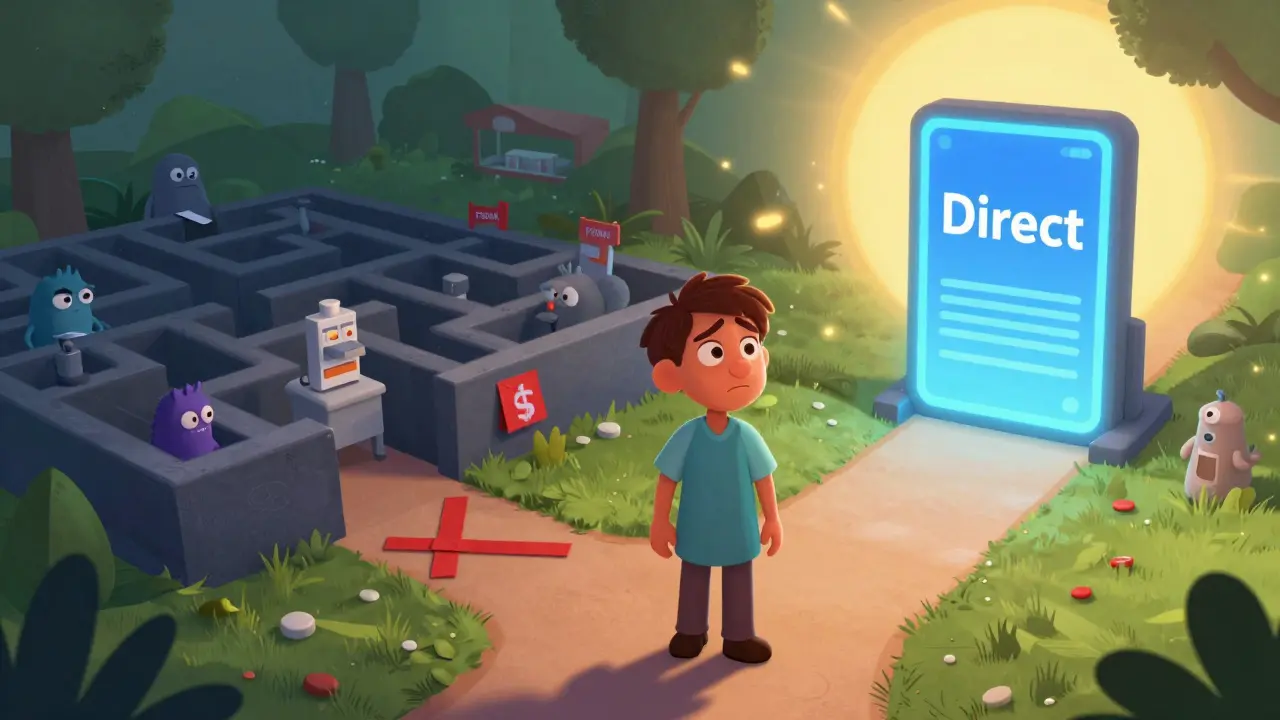
Remember when buying medication meant a quick trip to the corner store? That simplicity is vanishing. Today, the U.S. prescription drug market is a tangled web of middlemen-Pharmacy Benefit Managers (PBMs), wholesalers, and insurance companies-that often obscures true costs from patients. But a new wave of DTC generic pharmacies is cutting through this noise. These platforms are rewriting the rules by selling medications directly to you, bypassing the traditional supply chain entirely.
This isn't just about convenience; it's a structural shift in how healthcare money moves. With major players like Ro, Hims & Hers, and even big pharma giants launching direct programs, the landscape has changed dramatically since 2025. If you're trying to understand why your local pharmacy prices differ so wildly from an app on your phone, or if you're a business looking at this sector, you need to know how these new models work, where they save money, and what risks they carry.
The Shift from Traditional Chains to Direct Platforms
To understand the new model, you first have to see what it’s replacing. The traditional path for a pill looks like this: Manufacturer → Wholesaler → PBM → Retail Pharmacy → You. Every step adds a layer of cost, administration, and complexity. PBMs, in particular, have come under fire for keeping billions in rebates without passing those savings to consumers. In 2024 alone, the "Big Three" PBMs generated $28 billion in gross profit.
Direct-to-consumer (DTC) generic pharmacies are business models that eliminate intermediaries like PBMs and wholesalers, allowing patients to purchase medications directly from specialized digital platforms or manufacturers. By removing these middlemen, these platforms claim to reduce supply chain costs by 15-25%.
The catalyst for this acceleration was the May 2025 executive order mandating drug manufacturers to match lower international prices and expand DTC programs. While initially focused on brand-name drugs, this regulatory pressure opened the door for generic-focused startups to flourish. Companies like Ro processed approximately 2.1 million prescription orders in Q1 2025, proving there is massive demand for a simpler, transparent buying experience.
How the Technology Powers the Experience
You might wonder how a company can legally prescribe and ship meds without a physical storefront. It comes down to sophisticated tech stacks. Modern DTC platforms aren't just websites; they are integrated health ecosystems. They combine telehealth consultations, electronic prescribing, home delivery logistics, and adherence tracking into one seamless workflow.
Here is what happens behind the scenes when you use a service like Honeybee Health or Ro:
- Telehealth Integration: Cloud computing enables real-time video visits with licensed providers. This replaces the initial doctor visit for many common conditions.
- E-Prescribing APIs: Platforms integrate with networks like Surescripts to send prescriptions digitally, ensuring speed and accuracy.
- Data Analytics: AI tools analyze your health data to predict adherence issues. For example, chatbots remind you to take meds, reducing missed doses.
- Cybersecurity: Strict HIPAA-compliant storage protects your sensitive health information, which is critical given the high value of medical data.
This tech stack reduces the time-to-therapy by an average of 3.7 days compared to traditional methods. Instead of waiting for a doctor’s appointment, then a script, then a pharmacy fill, you get everything in a single digital journey.
Pricing Transparency and Cash-Pay Models
The biggest draw for most users is price. Traditional pharmacy pricing is opaque. You see a list price, but your actual cost depends on hidden rebates and formulary tiers managed by your PBM. DTC generic pharmacies operate primarily on a cash-pay basis.
Because they don’t deal with insurance negotiations, these platforms can offer flat, transparent rates. Users report saving 30-50% on generic medications compared to traditional pharmacy counters. For instance, a Reddit user noted saving $417.50 annually on blood pressure medication through Ro. However, this savings comes with a trade-off: you pay out-of-pocket, meaning these expenses may not count toward your insurance deductible unless your plan specifically allows it.
| Feature | Traditional Retail Pharmacy | DTC Generic Platform |
|---|---|---|
| Pricing Model | Insurance-based, opaque list prices | Cash-pay, transparent flat rates |
| Cost Savings | Variable (copays) | 30-50% off generics (cash price) |
| Consultation | In-person pharmacist available | Virtual/Chat support (limited access) |
| Delivery Speed | Immediate pickup | 3-5 business days shipping |
| Intermediaries | PBMs, Wholesalers, Insurers | None (Direct to Patient) |
Regulatory Hurdles and Compliance Costs
If this model is so much cheaper and easier, why hasn't everyone switched? The answer lies in regulation. Launching a compliant DTC pharmacy is expensive and slow. You cannot just set up a Shopify store and start selling pills.
According to PharmExec’s September 2025 analysis, obtaining pharmacy licenses in all 50 states plus Washington D.C. takes 14-18 months and costs approximately $2.3 million in legal and administrative fees. Each state has its own Board of Pharmacy with unique requirements. As of January 2025, 47 states required specific DTC pharmacy licensing.
Furthermore, companies must navigate the Stark Law and Anti-Kickback Statute. Legal experts warn that compliance must be "designed into product flows," not added later. The Department of Justice has opened investigations into potential anti-kickback violations in some DTC programs, signaling that regulators are watching closely to ensure these savings aren't achieved through illegal inducements.
Safety Concerns and the Pharmacist Gap
Convenience shouldn't come at the cost of safety. One of the most significant criticisms of DTC models is the reduced role of the pharmacist. In a traditional setting, a pharmacist reviews your entire medication profile for dangerous interactions before handing over the bag.
In the DTC world, this review is often automated or handled remotely. Dr. Sarah Chen, Professor of Pharmacy at Johns Hopkins, warned that "Direct-to-consumer models risk bypassing pharmacists, raising concerns about patient safety." Drug Topics documented 17 cases in late 2025 where potential drug interactions might have been caught by a human pharmacist but were missed in DTC workflows.
User feedback reflects this tension. While 61% of positive reviews cite price transparency, 38% of negative reviews mention limited medication availability or difficulty reaching a human expert. Trustpilot data for Honeybee Health shows that while many love the price, 42% of negative reviews highlight delivery delays or customer service response times exceeding 48 hours.
The Future: Hybrid Models and Market Growth
The market isn't choosing between old and new; it’s blending them. IQVIA reported that DTC pharmaceutical sales reached $18.7 billion in Q3 2025, up from just 0.8% of total sales in 2023. We are seeing a bifurcation: established telehealth companies like Ro focus on generics and lifestyle meds, while big pharma (Lilly, Pfizer) launches DTC arms for their brand-name drugs.
Experts predict that hybrid distribution strategies will dominate. Pharmaceutical executives surveyed by Galen Growth indicated that 83% plan to keep traditional channels while expanding DTC options. This means you might buy your chronic condition meds via a DTC app for lower cash prices while still using your local pharmacy for acute needs or complex regimens requiring close monitoring.
As the PBM rebate system faces continued scrutiny and potential reform, the valuation models for these DTC platforms will likely shift. If the middleman shrinks, the direct relationship between patient and provider becomes the most valuable asset in healthcare. For now, the best approach for consumers is to compare cash prices on DTC platforms against their insurance copays, keeping in mind the trade-offs in delivery speed and professional consultation.
Are DTC generic pharmacies legal?
Yes, provided they hold valid pharmacy licenses in every state where they ship medications. As of 2025, reputable platforms like Ro and Honeybee Health comply with state board regulations and federal HIPAA laws. However, legality varies by state, so check your local Board of Pharmacy for approved vendors.
Do DTC pharmacies accept insurance?
Most pure-play DTC generic platforms operate on a cash-pay basis to maintain low, transparent prices. They typically do not bill insurance directly because bypassing PBMs allows them to undercut negotiated rates. Some newer hybrid models are beginning to integrate insurance verification, but cash payment remains the standard for maximum savings.
Is it safe to get prescriptions online without a doctor visit?
For common, stable conditions like hypertension or acne, yes. DTC platforms use licensed providers who conduct virtual assessments. However, for complex medical histories or multiple medications, the lack of in-person pharmacist review poses a risk. Always disclose all current medications during the telehealth consultation to mitigate interaction risks.
Why are DTC generic prices lower than my local pharmacy?
DTC platforms eliminate middlemen like wholesalers and Pharmacy Benefit Managers (PBMs). They also operate with lower overhead by using centralized fulfillment centers rather than thousands of retail stores. This streamlined supply chain allows them to pass savings directly to the consumer, often resulting in 30-50% discounts on cash prices.
What are the main risks of using a DTC pharmacy?
The primary risks include delayed delivery (3-5 days vs. immediate pickup), limited access to human pharmacists for urgent questions, and potential gaps in drug interaction screening. Additionally, since payments are usually cash-based, these expenses may not apply toward your annual insurance deductible.