
When you buy a pill, an inhaler, or a bandage, you expect it to be safe. But how do you know the factory that made it followed the rules? The answer lies in manufacturing transparency-and the FDA’s access to inspection records is the backbone of that trust.
What the FDA Can See During an Inspection
The FDA doesn’t just show up and take a quick look. They have legal authority under Section 704(a)(1) of the Federal Food, Drug, and Cosmetic Act to walk into any drug or medical device facility, examine equipment, review documents, and interview staff. But not everything is open for inspection. For example, internal quality audit reports-those private reviews a company does to find its own mistakes-are generally off-limits. That’s by design. The FDA’s Compliance Policy Guide (CPG) Sec. 130.300 encourages companies to be honest with themselves by protecting those internal reviews from regulatory exposure. But here’s the catch: if something goes wrong, and the company investigates it internally, that investigation report? That’s fair game. The FDA can-and will-demand to see it. So what exactly do inspectors look at? Production logs. Batch records. Validation studies. Deviation reports. CAPA (Corrective and Preventive Action) files. They check if every step was documented as it happened. No backdating. No guesswork. If a machine broke down during production and someone didn’t record it within hours, that’s a violation.Record Retention Rules: How Long Must You Keep It?
It’s not enough to just create records. You have to keep them. For drug manufacturers, 21 CFR 211.180 says you must store CGMP records for at least one year after the product’s expiration date. For medical devices, it’s even longer: quality system records must be kept for the device’s entire lifespan plus two more years. That means if you made a pacemaker in 2020, you’re still responsible for its paperwork in 2032. These aren’t suggestions. The FDA’s Warning Letter Analytics Dashboard showed that 22% of warning letters issued in 2024 were for failing to maintain contemporaneous records. That means someone wrote down what happened after the fact-often the first sign of a broken quality culture.Form FDA 483: The Inspection Report That Changes Everything
At the end of every inspection, if the FDA finds problems, they hand you Form FDA 483. This isn’t a suggestion. It’s a list of observations-each one a potential violation. You have exactly 15 business days to respond. Miss that deadline, and you risk a warning letter, a product recall, or even a shutdown. Companies that respond well use root cause analysis. They don’t just say, “We fixed it.” They explain why it happened. Was it training? Equipment? Process design? The FDA’s 2024 Compliance Metrics Report shows that companies using proper root cause methods closed 89% of their 483 issues within six months. Those who rushed it? Only 62% succeeded.
Unannounced Inspections: The New Normal
In 2023, only 12% of foreign facility inspections were unannounced. By the end of 2025, that number will jump to 35%. The FDA is shifting from scheduled checks to surprise visits-especially for overseas plants that supply U.S. drugs. Why? Because companies that know they’re coming can clean up. Surprise inspections reveal the real state of operations. Domestic facilities still mostly get scheduled visits (92% of the time), but foreign manufacturers are under new pressure. The GAO Report GAO-24-105123 pointed out that foreign facilities had higher rates of compliance issues. The FDA’s response? Show up without warning.Remote Regulatory Assessments (RRAs): The Digital Alternative
In July 2025, the FDA finalized its guidance on Remote Regulatory Assessments. This lets inspectors review records digitally-no plane ticket needed. You can share read-only access to your database, upload documents, or even do a live video walkthrough of your production line. RRAs aren’t inspections. They don’t result in Form 483s. But they’re becoming a key part of oversight. By Q1 2025, 73% of Fortune 500 pharmaceutical companies had built RRA-ready systems. Why? Because companies using RRAs cut inspection-related downtime by 65%. That’s millions saved in lost production time.The Confusion Between Protected and Required Records
One of the biggest headaches for quality teams? Knowing what the FDA can and can’t see. A 2025 survey of 47 quality professionals at Pfizer found that 63% of them over-disclosed records-sending internal audit reports they thought were safe, just to be cautious. That’s because the line between protected quality assurance audits and required quality control investigations is blurry. The FDA says: if it’s a proactive audit, keep it private. If it’s a reaction to a failed batch, it’s public. But in practice, inspectors sometimes cross that line. A 2024 ECA Academy survey of 215 quality executives found that 41% had seen conflicting interpretations between different FDA district offices.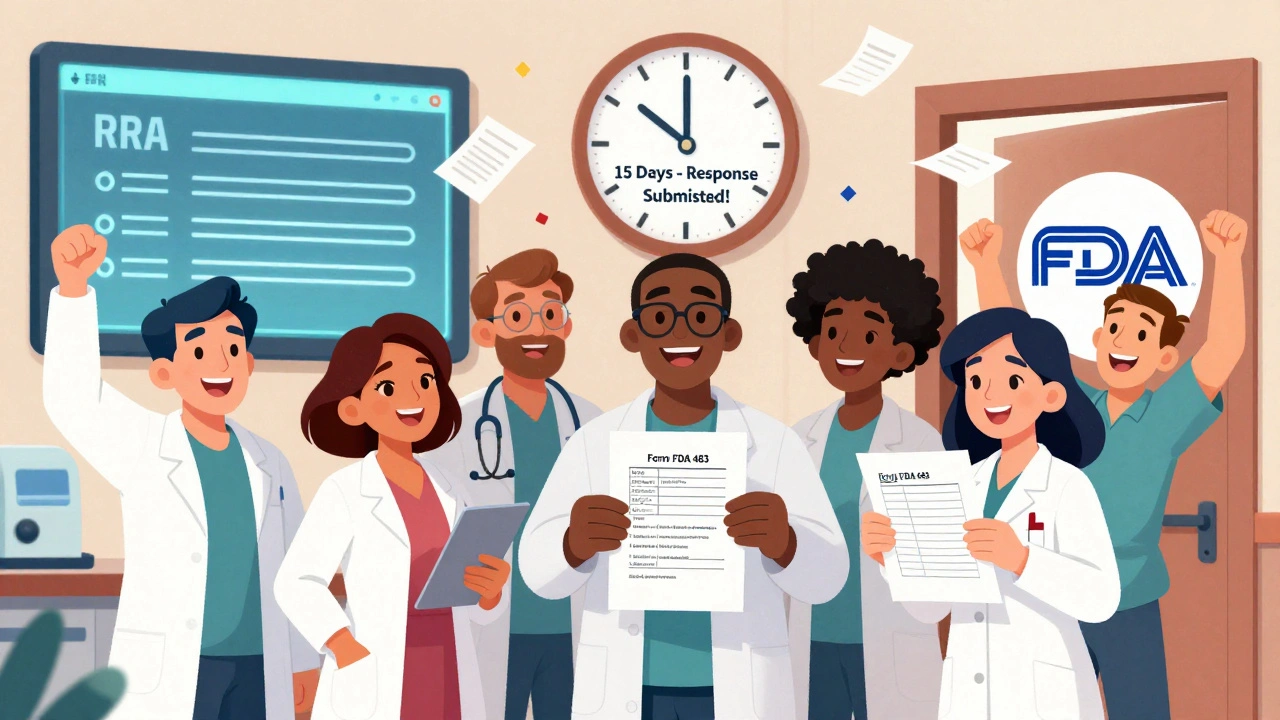
What Companies Are Doing to Prepare
Most pharmaceutical manufacturers now have dedicated inspection readiness teams. According to a 2025 benchmarking study by TheFDAGroup, companies spend an average of $385,000 per year just getting ready for inspections. That’s training, documentation systems, mock audits, and consultants. New hires need 6 to 9 months to fully understand the system. Certification through RAPS (Regulatory Affairs Professionals Society) boosts readiness by 37%. The Parenteral Drug Association estimates that setting up clear documentation protocols-knowing exactly which files are protected and which are open-takes 200 to 300 hours of work per facility.What’s Next? More Pressure, More Tech
The FDA’s 2025-2027 Strategic Plan aims to cut inspection cycle times by 25% using digital systems. That means more electronic records, fewer paper files. It also means stricter enforcement. In Q1 2025, warning letters for delaying or denying inspection access rose 17% year-over-year. Meanwhile, Congress is pushing for more transparency. The 2024 Pharmaceutical Supply Chain Transparency Act (S. 2884) would force public disclosure of some inspection results. The pharmaceutical industry fights back, arguing it would kill the safe space for honest internal audits. But the public wants to know: is my medicine safe? And if the FDA can’t show me, who can?Bottom Line: Transparency Isn’t Optional
Manufacturing transparency isn’t about pleasing regulators. It’s about protecting patients. The FDA doesn’t inspect to punish. It inspects because lives depend on it. Companies that treat inspection readiness as a compliance chore will get caught. Those that build it into their culture-documenting everything in real time, investigating failures honestly, and preparing for surprises-won’t just survive. They’ll earn trust. If you’re in manufacturing, ask yourself: if the FDA walked in tomorrow, would they find what they’re looking for? Or would they find gaps, delays, and excuses? The records don’t lie. And neither does the FDA.Can the FDA inspect my facility without notice?
Yes, especially for foreign manufacturing facilities. As of 2025, the FDA is increasing unannounced inspections of overseas plants from 12% to 35% of total inspections. Domestic facilities still mostly receive scheduled visits, but unannounced inspections are possible at any time under FDA’s legal authority.
What records can the FDA not access during an inspection?
The FDA generally does not review internal quality assurance audit reports if they’re part of a company’s written quality program, as protected under Compliance Policy Guide Sec. 130.300. These are meant to encourage honest self-assessment. However, if an audit leads to a formal investigation of a product failure, that investigation record becomes fully accessible.
How long do I need to keep manufacturing records?
Drug manufacturers must retain CGMP records for at least one year after the product’s expiration date (21 CFR 211.180). Medical device manufacturers must keep quality system records for the device’s lifetime plus two additional years (21 CFR 820.180). Failure to maintain these records is one of the most common reasons for FDA warning letters.
What happens if I don’t respond to a Form FDA 483 within 15 days?
Failing to respond within 15 business days can lead to a formal Warning Letter from the FDA, which is publicly posted. This can trigger product seizures, import alerts, or even injunctions against manufacturing. It also damages your reputation with regulators and customers. Timely, thorough responses using root cause analysis significantly improve closure rates.
Are Remote Regulatory Assessments (RRAs) replacing physical inspections?
No, RRAs are not replacements-they’re supplements. RRAs allow the FDA to review records remotely and may reduce the need for physical visits in low-risk cases. But they don’t generate Form 483s and cannot fully substitute for on-site inspections, especially for high-risk facilities or when serious compliance issues are suspected. In the first half of 2025, RRAs accounted for only 8% of total inspections.
How can my company prepare for an FDA inspection?
Start by distinguishing between protected internal audits and required quality control records. Train your team on real-time documentation, root cause analysis, and Form 483 response protocols. Conduct mock inspections annually. Invest in digital systems that support Remote Regulatory Assessments. Companies with dedicated inspection readiness teams and RAPS-certified staff see 37% higher preparedness and lower inspection-related downtime.
Kristi Pope
December 10, 2025 AT 05:43Really appreciate how this breaks down the real stuff without jargon. I work in QA and the part about internal audits vs. investigations totally clicked for me. The FDA isn’t out to get you-they just want to know you’re not cutting corners.
Also, 200-300 hours just to sort your docs? Yeah, that’s real. But worth it.
Aman deep
December 10, 2025 AT 09:27in india we dont even get this level of transparency and yet we export so much pharma… its wild. the system here is broken but we still make it work. hope the fda keeps pushing global standards.
ps: typo in 'facilties' lol
Eddie Bennett
December 10, 2025 AT 14:51Been on both sides of this-worked in a small lab that got hit with a 483, then later at a big pharma firm that had a whole team just for inspections. The difference? Culture. One place treated it like a test. The other treated it like breathing.
One got fined. The other got trusted.
It’s not about paperwork. It’s about pride in the product.
Sylvia Frenzel
December 11, 2025 AT 17:15So now we’re letting the FDA peek into every private document because ‘patients deserve safety’? What’s next? Random audits of your kitchen sink because someone might’ve used a dirty spoon?
This isn’t oversight. It’s control. And it’s getting out of hand.
Paul Dixon
December 12, 2025 AT 01:44RRAs are a game changer. I used to spend 3 weeks prepping for a physical audit. Now we just give them read-only access to our system. No stress, no chaos. And the FDA seems way more chill about it too.
Big win for everyone except the consultants who used to make bank off inspection prep.
Vivian Amadi
December 12, 2025 AT 22:59Anyone else notice how the FDA’s ‘transparency’ is just a fancy word for ‘we want your secrets’? Internal audits are protected by law. If they can’t trust companies to self-correct, why are they even here?
Stop pretending this is about safety. It’s about power.
Jimmy Kärnfeldt
December 13, 2025 AT 21:44There’s something beautiful about the idea that someone in a lab in Ohio or Bangalore is writing down every little thing that happens-because a kid in Ohio might be taking that pill tomorrow.
It’s not glamorous. It’s not sexy. But it’s the quiet backbone of everything we trust about medicine.
Let’s not turn that into a war. Let’s protect it.
Ariel Nichole
December 15, 2025 AT 18:10Love how this post doesn’t just list rules-it shows why they matter. I’m not in pharma, but my mom’s on a life-saving drug. Knowing there are people checking every batch? That’s peace of mind.
Thanks for writing this.
john damon
December 15, 2025 AT 20:14✅ 100% agree with the RRA part. 🚀 Also, mock audits = free therapy for stressed QA teams. 🤓
matthew dendle
December 17, 2025 AT 12:25so the fda wants you to document everything but you cant show them your internal audits unless its after something went wrong… so basically be perfect but dont admit you’re not
lol classic bureaucracy
also typo in 'contemporaneous' bro
Monica Evan
December 17, 2025 AT 16:20As someone who’s trained teams across 5 countries, I’ve seen the chaos when docs aren’t clear. One plant in Mexico had 3 different formats for batch records. Took 6 months to fix.
But once they did? Inspection time dropped from 14 days to 3. And morale? Skyrocketed.
It’s not about fear. It’s about clarity.
And yes, typos happen. But the system? It’s solid if you give it a chance.
Taylor Dressler
December 19, 2025 AT 11:09Let’s be real: the FDA’s job isn’t to be liked. It’s to keep people alive. The fact that 22% of warning letters are for poor recordkeeping means people are cutting corners-and that’s not a paperwork issue. It’s a safety issue.
Training, documentation, root cause analysis-these aren’t boxes to check. They’re the difference between a patient getting healed and a patient getting hurt.
Do the work. It matters.
Aidan Stacey
December 21, 2025 AT 00:12My uncle worked in a drug plant for 30 years. He never missed a shift. Never skipped a log. Never cut a corner. He retired last year. No fanfare. No press. Just a pension and a quiet pride.
That’s the real story behind every FDA inspection.
Not regulations.
Not audits.
Just people showing up, every day, to make sure someone else gets to go home safe.