

Mirtazapine Dose-Sedation Calculator
Adjust the slider to see how different dosages of Mirtazapine (Remeron) affect sedation levels, neurotransmitter activity, and recommended usage.
Sedation Zone
Strong Histamine Blockade
At this low dose, the drug primarily blocks histamine H1 receptors. This creates a potent sedative effect similar to strong antihistamines, making it effective for sleep but often causing significant daytime grogginess.
There is a strange paradox at the heart of Mirtazapine, a noradrenergic and specific serotonergic antidepressant (NaSSA) known for its potent sedative properties due to histamine H1 receptor antagonism. Also known as Remeron, it was approved by the FDA in 1996. If you take a low dose, say 15 mg, you will likely crash hard. You’ll sleep deeply, perhaps too deeply. But if you bump that dose up to 30 or 45 mg to treat your depression more aggressively, something counterintuitive happens: you might actually feel less sleepy. This inverse relationship between dose and sedation confuses many patients and even some clinicians. It’s not just about getting tired; it’s about how this drug interacts with your brain’s chemical wiring in ways that differ from almost every other antidepressant on the market.
If you are struggling with insomnia alongside depression, Mirtazapine is often prescribed because it hits two birds with one stone. However, the trade-off is often a heavy sense of grogginess the next morning. Understanding why this happens, and how to manage it, requires looking past the label and into the pharmacology. The goal isn't just to survive the side effects but to optimize your dosing so you get the mood lift without feeling like you're wading through mud all day.
The Science Behind the Sleepiness
To understand why Mirtazapine makes you so drowsy, we have to look at what it blocks in your brain. Most modern antidepressants, like SSRIs (Selective Serotonin Reuptake Inhibitors), focus heavily on serotonin. Mirtazapine does work with serotonin, but its most powerful effect comes from blocking Histamine H1 receptors. These are the same receptors targeted by over-the-counter allergy medications like diphenhydramine (Benadryl). When these receptors are blocked, your body receives a strong signal to shut down and rest.
Here is where it gets tricky. Mirtazapine has an incredibly high affinity for these histamine receptors-about 10 to 20 times stronger than other sedating antidepressants like Trazodone. A commonly used off-label medication for sleep and anxiety. At lower doses (7.5 mg to 15 mg), the drug’s ability to block histamine dominates its profile. This is why you feel such profound sedation. It’s essentially a chemical nap button.
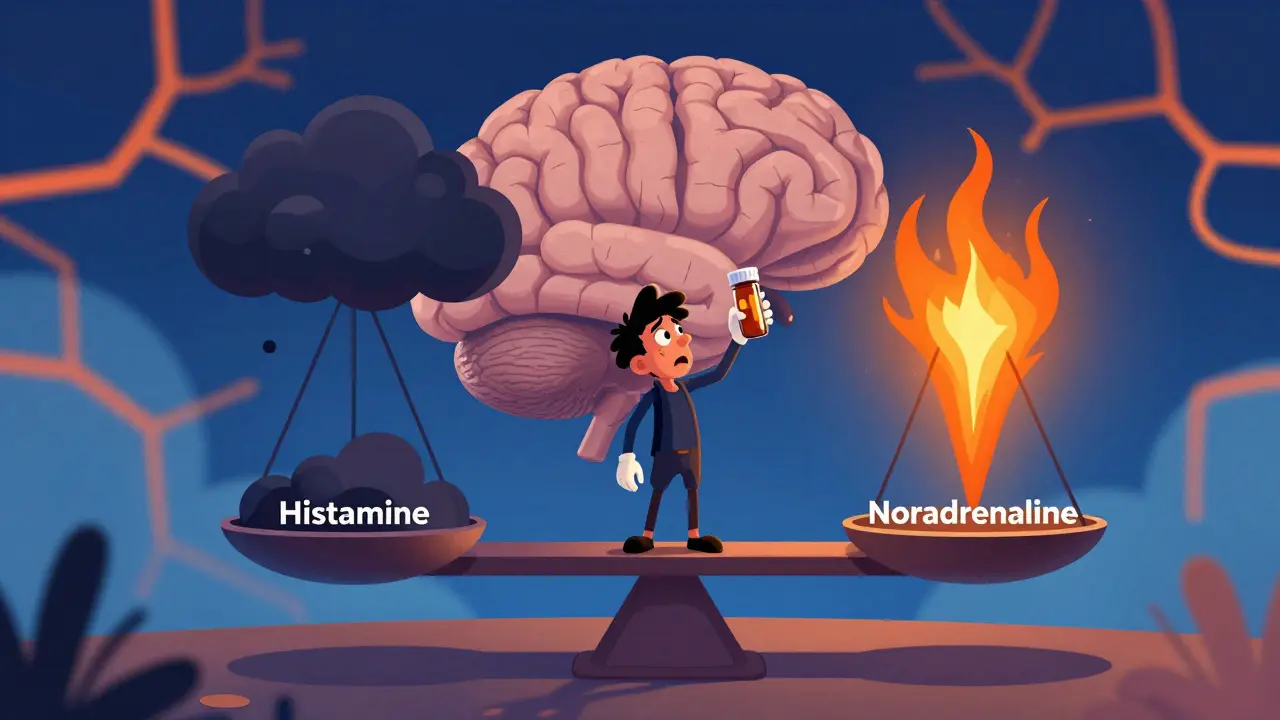
However, as you increase the dose to 30 mg or higher, Mirtazapine starts doing something else: it boosts Noradrenaline. A neurotransmitter responsible for alertness, energy, and focus. This surge in noradrenaline acts as a natural counterweight to the histamine blockade. Think of it like stepping on both the gas and the brake at the same time. The result? You still get the antidepressant benefits, but the crushing weight of sedation lifts slightly. This phenomenon, documented extensively by researchers like Blier and Berger, explains why increasing your dose might actually help you feel less groggy during the day, even though it seems illogical.
Timing Is Everything: The Bedtime Strategy
Because of its rapid absorption, Mirtazapine reaches peak concentration in your blood within about two hours. This pharmacokinetic profile dictates one golden rule: take it at bedtime. Taking it in the morning would likely leave you impaired throughout the workday, affecting your reaction times and cognitive clarity.
Dr. Charles Nemeroff, a leading psychiatrist, emphasizes that bedtime administration is non-negotiable for most patients. By taking the pill right before you plan to sleep, you align the drug’s peak sedative window with your sleep cycle. For many, this means falling asleep faster (reduced sleep latency) and staying asleep longer. Studies show that 15 mg of Mirtazapine can reduce the time it takes to fall asleep by nearly 30 minutes compared to a placebo.
However, timing alone doesn’t solve the problem of next-day drowsiness. Mirtazapine has a long half-life, meaning it stays in your system for 20 to 40 hours. Even after you’ve slept eight hours, a significant portion of the drug is still active in your bloodstream when you wake up. This residual presence is what causes the "hangover" effect. To mitigate this, consistency is key. Go to bed at the same time every night, and take your medication at the same time. Your body needs to establish a rhythm to adjust to the constant presence of the drug.
Navigating the Dose-Sedation Curve
One of the most common mistakes patients make is assuming that if they are still tired, they need a higher dose. Often, the opposite is true. Let’s break down the typical experiences at different dosage levels:
- 7.5 mg to 15 mg: This is the "sedation zone." Many psychiatrists start here specifically for patients with severe insomnia. You will likely experience deep sleep, but also significant morning grogginess. About 35-40% of users report daytime drowsiness at this level.
- 30 mg to 45 mg: This is the "activation zone." As noted earlier, the increased noradrenergic activity counteracts some of the histamine blockade. Patients often report feeling more alert during the day, though the initial sleep-inducing power may be weaker.
If you are on 15 mg and feel like a zombie until noon, talk to your doctor about titrating up to 30 mg. Conversely, if you are on 30 mg and find yourself unable to sleep, dropping back down to 15 mg might restore your sleep quality, albeit with a return of some daytime sleepiness. It’s a balancing act that requires patience and close communication with your prescriber.
| Dosage Range | Primary Effect | Sedation Level | Best For |
|---|---|---|---|
| 7.5 - 15 mg | Strong Histamine Blockade | High | Prominent Insomnia & Anxiety |
| 30 - 45 mg | Increased Noradrenaline | Moderate to Low | Depression with Fatigue/Less Insomnia |
When the Sleepiness Fades: Tachyphylaxis
There is another twist in the tale: tolerance. Many users report that the intense sedation they felt in the first week gradually disappears. This is called Tachyphylaxis. A rapidly decreasing response to successive doses of a drug. A case study published in 2018 highlighted a patient who developed consistent tachyphylaxis regarding the sedative action of Mirtazapine within just 10 days.
This isn’t necessarily a bad thing. In fact, it’s often a sign that your body is adapting. The heavy grogginess usually peaks in the first 7 to 14 days and then subsides. If you are worried that the drug won’t keep you sleeping long-term, remember that this adaptation is normal. However, if the sedation wears off completely and you are left with neither sleep nor mood improvement, your dosage strategy may need adjustment. Don’t assume the drug has "stopped working" immediately; give it at least two weeks to stabilize.
Alternatives and Comparisons
Mirtazapine isn’t the only game in town. If the daytime drowsiness becomes unmanageable despite adjusting the dose, it’s worth comparing it to other options. Here is how it stacks up against common alternatives:
- SSRIs (e.g., Sertraline, Escitalopram): These generally cause much less sedation. In fact, they can sometimes cause insomnia. If sleep isn’t your primary issue, an SSRI might be cleaner for daytime functioning, though they carry a higher risk of sexual side effects (30-40% vs. 2% for Mirtazapine).
- Trazodone: Often prescribed off-label for sleep. It is sedating but lacks the robust antidepressant efficacy of Mirtazapine at low doses. It’s a better pure sleep aid but a weaker mood stabilizer.
- Vilazodone: A newer agent with minimal sedation (12-15% rates). Good for those who need mood support without the sleep crash, but it can take longer to reach full effect.
Switching medications is a major decision. Never stop Mirtazapine abruptly, as this can lead to withdrawal symptoms like nausea and anxiety. Any change should be tapered under medical supervision.

Practical Tips for Managing Daytime Drowsiness
While you wait for your body to adjust or for your doctor to tweak your dose, there are practical steps you can take to cope with the daytime fog:
- Hydrate Aggressively: Dehydration worsens fatigue. Keep water nearby, especially in the morning.
- Avoid Alcohol: Alcohol amplifies the sedative effects of Mirtazapine. Mixing them can lead to dangerous levels of impairment and prolonged grogginess.
- Strategic Caffeine: A small amount of caffeine in the late morning can help cut through the haze. Avoid it after 2 PM to protect your nighttime sleep.
- Light Exposure: Get bright natural light within 30 minutes of waking up. This signals your brain to suppress melatonin and boost alertness.
- Short Power Naps: If you must nap, limit it to 20 minutes. Longer naps can push you into deep sleep, making you feel worse upon waking.
Conclusion: Finding Your Balance
Mirtazapine is a powerful tool, but it demands respect. Its unique pharmacological profile means it doesn’t behave like other antidepressants. The key to success lies in understanding that low doses equal high sedation, while higher doses may offer relief from that very sedation. By timing your dose correctly, monitoring your body’s adaptation period, and communicating openly with your healthcare provider, you can harness the sleep benefits without sacrificing your daytime life. Remember, the goal is not just to sleep, but to wake up ready to live.
Why does Mirtazapine make me more sleepy at low doses?
At low doses (7.5-15 mg), Mirtazapine primarily blocks histamine H1 receptors, which induces strong sedation similar to antihistamines. At higher doses, it increases noradrenaline release, which promotes alertness and counteracts some of the sedative effects.
How long does the daytime drowsiness last?
For most people, the intense grogginess peaks in the first 7 to 14 days. Due to tachyphylaxis (tolerance), the sedative effects often diminish over time, allowing for better daytime function after the initial adjustment period.
Can I take Mirtazapine in the morning?
Generally, no. Because of its rapid onset and potent sedative effects, it is recommended to take Mirtazapine at bedtime. Morning dosing could impair your ability to drive, work, or concentrate safely.
Is Mirtazapine safe for long-term use?
Yes, Mirtazapine is considered safe for long-term maintenance treatment of depression. However, long-term use should be monitored by a doctor to assess ongoing efficacy and potential side effects like weight gain or metabolic changes.
What should I do if I am still tired after two weeks?
If daytime drowsiness persists beyond the initial adjustment period, consult your doctor. They may recommend adjusting your dose (either lowering it to reduce total drug load or raising it to leverage noradrenergic activation) or switching to a different medication with a lower sedative profile.