
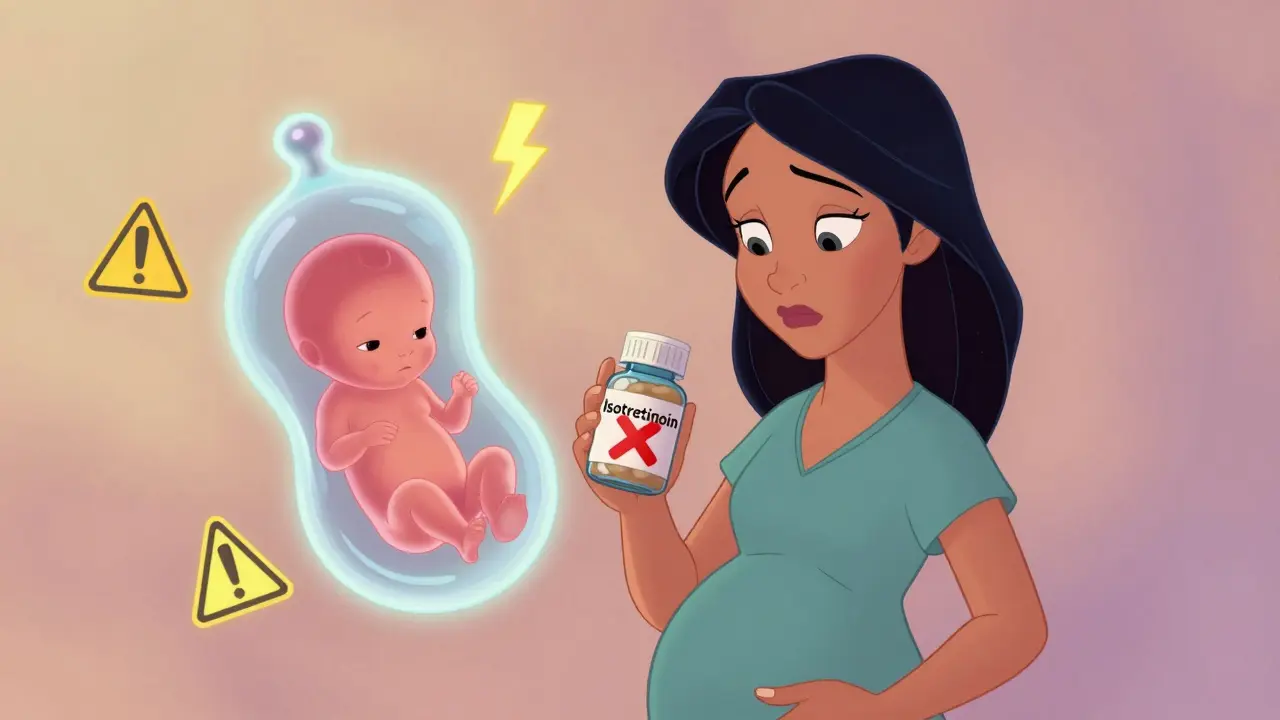
When you’re pregnant, every pill, supplement, or over-the-counter remedy feels like a potential risk. You want to protect your baby, but you also need to manage your own health-whether it’s pain, infection, or a chronic condition. The truth is, some medications can cause serious harm to a developing fetus. These are called teratogenic drugs. And while not every medication is dangerous, knowing which ones to avoid-and what to use instead-can make all the difference.
What Exactly Is a Teratogen?
A teratogen is any substance that can interfere with fetal development and cause birth defects. The word comes from the Greek teras, meaning “monster,” and it was first widely recognized after the thalidomide disaster in the late 1950s and early 1960s. Thousands of babies were born with missing or malformed limbs because their mothers took this drug for morning sickness. Since then, medical science has learned a lot about how and when drugs affect the fetus. The most dangerous window is between weeks 3 and 8 of pregnancy. That’s when the baby’s organs are forming. Exposure during this time can lead to major structural defects-like heart problems, cleft palate, or limb abnormalities. After week 9, the risk shifts. Instead of physical deformities, you’re more likely to see growth delays, brain development issues, or functional problems like hearing loss or learning disabilities. About 4% to 5% of birth defects are linked to medications. That sounds low, but when you consider that 1 in 16 pregnancies involves exposure to a potentially harmful drug, it’s a real concern. And here’s the kicker: most of these exposures happen before a woman even knows she’s pregnant. A 2023 study found that 72% of teratogenic drug exposures occurred before prenatal care started-and nearly 70% happened before the woman realized she was pregnant.Medications You Must Avoid During Pregnancy
Not all drugs are created equal. Some are outright dangerous. Here are the key ones to steer clear of:- Isotretinoin (Accutane): Used for severe acne, this drug is one of the most potent teratogens known. Even a single dose can cause severe brain, heart, and facial defects. The FDA requires doctors to enroll patients in the iPLEDGE program, which mandates two negative pregnancy tests, monthly counseling, and two forms of birth control. But even with these safeguards, 67 pregnancies occurred among women in the program in 2022.
- Warfarin (Coumadin): This blood thinner can cross the placenta and cause fetal warfarin syndrome, which includes nasal hypoplasia, bone abnormalities, and neurological damage. It’s especially risky between weeks 6 and 9. Low-molecular-weight heparin is the safer alternative for women who need anticoagulation.
- Thalidomide: Still used today for conditions like leprosy and multiple myeloma, thalidomide is strictly controlled because of its extreme risk. It’s classified as Category X-meaning the risks far outweigh any possible benefit during pregnancy.
- Tetracycline antibiotics: These can stain developing teeth yellow or gray and weaken tooth enamel. They also affect bone growth. Avoid doxycycline, minocycline, and tetracycline itself during pregnancy.
- Fluoroquinolones (like ciprofloxacin and levofloxacin): These antibiotics may damage fetal cartilage and joints. They’re not banned outright, but doctors avoid them unless there’s no other option for life-threatening infections.
- Sulfamethoxazole/trimethoprim (Bactrim, Septra): Linked to neural tube defects when taken in the first trimester. After 32 weeks, it can cause kernicterus-a dangerous buildup of bilirubin in the baby’s brain-by displacing bilirubin from protein-binding sites.
- NSAIDs (ibuprofen, naproxen): These are generally safe early on, but after 20 weeks, they can cause premature closure of the ductus arteriosus (a critical fetal blood vessel) and reduce amniotic fluid. Acetaminophen is the preferred pain reliever instead.
- ACE inhibitors and ARBs: Used for high blood pressure, these drugs can cause fetal kidney failure, low amniotic fluid, and even death. Safe alternatives include methyldopa, labetalol, or nifedipine.
- Anti-seizure drugs like valproic acid: This one is especially risky. It’s linked to a 10% chance of major birth defects, including spina bifida and cognitive delays. Lamotrigine or levetiracetam are safer options for epilepsy management during pregnancy.
- Retinoids (oral and topical high-dose): Besides isotretinoin, some topical retinoids (like tretinoin cream) are discouraged, especially in large amounts. While topical use is less risky, it’s still not recommended unless absolutely necessary.
Safe Alternatives for Common Pregnancy Complaints
You don’t have to suffer through pregnancy without relief. There are safe, effective options for most common issues:- Pain and fever: Acetaminophen (Tylenol) is the gold standard. It’s been studied in millions of pregnancies and is considered safe in all trimesters when used as directed. Avoid aspirin and NSAIDs after 20 weeks.
- Allergies and colds: Chlorpheniramine and loratadine (Claritin) are preferred over older antihistamines like diphenhydramine (Benadryl), which can cause drowsiness and potentially affect fetal movement. Pseudoephedrine is generally safe after the first trimester, but phenylephrine is less reliable and best avoided.
- Heartburn and indigestion: Antacids like Tums (calcium carbonate) and Maalox are safe. Avoid bismuth subsalicylate (Pepto-Bismol) because it contains salicylates, which carry the same risks as aspirin.
- Yeast infections: Clotrimazole (Monistat) is safe and effective. Avoid oral fluconazole (Diflucan) in the first trimester-it’s linked to a rare set of birth defects. Topical creams are fine.
- Urinary tract infections (UTIs): Nitrofurantoin is usually safe, but avoid it after 36 weeks because it may increase the risk of newborn jaundice. Amoxicillin and cephalexin are excellent alternatives.
- High blood pressure: Methyldopa, labetalol, and nifedipine are all well-studied and safe. Never stop your blood pressure meds without talking to your doctor-uncontrolled hypertension is far more dangerous to both you and your baby.
- Depression and anxiety: Some SSRIs like sertraline and citalopram are considered low-risk during pregnancy. Untreated depression can lead to poor prenatal care, preterm birth, and low birth weight. Work with your provider to find the safest option for you.
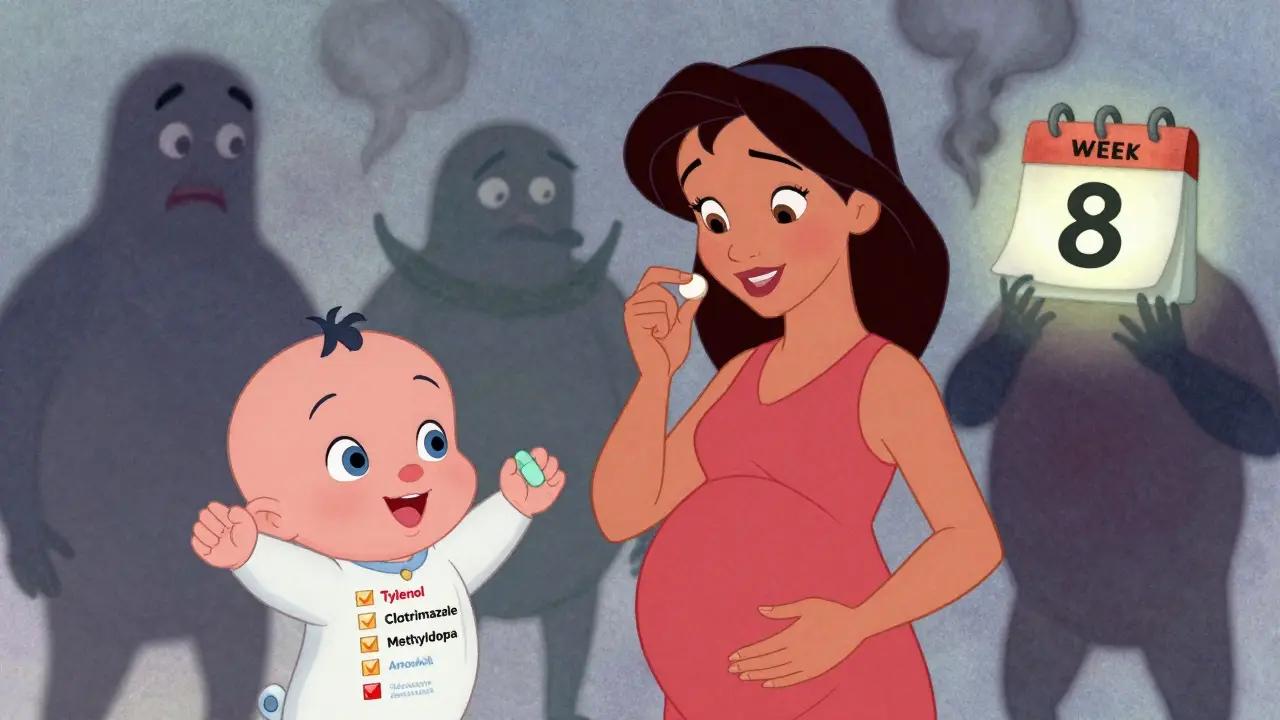
Timing Matters More Than You Think
It’s not just about what you take-it’s when you take it. The first trimester is the most critical for physical birth defects. But the third trimester is when functional damage happens-like brain development delays or lung underdevelopment. That’s why even “safe” drugs need careful timing. For example, fluconazole (a yeast infection pill) is low-risk in single, low doses-but repeated or high doses in the first trimester are linked to a rare pattern of birth defects. That’s why doctors now recommend topical treatments first. And here’s something many don’t realize: stopping a medication abruptly can be just as dangerous as continuing it. If you have epilepsy, asthma, or high blood pressure, suddenly quitting your meds can put you and your baby at greater risk than staying on a carefully monitored treatment plan. A 2021 study showed that uncontrolled seizures carry a 10-15% risk of fetal injury, while the teratogenic risk of most anti-seizure drugs is only 2-5%.What You Should Do Before and During Pregnancy
You don’t have to guess. There’s a clear path to safer medication use:- Plan ahead. If you’re thinking about getting pregnant, schedule a preconception visit with your doctor. Review every medication you take-even vitamins, herbs, and supplements. Many women don’t realize that some herbal teas or supplements can be harmful.
- Know your dates. Track your cycle. If you think you might be pregnant, stop taking any non-essential meds immediately and contact your provider. Don’t wait for your first prenatal appointment.
- Use reliable resources. The Organization of Teratology Information Specialists (OTIS) launched a free app called BabyMed in January 2024. It gives real-time, gestational-age-specific risk assessments for medications and has been validated with 94.7% accuracy compared to specialist consultations.
- Ask your provider the five key questions:
- Is this medication necessary?
- What’s the risk if I don’t take it?
- What’s the risk if I do take it?
- Is there a safer alternative?
- When is the safest time to take it during pregnancy?

New Advances in Pregnancy Drug Safety
The field is moving fast. In February 2024, a landmark study in the New England Journal of Medicine showed that changing how you take prednisone can cut birth defect risk by 73%. Taking a modified-release version at bedtime instead of in the morning reduced major malformations from 6.8% to just 1.8% in women with autoimmune diseases. The FDA is also updating its Pregnancy Exposure Registry system, scheduled for rollout in late 2024. It will use real-world data from electronic health records to spot new risks faster-potentially cutting detection time by 40%. This means safer drugs will be identified quicker, and dangerous ones will be flagged before they cause widespread harm.Final Thoughts: You’re Not Alone
It’s normal to feel overwhelmed. You’re trying to do the right thing, but the information is confusing, and the stakes feel incredibly high. The good news? Most women who take medications during pregnancy have healthy babies. Birth defects are rare, and medications account for only 2-3% of all cases. Even among women who take higher-risk drugs, many deliver without complications. The key is not fear-it’s awareness. Talk to your provider. Don’t assume something is safe just because it’s over the counter. Don’t stop a necessary medication without guidance. And if you’re unsure, reach out to a specialist. There are experts-like those at OTIS-ready to help you make informed choices. Your body is doing something extraordinary. You deserve to feel confident, not anxious, about every pill you take. With the right information and support, you can protect both your health and your baby’s.Can I take ibuprofen during pregnancy?
It’s safest to avoid ibuprofen and other NSAIDs after 20 weeks of pregnancy. They can cause serious issues like reduced amniotic fluid and premature closure of a fetal blood vessel. Before 20 weeks, occasional use is generally considered low-risk, but acetaminophen (Tylenol) is still the preferred pain reliever throughout pregnancy.
Is it safe to use topical acne treatments during pregnancy?
Topical benzoyl peroxide and azelaic acid are considered low-risk. Avoid topical retinoids like tretinoin or adapalene unless your doctor says it’s necessary. Even though these are applied to the skin, small amounts can enter your bloodstream, and the risk, while low, isn’t zero. Always check with your provider before using any new product.
What if I took a risky medication before I knew I was pregnant?
Don’t panic. Many women take medications before realizing they’re pregnant-and go on to have healthy babies. The risk depends on the drug, the dose, and the timing. Contact your doctor or a teratology specialist right away. They can assess your specific situation using tools like the BabyMed app or the OTIS database. Most exposures don’t lead to birth defects, and early monitoring can catch any potential issues.
Are herbal supplements safe during pregnancy?
No. Herbal supplements are not regulated like prescription drugs, and many contain active compounds that can harm fetal development. Examples include black cohosh, goldenseal, and high-dose vitamin A. Even “natural” doesn’t mean safe. Always tell your provider about every supplement you take.
Can I continue taking antidepressants if I’m pregnant?
Many women do. SSRIs like sertraline and citalopram are considered low-risk during pregnancy. The bigger danger is untreated depression, which can lead to poor nutrition, missed prenatal visits, preterm birth, and low birth weight. Never stop antidepressants abruptly. Work with your doctor to find the safest medication and dose for your stage of pregnancy.
Is it safe to get vaccinated during pregnancy?
Yes. Vaccines like the flu shot, Tdap, and COVID-19 boosters are not only safe but strongly recommended during pregnancy. They protect both you and your baby. Unlike medications, vaccines don’t contain live viruses that can cross the placenta. Instead, they help your body build antibodies that pass to your baby and offer protection after birth.
Madhav Malhotra
January 11, 2026 AT 12:09Love this breakdown! In India, so many women just pop painkillers without thinking-thanks for clarifying what’s actually safe. Acetaminophen FTW. Also, big ups for mentioning herbal teas; my mom drank chamomile ‘for calm’ and I nearly had a cousin born with a cleft palate. Scary stuff.
Jason Shriner
January 11, 2026 AT 16:34so like… if i took advil at 4 weeks and didn’t know i was preggo… am i a monster? or just a slightly irresponsible adult who thought ‘it’s just a headache’? 🤔
Sam Davies
January 13, 2026 AT 14:56How delightfully quaint that we still treat pregnancy like a medical minefield requiring a PhD in pharmacology just to take a Tylenol. The real tragedy? We’ve turned natural human biology into a liability audit. But hey, at least we’ve got apps now to guilt-trip us into compliance. BabyMed, indeed. Next up: a blockchain ledger of every prenatal aspirin.
Roshan Joy
January 14, 2026 AT 08:59This is such a helpful guide! 🙌 I’m planning to conceive next year and already started asking my doc about all my meds. Even my ‘natural’ turmeric supplement got flagged-turns out it can affect blood clotting. Who knew? Thanks for the BabyMed app tip too-I just downloaded it. So much better than scrolling through random Reddit threads 😅
Matthew Miller
January 15, 2026 AT 06:37Let’s be real-this post is just fearmongering dressed up as medicine. 4% birth defect risk from meds? That’s nothing compared to the 12% from obesity, 15% from smoking, and 20% from alcohol. Why aren’t we banning those? Oh right-because the FDA doesn’t care about your lifestyle choices, only your prescriptions. Hypocrites.
Adewumi Gbotemi
January 15, 2026 AT 09:26Man, this is good info. In Nigeria, people use everything-herbs, potions, even old wives’ tales. But this? Straight facts. No drama. Just: here’s what’s safe, here’s what’s not. I’m sharing this with my sister. She’s preggo now and taking something called ‘mama’s cure’-sounds like poison. Thanks.
Michael Patterson
January 16, 2026 AT 23:53Okay so I read this and I’m like… wait, so if I took ibuprofen once at 18 weeks and then stopped, am I gonna have a kid with no arms? I mean, I know I’m not perfect but come on. Also, why is everyone so obsessed with ‘safe alternatives’? Why not just say ‘if you’re preggo, stop being lazy and eat more kale’? Also, typo: ‘tretinoin’ is spelled wrong in paragraph 3. I know because I’m a pharmacist. And yes, I’ve seen more birth defects from stress than from meds. Just saying.
Vincent Clarizio
January 18, 2026 AT 15:16Let’s not pretend this is about safety-it’s about control. The medical-industrial complex profits from fear. Why not just tell women: ‘You’re not a vessel, you’re a person’? Instead, we get a 2,000-word essay on teratogens while ignoring systemic issues like lack of prenatal access, food deserts, and maternal mortality rates in rural America. You can’t fix birth defects with a pill list while ignoring the fact that 1 in 5 American women don’t see a doctor until the third trimester. This is performative medicine. It makes people feel safe while the real rot goes unaddressed.
Christian Basel
January 20, 2026 AT 06:03Teratogenicity is a spectrum, not a binary. The FDA’s categorization system is archaic. We need pharmacokinetic modeling, placental transport coefficients, and gestational-age-specific Cmax thresholds-not ‘avoid this, use that.’ Also, ‘safe’ alternatives like methyldopa? Half of my patients develop hemolytic anemia on it. Labetalol’s better, but QT prolongation risk increases after 32 weeks. So… what’s the real answer? There isn’t one. Just risk stratification and shared decision-making. But sure, here’s a bullet-point list. Classic.
Priya Patel
January 20, 2026 AT 18:55Thank you for this. I took Accutane before I knew I was pregnant and spent 3 months crying. When I found out, I thought I’d ruined everything. Turns out, my son is 4 now, healthy as a horse. But I still panic every time he sneezes. This post helped me breathe. ❤️
Jennifer Littler
January 22, 2026 AT 00:43Just wanted to add: the new FDA registry is a game-changer. My OB used it last month to check a drug I was on for anxiety-turns out, the risk was lower than we thought. Real-time data > outdated guidelines. Also, yes, vaccines are safe. Got my Tdap and flu shot at 28 weeks. Baby had zero issues. Don’t let fear silence science.