
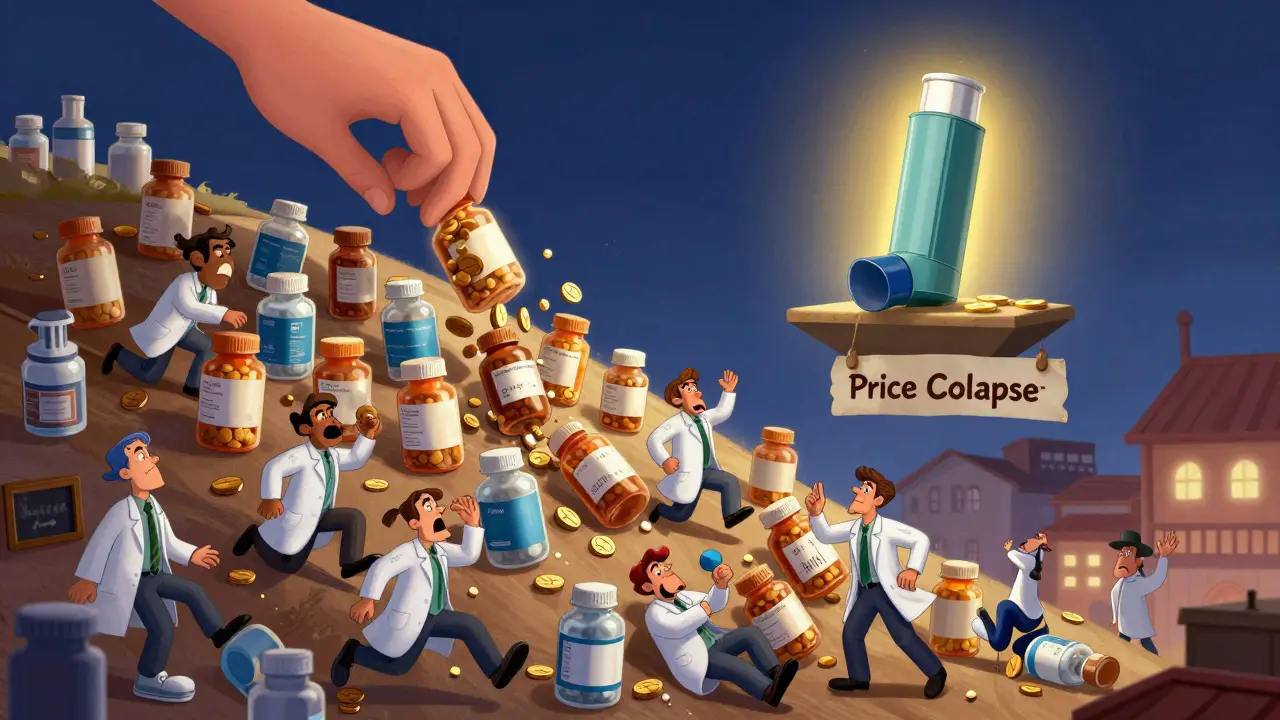
Generic drugs make up 90% of all prescriptions filled in the U.S., yet they account for just 10% of total drug spending. That’s not a typo. For every dollar spent on prescription medicine, nine cents go to generics. But behind those numbers is a broken system. Many generic manufacturers are losing money - not because they’re inefficient, but because the market has turned against them.
The Profitability Crisis in Generic Drugs
In 2025, Teva Pharmaceutical reported a loss of $174.6 million despite generating nearly $3.8 billion in revenue. That’s a negative profit margin of -4.6%. Meanwhile, Mylan (now part of Viatris) managed a slim 4.3% margin on $125.7 million in sales. These aren’t outliers. They’re symptoms of a deeper problem. The price of generic drugs has collapsed. Ten years ago, a simple generic pill might have carried a 50-60% gross margin. Today, it’s often below 30%. Why? Because when a brand-name drug loses patent protection, dozens of manufacturers rush in. Each one undercuts the other. The result? A race to the bottom. The FDA approved over 1,600 generic drugs in 2022 alone. Each one adds more pressure. The cost to get a generic drug approved? Around $2.6 million per application. Add in a $100+ million investment in FDA-compliant manufacturing facilities, and you’ve got a high-risk, low-reward business. For many, it’s not worth it. That’s why shortages of essential medicines - like antibiotics, chemotherapy agents, and insulin - are becoming more common. As Dr. Aaron Kesselheim from Harvard put it, “The relentless price competition has created a market failure.”Three Business Models Trying to Survive
Not all generic manufacturers are failing. Some are adapting. Three distinct business models are emerging:- Commodity generics: These are the old-school, low-margin products - simple pills like metformin or lisinopril. Hundreds of companies make them. Prices are set by auctions between distributors and pharmacy benefit managers (PBMs). Profit? Often less than 5%. Many companies are exiting this space.
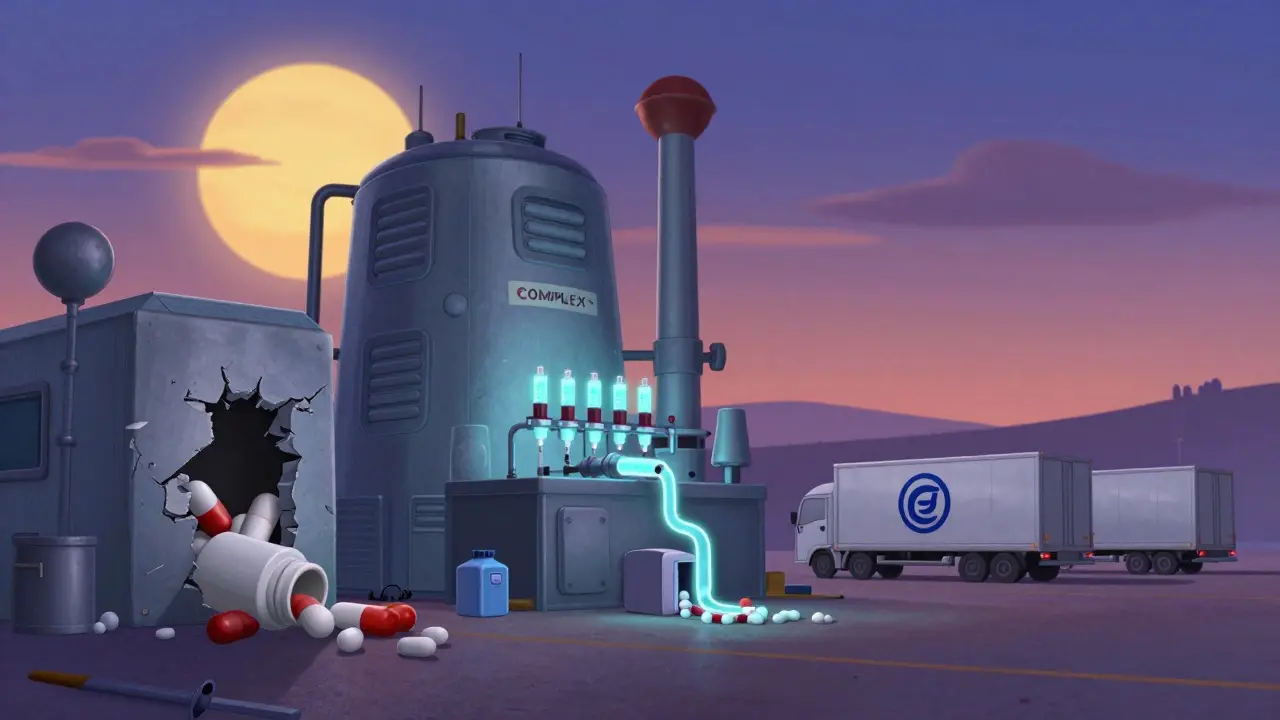
- Complex generics: These are harder to copy. Think inhalers, injectables, topical creams, or combination drugs. They require advanced formulation, specialized equipment, and deep regulatory knowledge. Fewer companies can make them. That means less competition - and better margins. Teva’s growth in 2024 came largely from drugs like Austedo XR and lenalidomide, both complex generics with limited competitors.
- Contract manufacturing (CMOs): Instead of selling their own brands, some manufacturers now produce drugs for others. This is the fastest-growing segment. The global contract manufacturing market for generics is expected to hit $91 billion by 2030, up from $56.5 billion in 2025. Companies like Egis Pharmaceuticals launched dedicated CMO divisions in 2023 to tap into this demand. It’s less risky. No marketing costs. No pricing wars. Just production.
Why Consolidation Isn’t the Answer
You’d think mergers would fix this. And in the short term, they did. Between 2014 and 2016, mergers in the generic space jumped from $1.86 billion to $44 billion. Teva bought Actavis. Mylan bought Merck’s generic division. Viatris was born from the merger of Mylan and Upjohn. But consolidation didn’t bring stability. It brought fewer players - and more pressure on the remaining ones. When only five companies make a drug, they still can’t raise prices. PBMs and insurers still demand the lowest bid. The savings go to patients and insurers, not manufacturers. Even worse, big mergers often mean layoffs, plant closures, and supply chain disruptions. When Viatris sold its biosimilars unit to Biocon and its OTC arm to another company, it streamlined operations - but also reduced its ability to diversify. The strategy worked for balance sheets, but not for resilience.The Global Divide: Who’s Winning?
Profitability isn’t the same everywhere. In the U.S., the PBM system is the main villain. PBMs negotiate rebates from manufacturers based on list prices. But they don’t pass those savings to patients. Instead, they keep a cut. Manufacturers get squeezed between lower wholesale prices and higher rebate demands. In Europe, pricing is more regulated. Governments set prices based on therapeutic value, not just cost. That means margins are higher - but growth is slower. In India and China, manufacturers benefit from lower labor and raw material costs. They’re becoming the world’s suppliers. But they face their own risks: currency swings, export restrictions, and environmental regulations. The real opportunity? Emerging markets. Countries like Brazil, Indonesia, and Nigeria are expanding access to generics. But building a presence there takes time, local partnerships, and patience. It’s not a quick fix.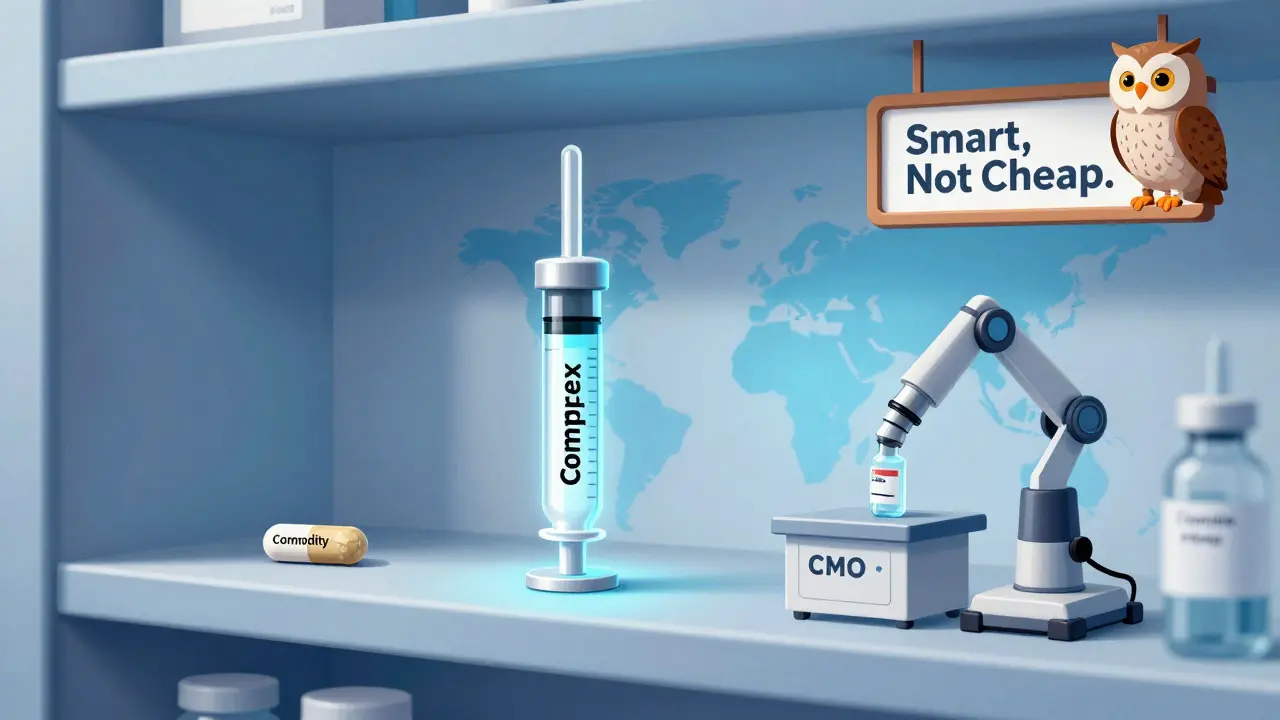
The Path to Sustainability
So how do generic manufacturers survive? It’s not about cutting costs anymore. It’s about changing what you sell.- Move away from commodity generics. If you’re still betting on 10-cent pills, you’re betting on a dying business.
- Invest in complex generics. That means hiring formulation scientists, upgrading labs, and building expertise in delivery systems - not just filling capsules.
- Consider contract manufacturing. If you have the facilities, why not rent them out? It’s steady income with less regulatory risk.
- Focus on niche markets. Drugs for rare diseases, pediatric formulations, or needle-free delivery systems have fewer competitors and higher margins.
What’s Next for Generic Drugs?
By 2033, the global generic drug market is projected to hit $600 billion. Why? Because dozens of blockbuster brand drugs are losing patents between now and then. Drugs like Humira, Eliquis, and Keytruda will go generic. That’s a $100+ billion opportunity. But only companies with the right model will capture it. Those still stuck in commodity production will get crushed. Those investing in complex formulations, supply chain control, and contract services will thrive. The public needs affordable drugs. That’s not going away. But the manufacturers who survive won’t be the cheapest. They’ll be the smartest.Why are generic drug prices so low?
Generic drug prices are low because once a brand-name drug’s patent expires, dozens of manufacturers enter the market. Each competes by lowering prices, often below production costs. Pharmacy benefit managers (PBMs) drive this further by demanding the lowest possible bids, leaving manufacturers with little room for profit.
Can generic manufacturers still make money?
Yes - but only if they avoid commodity generics. Companies focusing on complex generics like injectables, inhalers, or combination drugs are seeing better margins. Contract manufacturing for other brands is also a growing, profitable path. Profitability now depends on technical expertise, not volume.
What’s the difference between commodity and complex generics?
Commodity generics are simple, easy-to-copy pills like metformin or atorvastatin. Thousands of manufacturers make them. Complex generics involve advanced delivery systems - think nasal sprays, patches, or sterile injectables. They require specialized equipment, deep regulatory knowledge, and longer development times. Fewer companies can make them, so competition is lower and margins are higher.
Why are drug shortages happening with generics?
Manufacturers stop making drugs when they can’t profit from them. If a generic antibiotic sells for $10 a bottle but costs $12 to produce - including compliance, labor, and raw materials - companies shut down production. This leads to shortages of essential medicines, even when demand is high.
Is contract manufacturing a good option for generic companies?
Yes. Contract manufacturing avoids the risks of branding, marketing, and pricing wars. Companies with FDA-approved facilities can earn steady revenue by producing drugs for others - including big pharma and startups. The global contract manufacturing market is expected to grow to $91 billion by 2030, making it one of the most reliable segments in generics.
What role do PBMs play in generic drug profitability?
Pharmacy benefit managers (PBMs) negotiate rebates from generic manufacturers based on list prices, but rarely pass savings to patients. They often favor drugs with the highest rebates, not the lowest cost. This creates perverse incentives: manufacturers may raise list prices just to offer bigger rebates, while still making little profit after discounts and fees.
Will patent expirations in 2025-2033 help generic manufacturers?
It could - but only for those ready to compete. Drugs like Humira and Keytruda will go generic, creating a $100+ billion opportunity. But if manufacturers still rely on old models, they’ll be outbid. Success will go to those with the ability to quickly produce complex generics, manage supply chains, and meet regulatory demands at scale.
Winni Victor
December 24, 2025 AT 23:02So let me get this straight - we’re paying $10 for a pill that costs 12 cents to make, and the company making it is LOSING money? 😂 The system isn’t broken. It’s a fucking joke. PBMs are the real villains here, siphoning off cash like greedy leeches while manufacturers starve. And don’t even get me started on how they jack up list prices just to give bigger rebates. It’s like a casino where the house always wins - except the house is a middleman who never touches the damn drug.
Bailey Adkison
December 25, 2025 AT 04:43The problem is simple. Market forces have failed because regulators refused to intervene. Price controls aren’t socialism - they’re common sense. When a life-saving drug becomes unprofitable because of predatory bidding, it’s not capitalism - it’s market collapse. The FDA approves 1600 generics a year but does nothing to prevent the race to zero. That’s regulatory negligence disguised as free-market ideology.
Katherine Blumhardt
December 27, 2025 AT 04:29im so tired of this whole thing like why cant we just fix it?? like i get it drugs are expensive but also like why do we let companies go bankrupt just to make metformin?? its not even cool its just like… basic??
Gary Hartung
December 28, 2025 AT 20:54Oh, please. Let’s not pretend this is about “access to medicine.” It’s about the death of American manufacturing. We used to make things here. Now we outsource everything - from pills to microchips - and then cry when the supply chain snaps. Meanwhile, Indian and Chinese firms are quietly building empires on our broken system. The U.S. government could fix this overnight - if it had the spine to stop coddling PBMs and start protecting producers.
Ben Harris
December 30, 2025 AT 16:57Contract manufacturing is the only way forward. Why risk your soul building a brand when you can just produce for someone else and get paid? It’s the corporate equivalent of renting out your basement - low stress, steady cash, no marketing nightmares. The real losers are the ones still clinging to commodity generics like it’s 2008. That’s not business - that’s masochism
Justin James
December 31, 2025 AT 05:30Think about this - what if the entire generic drug system is a controlled demolition? Big Pharma quietly funds the price wars to drive out smaller players so they can buy up the remaining manufacturers and then rebrand their own generics as “proprietary” under new names. Look at the mergers - Teva, Viatris, Mylan - all bought up by the same handful of investors. Meanwhile, the FDA approves thousands of generics but never audits the real ownership chains. Coincidence? Or is this a silent takeover disguised as competition?
Rick Kimberly
December 31, 2025 AT 15:43The data presented here is compelling and aligns with recent studies from the Journal of Health Economics. The structural incentives within the PBM system create negative externalities that are not accounted for in traditional market models. A regulatory intervention that caps rebate percentages or mandates pass-through pricing to patients could restore equilibrium. Additionally, tiered pricing models based on therapeutic necessity - similar to those used in the UK - may offer a more sustainable path forward without sacrificing access.
Terry Free
December 31, 2025 AT 17:03Oh wow, complex generics? So now we’re glorifying injection pens and nasal sprays like they’re rocket science? Newsflash: if you can’t make a $0.10 pill profitable, maybe you’re just bad at business. The real problem? Pharma execs spent too much time on yacht parties and not enough on supply chain efficiency. Blame the system? Sure. But don’t pretend you’re a hero for switching to inhalers. You’re just chasing less competition - not solving anything.
Lindsay Hensel
January 2, 2026 AT 12:29There’s dignity in making essential medicine accessible. But dignity doesn’t pay rent. The real tragedy isn’t the lost profits - it’s the patients who go without because the system prioritized auctions over access. We need policy that values human life over quarterly earnings. This isn’t just economics. It’s ethics.
Sophie Stallkind
January 2, 2026 AT 17:22While the structural challenges facing generic manufacturers are well-documented, it is imperative to recognize the role of international supply chain resilience. The concentration of active pharmaceutical ingredient production in specific geographic regions introduces systemic risk. Diversification, coupled with strategic public-private partnerships, may offer a viable pathway toward sustainable production without compromising affordability.
Michael Dillon
January 4, 2026 AT 09:18Everyone’s acting like this is a new problem. Nah. It’s been happening since the 2000s. The only reason we’re talking about it now is because insulin shortages are killing people. We knew this was coming. We ignored it. Now we’re surprised? Wake up. The fix isn’t fancy R&D - it’s forcing PBMs to disclose their rebates and banning secret contracts. Simple. Legal. Necessary.
Jason Jasper
January 5, 2026 AT 18:25I’ve worked in a generic plant. The machines run 24/7. The workers are exhausted. The margins are razor-thin. We made 50 million pills a month of metformin. Got paid $0.02 per pill after overhead. No one talks about the people who make this happen. They’re not in boardrooms. They’re on the floor. And they’re not getting a cut of the $91 billion CMO market.
Mussin Machhour
January 7, 2026 AT 05:50Look, if you’re still making simple pills, you’re behind. Time to upgrade. Complex generics? CMO? Niche markets? That’s where the future is. I’ve seen companies turn around in 18 months just by shifting focus. It’s not magic - it’s strategy. Stop fighting the tide. Ride it.
Carlos Narvaez
January 9, 2026 AT 00:05Contract manufacturing is the only sane option. Why risk your company on pricing wars when you can just be the silent engine behind the brand? Smart. Simple. Sustainable.