
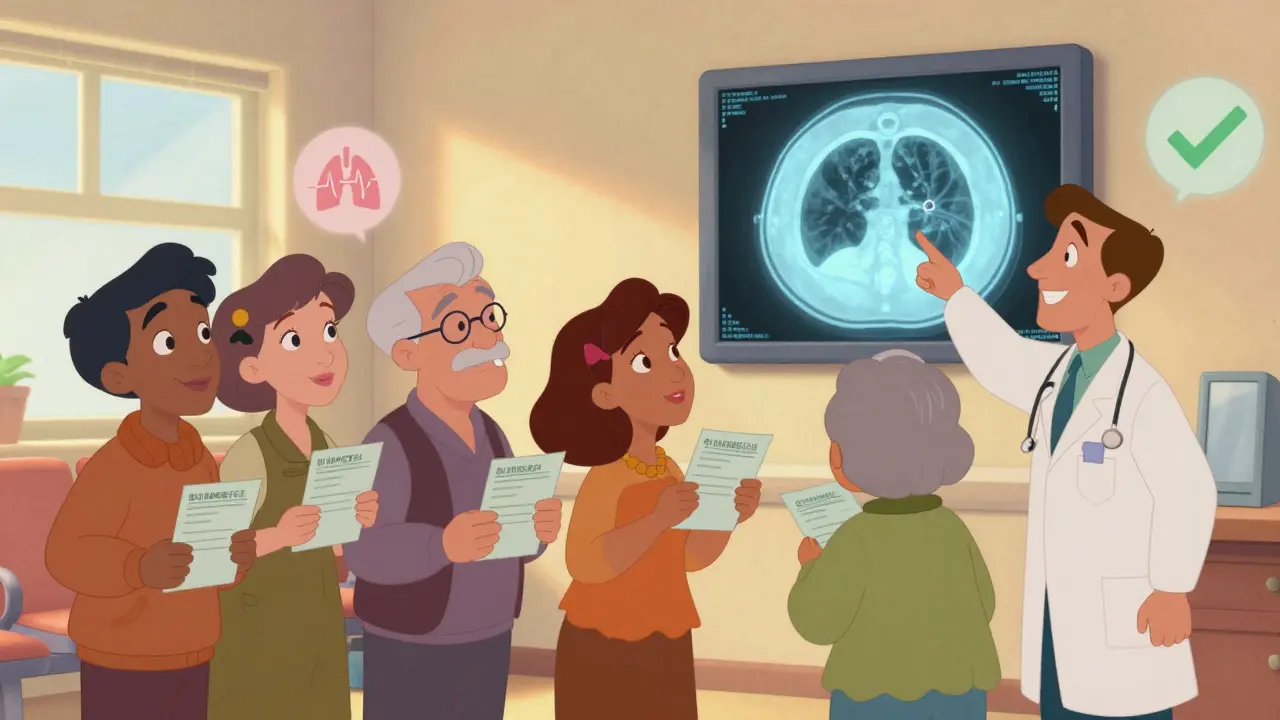
Every year, more people die from lung cancer than from breast, colon, and prostate cancer combined. And yet, most of those deaths are preventable-if we catch it early. For smokers and former smokers, the window to act is narrow, but it’s not closed. Lung cancer screening isn’t just a test-it’s a lifeline. And with new targeted therapies changing the game, catching it early now means not just surviving, but living longer with far better quality of life.
Who Should Be Screened? The Rules Have Changed
If you’re a smoker or used to smoke, you might think you’re off the hook after quitting. That’s a dangerous myth. The American Cancer Society updated its guidelines in March 2023 to reflect a simple truth: the risk doesn’t vanish after 15 years. It lingers. For decades, screening was limited to people who quit within the past 15 years. Now, if you’re 50 to 80 years old and have smoked at least 20 pack-years, you qualify-no matter when you quit. A pack-year is easy to calculate: one pack a day for 20 years, two packs a day for 10 years, or half a pack a day for 40 years. That’s it. The USPSTF and Medicare still use the old 15-year quit limit, but the ACS guidelines are more realistic. A 2022 JAMA Oncology study found that former smokers 15 to 30 years after quitting still had 2.5 times the risk of lung cancer compared to people who never smoked. Ignoring that puts lives at risk.How Screening Works: The Low-Dose CT Scan
The only proven way to catch lung cancer early is with a low-dose CT scan, or LDCT. It’s not a regular chest X-ray. It’s a fast, painless scan that uses 70-80% less radiation than a standard CT. You lie on a table, breathe in, hold it for a few seconds, and it’s over. No needles. No fasting. No prep. The scan finds tiny nodules-small spots on the lungs-that might be cancer. Most are harmless. But catching the dangerous ones early makes all the difference. If caught at stage I, the five-year survival rate jumps to 59%. If it’s found late, after spreading, that number drops to 6%. That’s not a slight improvement. That’s life or death. But here’s the catch: only 23% of lung cancers are found early. Why? Because only about 18% of eligible people get screened. Most don’t know they qualify. Many doctors don’t bring it up. And even when they do, patients often say no-fear, confusion, or the belief that it’s too late.Why So Few People Get Screened
The gap between who should be screened and who actually is is massive. In the U.S., 14.5 million people qualify under the latest guidelines. But in 2021, only 2.6 million got screened. That’s less than one in five. The reasons are systemic. First, many primary care doctors still don’t know the updated rules. A 2022 AMA survey found 42% of them were unaware of the 2021 USPSTF changes. Second, access is uneven. Rural areas have 67% fewer screening centers per person than cities. Third, insurance confusion. Medicare covers screening for people 50-77 with 20 pack-years. But some private insurers still require 30 pack-years and only cover people 55-80. That’s outdated. It leaves people out. And then there’s the false alarm problem. The National Lung Screening Trial showed that 96.4% of positive LDCT results turned out to be false positives. That means nearly every person who gets a positive result has to go through more scans, biopsies, and anxiety-all for something that wasn’t cancer. That’s why AI tools are now being rolled out. In 2023, the FDA approved LungQ by Riverain Technologies, an AI software that helps radiologists spot real tumors and ignore harmless shadows. Early results show it cuts unnecessary follow-ups by 22%.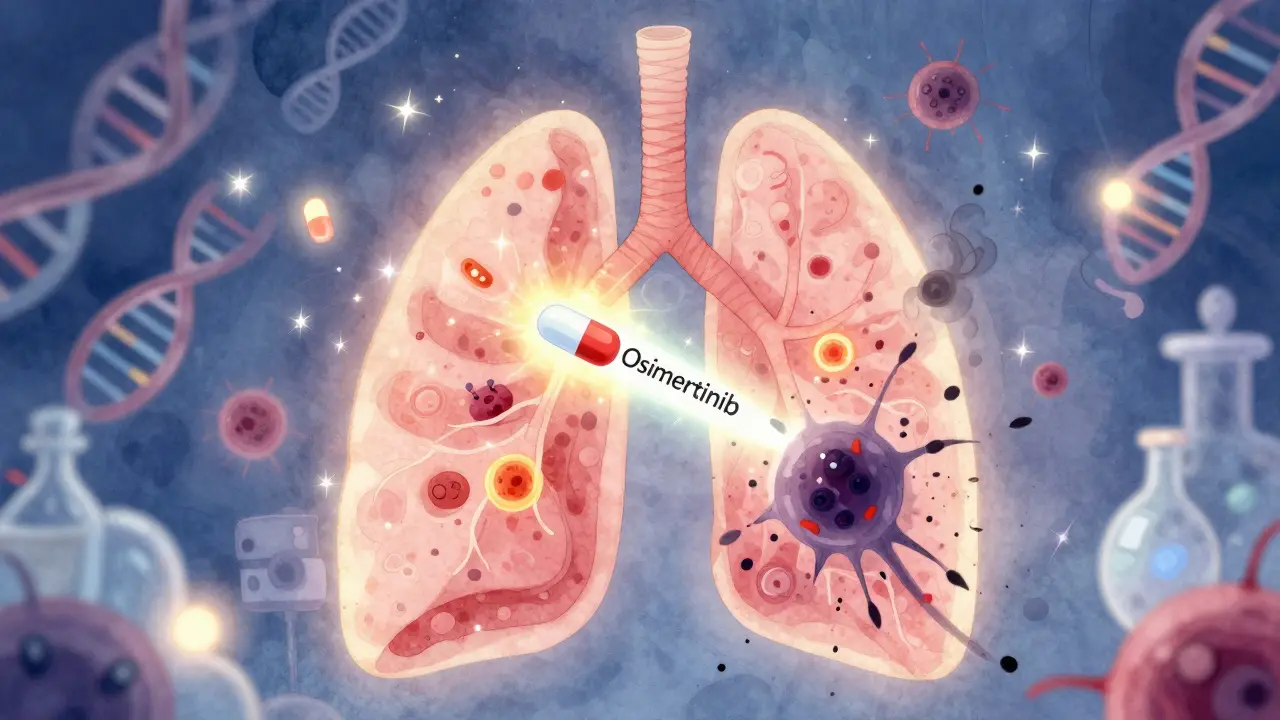
Targeted Therapy: Turning Early Detection Into Long-Term Survival
Screening finds cancer. But what happens next? That’s where things have changed dramatically. In the past, early-stage lung cancer meant surgery, then maybe chemo. Now, if your tumor has certain genetic mutations, you can take a pill that stops the cancer from growing. The drug osimertinib, approved in 2020 for early-stage non-small cell lung cancer with EGFR mutations, is a game-changer. The ADAURA trial, published in the New England Journal of Medicine in 2021, showed that patients who took osimertinib after surgery had an 83% reduction in cancer recurrence. That’s not just survival. That’s living cancer-free for years. The International Association for the Study of Lung Cancer predicts that by 2025, 70% of early-stage lung cancers found through screening will have these targetable mutations. But here’s the kicker: only 30% of late-stage tumors do. That’s why screening isn’t just about catching cancer-it’s about catching the right kind of cancer. The kind that can be stopped with precision medicine.What’s Next: Blood Tests and Personalized Risk
The future of lung cancer screening isn’t just about who gets scanned-it’s about who needs it most. Right now, smoking history is the only filter. But that’s changing. The National Cancer Institute is launching the PACIFIC trial in 2024, which will test whether adding genetic risk scores and environmental exposures can better identify who’s at highest risk. Even more promising: liquid biopsies. These are blood tests that look for tumor DNA floating in the bloodstream. They’re not ready for prime time yet, but trials like NCT04541082 and NCT04924022 are showing they can detect cancer signals before a tumor shows up on a CT scan. Imagine getting a blood test at your annual check-up that says, “Your lungs are showing early signs of trouble.” That could mean screening starts even earlier, for people who haven’t even been flagged as high-risk yet.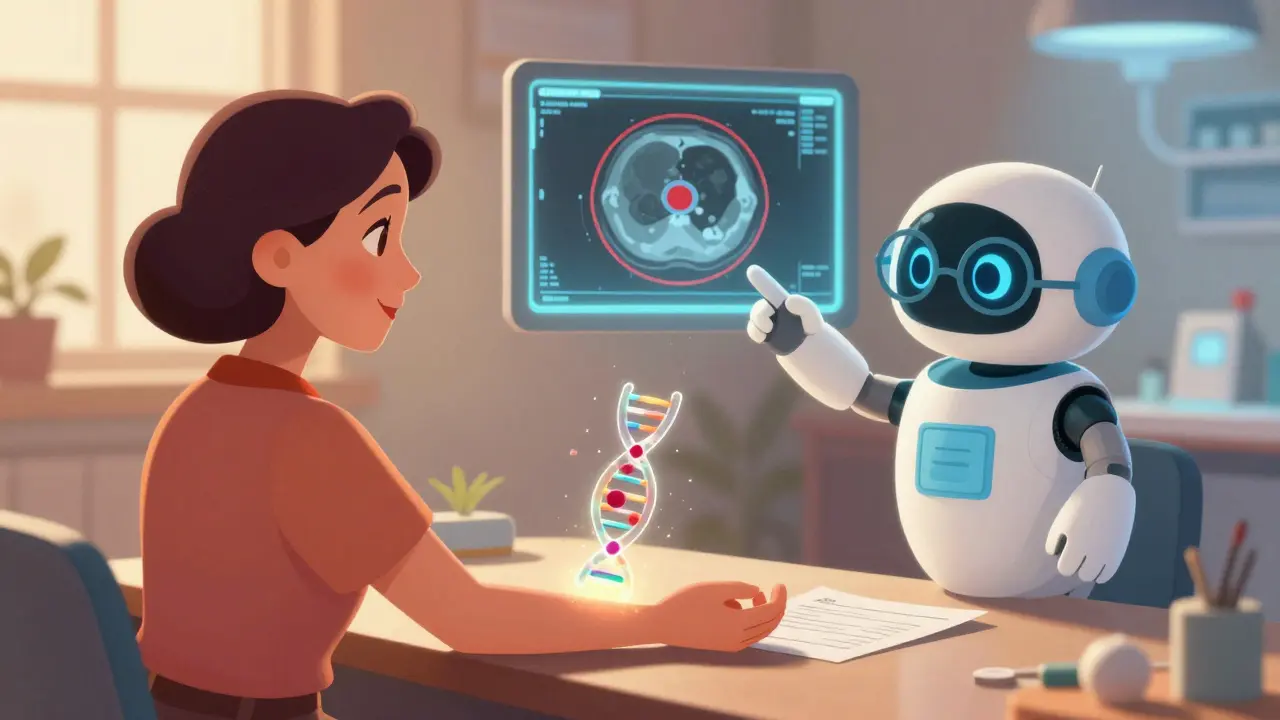
What You Need to Do Now
If you’re a current or former smoker between 50 and 80 with 20+ pack-years, here’s your action plan:- Ask your doctor if you qualify for screening-even if you quit 20 years ago.
- Request a shared decision-making visit. This isn’t just a formality. It’s a 15-minute conversation where you and your doctor weigh the benefits and risks of screening.
- Make sure the scan is done at an ACR-accredited facility. These centers follow strict quality standards.
- Ask about smoking cessation support. Most people who get screened still smoke. And 70% want to quit-but only 30% get help. Don’t be one of them.
- If you’re told you have a nodule, don’t panic. Most aren’t cancer. But follow up. Get the next scan. Stay in the system.
Why This Matters More Than Ever
Lung cancer isn’t a death sentence anymore-not if you catch it early and get the right treatment. The tools are here. The science is solid. The guidelines are updated. The only thing missing is action. The American Cancer Society says expanding screening could prevent 6,600 deaths a year. That’s more than the population of a small city. But without more people getting screened and more doctors pushing it, that number stays theoretical. And if you’re reading this because you or someone you love smoked, don’t wait. Don’t assume it’s too late. Don’t think you’re not at risk because you quit. You are. And now, more than ever, there’s a real chance to change the outcome.Who qualifies for lung cancer screening?
Anyone aged 50 to 80 with a 20+ pack-year smoking history who currently smokes or has quit at any point in the past qualifies under the latest American Cancer Society guidelines. A pack-year means smoking one pack a day for a year-so 20 pack-years could be one pack daily for 20 years, two packs a day for 10 years, or half a pack a day for 40 years. The USPSTF and Medicare still require quitting within the past 15 years, but the ACS removed that limit because risk remains high for decades after quitting.
Is a low-dose CT scan safe?
Yes. A low-dose CT scan uses 70-80% less radiation than a standard CT scan-about the same as a mammogram. The benefits of early detection far outweigh the small radiation risk. The scan is quick, painless, and doesn’t require any special preparation. It’s not a substitute for quitting smoking, but it’s the best tool we have to catch lung cancer before it spreads.
What if the scan finds a nodule?
Most nodules are not cancer. In fact, over 96% of positive scans turn out to be false alarms. But if a nodule is found, you’ll need follow-up scans-usually at 3, 6, or 12 months-to see if it grows. If it does, your doctor may recommend a biopsy. Don’t panic. Growth is the key sign. A stable nodule is rarely dangerous. AI tools like LungQ are now helping radiologists reduce false positives by 22%.
Can targeted therapy cure early-stage lung cancer?
It doesn’t always cure it, but it dramatically reduces the chance of it coming back. For patients with EGFR-mutated early-stage non-small cell lung cancer, the drug osimertinib, taken after surgery, reduces recurrence by 83% over three years. That’s not a guarantee, but it’s the most effective treatment we’ve ever had for this group. It’s only effective if the cancer is caught early-before it spreads-and if the tumor has the right mutation. That’s why screening is so critical.
Does insurance cover lung cancer screening?
Medicare covers annual LDCT screening for people aged 50-77 with a 20+ pack-year history who currently smoke or quit within the past 15 years. Most private insurers follow Medicare’s rules, but some still use older guidelines requiring 30 pack-years or only covering people 55-80. Always check with your insurer. The Affordable Care Act requires coverage for services with a USPSTF ‘B’ grade recommendation-which LDCT screening has. If you’re denied, ask for a formal appeal.
What if I’m not a smoker but have a family history of lung cancer?
Current guidelines are based on smoking history, not family history. But research is changing that. The upcoming PACIFIC trial is testing whether genetic risk scores and environmental exposures can help identify non-smokers who need screening. For now, if you’ve never smoked but have a strong family history, talk to your doctor. You may qualify for genetic counseling or other monitoring, but you don’t yet meet standard screening criteria.
Donna Packard
December 18, 2025 AT 10:21I never thought I’d live to see this day. My dad quit smoking 22 years ago, and we just found out last year he had stage I lung cancer-caught by a scan he almost skipped. He’s now on osimertinib and feels better than he has in decades. This isn’t just medical advice-it’s family survival. Thank you for laying it out so clearly.
Don’t let fear stop you. The scan takes less time than your morning coffee. And if you’ve smoked even a little, you’re still at risk. It’s not about guilt. It’s about giving yourself a real shot at tomorrow.
Patrick A. Ck. Trip
December 18, 2025 AT 17:42As a primary care physician who just learned about the updated ACS guidelines last month, I’m ashamed I didn’t know this sooner. I’ve been telling patients to get screened only if they quit within 15 years-turns out I’ve been missing dozens of high-risk individuals.
Just updated my EHR prompts. If you’re 50+ and have 20+ pack-years, I’m now flagging you for a referral. No more assumptions. No more outdated rules. Thanks for the wake-up call. I’ll be sharing this with my whole clinic.
Sam Clark
December 19, 2025 AT 19:47One of the most important public health messages I’ve read in years. The gap between guideline and practice is staggering. I’ve seen too many patients dismissed because they ‘quit a while ago.’
The data is clear: risk persists. The tools exist. The cost of inaction isn’t just financial-it’s human. I’ve already scheduled my mother’s LDCT. She quit 18 years ago. She deserves this chance. So do you.
Jessica Salgado
December 21, 2025 AT 13:21Okay, I’m crying. I’m not even a smoker, but my aunt died of lung cancer at 56-she quit 25 years ago. She never got screened because her doctor said she was ‘off the hook.’
That’s not just a mistake. That’s a tragedy. And now I’m texting every single person I know who smoked-even one pack a week for five years-to ask if they’ve been screened. This isn’t about fear. It’s about love. Don’t wait until it’s too late. Please.
Also-AI tools like LungQ? That’s the future. I want that tech everywhere. 🙏
Chris Van Horn
December 23, 2025 AT 05:22Oh please. Another ‘screening saves lives’ PSA. Let’s be real-96% false positives? That’s a racket. You’re flooding the system with anxiety, biopsies, and bills for people who are perfectly fine. And now they want to screen non-smokers with blood tests? Next thing you know, we’ll be testing toddlers for lung cancer because their grandma smoked in the ‘70s.
Also, osimertinib costs $15,000 a month. Who’s paying? You? I’m not falling for this corporate-backed fear campaign. Wake up.
PS: Typo in ‘lifeline’-it’s ‘life-line.’ Fix it.
Virginia Seitz
December 23, 2025 AT 08:47My uncle got screened last year. Nodule. Scared. Then they said it was nothing. He’s still here. 😊
Screening = peace of mind. No big deal. Just go.
Also, quit smoking. 💪❤️
amanda s
December 24, 2025 AT 08:36Why are we letting people who smoked get screened but not the poor people in the inner cities who breathe polluted air? This is elitist. You’re ignoring environmental causes. Why isn’t the government screening factory workers, bus drivers, people living near highways? This is just another way to blame the victim.
And don’t even get me started on the cost. My cousin got a false positive and had to pay $4,000 out of pocket. That’s not healthcare-that’s exploitation.
Screening for smokers? Fine. But don’t pretend this is justice.
Peter Ronai
December 25, 2025 AT 19:08Let’s cut through the noise. The entire screening push is based on a flawed premise: that early detection = survival. But survival statistics are manipulated. You’re counting people who live five years after diagnosis-even if they’d have lived six anyway. That’s not a cure. That’s statistical theater.
And osimertinib? It only works for 15% of lung cancer patients. The rest? Still dead. This isn’t progress-it’s distraction. We’re spending billions on targeted drugs while ignoring air quality, asbestos, radon, and the fact that 30% of lung cancer patients never smoked.
Wake up. This is industry-funded wishful thinking.
Steven Lavoie
December 26, 2025 AT 05:38Chris and Peter-your comments are toxic and misleading. The data on LDCT screening is robust, replicated across multiple countries, and endorsed by the WHO, CDC, and European Respiratory Society. False positives are a challenge, yes-but AI is reducing them, and follow-up protocols are standardized.
Targeted therapies like osimertinib aren’t just expensive-they’re revolutionary. The ADAURA trial wasn’t sponsored by Big Pharma alone; it was a global academic collaboration. The 83% reduction in recurrence is real. It’s published. It’s life-changing.
And yes, access is unequal. That’s why we need policy change, not cynicism. Blaming the tool because the system is broken is like refusing to use a fire extinguisher because the building has no sprinklers.
Let’s focus on fixing the system-not dismissing the solution.