
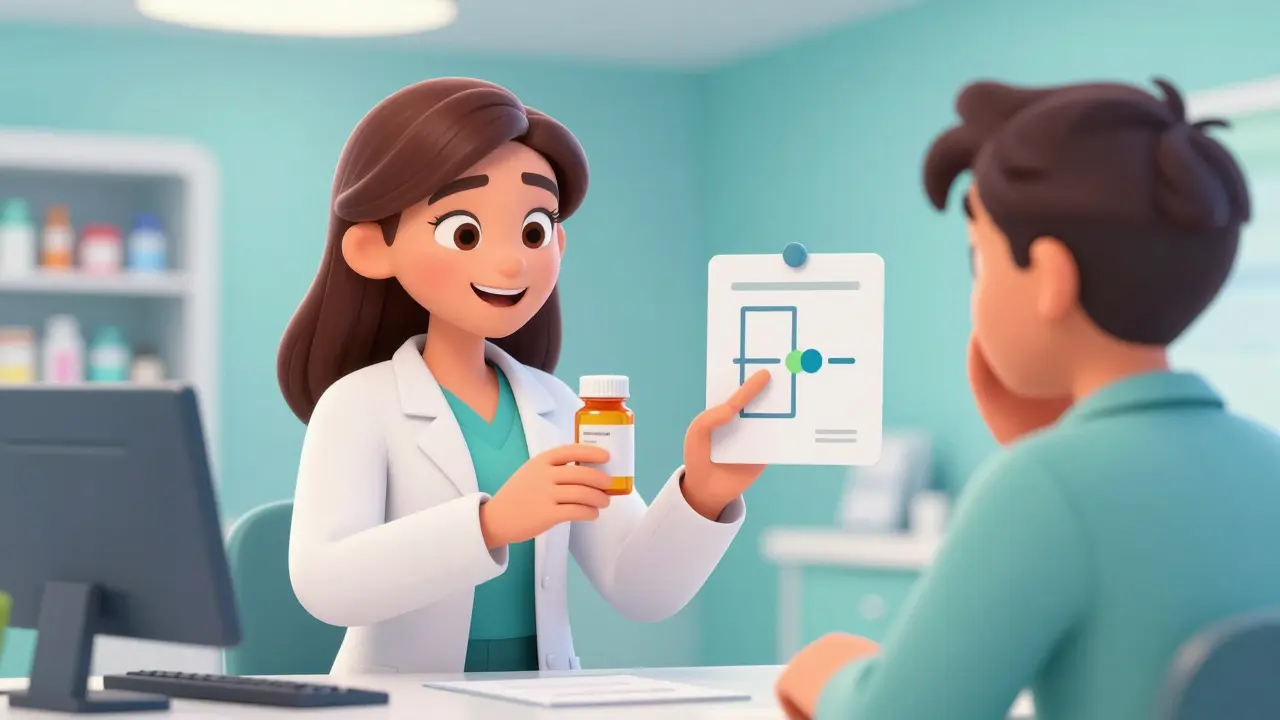
Prescription drug costs are climbing, and employers are feeling the pinch. For years, companies tried to control these expenses by simply telling employees to "buy generics." It didn't work well. People stuck with expensive brand-name drugs because they were worried about safety or efficacy. That is where the pharmacist is a licensed healthcare professional who dispenses prescription medications and provides clinical advice on their safe use comes in. By integrating pharmacists directly into workplace wellness programs, organizations are seeing a shift. These experts don't just hand over pills; they build trust. They explain why a generic version of a drug works just as well as the brand name, leading to better adherence and significant savings.
The Cost of Non-Adherence and the Generic Solution
Let's look at the numbers first. The Centers for Disease Control and Prevention (CDC) estimates that poor medication adherence leads to nearly 125,000 deaths annually in the U.S. It also costs the healthcare system up to $300 billion each year. Why do people skip doses or stop taking meds? Often, it’s money. When a patient faces a high copay for a brand-name drug, they might split pills or go without entirely. This is where generic medications are drugs that contain the same active ingredients as brand-name drugs but are sold under a different name at a lower cost become critical. Generics typically cost 80% to 85% less than their brand-name counterparts. However, getting patients to switch requires more than just a price tag; it requires education.
Pharmacists bridge this gap. They have direct access to patients and the clinical knowledge to reassure them. According to recent data, 92.5% of community pharmacists agree that generics improve medication access. But agreement isn't enough. Pharmacists actively counsel patients, explaining that a generic contains the exact same active ingredient as the brand. For example, ibuprofen is the active ingredient in Advil. If you buy store-brand ibuprofen, you get the same pain relief for a fraction of the price. Pharmacists make this connection clear during consultations, removing the fear factor that often keeps employees tied to expensive brands.
Medication Therapy Management: The Pharmacist's Core Tool
The primary mechanism pharmacists use in these programs is Medication Therapy Management is a service provided by pharmacists to optimize therapeutic outcomes for individual patients through assessment and management of their medication regimens, or MTM. This is not a quick chat at the counter. It is a comprehensive review of every medication a patient takes. During an MTM session, a pharmacist looks for interactions, redundancies, and opportunities for cost-saving substitutions.
In a workplace setting, this service is transformative. Employees dealing with chronic conditions like hypertension or diabetes benefit most. These conditions require long-term treatment, so even small monthly savings add up. A pharmacist reviewing a patient's profile might notice they are paying full price for a brand-name statin when a therapeutically equivalent generic is available. They then collaborate with the prescribing physician to switch the patient. Studies show that Pharmacy Benefit Managers (PBMs) incorporating pharmacist-led MTM see 15-20% higher medication adherence rates compared to programs without such involvement. This isn't just about saving money; it's about keeping employees healthy and productive.
Understanding Therapeutic Equivalence and Bioequivalence
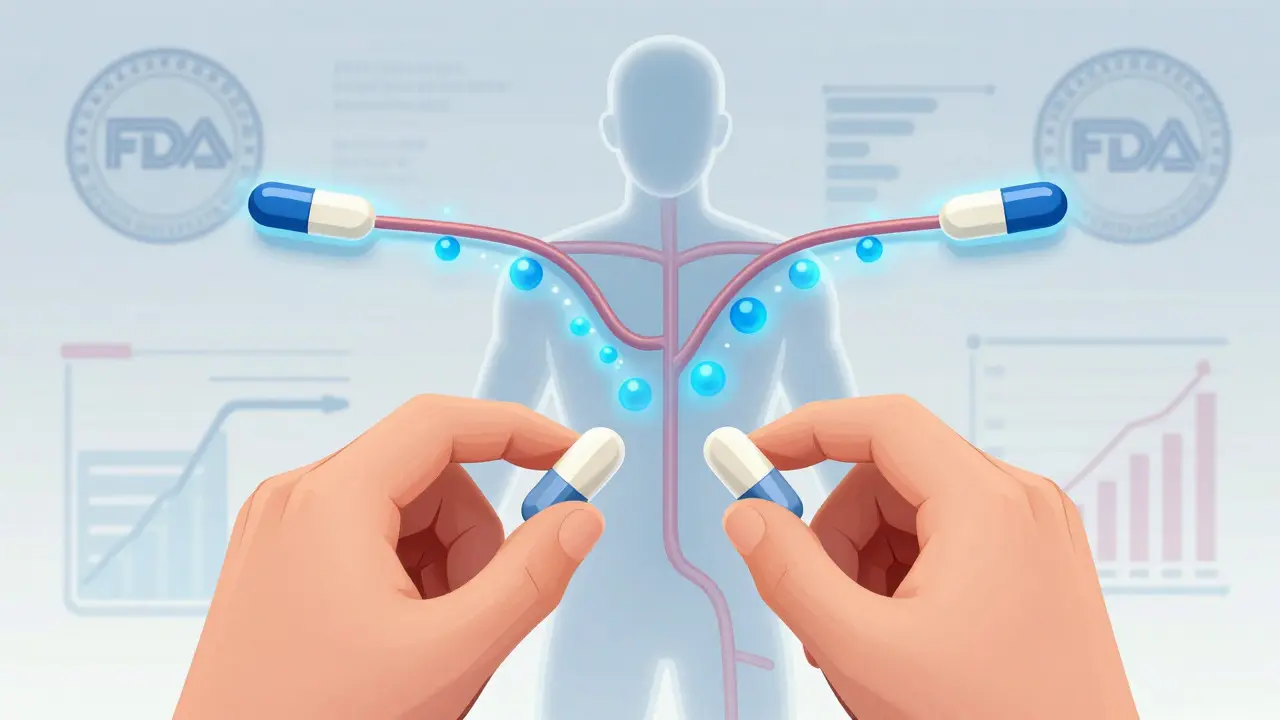
To promote generics effectively, pharmacists rely on scientific standards. You might wonder if a cheaper drug can really be the same. The answer lies in the approval process established by the Drug Price Competition and Patent Term Restoration Act of 1984, known as the Hatch-Waxman Amendments. This law created the Abbreviated New Drug Application (ANDA) pathway. To get approved, a generic drug must demonstrate bioequivalence to the brand-name drug.
Bioequivalence means the generic drug delivers the same amount of active ingredient into a patient's bloodstream in the same amount of time as the brand-name drug. The FDA typically requires that the generic's absorption rate falls within 80-125% of the brand's rate. Pharmacists use resources like the Orange Book to verify this therapeutic equivalence. When a patient asks, "Is this generic as strong?" the pharmacist can confidently point to these rigorous FDA standards. They explain that quality, strength, purity, and stability requirements are identical for both generic and brand-name products. This factual backing empowers pharmacists to overcome patient skepticism.
Employer Strategies and PBM Partnerships
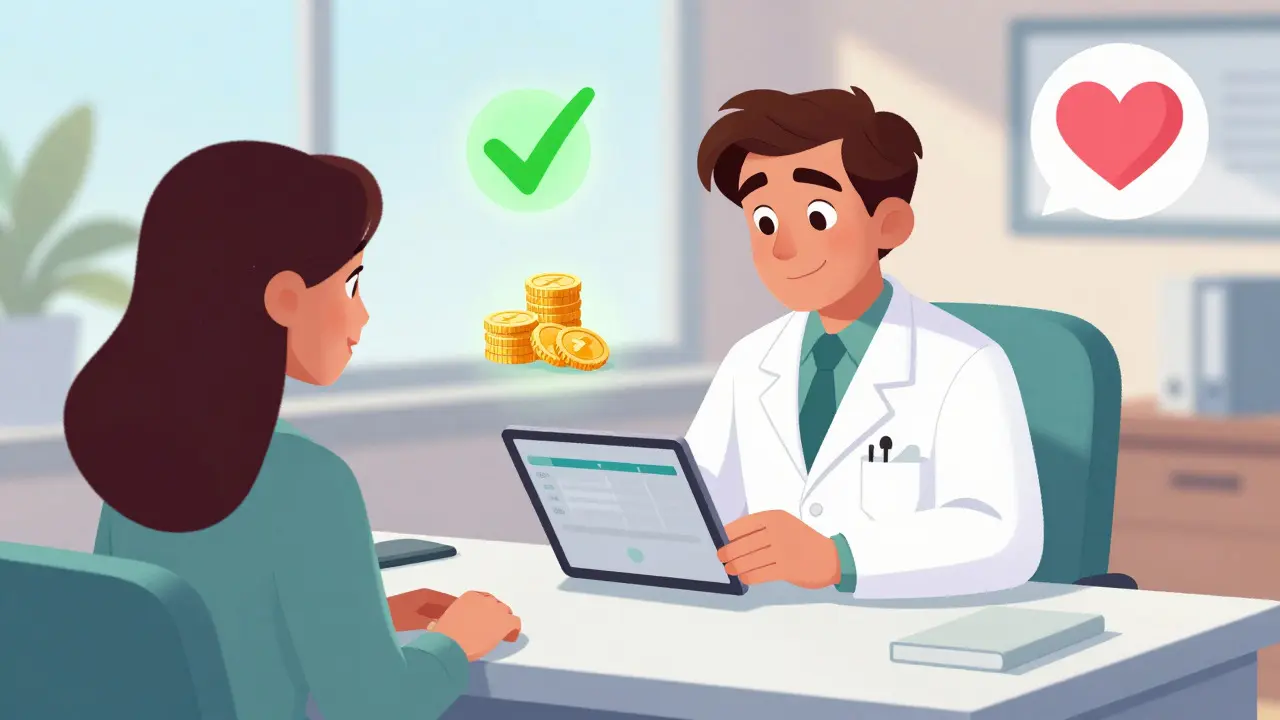
Employers are increasingly recognizing the value of this approach. According to Watson Wyatt survey data, 84% of employers implement three-tier prescription drug programs that incentivize generic use. Some even mandate generic usage unless a doctor specifies otherwise. However, mandates alone can frustrate employees. Integrating pharmacists softens this blow.
Pharmacy Benefit Managers (PBMs) play a huge role here. Large PBMs like CVS Caremark, Express Scripts, and OptumRX are embedding clinical pharmacists into their services. These partnerships allow for transparent communication. When a PBM flags a high-cost brand prescription, a pharmacist can intervene immediately. They might call the employee to discuss options or contact the prescriber to request a generic alternative. This proactive stance reduces friction. Data suggests that pharmacists can reduce prescription drug costs by 20-30% through these strategic interventions. For large employers with 5,000+ staff, 68% now include pharmacist consultation services in their wellness plans. This trend is driven by the need to manage rising medical costs, which grew 4.8% annually from 2019 to 2023.
Overcoming Barriers: State Laws and Physician Collaboration
Despite the benefits, challenges remain. One major hurdle is state legislation regarding substitution laws. While 49 states permit pharmacists to substitute therapeutically equivalent generics, the rules vary. In some states, pharmacists must notify the prescriber or even get explicit approval for certain interchanges. This administrative burden can slow down cost-saving efforts. Community pharmacists often express frustration with these restrictions, noting that requiring prescriber approval for simple generic swaps defeats the purpose of immediate cost containment.
Another barrier is the scope of practice. Some physicians are hesitant to let pharmacists make changes to medication regimens without consulting them first. However, evidence shows that pharmacists correctly identify appropriate substitutions in 98.7% of cases when following established protocols. Successful workplace wellness programs address this by establishing collaborative practice agreements. These agreements define exactly when a pharmacist can swap a brand for a generic and when they must consult the doctor. Clear protocols build trust between providers and ensure smooth patient care.
Real-World Impact and Future Trends
The impact of these initiatives is measurable. Walmart’s Health Centers, which integrate pharmacists into primary care teams for employer clients, reported a 23% reduction in prescription costs among participating employees in late 2023. Employee feedback supports these findings. Surveys indicate that 78% of workers feel more confident about taking generic medications after speaking with a pharmacist. This confidence is crucial for long-term health outcomes.
Looking ahead, the role of the pharmacist in workplace wellness is set to expand. The American Pharmacists Association projects that pharmacist-led medication optimization will become standard in 85% of large employer wellness initiatives by 2027. This growth is fueled by a demonstrated return on investment: for every $1 invested in pharmacist care, employers save $7.20 in medical costs. With the Bureau of Labor Statistics projecting 4% growth in pharmacist positions through 2032, particularly in clinical roles, the workforce is ready to meet this demand. As transparency regulations like the 2024 PBM Transparency Act take effect, pharmacists will have even more tools to advocate for affordable, effective care.
| Feature | Brand-Name Drug | Generic Drug |
|---|---|---|
| Active Ingredient | Specific chemical compound | Identical chemical compound |
| Cost | High (often hundreds per month) | Low (typically 80-85% less) |
| FDA Approval Process | Full New Drug Application (NDA) | Abbreviated New Drug Application (ANDA) |
| Bioequivalence Requirement | N/A (Reference standard) | Must match brand (80-125% absorption range) |
| Patient Perception | Often viewed as "safer" or "better" | Often viewed with skepticism until counseled |
Key Takeaways for Employers and Employees
- Trust the Expert: Pharmacists are trained to evaluate drug efficacy and safety. Their recommendation to switch to a generic is based on rigorous FDA standards, not just cost-cutting.
- Utilize MTM Services: If your workplace wellness program offers Medication Therapy Management, take advantage of it. It’s a chance to review all your meds for interactions and savings.
- Understand Bioequivalence: Remember that generics must perform similarly to brands in the body. The inactive ingredients may differ, but the therapeutic effect remains the same.
- Advocate for Access: Employers should support policies that allow pharmacists to substitute generics easily, reducing administrative hurdles and speeding up care.
- Focus on Adherence: Lower costs lead to better adherence. Better adherence leads to fewer hospitalizations and healthier employees.
What is the difference between a generic and a brand-name drug?
The main difference is the price and the name. Both contain the same active ingredient, dose, safety, strength, route of administration, and performance characteristics. Brand-name drugs undergo extensive testing to prove safety and efficacy, while generic drugs must demonstrate bioequivalence to the brand-name version. This means they work the same way in the body but cost significantly less.
How do pharmacists help reduce healthcare costs in the workplace?
Pharmacists reduce costs by promoting the use of generic medications, identifying unnecessary prescriptions, and improving medication adherence. Through services like Medication Therapy Management (MTM), they ensure patients take the right drugs at the right times, preventing costly complications and hospital visits. Studies show pharmacist-led programs can cut prescription costs by 20-30%.
Are generic drugs as safe as brand-name drugs?
Yes. The FDA requires generic drugs to meet the same strict standards for quality, strength, purity, and stability as brand-name drugs. They must also demonstrate bioequivalence, meaning they deliver the same amount of active ingredient into the bloodstream in the same amount of time. Millions of people take generics safely every day.
What is Medication Therapy Management (MTM)?
MTM is a service provided by pharmacists to optimize drug therapy. It involves a comprehensive review of all medications a patient takes, checking for interactions, side effects, and opportunities for cost savings. In workplace wellness programs, MTM helps employees manage chronic conditions better and stick to their treatment plans.
Why do some doctors prefer brand-name drugs?
Some doctors may prescribe brand-name drugs due to habit, marketing influences, or concerns about specific narrow-therapeutic-index drugs where small differences matter. However, for most medications, generics are therapeutically equivalent. Pharmacists work with doctors to ensure the safest and most cost-effective option is chosen, often using data from the FDA's Orange Book to guide decisions.