
Opioid-Antidepressant Interaction Checker
Check Your Medication Safety
Select your opioid and antidepressant to see if this combination could cause serotonin syndrome.
Please select both medications to see results.
Important Safety Information
High-risk combinations include tramadol, meperidine, and dextromethorphan with any SSRI or SNRI. These combinations can cause serotonin syndrome - a life-threatening condition.
Signs to watch for: High fever (>102°F), muscle stiffness, confusion, rapid heartbeat, sweating, shivering, seizures. If you experience these symptoms, seek emergency medical help immediately.
Low-risk combinations include morphine, oxycodone, and hydromorphone with antidepressants. However, always consult your doctor before changing medications.
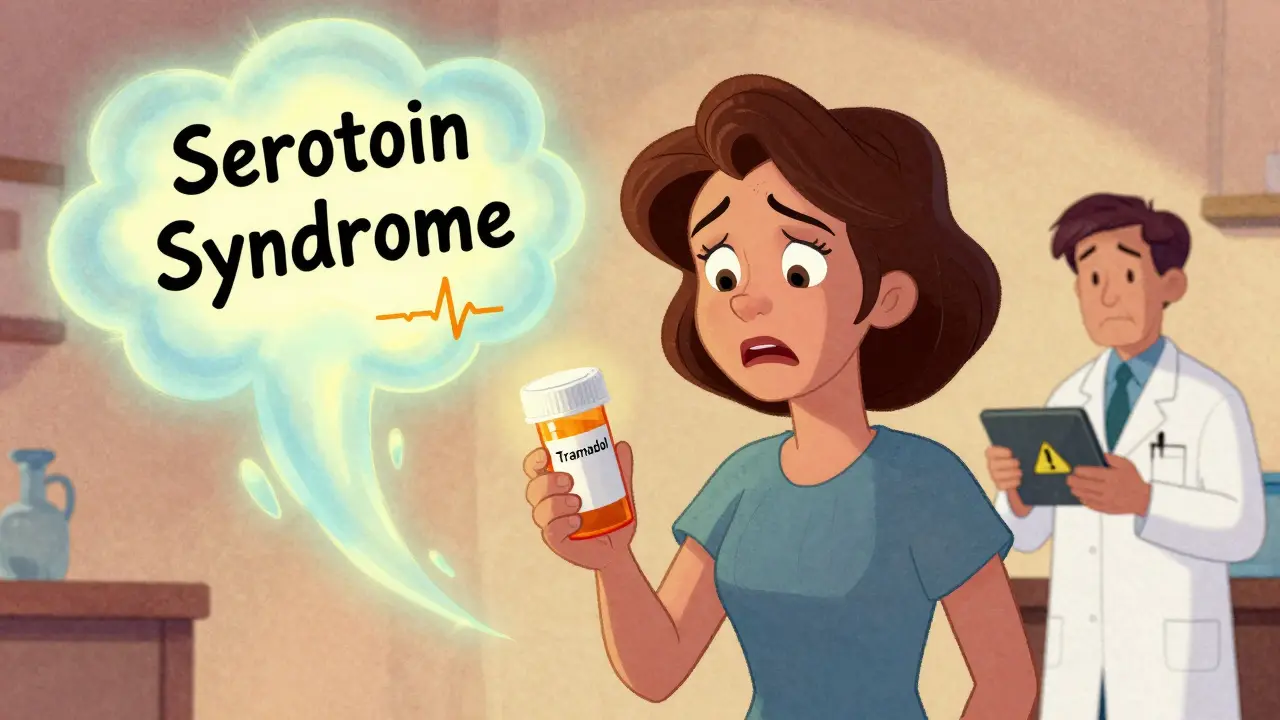
It’s not just about pain relief. When you’re taking an opioid for chronic pain, and your doctor also prescribed an antidepressant, you might not realize you’re walking into a hidden danger. Opioids and serotonin syndrome is a combination that can turn deadly - and it’s happening more often than most people realize.
What Exactly Is Serotonin Syndrome?
Serotonin syndrome isn’t a rare side effect. It’s a full-blown medical emergency caused by too much serotonin in your brain. Think of serotonin as your brain’s natural mood regulator. But when it builds up too fast - usually because two drugs are working together - your body goes into overdrive.
The signs don’t show up slowly. They hit hard and fast: high fever (over 102°F), muscle stiffness so bad you can’t move, confusion, rapid heartbeat, sweating, shivering, and sometimes seizures. In severe cases, it leads to organ failure and death. The good news? If caught early, it’s treatable. The bad news? Many doctors miss it because the symptoms look like other conditions - flu, heatstroke, or even a panic attack.
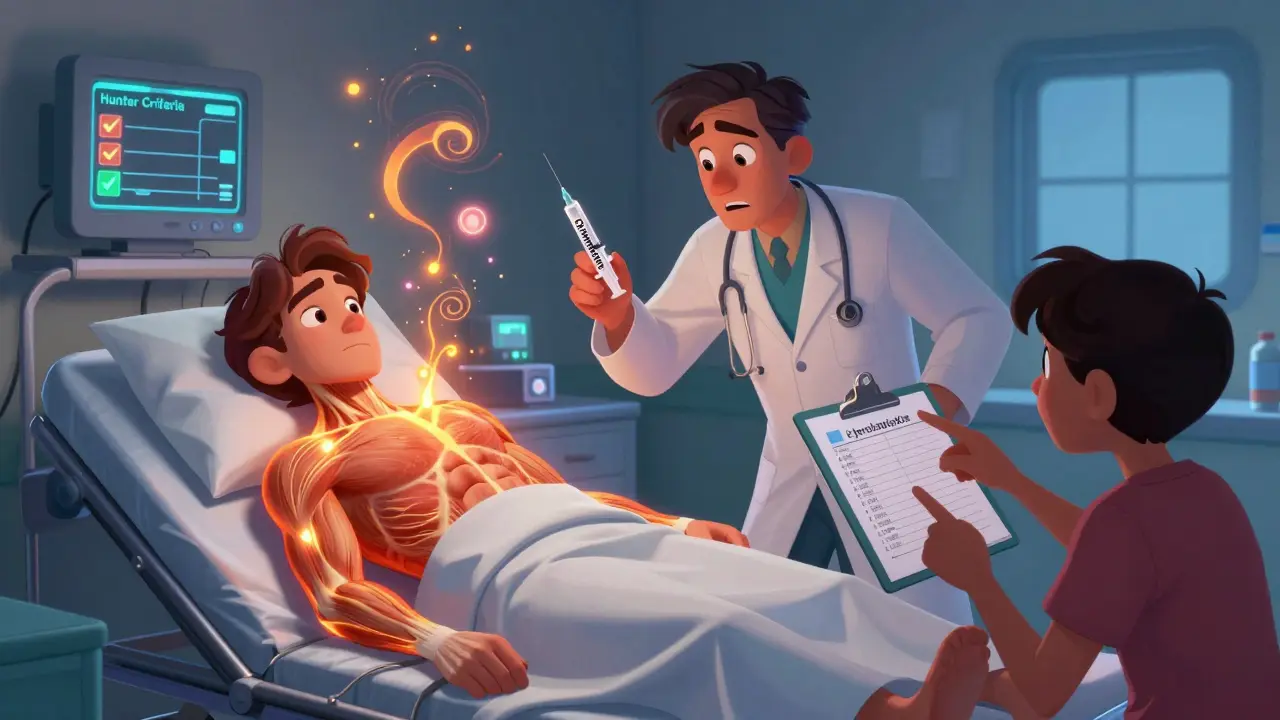
The Hunter Criteria, used by emergency rooms worldwide, help diagnose it. You need at least one of these: muscle twitching + fever, shivering + hyperreflexia, or clonus (involuntary muscle contractions) + agitation. If you’re on an opioid and an antidepressant and suddenly feel this way - get help immediately.
Not All Opioids Are Created Equal
Here’s where things get confusing. You’ve heard that opioids are opioids. But when it comes to serotonin syndrome, that’s not true. Some are high-risk. Others? Almost none.
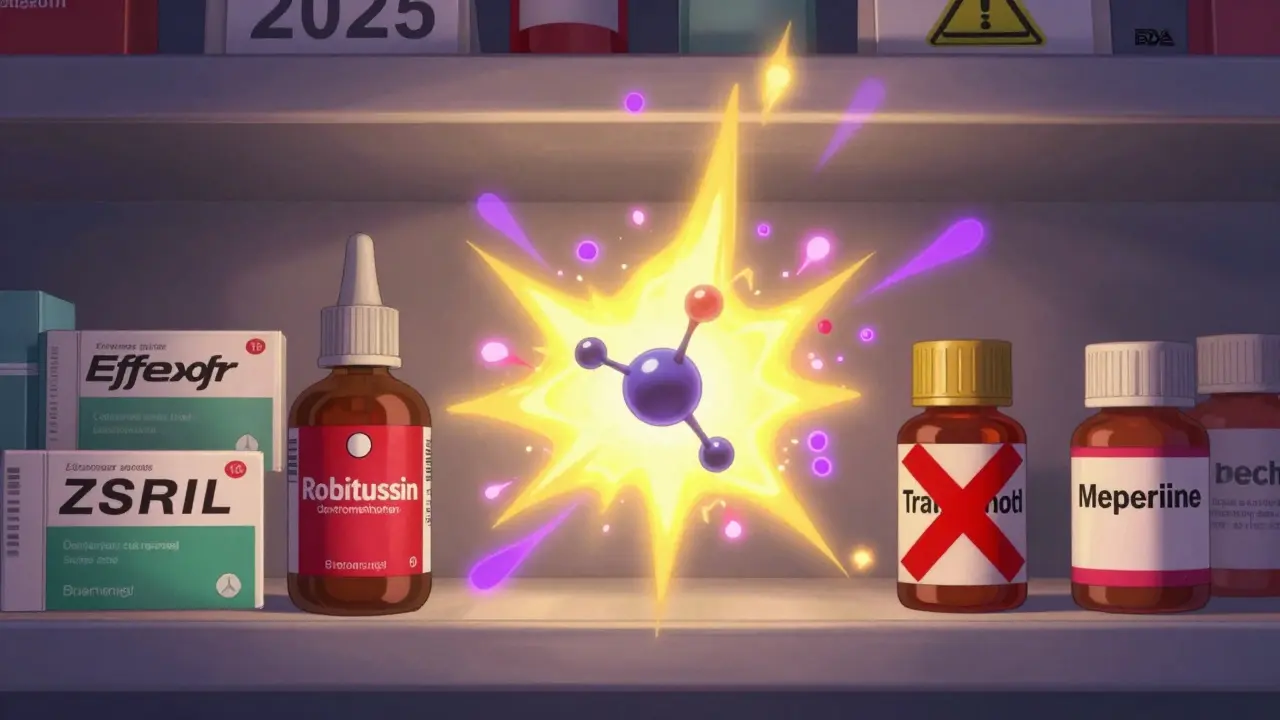
Tramadol, meperidine (also called pethidine), and dextromethorphan (a common cough syrup ingredient) are the worst offenders. Why? They don’t just relieve pain - they block serotonin from being reabsorbed in your brain. That means serotonin piles up. Tramadol alone is responsible for nearly half of all reported cases. And dextromethorphan? It’s in over-the-counter cough medicines. People take it without thinking. Combine it with an SSRI like sertraline or fluoxetine, and you’re playing Russian roulette.
Methadone and fentanyl are medium risk. Methadone is used for pain and addiction treatment. It does affect serotonin, but its long half-life and complex metabolism make it unpredictable. Fentanyl, especially in high doses during surgery, can trigger serotonin syndrome through receptor activation - not just reuptake blocking.
Now here’s the relief: morphine, oxycodone, and hydromorphone? These don’t interfere with serotonin at all in lab studies. They’re safe to use with antidepressants - if your pain requires them. No need to avoid them out of fear.
Antidepressants Are the Other Half of the Problem
Opioids alone rarely cause serotonin syndrome. It’s the combo that kills. The most dangerous partners? SSRIs and SNRIs - the most common antidepressants prescribed today.
Drugs like fluoxetine (Prozac), sertraline (Zoloft), venlafaxine (Effexor), and duloxetine (Cymbalta) are everywhere. They’re prescribed for depression, anxiety, nerve pain, even migraines. And they work by keeping serotonin in your brain longer. When you add a serotonergic opioid on top? It’s like turning up the volume on a speaker that’s already at max.
Even worse, some SSRIs like fluoxetine and paroxetine block the liver enzyme CYP2D6. That’s the same enzyme that turns tramadol into its active form. So instead of helping pain, the tramadol just sits in your system, building up serotonin - and you don’t even get pain relief.
And then there’s dextromethorphan. It’s in Robitussin, NyQuil, DayQuil - you name it. People take it for a cold. They’re not even thinking about their antidepressant. But 30mg a day - less than a full dose - has killed people. The FDA has warned about this. The CDC has tracked it. Yet it’s still happening.
Real Cases, Real Consequences
Here’s what this looks like in real life.
A 42-year-old woman started tramadol for back pain. She was already on venlafaxine for depression. Two days later, she was in the ICU. Fever: 104.2°F. Muscles locked up. Confused, unresponsive. She survived - but barely. Her doctors later said if she’d gone to the ER even 12 hours later, she wouldn’t have made it.
In another case, a 68-year-old man took a cough syrup with dextromethorphan after a cold. He was on escitalopram for anxiety. Within 24 hours, he had seizures. He died. Autopsy showed serotonin levels three times normal.
Between 2015 and 2021, New Zealand recorded 41 confirmed cases of opioid-induced serotonin syndrome. Tramadol caused 56% of them. Meperidine caused 27%. And dextromethorphan? It was in 14 cases - all from OTC cough medicine.
These aren’t outliers. They’re predictable. And preventable.
What Should You Do If You’re on Both?
If you’re taking an antidepressant and your doctor wants to prescribe an opioid, ask these questions:
- Is this opioid serotonergic? (Tramadol, meperidine, dextromethorphan? Avoid.)
- Can we use morphine, oxycodone, or hydromorphone instead?
- Are you aware of my full medication list - including OTC cough meds?
- What signs should I watch for?
If you’re already on both and feel weird - muscle twitching, sweating, confusion - don’t wait. Stop taking the opioid immediately. Call your doctor. Go to the ER. Don’t say, “It might be nothing.” It might not be.
There’s a specific antidote: cyproheptadine. It blocks serotonin receptors. But it only works if given early. The longer you wait, the less effective it is.
What’s Changing in 2025?
The FDA added a Black Box Warning to tramadol in 2023 - the strongest possible alert. The European Medicines Agency followed. Insurance companies are now flagging tramadol-SSRI combos as high-risk and requiring prior authorization.
Doctors are catching on. Since 2020, tramadol prescriptions in the U.S. have dropped 18%. That’s good news. But dextromethorphan? Still flying under the radar. With 28 million OTC sales every year in the U.S., it’s the silent killer.
Researchers are now studying genetic factors. Some people have a variation in the serotonin transporter gene (SLC6A4) that makes them 5 times more likely to develop serotonin syndrome from these combinations. We’re not testing for it yet - but we will be soon.
Bottom Line
You don’t have to choose between pain relief and mental health. But you do need to know which opioids are safe. Avoid tramadol, meperidine, and dextromethorphan if you’re on any antidepressant - even if it’s just for a few days. Use morphine, oxycodone, or hydromorphone instead. Always tell your doctor about every medication you take - including cough syrup and herbal supplements. And if you feel off - don’t ignore it. Serotonin syndrome doesn’t wait.
It’s not about fear. It’s about awareness. And that awareness could save your life.