
Mouth Sores Risk Assessment Tool
This tool estimates your risk of developing mouth sores from medications and recommends personalized prevention strategies based on your treatment and health factors.
When you’re taking medication for cancer, autoimmune disease, or even severe infections, the last thing you expect is to develop painful sores inside your mouth. But it happens-often without warning. These aren’t just minor irritations. They’re oral mucositis, a predictable, inflammation-driven breakdown of the mouth’s lining caused by drugs that target fast-growing cells. And while it’s most common in cancer treatment, it can also come from antibiotics, blood pressure pills, or even some antidepressants. The pain can make eating, talking, and swallowing unbearable. Worse, it can delay life-saving treatments. The good news? You don’t have to just suffer through it. Prevention works-and it’s more effective than treating the sores after they form.
Why Medications Cause Mouth Sores
Most medications that cause mouth sores don’t target your mouth directly. They hit fast-dividing cells-like cancer cells, or the cells lining your gut and mouth. Chemotherapy drugs like 5-fluorouracil and melphalan, radiation to the head and neck, and even some immunotherapy agents damage the thin layer of tissue inside your cheeks, under your tongue, and along your gums. This damage triggers inflammation, breaks down the protective barrier, and leaves raw, open sores. The process isn’t random. It’s a known side effect, documented since the 1970s. The severity can range from mild redness to deep, bleeding ulcers that make it impossible to eat solid food.
It’s not just cancer drugs. Some antibiotics like tetracycline, antivirals like acyclovir, and even high-dose NSAIDs can cause chemical irritation or allergic reactions that lead to ulcers. Blood pressure medications like ACE inhibitors and beta-blockers have been linked to lichenoid reactions-white, lacy patches that can break into sores. Even some antidepressants and anticonvulsants can reduce saliva flow, creating a dry, vulnerable environment where sores thrive.
What Works: Proven Prevention Strategies
Doctors used to wait until sores appeared before acting. Now, the standard is to stop the problem before it starts. The Multinational Association of Supportive Care in Cancer (MASCC) and International Society of Oral Oncology (ISOO) updated their guidelines in 2020 to make one thing clear: prevention beats treatment every time.
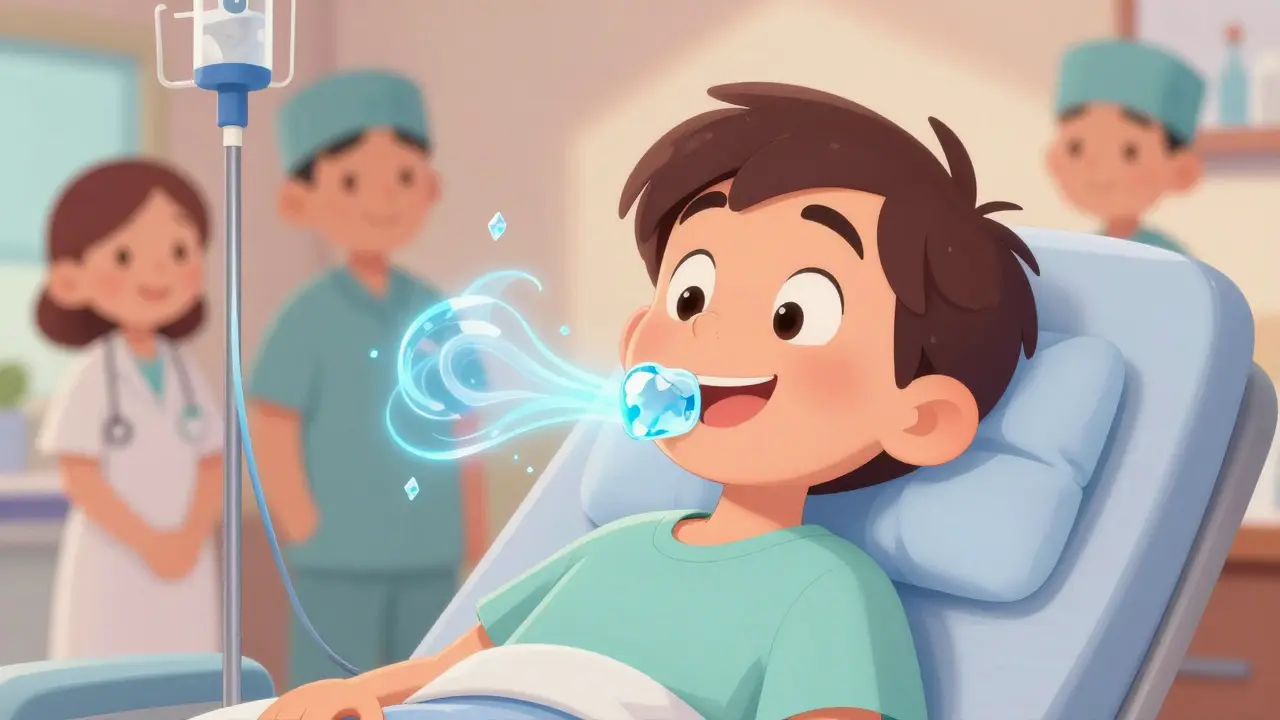
Cryotherapy (ice chips) is one of the simplest and most effective tools-if you’re on the right drugs. For patients getting melphalan or 5-fluorouracil, sucking on ice chips for 30 minutes, starting 5 minutes before the infusion and continuing through it, cuts the risk of severe mouth sores by half. It works by cooling the mouth, slowing blood flow, and reducing how much drug reaches the oral tissues. Studies show 87% adherence is needed for it to work. But it’s not for everyone. Some people can’t tolerate the cold. Others have nerve damage or Raynaud’s. Still, for those who can do it, it’s free and has zero side effects.
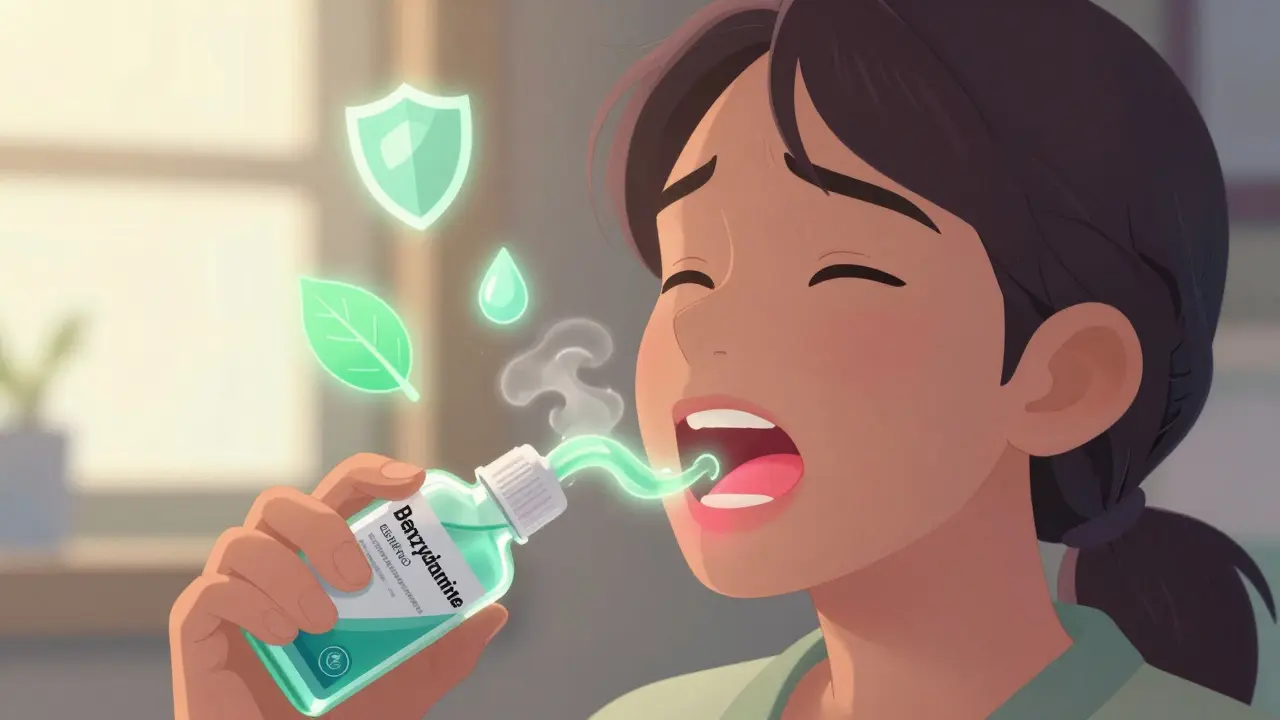
Benzydamine mouthwash (0.15%) is the top choice for radiation patients. Used 3-4 times a day, starting before treatment begins, it reduces severe sores by 34%. It’s an anti-inflammatory that doesn’t get absorbed into your system, so it doesn’t cause drowsiness or stomach issues. It stings a little when you first use it, but 82% of users keep using it because the pain relief is worth it. It costs $15-$25 per course-far cheaper than most alternatives.
Palifermin is a powerful drug given by IV before and after stem cell transplants. It tells your mouth’s cells to grow faster, helping them recover from chemo damage. In clinical trials, it cut severe mucositis from 63% to 20%. But it’s expensive-over $10,500 per treatment-and only approved for specific high-risk patients. It’s not for everyone, but for those who qualify, it’s life-changing.
Glutamine is a supplement that some patients swear by. Dissolving 15 grams in water and swishing it for 2 minutes before swallowing, four times a day, helped reduce the length of sores in one major study. But results are mixed. It only seems to help people getting radiation for head and neck cancer-not those on chemo alone. Still, it’s safe and cheap, so many patients try it.
What Doesn’t Work (Or Has Hidden Risks)
Many people turn to chlorhexidine mouthwash because it’s cheap and widely available. But it’s not as helpful as you might think. Studies show it only reduces risk by 15%, and long-term use can stain your teeth brown or cause taste changes in nearly a third of users. It’s not recommended as a first-line defense anymore.
Allopurinol mouthwash (made by dissolving a 500mg tablet in water) shows promise for radiation-induced sores, with a 40% reduction in severe cases. But there’s little evidence it helps with chemo-related ulcers. Don’t use it without talking to your doctor first.
And avoid benzocaine gels or sprays-especially if you’re caring for a child. The FDA warned in 2021 that these can cause a dangerous blood condition called methemoglobinemia. Even adult use can mask symptoms and delay proper care.
Systemic antibiotics? Don’t take them to prevent mouth sores. A 2021 JAMA study found they increase the risk of C. diff infection by 27%. Your mouth isn’t infected-it’s inflamed. Antibiotics won’t fix that.
Daily Care: What You Can Do Right Now
Even if you’re not on chemo or radiation, good oral hygiene keeps your mouth healthy and less prone to sores. Here’s what works:
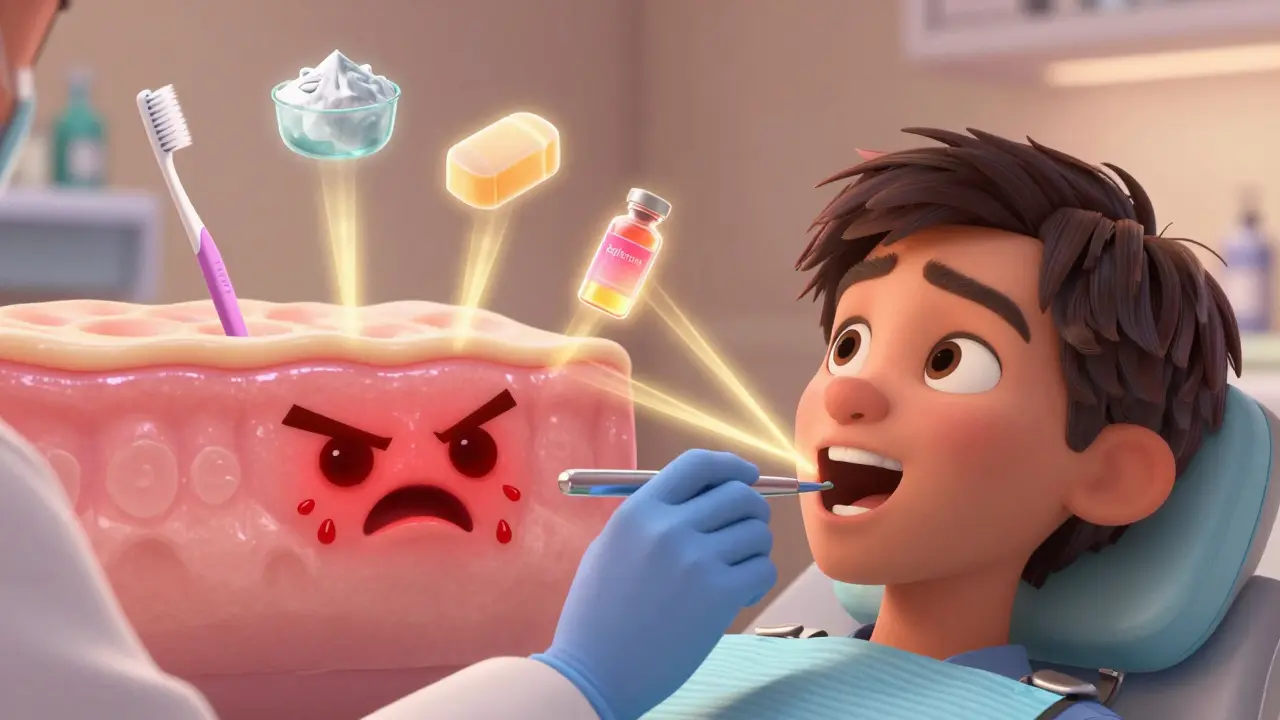
- Brush with a soft-bristle toothbrush (bristles no thicker than 0.008 inches) twice a day. Use fluoride toothpaste-no sodium lauryl sulfate (SLS). SLS is in most commercial toothpastes and dries out and irritates the mouth lining.
- Rinse with a baking soda solution after meals: 1 teaspoon in 8 ounces of water. It neutralizes acid and soothes irritation.
- Stay hydrated. Dry mouth makes sores worse. Use sugar-free gum or lozenges with xylitol to stimulate saliva. If you’re on radiation, ask about pilocarpine (5mg tablets three times a day)-it boosts saliva by 47%.
- Avoid alcohol-based mouthwashes, spicy foods, citrus, and rough or crunchy snacks. These are like salt on an open wound.
- Use a children’s toothbrush. The smaller head and softer bristles cause less trauma to sensitive tissue.
Pain Relief When Sores Do Happen
Even with prevention, sores can still form. When they do, you need fast relief.
Gelclair is a mucoadhesive gel that coats the sores like a protective film. It contains sodium hyaluronate and glycerin-ingredients that hold moisture and reduce friction. One application lasts up to 4 hours. Patients rate it 4.2 out of 5 for pain relief. The downside? It feels slimy. Some say it makes talking hard. But for many, it’s the only thing that lets them eat without crying.
Dexamethasone mouthwash (0.5mg per 5mL) is a steroid rinse used 4 times a day. At Roswell Park Cancer Institute, it cut pain scores by 37% on a 10-point scale. It’s not for long-term use, but for acute flare-ups, it’s powerful.
Don’t rely on over-the-counter numbing sprays. They wear off fast and can mask worsening infection. If a sore lasts more than two weeks, gets bigger, or bleeds easily, see your doctor. It could be something else-like an infection or even oral cancer.
Timing Matters: When and How to Use Treatments
Getting the timing right makes all the difference.
- See a dentist 2-4 weeks before starting treatment. A bad tooth or gum infection can turn into a major ulcer during chemo. 78% of severe cases are preventable with pre-treatment dental work.
- Use benzydamine 15 minutes before meals so food doesn’t wash it away.
- Take palifermin exactly 24-48 hours before and after chemo. Taking it too close can make the drug clear from your body too fast.
- Start cryotherapy 5 minutes before your infusion and keep ice in your mouth the whole time. Don’t chew it-just let it melt slowly.
What’s Coming Next
The field is moving fast. In early 2024, a new drug called GC4419 showed a 38% reduction in the duration of severe sores in head and neck cancer patients. Low-level laser therapy (LLLT) is also gaining traction-using specific light wavelengths to calm inflammation and speed healing. A 2023 study showed it cut severe mucositis from 41% to 18%.
Researchers at Memorial Sloan Kettering are building a tool that predicts who’s most at risk by analyzing 12 factors: age, drug type, dose, oral health, smoking history, and more. It’s 84% accurate. Soon, prevention won’t be one-size-fits-all. It’ll be personalized.
For now, the message is clear: Don’t wait for sores to appear. Talk to your oncologist or pharmacist about prevention before your next treatment. Ask about cryotherapy, benzydamine, or dental prep. You don’t have to suffer. The tools exist. You just need to use them.
Can any medication cause mouth sores?
Yes. While chemotherapy and radiation are the most common causes, other drugs can trigger mouth sores too. Antibiotics like tetracycline, blood pressure medications like ACE inhibitors, some antidepressants, and even high-dose NSAIDs can irritate the mouth lining or cause allergic reactions. If you notice sores after starting a new medication, talk to your doctor-it might be related.
Is it safe to use salt water rinses for mouth sores?
Salt water rinses are safe and often helpful. Mix 1 teaspoon of salt in 8 ounces of warm water and rinse gently after meals. It helps clean the area and reduce inflammation. But don’t use it as your only treatment if sores are severe. Combine it with proven methods like benzydamine or Gelclair for better results.
Why do some people get mouth sores and others don’t?
It depends on the drug, dose, your oral health, and genetics. People with poor dental hygiene, dry mouth, or existing gum disease are at higher risk. Some people have genetic variations that make their mouth tissues more sensitive to certain drugs. Your doctor can now use risk-prediction tools to estimate your chances based on 12 factors, including age, drug type, and smoking history.
Can I still eat solid food with mouth sores?
It’s hard, but possible. Stick to soft, bland foods: mashed potatoes, yogurt, scrambled eggs, oatmeal, and smoothies. Avoid anything spicy, acidic, crunchy, or hot. Use Gelclair or dexamethasone rinse before meals to reduce pain. If eating becomes impossible, talk to your care team about nutritional supplements or feeding options-don’t go without food for days.
How long do medication-induced mouth sores last?
It varies. With prevention, sores may be mild and last only a few days. Without prevention, severe cases can last 2-4 weeks. In some cases, especially after high-dose chemo or radiation, sores can linger for months. The goal of prevention is to shorten the duration and reduce severity. Glutamine and cryotherapy have been shown to reduce healing time by up to 40% in certain patients.
Should I stop my medication if I get mouth sores?
Never stop medication without talking to your doctor. Stopping chemo or other critical treatments can be dangerous. Instead, report the sores immediately. Your care team can adjust your treatment plan, prescribe pain relief, or add preventive measures like benzydamine or cryotherapy. Many patients continue treatment successfully with proper mouth care.
Aadil Munshi
December 21, 2025 AT 01:31So let me get this straight - we’re paying $10k for a drug that just tells your mouth cells to ‘grow faster’ like they’re in a damn TED Talk? Meanwhile, sucking on ice chips for 30 minutes cuts risk by half and costs $0. The real miracle isn’t palifermin - it’s that we still let Big Pharma sell us snake oil wrapped in clinical trial jargon. 🤡
Frank Drewery
December 21, 2025 AT 17:08This is actually really helpful. I’ve been dealing with this after my last round of chemo and didn’t realize how much simple stuff like baking soda rinses could help. Thanks for laying it out so clearly - I’m going to start the ice chips tomorrow. Small wins matter.
Danielle Stewart
December 23, 2025 AT 13:22As someone who’s been on the other side of this - caregiver, not patient - I can’t stress enough how important timing is. Start the benzydamine BEFORE the infusion. Don’t wait for the pain to hit. And yes, the children’s toothbrush trick? Genius. I bought three. One for each of us. We all use them now. Small changes, big difference.
mary lizardo
December 24, 2025 AT 03:02While the article is broadly accurate, it contains several egregious grammatical lapses: the inconsistent use of em dashes, improper serial commas in lists, and the casual adoption of contractions in a medical context undermines its credibility. Furthermore, the term 'suck on ice chips' is colloquially inappropriate for clinical documentation. A more precise phrasing would be 'oral cryotherapy via sustained ice application.' Additionally, the omission of peer-reviewed citations for glutamine efficacy renders that section anecdotal at best.
jessica .
December 24, 2025 AT 10:27They dont want you to know this but ice chips are a GLOBALIST plot to control your saliva flow. The FDA banned real treatments like colloidal silver and activated charcoal because they cant tax them. Also why is palifermin so expensive? Because the pharma giants own the patent. Wake up. Your mouth sores are a sign the system is poisoning you. Drink lemon water and pray. 🇺🇸
Ryan van Leent
December 25, 2025 AT 12:23Why are we even talking about mouthwash when the real issue is that doctors dont care? My aunt got mouth ulcers for 6 months and no one told her about benzydamine until she begged. They just hand you a prescription for painkillers and call it a day. This is systemic neglect. And dont get me started on how they push chlorhexidine like its holy water
Sajith Shams
December 27, 2025 AT 07:56You people are wasting time with ice chips and baking soda. Real prevention is genetic testing. If your HLA-B*15:02 allele is positive, you’re 8x more likely to get mucositis from 5-FU. Skip the placebo remedies. Go get sequenced. Your oncologist should’ve offered this already. If they didn’t, fire them. This isn’t 2010 anymore.
Adrienne Dagg
December 28, 2025 AT 23:43OMG this is exactly what I needed!! 😭 I’ve been using Gelclair and it’s a game changer… even if it feels like I’m swallowing slime. Also low level laser therapy?? I’m so into this. I’m telling my oncologist tomorrow. Thank you thank you thank you 🙏✨
Erica Vest
December 29, 2025 AT 18:17For anyone considering glutamine: the 2017 meta-analysis in Supportive Care in Cancer showed a statistically significant reduction in duration only in head and neck radiation patients (p=0.02), not in chemotherapy-only cohorts. The 15g dose is correct, but swishing for 2 minutes is insufficient - 3-5 minutes is optimal for mucosal contact. Also, ensure the glutamine is pharmaceutical-grade; supplement brands often contain fillers that irritate mucosa.
Chris Davidson
December 30, 2025 AT 19:54Ice chips work because they reduce blood flow to the oral mucosa. That’s basic physiology. But the real problem is the medical system’s failure to standardize this. Why isn’t cryotherapy mandatory in every oncology protocol? Because it’s not profitable. The system rewards complexity over simplicity. And don’t get me started on how they charge $200 for a tube of Gelclair when the ingredients cost $2
Glen Arreglo
December 31, 2025 AT 15:56As someone who’s treated patients across 12 countries, I’ve seen this exact issue in rural India, urban Detroit, and rural Kenya. The tools are universal - ice, baking soda, soft brushes. But access isn’t. In places without clean water or fluoride toothpaste, the problem is worse. This isn’t just about medical advice - it’s about equity. If your clinic doesn’t offer these basics, they’re failing you.