
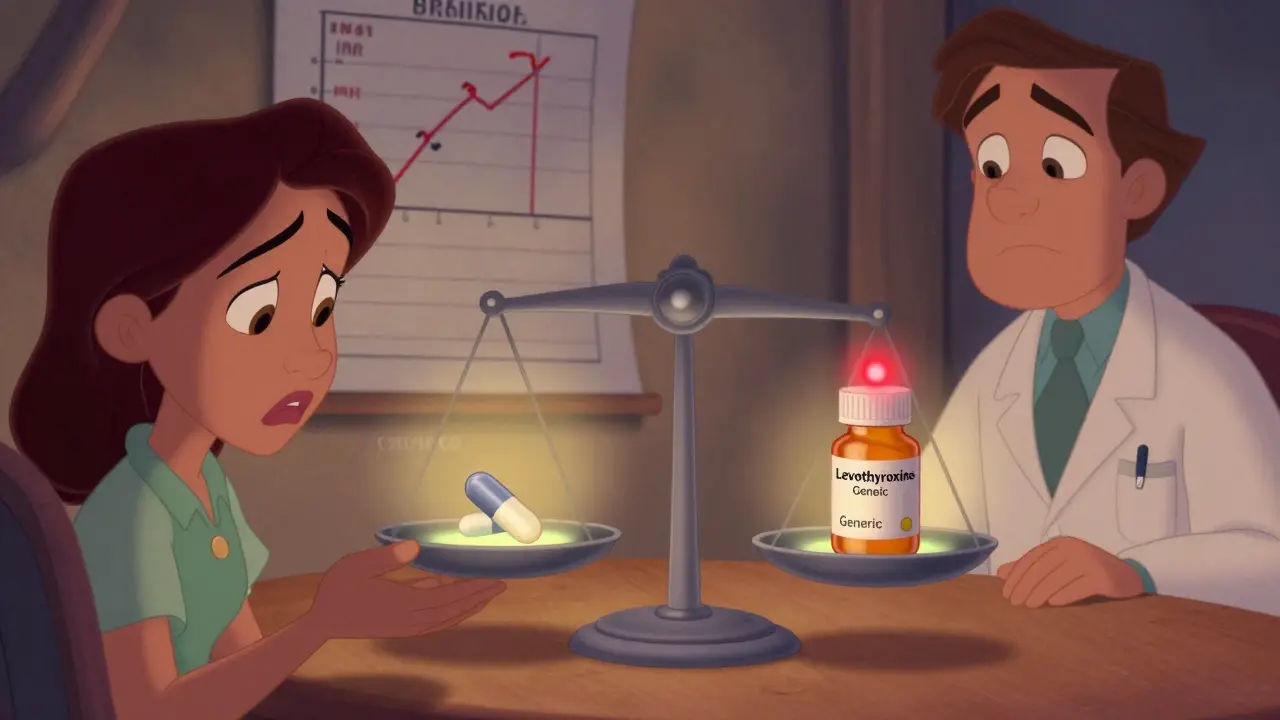
When a generic version of a drug hits the market, most people assume it works just like the brand-name version. That’s usually true-for most medications. But for drugs with a narrow therapeutic index (NTI), the margin for error is razor-thin. A little too little, and the drug doesn’t work. A little too much, and it can poison the patient. That’s why bridging studies for NTI generics aren’t just a formality-they’re a lifeline.
What Makes a Drug Have a Narrow Therapeutic Index?
Not all drugs are created equal. Most medications have a wide safety margin: you can take a bit more or less without serious consequences. But NTI drugs are different. Their effective dose is almost the same as their toxic dose. The FDA defines an NTI drug as one where the ratio between the minimum effective dose and the minimum toxic dose is 2:1 or less. That means if your dose goes up by just 10%, you might cross into dangerous territory.
Common NTI drugs include warfarin (a blood thinner), phenytoin (for seizures), digoxin (for heart failure), and levothyroxine (for hypothyroidism). These aren’t obscure medications-they’re used by millions. Warfarin alone is prescribed to over 2 million people in the U.S. every year. If a generic version of warfarin isn’t bioequivalent to the brand, even by a small amount, it could lead to strokes, clots, or death.
The FDA uses five criteria to identify NTI drugs: a maximum 2-fold difference between effective and toxic doses, therapeutic monitoring required, low within-subject variability (under 30%), small dose adjustments (less than 20%), and a therapeutic index of 3 or less. These aren’t arbitrary numbers-they’re based on decades of clinical data and adverse event reports.
Why Standard Bioequivalence Studies Aren’t Enough
For regular generics, regulators rely on a simple two-way crossover study. Healthy volunteers take the brand-name drug once and the generic once, then blood samples are taken to compare absorption rates (AUC and Cmax). If the generic falls within 80% to 125% of the brand’s levels, it’s approved. Simple. Fast. Cheap.
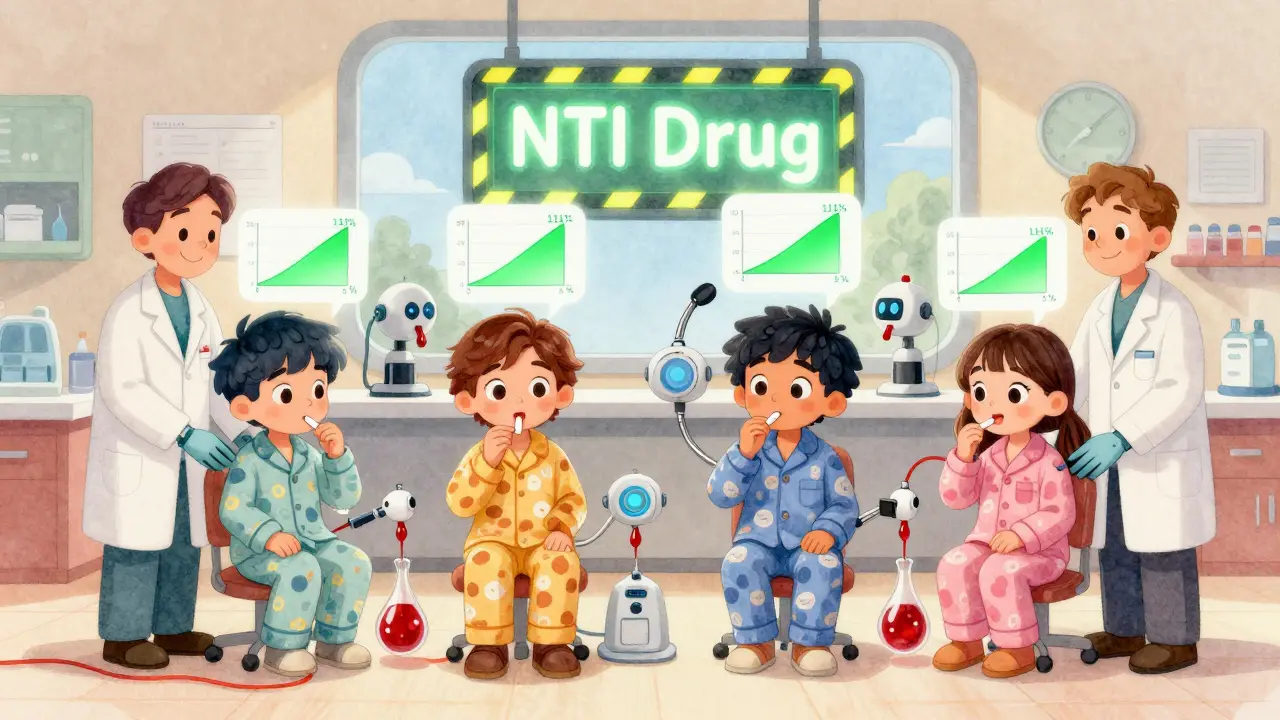
But for NTI drugs, that 80%-125% window is too wide. A 20% difference in absorption could mean the difference between therapeutic effect and toxicity. So regulators tightened the rules. For NTI generics, the acceptable range for both Cmax and AUC is now 90.00% to 111.11%. That’s a much narrower band. It’s like going from allowing a car to be 20% off-speed to only 5% off-when you’re driving on a cliff’s edge, precision matters.
And it’s not just about the range. The study design is more complex. Instead of two doses, NTI studies use a fully replicated, four-way crossover design. Each volunteer takes the brand, the generic, the brand again, and the generic again-over multiple periods. This helps account for natural variability in how individuals metabolize drugs. It’s not just about whether the average is close-it’s about whether every single person stays within safe limits.
The Cost and Complexity of NTI Bridging Studies
Developing an NTI generic isn’t just harder-it’s dramatically more expensive. A standard bioequivalence study costs between $1.5 million and $2.5 million. For NTI generics, that jumps to $2.5 million to $3.5 million. Why? Four reasons:
- More subjects: A standard study might involve 24-36 volunteers. An NTI study needs 60-80 because of the four-period design and higher dropout risk.
- Longer duration: Each subject spends 4-6 weeks in the clinic, compared to 2-3 weeks for standard drugs.
- More blood draws: Each period requires 15-20 blood samples, often at odd hours.
- Advanced analysis: Statisticians must use reference-scaled average bioequivalence (RSABE), a method that adjusts for variability, which requires specialized expertise.
Only about 35% of generic manufacturers have in-house teams trained in RSABE. Many hire contract research organizations (CROs), adding another layer of cost. The FDA estimates it takes 3-5 years to bring an NTI generic to market-compared to 2-3 years for standard generics. And even then, 37% of applications get rejected because of flawed study design.
Regulatory Differences Around the World
The U.S. Food and Drug Administration (FDA) set the global standard for NTI bridging studies with its 2017 guidance on warfarin. But other agencies have followed. The European Medicines Agency (EMA) issued a position paper in 2022 that explicitly rejected waiving bridging studies for NTI drugs, even if they’re similar to approved generics. The same stance is held by Health Canada, Australia’s TGA, and Japan’s PMDA.
The International Council for Harmonisation (ICH) is currently updating its E18 guideline to address ethnic differences in NTI drug response. This matters because metabolism varies across populations. A generic that works for a U.S. population might not be safe for an Asian or African population without additional testing. That’s why bridging studies aren’t just about chemistry-they’re about human biology across geographies.
One big debate: Should some NTI generics be exempt? The International Generic and Biosimilar Medicines Association (IGBA) suggested in 2018 that if a generic had already been approved in the U.S. or EU, bridging studies could be waived elsewhere. But regulators pushed back. Dr. Philip K. Robinson of the FDA’s Office of Generic Drugs wrote in 2020: “For NTI drugs, even minor differences in pharmacokinetics can have clinically significant consequences.”
Real-World Consequences of Poor Bridging
In 2014, a batch of generic levothyroxine in France caused a wave of patient complaints-fatigue, palpitations, weight gain. The issue wasn’t contamination. It was bioequivalence. The generic had slightly different absorption rates, and because levothyroxine is an NTI drug, even a 10% change disrupted thyroid levels in sensitive patients. The product was pulled, and hundreds of patients had to be retested and readjusted.
This isn’t an isolated case. The FDA’s 2022 report found that NTI generics made up only 6% of all generic approvals between 2018 and 2022, even though they represent 14% of small-molecule drugs. Why? Because manufacturers avoid them. The risk of rejection, lawsuits, and patient harm is too high. The result? Patients in many countries still pay full price for brand-name NTI drugs, while cheaper alternatives sit on the shelf.
What’s Changing in 2025 and Beyond
There’s hope on the horizon. The FDA launched a pilot program in 2023 to fast-track complex generics, including NTI drugs. Participating applicants saw review times drop by 25%. Pre-ANDA meetings-where companies consult with regulators before submitting a full application-are now used by 82% of NTI applicants and have cut development time significantly.
Emerging tools like physiologically-based pharmacokinetic (PBPK) modeling are also gaining traction. These computer simulations predict how a drug will behave in the body based on physiology, chemistry, and metabolism. In a 2022 pilot study, PBPK modeling successfully predicted bioequivalence for a warfarin generic without a full clinical trial. The FDA called the results “promising.”
By 2027, some experts believe PBPK could replace bridging studies for certain NTI drugs. But for now, regulators insist: clinical data is still essential. As Dr. Sally Sepehrara of the FDA said in 2023, “For the foreseeable future, robust clinical data will remain essential for NTI drug approval.”
Why This Matters to Patients
Generic drugs save the U.S. healthcare system over $300 billion a year. But for NTI drugs, the savings are minimal. Only 42% of NTI prescriptions are filled with generics, compared to 85% for non-NTI drugs. That’s a $32.8 billion opportunity left untapped-because the path to approval is too risky, too expensive, and too slow.
Patients on warfarin need stable INR levels. Those on levothyroxine need consistent thyroid hormone. Switching between brands and generics without proper bridging can mean hospital visits, emergency tests, or worse. Regulatory agencies aren’t being overly cautious-they’re being responsible.
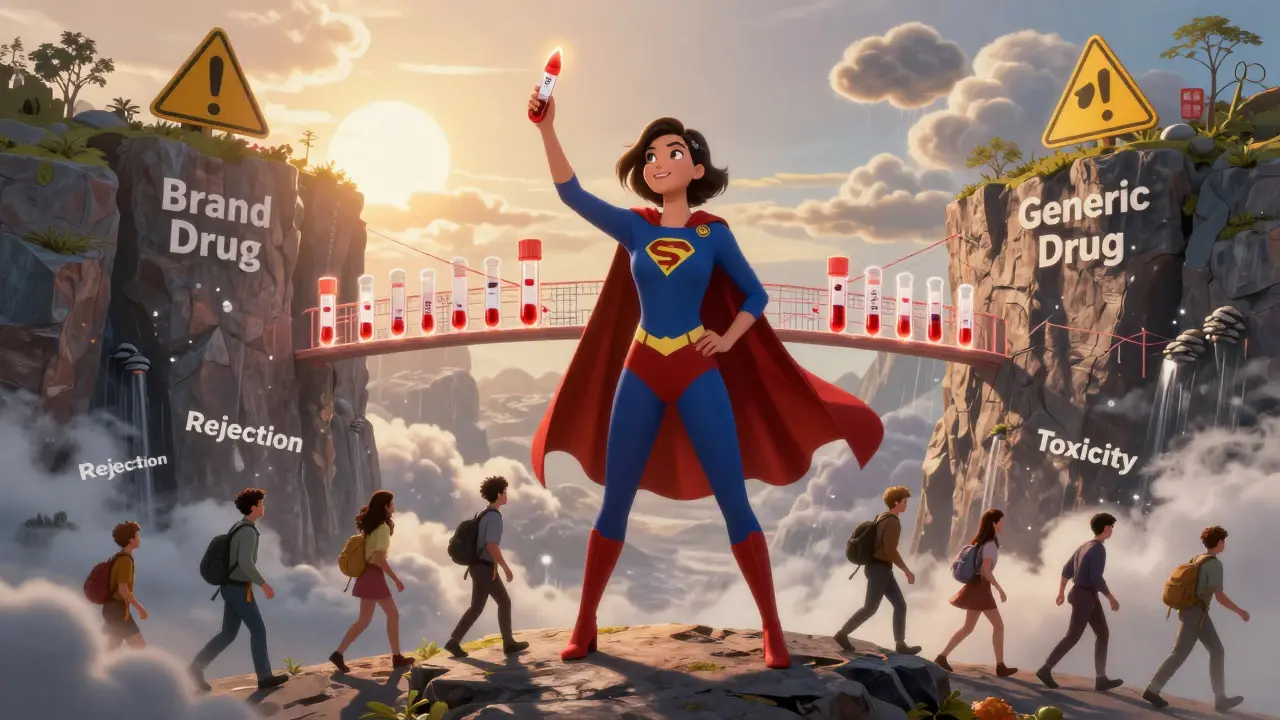
The goal isn’t to block generics. It’s to ensure that when a generic NTI drug is approved, it’s as safe and effective as the brand. That’s not just policy. It’s patient care.
What drugs are considered narrow therapeutic index (NTI) drugs?
Common NTI drugs include warfarin, phenytoin, digoxin, levothyroxine, lithium, cyclosporine, and tacrolimus. These drugs require precise dosing because their therapeutic dose is very close to their toxic dose. The FDA identifies them using five criteria: a maximum 2-fold difference between effective and toxic doses, requirement for therapeutic monitoring, low within-subject variability, small dose adjustments, and a therapeutic index of 3 or less.
How do bridging studies for NTI generics differ from standard generic studies?
Standard generics use a two-way crossover study with an 80%-125% bioequivalence range. NTI generics require a four-way, fully replicated crossover design with a much tighter 90.00%-111.11% range for both Cmax and AUC. NTI studies also involve more subjects, longer durations, more blood draws, and advanced statistical methods like reference-scaled average bioequivalence (RSABE).
Why are NTI generics more expensive to develop?
NTI generics cost 30-50% more to develop than standard generics. This is due to larger study populations (60-80 subjects vs. 24-36), longer study durations (12-18 months vs. 6-9 months), complex study designs requiring four drug exposures, and the need for specialized statistical expertise. Bioequivalence studies alone cost $2.5-$3.5 million compared to $1.5-$2.5 million for standard drugs.
Do all countries require the same bridging studies for NTI generics?
Most major regulators-FDA, EMA, Health Canada, TGA, and PMDA-follow similar standards based on FDA’s 2017 guidance. However, regional differences exist in how ethnic variability is handled. The ICH is working on an updated E18 guideline for 2025 to harmonize these requirements globally. Waiving bridging studies based on prior approval in another region is generally not accepted for NTI drugs.
Can computer modeling replace clinical bridging studies for NTI drugs?
Physiologically-based pharmacokinetic (PBPK) modeling shows promise and has been successfully tested in FDA pilot studies for warfarin. However, regulators still require clinical data for approval. PBPK may reduce the need for some studies in the future, but as of 2026, clinical bridging studies remain mandatory for NTI generics. The FDA states that robust clinical data will be essential for the foreseeable future.
What Comes Next?
The gap between brand-name NTI drugs and their generics isn’t closing fast. But it’s not impossible. With better tools, clearer guidelines, and more investment in specialized expertise, the number of approved NTI generics can rise. The key is not to cut corners-it’s to build better ones. For patients who depend on these drugs, the stakes are too high for anything less.
John Sonnenberg
February 7, 2026 AT 22:34Kathryn Lenn
February 9, 2026 AT 00:02Chima Ifeanyi
February 9, 2026 AT 09:34Tori Thenazi
February 9, 2026 AT 23:11Elan Ricarte
February 11, 2026 AT 02:32Monica Warnick
February 11, 2026 AT 13:11Jonah Mann
February 12, 2026 AT 20:13THANGAVEL PARASAKTHI
February 14, 2026 AT 11:11Frank Baumann
February 16, 2026 AT 05:54Chelsea Deflyss
February 17, 2026 AT 10:06