
What Is Contact Allergens and Why Does It Matter?
If your skin breaks out in redness, itching, or blisters after touching something harmless-like your watch, shampoo, or even your own jeans-you’re not imagining it. You might be reacting to a contact allergen. Unlike a quick sting from a bee or a sneeze from pollen, these reactions don’t happen right away. They creep in over days, making it hard to connect the dots between what you touched and what’s wrong with your skin.
This isn’t just a nuisance. For some people, it’s a chronic problem that ruins daily life. You avoid certain clothes, skip using favorite lotions, or even change jobs because your skin keeps flaring up. The good news? There’s a proven way to find out exactly what’s causing it: patch testing.
Patch testing isn’t like a skin prick test for hay fever. It doesn’t check for immediate reactions. Instead, it finds the hidden triggers behind allergic contact dermatitis-a delayed immune response that can take 48 to 96 hours to show up. And unlike other allergy tests, you don’t have to stop your antihistamines. That’s because this test looks at a different kind of reaction entirely.
How Patch Testing Works: A Step-by-Step Breakdown
Patch testing is simple in concept but precise in execution. It’s not a single appointment-it’s a three-visit process over about a week. Most clinics schedule it for Monday, Wednesday, and Friday so the timing lines up with the 96-hour window needed for accurate results.
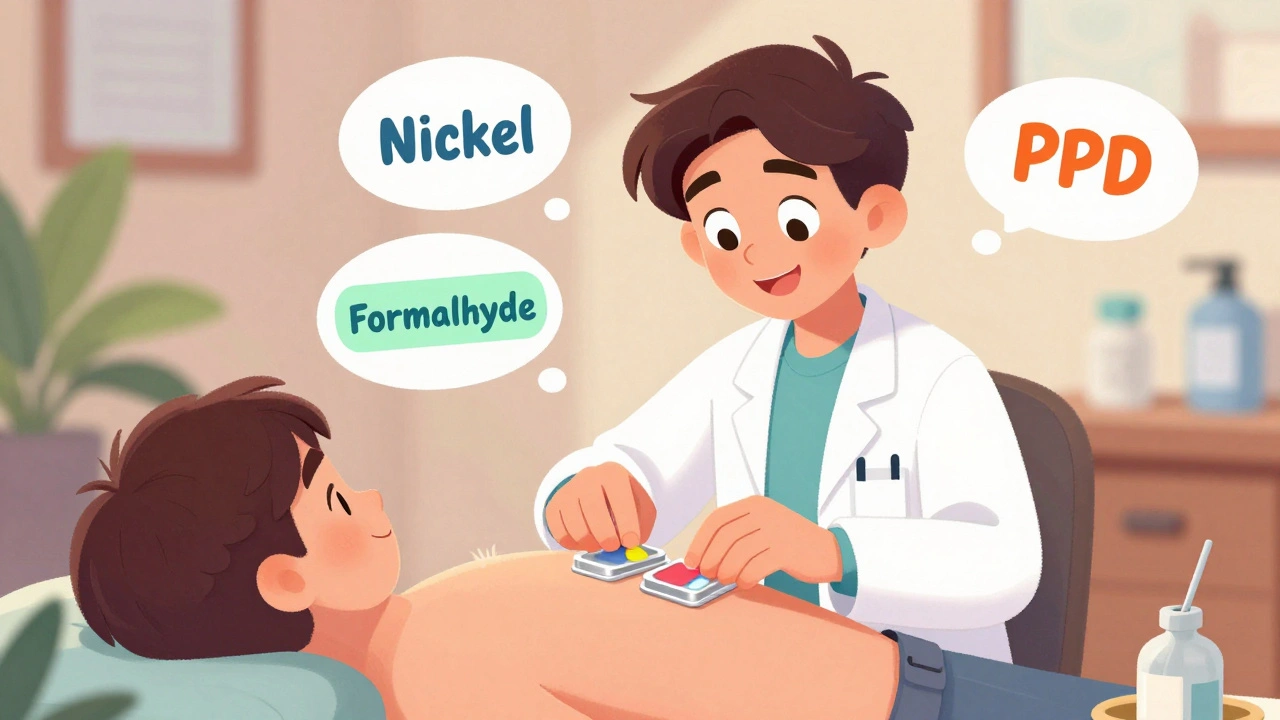
On day one, a dermatologist applies small amounts of common allergens to your back. These aren’t liquids or creams you rub on. They’re sealed in tiny aluminum chambers called Finn chambers, each holding a specific chemical at a controlled concentration. Between 30 and 100 different substances can be tested at once. The chambers are stuck to your skin with medical tape and left undisturbed for 48 hours.
During those two days, you can’t shower, sweat, or get the patches wet. That means no swimming, no intense workouts, and no long hot showers. Moisture can wash away the allergens or cause false reactions. You also can’t peel off the patches, even if they itch. Scratching or removing them early will ruin the test.
On day three, you return. The patches are removed, and the skin is checked for early signs of reaction-redness, swelling, or tiny blisters. But here’s the catch: the real reaction often shows up 24 to 48 hours later. That’s why you come back again on day five. The final reading tells you which allergens triggered a true immune response.
What’s in the Patch Test? The Most Common Allergens
There are thousands of possible contact allergens, but only a few show up again and again. The standard patch test panel includes the most frequent culprits, identified through decades of clinical data. In the U.S., the baseline series covers about 70% of allergic contact dermatitis cases. For people with occupational exposures, expanded panels can push that to 80%.
Here are the top offenders:
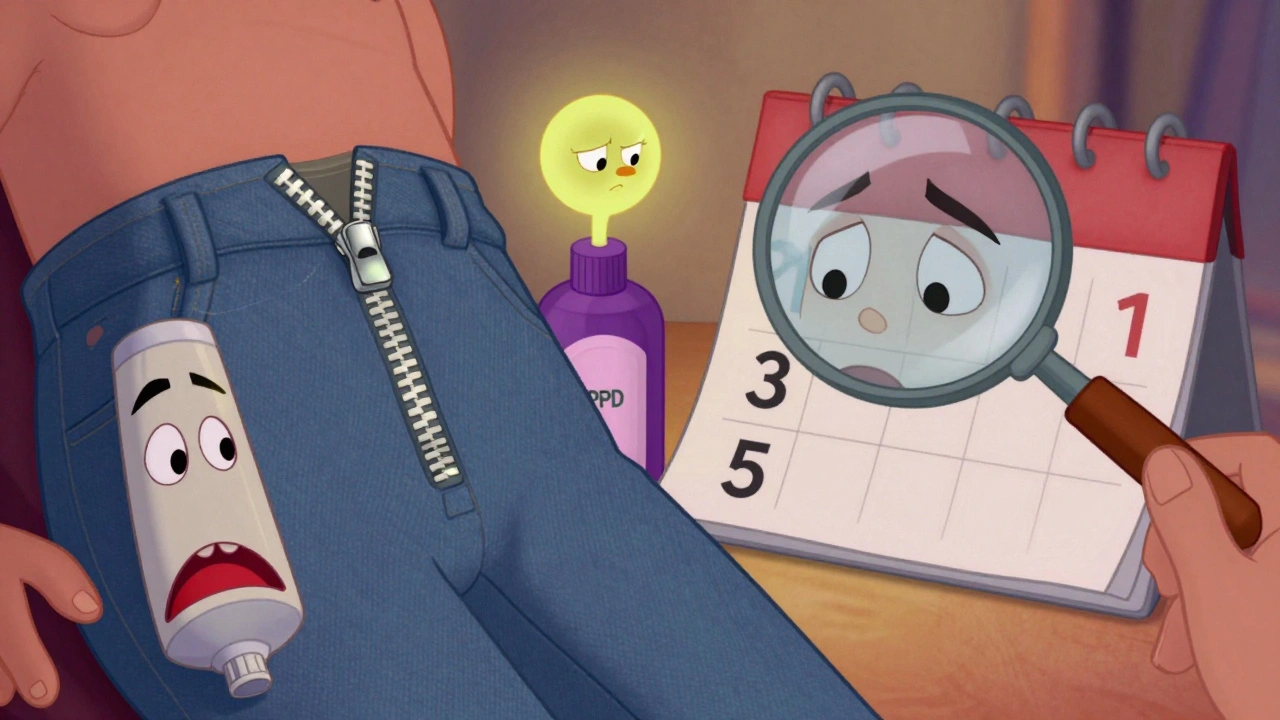
- Nickel-found in jewelry, belt buckles, zippers, and even some cell phones. It’s the number one allergen worldwide.
- Chromium-used in leather tanning, cement, and metal plating. Construction workers and shoemakers are especially at risk.
- Formaldehyde-a preservative in cosmetics, shampoos, and even some medications. It’s sneaky because it’s in so many everyday products.
- Paraphenylenediamine (PPD)-the main ingredient in permanent hair dyes. Reactions here often show up as scalp or eyelid rashes.
- Coconut diethanolamide-a foaming agent in soaps and body washes. People think it’s natural because it’s from coconut, but it’s chemically modified.
- Neomycin-an antibiotic found in over-the-counter creams. It’s a common cause of reactions to first-aid ointments.
- Thimerosal-a preservative in some eye drops and vaccines. Less common now, but still a trigger for some.
Some allergens are unexpected. Rubber in gloves, fragrances in laundry detergent, even the adhesive on bandages can cause reactions. That’s why testing doesn’t just rely on a standard panel-it’s tailored to your life.
How Patch Testing Differs From Other Allergy Tests
Many people confuse patch testing with skin prick tests. They’re both called allergy tests, but they’re completely different.
Skin prick tests check for immediate, IgE-mediated reactions-like peanut allergies or hay fever. You get pricked with a tiny needle, and if you’re allergic, you swell up within minutes. These tests are great for food and airborne allergens.
Patch testing? It’s for delayed reactions. It’s a Type IV hypersensitivity, meaning your T-cells are involved, not your antibodies. It takes days. That’s why you can’t use skin prick tests to diagnose contact dermatitis. They just won’t pick it up.
Another big difference: you can keep taking antihistamines during patch testing. They don’t interfere. That’s huge for people who rely on them for other allergies. With skin prick tests, you have to stop them for days beforehand. Patch testing lets you stay on your normal meds.
And unlike blood tests, which look for antibodies in your serum, patch testing shows you exactly what happens on your skin. It’s the only test that mimics real-life exposure.
What If the Test Comes Back Negative?
Not everyone gets a positive result. That doesn’t mean nothing’s wrong. It might mean your rash is caused by irritant contact dermatitis-something completely different.
Irritant contact dermatitis happens when a substance directly damages your skin barrier. Think: bleach, harsh soaps, or repeated handwashing. No immune system involved. Just chemical burn. Patch testing won’t catch that.
When patch testing is negative, doctors often suggest a different approach: repeat open application testing. You take a product you suspect-like your favorite hand cream-and apply it twice a day to a small patch of skin on your forearm for five to ten days. If your skin reacts, you’ve found your trigger. If not, you can rule it out.
It’s not as precise as patch testing, but it’s a practical next step. Sometimes, the allergen isn’t even in the standard panel. Maybe it’s a new chemical in a product you started using last month. Or something from your workplace. That’s why some dermatologists recommend expanded panels for people with persistent rashes or specific jobs.
What Happens After a Positive Result?
Getting a positive result isn’t the end-it’s the beginning of real relief.
Once you know what’s causing your rash, avoidance becomes possible. You don’t have to guess anymore. You can read labels. You can ask your barber about nickel-free tools. You can switch to fragrance-free laundry detergent. You can even buy nickel-free jewelry online.
But avoidance isn’t always easy. Nickel is everywhere. Formaldehyde is in some cosmetics, even if it’s not listed. Chromium hides in leather. That’s where education matters. Dermatologists don’t just hand you a list-they help you understand how to navigate it.
For active rashes, treatment includes topical corticosteroids to calm inflammation. Severe cases might need a short course of oral steroids. Antihistamines help with itching but won’t fix the underlying reaction. Moisturizing daily is critical too-repairing your skin barrier makes you less sensitive over time.
Some people need to change jobs. A dental technician allergic to methacrylates might need to switch to non-latex gloves or different materials. A florist allergic to chrysanthemum plant compounds might need to wear gloves or avoid certain flowers.
The goal isn’t just to treat the rash. It’s to stop it from coming back.

When and Where to Get Tested
Patch testing isn’t offered at every clinic. You need a dermatologist trained in the procedure. Most major hospitals and skin specialty centers offer it. It’s usually covered by insurance if you have a history of chronic or recurrent contact dermatitis.
The best time to get tested is when your skin is calm. If you’re in the middle of a bad flare, the test might not work as well. Your skin is too inflamed to react properly. But if your back is too irritated, they can test your upper arms or abdomen instead.
Don’t wait until your rash is unbearable. If you’ve had unexplained skin reactions for more than a few weeks, especially if they keep coming back in the same spots, it’s time to ask for patch testing. The sooner you find the trigger, the sooner you can start living without fear of flare-ups.
What to Expect After the Test
After the final reading, your dermatologist will give you a printed report listing every allergen you reacted to. They’ll explain what each one is, where you might find it, and how to avoid it.
You’ll get a list of safe products-fragrance-free, nickel-free, hypoallergenic brands that don’t contain your triggers. Some clinics even provide sample products or links to online stores.
It’s normal to feel overwhelmed at first. There might be five or six allergens you need to avoid. But over time, it gets easier. You learn to read labels. You start recognizing ingredient names. You build a new routine.
And here’s the best part: once you avoid your triggers, your skin often improves dramatically. Many patients report fewer rashes, less itching, and better sleep within weeks. Some say it’s the first time in years they’ve felt comfortable in their own skin.
Why Patch Testing Is Still the Gold Standard
There’s no other test that comes close. Blood tests can’t detect delayed hypersensitivity. Skin prick tests miss it entirely. Self-diagnosis leads to guesswork and frustration.
Patch testing is the only method that directly shows how your skin responds to real-world allergens. It’s been the gold standard for over 50 years-and it still is.
Even as new chemicals emerge in cosmetics, electronics, and household products, the core method hasn’t changed. It’s simple, reliable, and cost-effective. The American Academy of Dermatology, DermNet NZ, and UC Davis Health all agree: if you have contact dermatitis, patch testing is the first step toward real answers.
It’s not perfect. You might still miss something. But it’s the best tool we have. And for thousands of people every year, it’s the key to finally finding peace with their skin.
Jennifer Anderson
December 6, 2025 AT 11:41Helen Maples
December 7, 2025 AT 23:34Sadie Nastor
December 9, 2025 AT 19:08Oliver Damon
December 10, 2025 AT 21:41Kyle Flores
December 11, 2025 AT 18:24Ryan Sullivan
December 11, 2025 AT 23:19Wesley Phillips
December 12, 2025 AT 11:37Kyle Oksten
December 12, 2025 AT 16:20Ernie Blevins
December 14, 2025 AT 05:39