
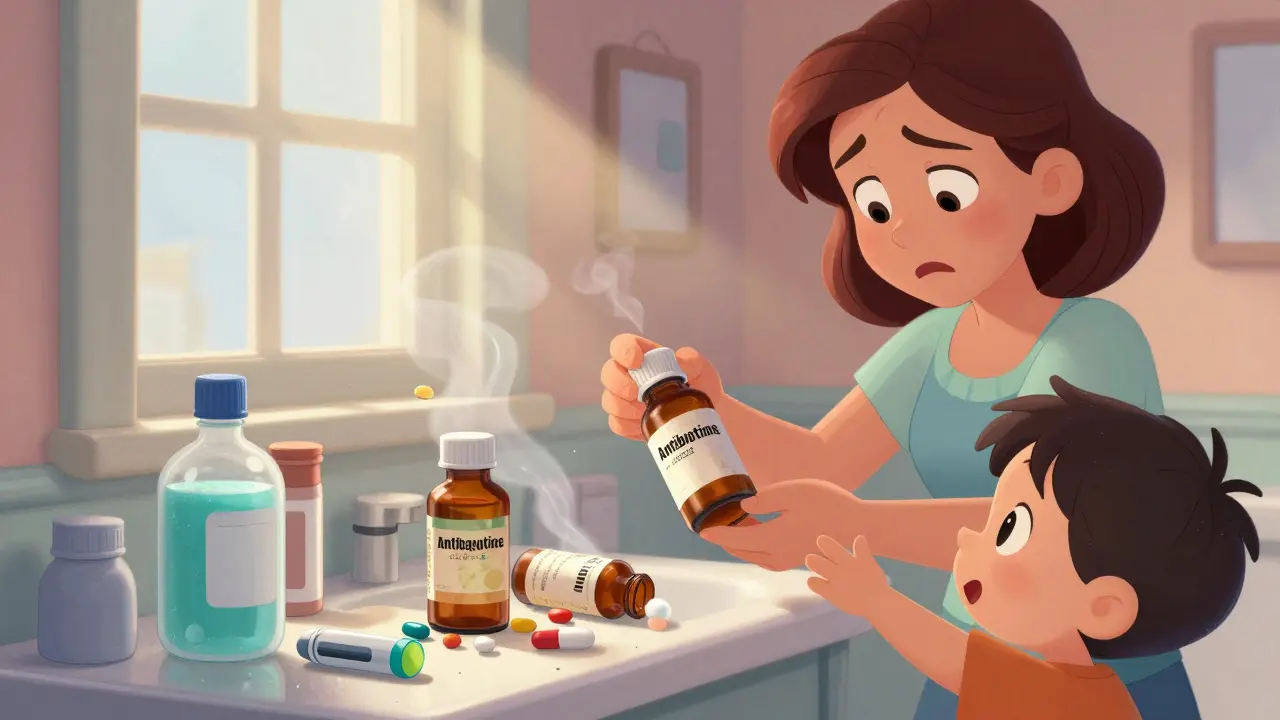
Why You Need to Check Your Medicine Cabinet Right Now
Most people don’t think about their medicine cabinet until they need something-like painkillers for a headache or allergy pills during pollen season. But what happens when those pills are old? Or when the liquid cough syrup looks cloudy? Or when your child finds a bottle of leftover antibiotics from last year’s cold?
Expired medications aren’t just useless-they can be dangerous.
The FDA warns that expired drugs can lose strength, change chemical composition, or even become toxic. Tetracycline antibiotics, for example, can damage your kidneys if taken after expiration. Insulin that’s past its date won’t control blood sugar. Epinephrine from an EpiPen might not save your life in an allergic reaction. And in homes with kids or older adults, cluttered cabinets increase the risk of accidental poisoning or dangerous drug mix-ups.
According to the American Association of Poison Control Centers, there were over 67,500 cases of children ingesting medications from home cabinets in 2022 alone. Meanwhile, the CDC reports that 70% of misused prescription opioids come from family medicine cabinets. If you haven’t checked your cabinet in over a year, you’re not just holding onto old pills-you’re holding onto risk.
What Counts as Expired? It’s Not Just the Date on the Bottle
Expiration dates aren’t arbitrary. They’re the last day the manufacturer guarantees the drug is fully potent and safe. But here’s the catch: many medications lose effectiveness long before that date-especially if they’re stored poorly.
Here’s what to look for:
- Color changes: Pills that have faded, turned yellow, or developed spots. Liquid medications that look cloudy or have particles floating in them.
- Smell or taste: If your medicine smells weird-like vinegar or rot-or tastes bitter when it shouldn’t, toss it. Medications shouldn’t have strong odors unless specified.
- Texture changes: Tablets that crumble easily, capsules that stick together, or ointments that separate into layers.
- Unmarked containers: If you can’t read the label, or the bottle has no name or expiration date, throw it out. No exceptions.
Even if the date hasn’t passed, if any of these signs are present, the drug is no longer safe to use. The National Kidney Foundation recommends treating any medication with visible changes as expired, regardless of the printed date.
And here’s something most people don’t know: prescription drugs should be thrown out after one year, even if the expiration date is still two years away. That’s the rule doctors at the National Kidney Foundation and Cone Health follow. Why? Because once a prescription bottle is opened, exposure to air, light, and moisture starts breaking down the ingredients faster than the manufacturer’s sealed-date estimate.
Where You Store Your Medicines Matters More Than You Think
Storing your meds in the bathroom? That’s a problem.
Humidity from showers and steam can destroy the active ingredients in pills and liquids. A 2022 study from Yale New Haven Health found that medications stored in bathroom cabinets lose 15-25% of their potency within just six months. That means your blood pressure pill might only be working at 75% strength. Your asthma inhaler might not open your airways fully. Your thyroid med might not keep your metabolism stable.
Instead, keep your medicine cabinet in a cool, dry place-like a kitchen cabinet away from the stove or sink. Avoid direct sunlight. Don’t leave pills in the car, on a windowsill, or near the dishwasher. Temperature swings and moisture are the two biggest enemies of medication stability.
Pro tip: If you live in a humid climate like Durban, consider using a small airtight container with a silica gel packet (the kind you find in shoeboxes) to keep moisture out. It’s cheap, simple, and works.
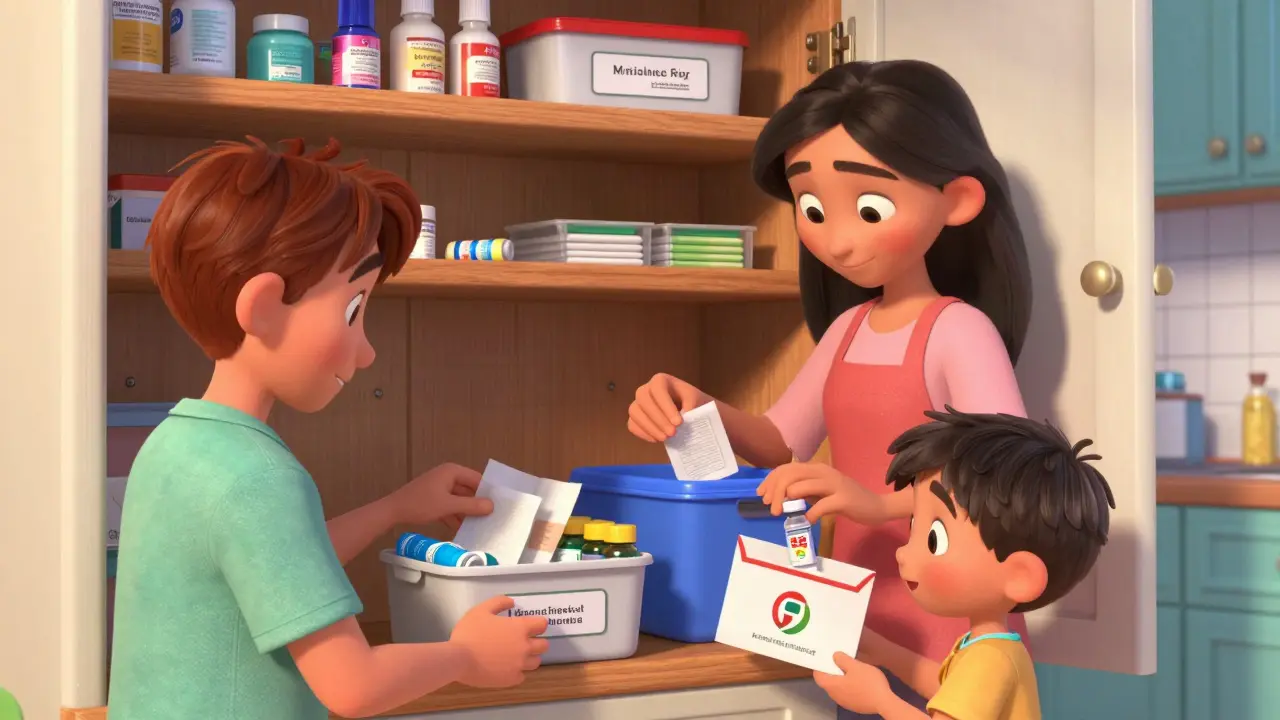
What Should Be in Your Medicine Cabinet? A Minimalist Emergency Kit
You don’t need a pharmacy in your cabinet. You need a few essentials ready for common emergencies. Here’s what NorthShore University HealthSystem and Emergency Physicians recommend keeping on hand:
- Adhesive bandages (at least 20, in assorted sizes)
- Gauze pads (10 or more)
- Medical tape
- Digital thermometer (non-mercury)
- Alcohol wipes (10+)
- Hydrogen peroxide (for cleaning minor cuts)
- Petroleum jelly (for dry skin or minor burns)
- Scissors and tweezers (clean and sharp)
- Antihistamines (like loratadine or cetirizine)
- Pain relievers (acetaminophen and ibuprofen-check expiration dates)
Don’t stockpile antibiotics, sleeping pills, or strong painkillers unless they’re actively prescribed and being used. Unused opioids, sedatives, and stimulants are the most commonly stolen or misused drugs in homes. Keep only what you need-and nothing more.
How to Safely Dispose of Expired Medications (No Flushing!)
Never flush pills down the toilet or toss them in the trash without taking steps to protect others. Here’s how to do it right.
Best option: Use a drug take-back program. The DEA runs over 14,600 authorized collection sites across the U.S., including many pharmacies, hospitals, and police stations. In October 2023 alone, these programs collected over a million pounds of unused meds. You can find your nearest drop-off point through the DEA’s website or by calling your local pharmacy.
Second best: Use a mail-back envelope. Since January 2024, CVS, Walgreens, and other major pharmacies have been offering free prepaid mailers for expired medications. Just put your pills in the envelope, seal it, and drop it in any mailbox. No postage needed.
If neither option is available, use the FDA’s home disposal method:
- Remove pills from their original bottles.
- Mix them with something unappealing-used coffee grounds, cat litter, or dirt. Use at least two parts filler to one part medication.
- Put the mixture in a sealed plastic bag or container.
- Scratch out or black out your name and prescription info on the empty bottle.
- Throw the sealed container in the trash.
For sharps like insulin needles or syringes: Use an FDA-approved sharps container. If you don’t have one, a heavy-duty plastic bottle (like a 2-liter soda bottle) works as long as you seal the top tightly with duct tape and label it “SHARPS-DO NOT OPEN.”
Make It a Habit: Link Your Check to a Regular Event
Most people forget to check their cabinets because there’s no trigger. But if you tie it to something you already do, it sticks.
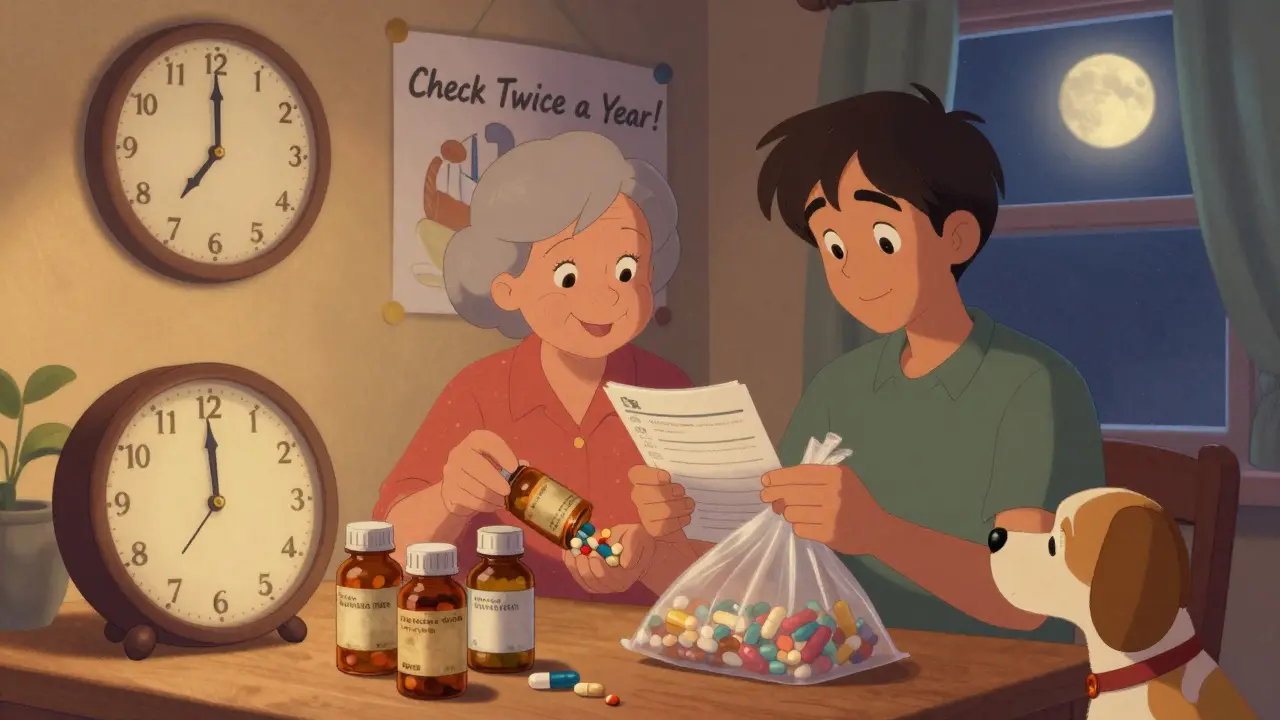
According to CenterWell Pharmacy’s 2023 survey, 92% of pharmacists recommend checking your medicine cabinet twice a year-right when you change your clocks for daylight saving time. Spring forward in March. Fall back in November. That’s your cue to pull everything out, sort it, and toss what’s expired.
Why this works: You’re already changing smoke detector batteries. You’re already adjusting your schedule. Make it part of the same routine. Keep a small notepad next to your cabinet. Write down what you threw out and what you need to restock. In six months, you’ll know exactly what to buy.
Special Cases: Drugs That Are Always Dangerous After Expiration
Some medications don’t just lose strength-they become harmful. These should be tossed immediately, no matter how recent the expiration date:
- Tetracycline antibiotics: Can cause kidney damage if taken after expiration.
- Insulin: Loses potency fast, especially if not refrigerated. Used insulin won’t lower blood sugar.
- Nitroglycerin: Used for chest pain. If it’s expired, it may not work during a heart attack.
- Liquid antibiotics: Break down quickly and can grow bacteria.
- Injectables like epinephrine: If your EpiPen fails during an allergic reaction, the consequences can be fatal.
- Eyedrops: Once opened, they’re only good for 28 days. After that, they risk causing eye infections.
If you’re unsure about a medication, call your pharmacist. They’ll tell you if it’s safe-or if you need to get a new prescription.
What Happens If You Don’t Clean Out Your Cabinet?
Here’s the real cost of ignoring this:
- Accidental poisoning: Kids, pets, or even confused older adults grab the wrong bottle. In 2022, poison control centers handled over 1.5 million medication exposure calls nationwide.
- Antibiotic resistance: Taking half-dosed expired antibiotics doesn’t kill bacteria-it trains them to survive. Hospital data shows a 12-15% rise in resistant infections linked to home use of expired antibiotics.
- Drug misuse: Teens and adults often turn to leftover painkillers or sedatives. That’s how addiction starts.
- Wasted money: You’re paying for meds you can’t use. One study found the average household has over $1,000 in expired or unused prescriptions.
Cleaning your cabinet isn’t just about safety-it’s about respect. Respect for your body. Respect for your family. Respect for your health.
Final Thought: Your Medicine Cabinet Isn’t a Storage Unit. It’s a Lifeline.
Think of your medicine cabinet like your fire extinguisher. You don’t want to find out it’s empty when the flames are already spreading. Same with your meds. If you’re not sure it works, it doesn’t.
Take 15 minutes this weekend. Pull everything out. Check the dates. Toss what’s expired. Restock the essentials. Use a mail-back envelope or find a drop-off site. Do it before spring comes.
It’s not glamorous. But it’s one of the simplest, most powerful things you can do to protect your household.
Carolyn Rose Meszaros
January 20, 2026 AT 11:40Greg Robertson
January 21, 2026 AT 19:59Crystal August
January 22, 2026 AT 01:49Nadia Watson
January 22, 2026 AT 07:38Courtney Carra
January 24, 2026 AT 03:57clifford hoang
January 24, 2026 AT 09:02Arlene Mathison
January 25, 2026 AT 11:54Emily Leigh
January 25, 2026 AT 20:30Art Gar
January 26, 2026 AT 15:04