

Medication Side Effect Checker
Check Your Medications
Enter medications you're currently taking to see if they may cause bladder side effects
Your Results
Have you started a new medication and suddenly find yourself running to the bathroom every hour? Or maybe you’re waking up three times a night just to pee, even though you didn’t drink anything before bed? You’re not alone. Many people assume frequent urination and sudden urgency are just part of aging - but often, the real culprit is something you’re taking every day.
Medications that cause bladder side effects are more common than you think. According to the American Urological Association, about 1 in 5 cases of frequent urination and urgency in adults over 40 are directly linked to prescription drugs. That’s not normal aging. That’s a side effect you can actually do something about.
Diuretics: The Most Common Culprit
If you’re on a water pill, it’s no surprise you’re peeing more. Diuretics like hydrochlorothiazide, furosemide (Lasix), and spironolactone (Aldactone) are among the most prescribed drugs in the U.S., mostly for high blood pressure and heart failure. But here’s what most people don’t realize: these drugs don’t just make your kidneys produce more urine - they overload your bladder.
Within two hours of taking a diuretic, urine output can jump by 20 to 50%. That means your bladder fills faster and stretches more than it’s designed to handle. The result? Constant urgency, daytime frequency, and yes - nighttime awakenings. Studies show 65% of people on diuretics have more daytime trips to the bathroom, and 40% wake up at night to urinate.
And dosage matters. A 2021 Journal of Urology study found that people taking 80mg of furosemide daily were nearly four times more likely to need incontinence products than those on 20-40mg. The fix? Timing. Taking your diuretic before 2 p.m. cuts nighttime bathroom trips by 60%, according to clinical data from BuzzRx. Splitting the dose - say, half in the morning and half at lunch - also helps. No need to stop the medication. Just adjust when you take it.
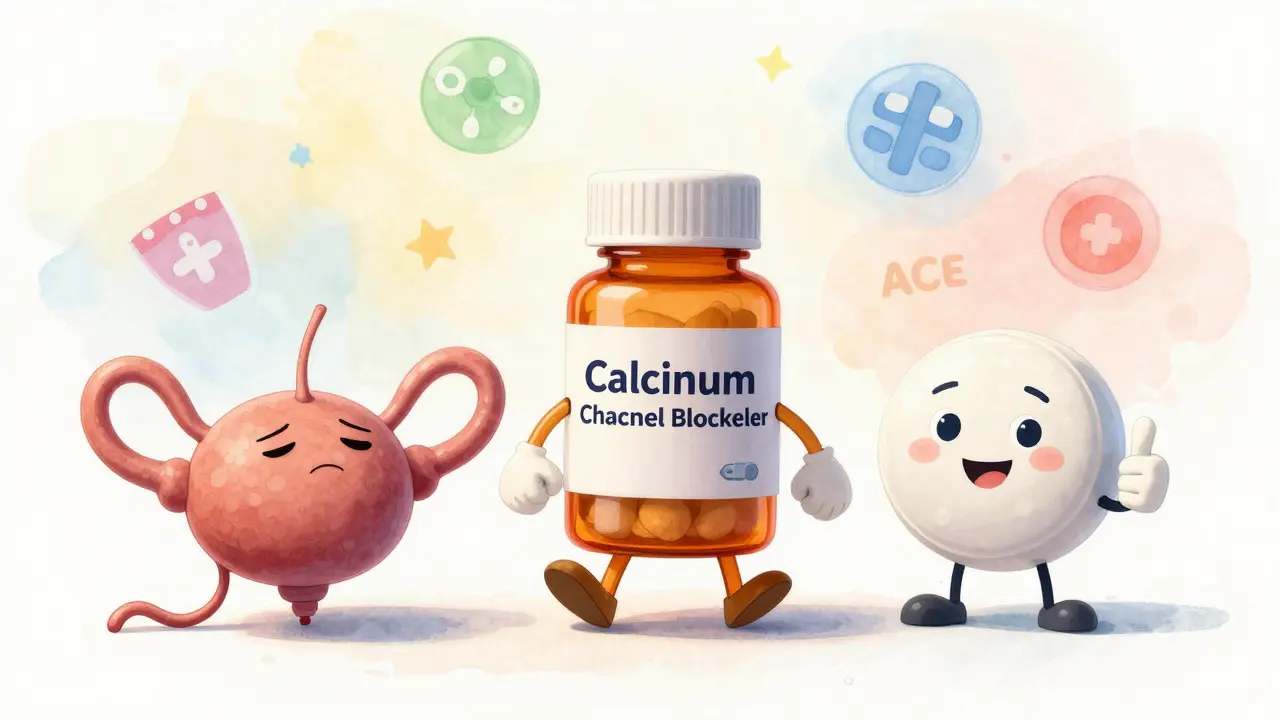
Calcium Channel Blockers: Hidden Bladder Disruptors
These are common blood pressure meds - amlodipine, nifedipine, verapamil. You might not connect them to your bladder, but they’re a major cause of nocturia. Here’s why: calcium is needed for your bladder muscle to contract and empty properly. These drugs block calcium flow, so your bladder doesn’t squeeze as hard. It fills up, but doesn’t empty well. That leads to that uncomfortable feeling of urgency, even when there’s not much urine.
A 2019 meta-analysis in the Journal of Hypertension found that people on nifedipine had nearly two extra nighttime voids compared to those on placebo. Verapamil showed the strongest link - 42% of users reported worsened nocturia. Symptoms usually show up within 2 to 4 weeks of starting the drug. If you’ve noticed this pattern, talk to your doctor. There are other blood pressure meds, like ACE inhibitors or beta-blockers, that are less likely to cause bladder issues.
Psychotropic Drugs: When Mood Meds Hit the Bladder
Antidepressants, mood stabilizers, and antipsychotics are another big group. Venlafaxine (Effexor), escitalopram (Lexapro), fluoxetine (Prozac), and paroxetine (Paxil) can worsen overactive bladder in 22% of users. Why? They affect neurotransmitters like serotonin and norepinephrine, which also control bladder nerve signals. The result? Bladder spasms, urgency, and accidents.
Lithium, used for bipolar disorder, has a unique effect. About 1% of long-term users develop nephrogenic diabetes insipidus - a condition where the kidneys can’t concentrate urine. That means you’re peeing out 3 liters or more a day. A 2018 study of 873 patients found 9% stopped lithium because of urinary side effects. If you’re on lithium and suddenly peeing nonstop, get your kidney function checked.
Antipsychotics like clozapine, risperidone, and olanzapine cause problems too. They block acetylcholine - a chemical your bladder needs to contract. That leads to urinary retention. You feel the urge, but can’t fully empty. That’s when overflow incontinence kicks in: small leaks because your bladder’s always full.
Other Surprising Offenders
Antihistamines like diphenhydramine (Benadryl) and chlorpheniramine (Chlor-Trimeton) are often taken for allergies or sleep. But they’re anticholinergics - meaning they dry up secretions and relax smooth muscles, including your bladder. This can cause retention, which then leads to overflow and frequent small leaks. About 5-7% of users experience this.
ACE inhibitors and ARBs (like captopril or losartan) don’t directly affect the bladder. But they cause a dry cough in up to 15% of users. That cough? It puts pressure on your pelvic floor. Over time, that can lead to stress incontinence - leaking when you laugh, cough, or sneeze.
And then there’s tamsulosin (Flomax) and silodosin (Rapaflo). These are used for enlarged prostate - and they work great for helping men urinate. But they also cause retrograde ejaculation in 25-30% of men. Semen goes backward into the bladder instead of out the penis. It’s not dangerous, but it can be shocking if you didn’t know it was a side effect.

What to Do If Medications Are Causing Problems
Don’t stop your meds on your own. But do speak up. Here’s what works:
- Track your symptoms. Write down when you started the drug and when the bladder issues began. If it lines up within 2-8 weeks, that’s a strong clue.
- Ask about timing. For diuretics, take them early. For other meds, splitting doses or changing the time of day can help.
- Try bladder retraining. This isn’t just about holding it in. It’s scheduled voiding - going to the bathroom every 2-3 hours, even if you don’t feel the urge. Studies show 70% of people improve after 6-8 weeks.
- Add pelvic floor exercises. Kegels strengthen the muscles that control urine flow. A 2023 review found combining timed voiding with pelvic floor training cut incontinence episodes by 55%.
- Ask for alternatives. Is there another blood pressure med that doesn’t affect the bladder? Is there an antidepressant with lower anticholinergic activity? Your doctor can swap out drugs without losing effectiveness.
The Mayo Clinic recommends a 4-step approach: confirm timing, rule out other causes (like infection or prostate issues), adjust behavior, then consider changes to the drug. Don’t wait until you’re embarrassed or exhausted. Most cases improve once the link is recognized.
Why This Gets Overlooked
Patients often don’t connect the dots. One Reddit thread with 157 participants found 42% had to push back on their doctors before anyone considered medication as the cause. Doctors, too, can miss it - especially if they’re focused on the main condition (like hypertension or depression) and not the side effects.
But the data is clear. A 2022 PatientsLikeMe survey found 68% of lithium users reported moderate to severe disruption to daily life because of frequent urination. That’s not just inconvenient - it’s affecting sleep, work, relationships, and mental health.
The good news? You don’t have to live with it. Medication-induced bladder problems are often reversible. With the right adjustments, you can keep the drugs you need - and get your life back.
Can stopping a medication reverse frequent urination?
Yes - in many cases. Symptoms often improve within days to weeks after stopping or adjusting the medication. But never stop a drug without talking to your doctor first. For example, stopping a diuretic too quickly can cause fluid buildup and worsen heart or kidney conditions. Your doctor can help you taper safely or switch to a different medication with fewer bladder side effects.
Are there any medications that help with medication-induced urinary urgency?
Sometimes. If you can’t stop the original drug, your doctor might prescribe an overactive bladder medication like oxybutynin, tolterodine, or mirabegron. These calm bladder spasms. But they come with their own side effects - dry mouth, constipation, blurred vision - so they’re usually only used if the bladder symptoms are severe and other options have failed.
Do all diuretics cause frequent urination?
Most do, but the severity varies. Loop diuretics like furosemide cause the strongest effect - they’re powerful and fast-acting. Thiazides like hydrochlorothiazide are milder but still cause noticeable increases in urination. Potassium-sparing diuretics like spironolactone are slower and less likely to cause sudden urgency, but they still increase total urine output over time. All diuretics increase urine volume - the question is how much and how fast.
Can drinking less water help reduce frequent urination from meds?
No - and it can make things worse. Cutting back on fluids doesn’t reduce how much your kidneys produce - it just makes your urine more concentrated, which can irritate the bladder lining and increase urgency. It can also lead to dehydration or kidney stones. Instead of drinking less, focus on timing: avoid fluids 2-3 hours before bed, and spread your intake evenly through the day.
Is frequent urination from meds more common in older adults?
Yes, and for two reasons. First, older adults are more likely to be on multiple medications - each one adding risk. Second, aging naturally weakens bladder muscles and reduces bladder capacity. So when a drug adds extra pressure, the system can’t compensate. Studies show that over 33% of adults over 40 have urinary symptoms, and medication side effects make up 15-20% of those cases. The risk goes up with age, especially if you’re taking three or more prescriptions.
Adam Kleinberg
March 10, 2026 AT 22:03They don't want you to know this but Big Pharma designed diuretics to make you pee constantly so you buy more incontinence pads and toilet paper. It's a cash cow. I've seen the internal memos. They even fund studies that say 'it's just aging' to keep you docile. Your bladder isn't failing - your system is rigged. Wake up.
Gene Forte
March 11, 2026 AT 10:48Every human body is a miracle of balance. When we introduce chemicals, we must respect the delicate harmony of nature. A simple shift in timing - taking your medication before noon - can restore dignity to your nights. It’s not about stopping treatment. It’s about aligning with your body’s rhythm.
Kenneth Zieden-Weber
March 13, 2026 AT 00:58So let me get this straight - you're telling me that the same drugs that keep my dad's heart from exploding are also turning his life into a bathroom roulette game? And we're supposed to just 'adjust timing' like it's a coffee schedule? Bro. I'm not even mad. I'm just impressed by how many ways medicine can accidentally ruin your life while trying to save it.
Chris Bird
March 14, 2026 AT 04:00This is why Africa doesn't have these problems. We don't take 12 pills a day. We eat food. We move. We pray. You Americans turn every symptom into a pharmaceutical product. Stop buying the lie.
David L. Thomas
March 15, 2026 AT 16:55From a pharmacokinetic standpoint, the circadian modulation of diuretic dosing is a well-documented strategy to mitigate nocturnal polyuria. The half-life of furosemide is ~2 hours, so administering it post-14:00 creates a pharmacodynamic mismatch with the body's natural antidiuretic hormone surge. Also - Kegels aren't just for postpartum folks. Pelvic floor EMG data shows 68% of males over 45 have latent detrusor overactivity. Time to get proactive.
Bridgette Pulliam
March 17, 2026 AT 08:02I appreciate how thorough this is. I’ve been on Lexapro for five years and never connected the dots to my 3 a.m. bathroom runs. I thought I was just ‘getting older.’ Turns out, serotonin reuptake inhibition can overstimulate the sacral nerve plexus. I’m going to talk to my psychiatrist about switching to bupropion. Thank you for the clarity.
Mike Winter
March 18, 2026 AT 02:25It's fascinating how medicine, in its quest to treat one system, so often disrupts another. The bladder is not an isolated organ - it's a mirror of autonomic balance. When we interfere with calcium channels or cholinergic pathways, we're not just altering urine output. We're changing how the body speaks to itself. Perhaps the real question isn't 'which drug?' but 'what are we ignoring when we only look at the symptom?'
Randall Walker
March 19, 2026 AT 07:33So… I’m on amlodipine… and I wake up 4 times a night… and now I’m supposed to believe it’s not because I’m old… but because I’m a walking calcium channel blockade experiment? And my doctor just nods and says ‘it’s normal’? Yeah. Right. I’m gonna start bringing this article to every appointment. With highlighters. And a timer. And a spreadsheet. I’m not just a patient. I’m a data point with dignity.
Miranda Varn-Harper
March 20, 2026 AT 00:51How can you possibly trust a medical system that has you on seven different medications for seven different side effects of the other six? You take a pill for blood pressure. Then a pill for the dry mouth from that pill. Then a pill for the constipation from the second pill. Then a pill for the urinary retention from the third pill. Then a pill for the anxiety from knowing you’re on four pills that are making you need five more pills. This isn’t healthcare. It’s a Ponzi scheme with a stethoscope.
Alexander Erb
March 20, 2026 AT 15:12Just dropped my diuretic to 8 a.m. and holy crap - no more midnight marathons. 😍 Also started doing 5 mins of Kegels before bed. Felt like I was doing pelvic yoga. My wife thinks I’m weird. I think I’m finally sleeping like a human again. If you’re on meds and peeing like a teakettle - try timing. It’s free. It’s easy. And it works. You’re welcome. 🙌