
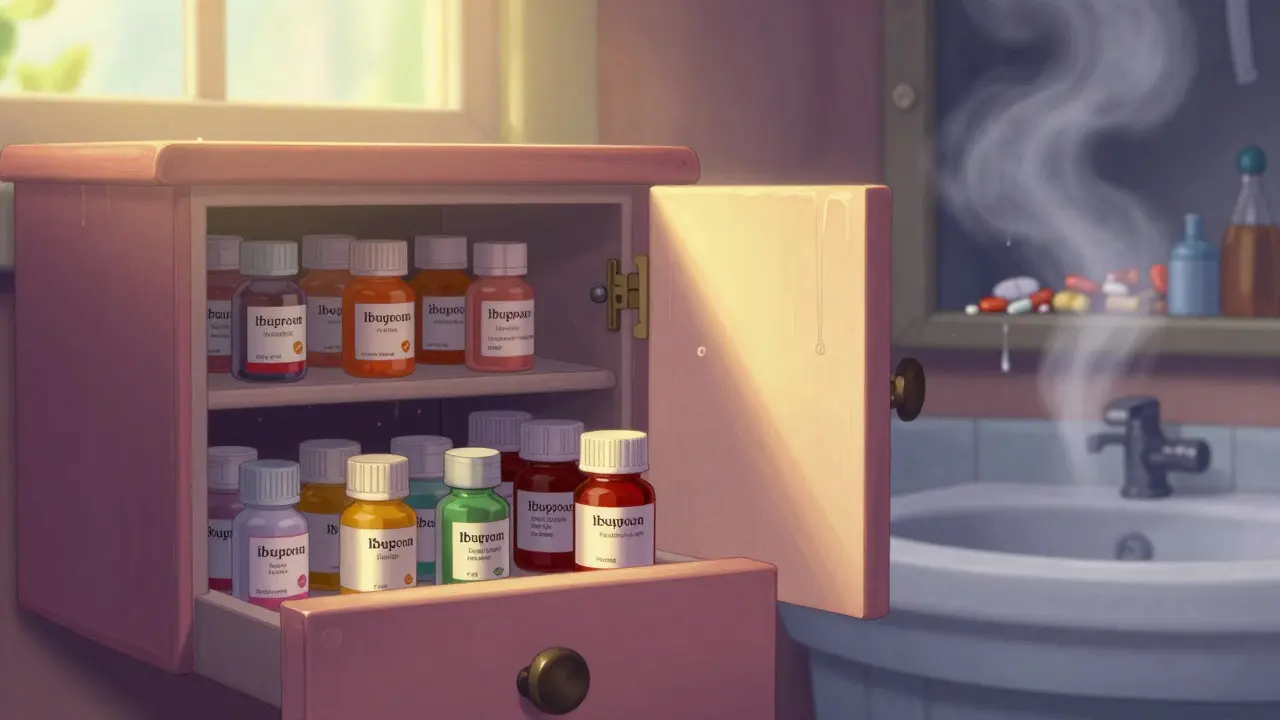
How many of us have reached into the medicine cabinet and found a bottle of ibuprofen or allergy pills with a date that’s long passed? It’s easy to shrug it off - "It’s just a few months old, it’s probably fine." But is it? When you’re dealing with over-the-counter medications past their expiration date, the real question isn’t whether they’re dangerous - it’s whether they’ll still work when you need them most.
What Does an Expiration Date Actually Mean?
The expiration date on your OTC meds isn’t a "use-by" date like milk. It’s not saying the medicine turns toxic after that day. What it means is this: the manufacturer guarantees the drug will be at full strength and safe to use up until that date. After that? They can’t promise anything. The FDA required these dates back in 1979 to protect people, and they stick to them - even though science shows many pills stay potent far longer.
Take solid tablets like acetaminophen (Tylenol) or ibuprofen (Advil). If you’ve kept them in their original bottle, away from heat and moisture, they often hold onto 85-90% of their potency for 1-2 years past the expiration date. Harvard Medical School tested over 100 different medications and found that 88% of tablets still worked well even after sitting on a shelf for years. That’s not magic - it’s chemistry. Solid forms don’t break down as fast as liquids.
Not All Medications Age the Same Way
Here’s where things get tricky. Some meds are fine. Others? Not so much.
Antihistamines like loratadine (Claritin) or cetirizine (Zyrtec) are among the most stable. Lab tests show they can remain effective for 3-5 years beyond their printed date if stored properly. Same with pain relievers. If you’ve got a headache and your ibuprofen expired six months ago? It’s probably still doing its job.
But then there’s the flip side.
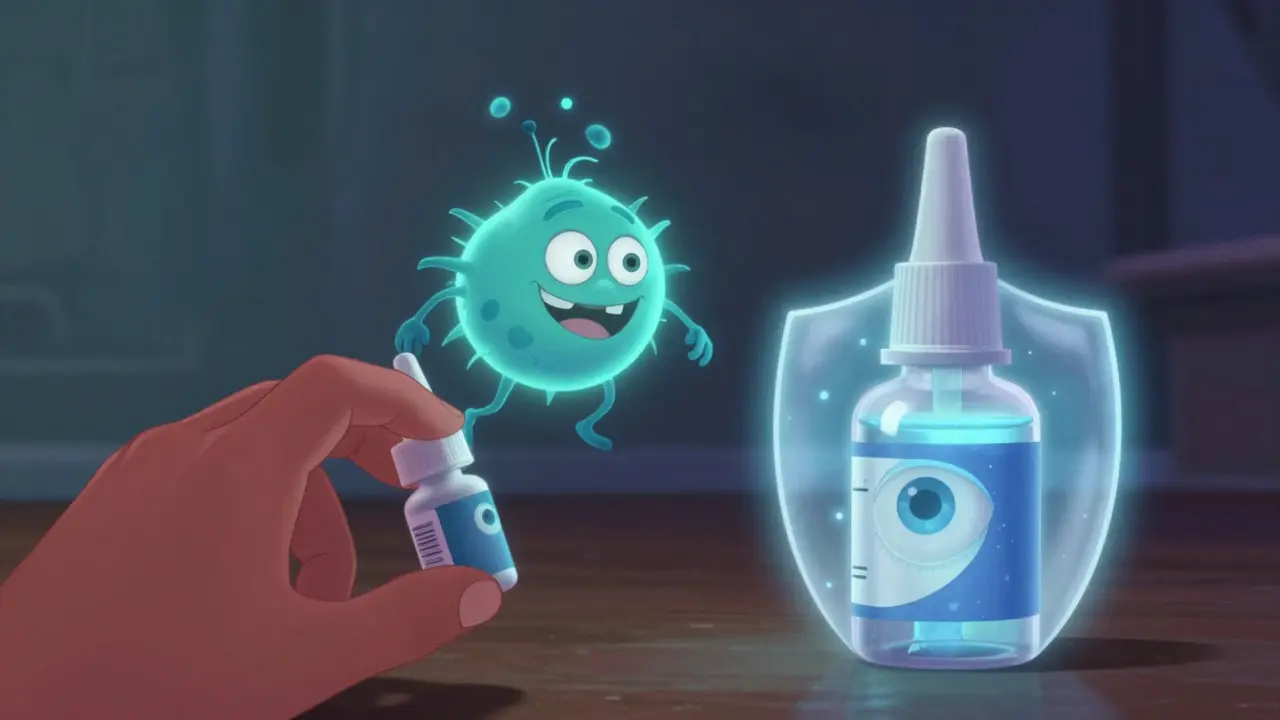
Eye drops? Huge risk. Studies from Providence Health show that 72% of expired eye drops develop bacterial growth within three months. That’s not just ineffective - that’s a direct path to an eye infection. Liquid antibiotics? Even worse. University Hospitals found 43% of liquid suspensions showed signs of contamination within six months of expiration. And if you’ve ever used an expired nasal spray that’s cloudy or smells off? That’s not just old - that’s unsafe.
Then there are the critical ones. Nitroglycerin for heart conditions? It loses half its potency within six months of expiration. Epinephrine for severe allergies? If it’s expired, it might not save your life. These aren’t the kind of meds you gamble with.
What Happens If You Take an Expired Pill?
Most of the time, nothing bad happens. You just might not feel the relief you expect. A Reddit thread with over 147 user reports found that 63% of people noticed their expired ibuprofen didn’t work as well. One user wrote: "Took two pills for my headache. Felt nothing. Replaced them. Took one fresh one - gone in 20 minutes."
But there’s a darker side. Expired antibiotics are the real concern. Back in the 1960s, expired tetracycline caused a rare but serious kidney condition called Fanconi syndrome. While modern formulations are safer, the risk of incomplete treatment still exists. If an antibiotic doesn’t kill all the bacteria, the survivors can become resistant. That’s how superbugs grow - and it’s not just a lab problem. Drugs.com user reports show 17% of people who took expired liquid antibiotics ended up with longer infections, some needing hospital visits.
And then there’s the psychological risk. You take a pill, feel okay, and assume it worked. But if the dose is too low, the infection keeps growing. You delay seeing a doctor. By the time you do, it’s worse - and harder to treat.
Storage Matters More Than You Think
It’s not just about the date. It’s about where you keep the bottle.
The FDA says storing meds above 30°C (86°F) causes potency to drop 300% faster than at 25°C (77°F). That means your bathroom cabinet - hot, steamy, humid - is one of the worst places to store pills. A medicine cabinet in a cool, dry bedroom? Much better.
Original packaging? Keep it. Transferring pills to a plastic bag or a pill organizer? That’s a fast track to degradation. University Hospitals found that pills kept in their original sealed containers stayed stable 40% longer than those moved around. Why? Because the foil blister packs and child-resistant bottles are designed to block moisture and air.
And don’t forget the signs of spoilage. If your tablet crumbles when you touch it, if your liquid is cloudy or smells weird, if the color changed - toss it. You don’t need to be a pharmacist to know something’s off. Trust your eyes and your nose.
When Is It Okay to Use an Expired Medication?
Let’s be practical.
If you’re out of allergy meds and your loratadine expired three months ago? Go ahead. It’s probably fine. You’re not treating a life-threatening condition. You’re just trying to stop the sneezing.
Same with a bottle of aspirin that’s six months past its date - if you’re using it for a headache or minor pain, it’s unlikely to hurt you. But if you’re on daily low-dose aspirin for heart protection? Replace it. That’s not a gamble worth taking.
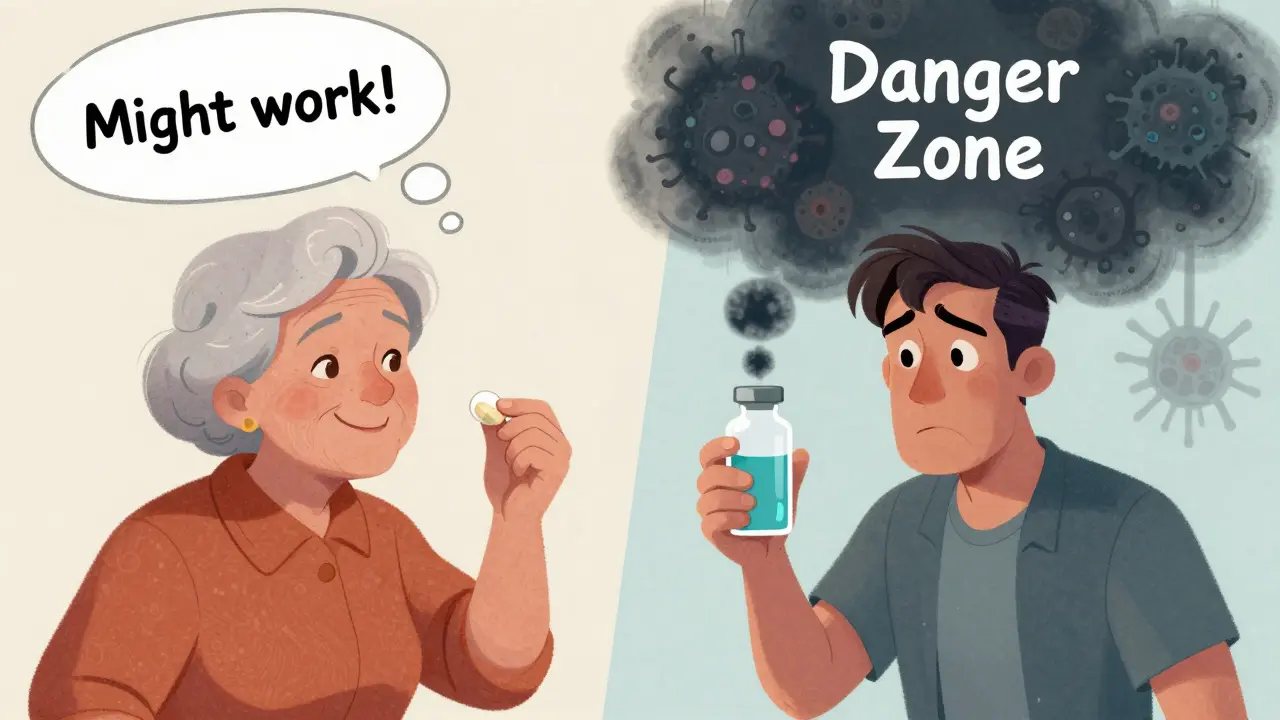
For minor issues - a cold, a cough, a runny nose - using an expired OTC med for a few weeks might be harmless. But if you’re managing a chronic condition, or if you’re pregnant, elderly, or immunocompromised? Don’t risk it. Your body doesn’t have the same buffer.
Pharmacists at Brevard Health Alliance say this: "We recommend sticking to the date. But we also know people live real lives. If you’re in a pinch and the only option is an expired pill for a minor symptom, it’s not going to kill you. But don’t make a habit of it."
What Should You Do With Expired Meds?
Don’t flush them unless they’re opioids or other controlled substances - the FDA says that’s the only time flushing is safe. For everything else, mix them with coffee grounds or cat litter in a sealed bag, then throw them in the trash. It keeps kids and pets from getting into them, and it stops them from leaching into water supplies.
Some pharmacies and local health departments offer take-back programs. Check with your local clinic - it’s free and safe.
And here’s a tip: every six months, do a medicine cabinet check. Toss what’s expired. Keep what’s not. Don’t hoard. Don’t ignore. Just stay aware.
The Bigger Picture
Here’s the irony: 68% of U.S. households still have expired meds in their cabinets. That’s over $765 million a year spent replacing pills that are still good - and another $1.2 billion in extra healthcare costs from infections and treatment failures because people used expired antibiotics or heart meds.
The FDA still says: "No guarantees after the date." And they’re not wrong. But science also says: many pills last longer than we think. The real issue isn’t the date - it’s the lack of clear guidance. People don’t know what’s safe, what’s risky, or how to store their meds properly.
That’s changing. The FDA is testing smart packaging that can show real-time potency levels. Companies are investing billions into labels that change color if the drug degrades. In five years, you might scan a QR code on your ibuprofen bottle and see: "87% potency - still effective."
Until then? Use common sense. If it’s a minor issue, and the pill looks and smells normal? It’s probably fine. If it’s something serious - heart, infection, allergy - replace it. Your health isn’t worth the gamble.
Is it dangerous to take expired over-the-counter painkillers like ibuprofen or acetaminophen?
For most people, taking expired ibuprofen or acetaminophen isn’t dangerous - it’s just less effective. Studies show these solid tablets retain 85-90% of their potency up to two years past the expiration date if stored properly. You might need to take an extra pill to get the same relief, but you won’t get sick from it. The real risk comes from using them for serious pain or inflammation and assuming they’re working when they’re not.
Why do some medications expire faster than others?
Liquid medications - like cough syrups, eye drops, and antibiotics - break down faster because they contain water, which lets bacteria grow and chemicals degrade. Solid tablets and capsules are more stable because they’re dry and sealed. Eye drops are especially risky because they’re meant to be sterile. Once the seal is broken and the date passes, contamination can happen quickly. Heat and humidity also speed up degradation - that’s why storing meds in the bathroom is a bad idea.
Can expired allergy medicine still work?
Yes, often. Antihistamines like loratadine (Claritin) and cetirizine (Zyrtec) are among the most stable OTC drugs. Lab tests show they can maintain therapeutic effectiveness for 3-5 years beyond their printed expiration date when kept in cool, dry conditions. If your allergy pill is six months past its date and looks normal, it’s very likely still working. But if you’re having a severe reaction, don’t rely on an old bottle - get a new one.
What should I do if I accidentally took an expired antibiotic?
If you took a single dose of an expired antibiotic and feel fine, you’re likely okay. But if you’re using it to treat an infection and you don’t start feeling better within a day or two, stop and see a doctor. Expired antibiotics may not kill all the bacteria, which can lead to a stronger, resistant infection. Don’t try to finish the course if it’s not working - that’s how antibiotic resistance starts. Always replace expired antibiotics.
How can I tell if a medication has gone bad?
Look for changes in color, texture, or smell. Tablets that crumble easily, capsules that are sticky or cracked, liquids that are cloudy or have particles floating in them - these are red flags. If a liquid smells sour or unusual, or if an eye drop has changed color, throw it out. Also, if the packaging is damaged or the seal is broken, don’t use it. These signs mean the medication is no longer safe or effective, regardless of the expiration date.
What’s Next?
The future of expiration dates is changing. Smart packaging that tells you if your pill is still good? That’s coming. For now, though, the best advice is simple: know what you’re taking, how you’re storing it, and when to replace it. For minor symptoms, an old pill might be okay. For anything serious - don’t risk it. Your body remembers when something doesn’t work. Don’t let outdated medicine be the reason you’re still in pain.
Sophia Nelson
February 10, 2026 AT 19:20Skilken Awe
February 11, 2026 AT 00:10andres az
February 11, 2026 AT 14:29Steve DESTIVELLE
February 12, 2026 AT 10:25Stephon Devereux
February 12, 2026 AT 22:34Neha Motiwala
February 13, 2026 AT 08:56athmaja biju
February 13, 2026 AT 21:14Robert Petersen
February 14, 2026 AT 16:55alex clo
February 16, 2026 AT 01:43Joanne Tan
February 17, 2026 AT 07:57Reggie McIntyre
February 17, 2026 AT 15:55Carla McKinney
February 18, 2026 AT 23:00Ojus Save
February 20, 2026 AT 19:21Sophia Nelson
February 22, 2026 AT 19:13