
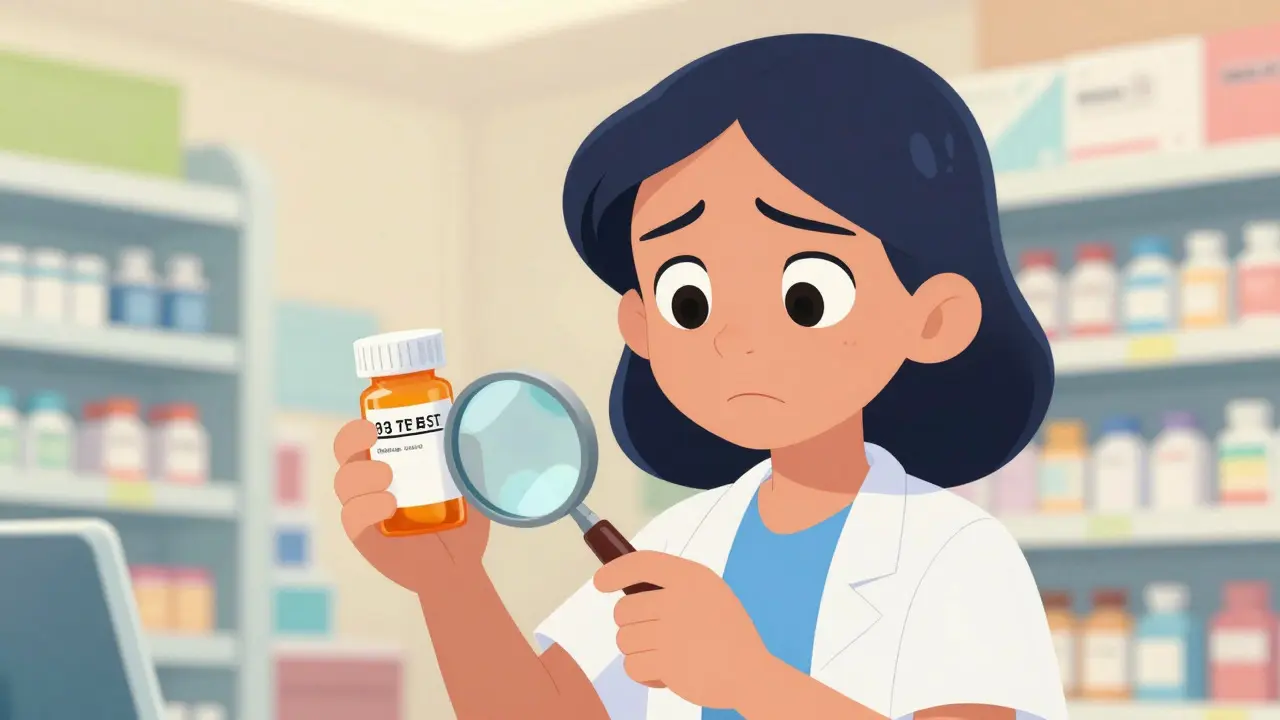
Imagine leaving your doctor’s office with a prescription that looks perfectly normal. You hand it to the pharmacist, pick up the bottle, and start taking the pills. But what if the dosage is ten times higher than intended? Or worse, what if you’ve been given a heart medication instead of an allergy pill because the names sound similar?
This isn’t a movie plot; it’s a daily reality for many patients. Prescription writing errors are not just typos-they are critical medical mistakes that happen before the medicine even reaches your hands. According to data from the National Coordinating Council for Medication Error Reporting and Prevention, these preventable events can lead to inappropriate medication use or serious harm. In fact, estimates suggest that medication errors affect at least 1.5 million people annually in the United States alone.
The good news? You hold significant power in this equation. Research shows that when patients actively engage in reviewing their prescriptions, the risk of errors drops by up to 50%. You don’t need a medical degree to spot the red flags. You just need to know where to look and have the confidence to ask questions. Here is how you can protect yourself and catch these errors before they become emergencies.
The Hidden Dangers in Plain Sight
To catch an error, you first need to understand what they look like. Prescription errors aren't random; they follow patterns. An analysis of over 12,000 malpractice claims revealed nine distinct categories of mistakes, with unclear handwriting and wrong dosages being the most common culprits.
One of the biggest risks comes from dangerous abbreviations. For decades, doctors used shorthand to save time, but this shorthand is often misinterpreted. For example, the letter 'U' for units can easily be mistaken for a zero. If a doctor writes '10 U' of insulin, a hurried reader might see '100,' leading to a ten-fold overdose. Similarly, 'QD' (once daily) can be confused with 'QID' (four times daily). The Institute for Safe Medication Practices has documented countless cases where 'Ug' for micrograms was read as 'units,' causing fatal overdoses of drugs like heparin.
Then there are decimal point disasters. Writing '.5 mg' without a leading zero can make it look like '5 mg.' Conversely, writing '5.0 mg' with a trailing zero can be misread as '50 mg.' These small visual tricks account for a staggering number of deaths reported by the FDA between 2010 and 2020. Even with the rise of electronic health records, which have reduced handwriting errors by 55%, new problems have emerged. A 2019 study found that electronic systems introduced new types of errors, such as selecting the wrong strength from a dropdown menu because the correct option wasn't at the top of the list.
Your Seven-Point Verification Checklist
You don’t have to memorize every medical abbreviation. Instead, use a simple, structured approach. The FDA recommends examining every prescription for seven critical elements. Think of this as your personal quality control step before you leave the clinic or pharmacy counter.
- Complete Drug Name: Ensure the name is spelled out fully. Abbreviations should be avoided entirely. If you see 'HC,' ask if it means hydrocortisone or heparin-these two drugs treat completely different conditions and swapping them could be disastrous.
- Precise Dosage: Look for leading zeros on decimals less than one (e.g., 0.5 mg, not .5 mg) and no trailing zeros (e.g., 5 mg, not 5.0 mg). This eliminates ambiguity.
- Clear Frequency Instructions: Avoid Latin abbreviations like 'BID' (twice daily) or 'TID' (three times daily). Clear instructions should say "Take twice a day" explicitly.
- Total Quantity: Does the number of pills match the duration of treatment? If you’re prescribed antibiotics for a 7-day course, you shouldn’t receive a 30-day supply unless specified.
- Indication or Purpose: Modern guidelines mandate stating why you are taking the drug. This helps you verify that the medication matches your diagnosis.
- Prescriber Contact Information: Ensure you have a way to reach the doctor if you have questions later.
- Expiration Date: Check that the prescription hasn’t expired, especially for controlled substances which have strict validity periods.
A University of Michigan study found that patients using a similar checklist caught 63% of errors before the medication left the pharmacy, compared to only 22% of those who didn’t review carefully.

High-Alert Medications Require Extra Scrutiny
Not all medications carry the same level of risk. Some drugs, known as high-alert medications, have a narrow therapeutic index, meaning the difference between a helpful dose and a harmful one is very small. Insulin, anticoagulants (blood thinners), and opioids fall into this category.
These drugs account for 72% of fatal prescription errors despite making up only 8% of all prescriptions. When you are prescribed one of these, double-check everything. Verify the brand and generic names. For instance, Lamictal is the brand name for lamotrigine, an anticonvulsant. Confusing it with another similarly named drug can increase overdose risk significantly.
Pay close attention to look-alike/sound-alike pairs. Celebrex (for arthritis) and Celexa (an antidepressant) sound nearly identical. Zyprexa (an antipsychotic) and Zyrtec (an allergy medication) share similar beginnings. If you are picking up a new med, confirm the spelling aloud with the pharmacist. Ask them to repeat the name back to you. This verbal confirmation acts as a second layer of defense against visual confusion.
Mastering the Conversation with Your Provider
Catching errors isn’t just about looking at paper; it’s about communication. Many patients feel intimidated to question their doctor, fearing they will seem difficult or uninformed. However, healthcare providers expect-and appreciate-patients who are engaged in their own care.
Use the "Teach-Back Method." After your doctor explains how to take the medication, repeat it back in your own words. Say something like, "Just to make sure I got this right, I will take one tablet of 0.5 mg once a day after breakfast." If they correct you, great-you caught a misunderstanding before it became an error. If they confirm it, you have a clear record of the agreement.
Also, utilize the "Ask Me 3" framework promoted by the National Patient Safety Foundation. Before leaving any appointment, ask yourself three questions:
- What is my main problem or diagnosis?
- What do I need to do regarding my medication?
- Why is it important for me to do this?
A 2021 study showed that consistently applying these questions reduced medication errors by 44%. It forces a pause in the fast-paced clinical environment, allowing both you and the provider to align on the plan.
| Red Flag / Error Type | Why It’s Dangerous | Patient Action |
|---|---|---|
| Abbreviation 'U' | Mistaken for '0', leading to 10x overdose | Ensure "units" is spelled out fully |
| Decimal without leading zero (.5 mg) | Read as 5 mg, causing overdose | Check for '0.5 mg' format |
| Trailing zero (5.0 mg) | Read as 50 mg, causing overdose | Check for '5 mg' format |
| Look-alike names (Celebrex vs Celexa) | Wrong drug class administered | Verify spelling and purpose aloud |
| Vague frequency (QD/BID) | Misunderstood timing/dosage | Request plain English instructions |
Navigating Electronic Prescriptions
You might think that electronic prescribing (e-prescribing) solves all these problems. While it has eliminated illegible handwriting, it has introduced new pitfalls. Doctors often use computerized provider order entry (CPOE) systems that rely on dropdown menus and autocomplete features.
The danger here is "selection error." A doctor might intend to prescribe 5 mg of a drug but accidentally click 50 mg because it appears nearby in the list. Or they might bypass safety alerts due to "alert fatigue," where too many warnings cause providers to ignore them. Studies show that 31% of providers bypass safety alerts, leading to thousands of preventable errors monthly.
As a patient, your role changes slightly with e-prescribing. Since you may not see the original script, you must verify the final product at the pharmacy. When the pharmacist hands you the bottle, check the label against your condition. If you are there for diabetes, ensure the label says insulin, not a blood pressure medication. Cross-reference the dosage with what was discussed in the exam room. Don’t assume the digital transmission was perfect; human input errors still occur upstream.
Tools and Resources for Ongoing Safety
Technology is also offering new ways for patients to stay safe. Apps like MedSafety allow users to scan prescription images using AI to detect potential error patterns. In pilot studies, these tools helped reduce patient-identified errors by 68%. While not a replacement for professional verification, they serve as an extra set of eyes.
Additionally, keep a personal medication list updated. Include the drug name, dosage, frequency, and the prescribing doctor’s contact info. Bring this list to every appointment. This helps providers identify potential drug interactions-a major source of errors accounting for 15% of prescribing mistakes. If you are seeing multiple specialists, this list ensures everyone knows what you are already taking, preventing duplicate therapies or dangerous combinations.
Remember, catching a prescription error is not about mistrusting your healthcare team; it’s about collaborating with them. Providers work under immense time pressure, averaging just 17 seconds per prescription in high-volume clinics. By slowing down the process through verification and clear communication, you become an essential partner in your own safety. Stay vigilant, ask questions, and never hesitate to double-check. Your health depends on it.
What is the most common type of prescription error?
The most common type of prescription error is improper dosing, which accounts for nearly 38% of prescribing errors. This includes incorrect amounts, frequencies, or durations. Other frequent errors involve wrong drug preparation and monitoring failures where prescribers don't account for kidney or liver function.
How can I tell if my prescription dosage is written correctly?
A correctly written dosage should always have a leading zero before a decimal point (e.g., 0.5 mg, not .5 mg) and no trailing zeros after a whole number (e.g., 5 mg, not 5.0 mg). Units should be spelled out (e.g., "mg" or "units") rather than abbreviated ambiguously. If you see a decimal without a leading zero, ask for clarification immediately.
Are electronic prescriptions safer than handwritten ones?
Electronic prescriptions eliminate handwriting errors but introduce new risks like selection errors from dropdown menus and alert fatigue. While they reduce traditional errors by 55%, they contribute to 34% of new error types. Patients should still verify the details on the pharmacy label against their verbal instructions from the doctor.
What are "high-alert" medications?
High-alert medications are drugs that carry a heightened risk of causing significant patient harm when used in error. Examples include insulin, anticoagulants (blood thinners), and opioids. These require extra scrutiny because small dosing errors can be fatal. They account for 72% of fatal prescription errors despite being a small fraction of total prescriptions.
What should I do if I suspect a prescription error?
Stop taking the medication immediately and contact your pharmacist or prescribing doctor. Do not guess or adjust the dose yourself. Explain your concern clearly, referencing the specific part of the prescription that seems wrong (e.g., dosage, frequency, or drug name). Pharmacists are trained to verify orders and can contact the prescriber directly to resolve discrepancies.
Why are abbreviations like 'QD' and 'U' dangerous?
Abbreviations like 'QD' (once daily) can be mistaken for 'QID' (four times daily), leading to massive overdoses. The letter 'U' for units can look like a zero, turning a dose of 10 units into 100 units. The Institute for Safe Medication Practices recommends avoiding these abbreviations entirely to prevent life-threatening misinterpretations.