
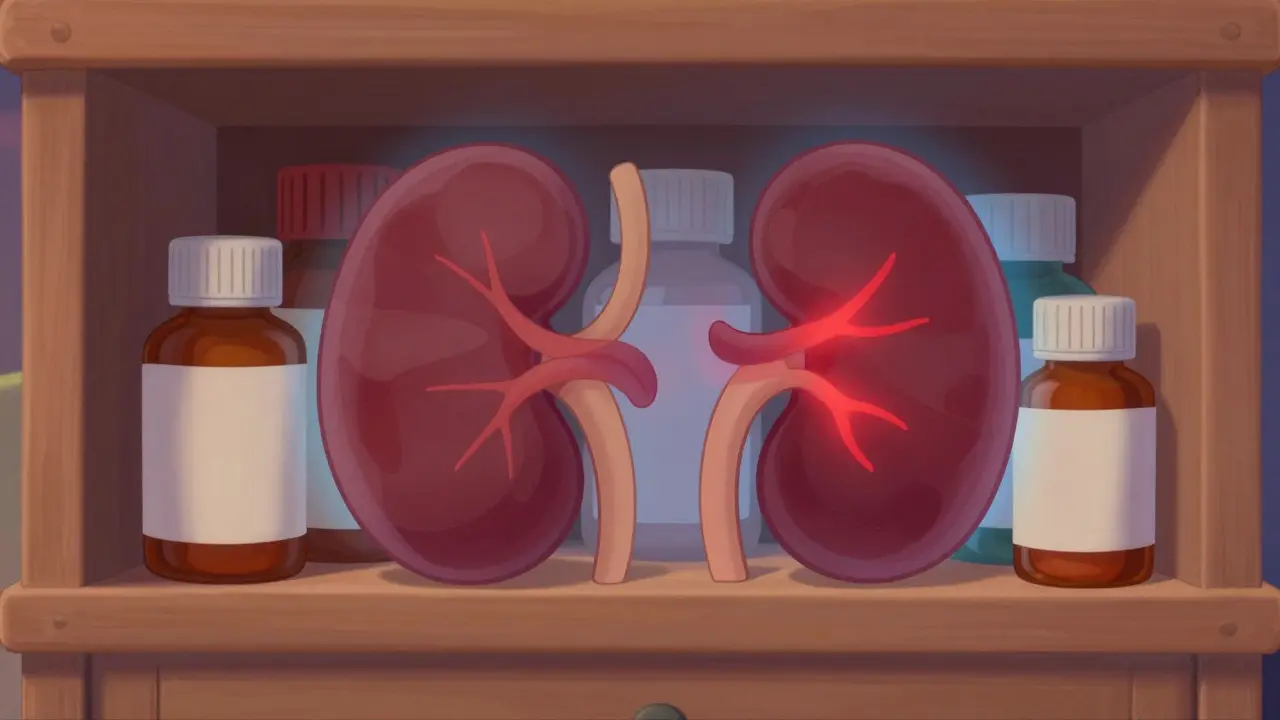
We often treat over-the-counter painkillers like ibuprofen or naproxen as harmless household staples. They sit right there next to your vitamins, seemingly benign. But here is the uncomfortable truth: these very common drugs are one of the leading causes of kidney failure we see today. If you have ever taken Nonsteroidal Anti-Inflammatory Drugs, commonly known as NSAIDs, you need to understand what they are doing to your body.
The Hidden Danger in Your Medicine Cabinet
You might take a pill for a headache or sore muscles without a second thought. However, for a significant portion of the population, this habit is quietly damaging their organs. Research indicates that roughly 1% to 5% of all acute kidney injury cases in hospitalized patients are directly linked to these medications. This isn't just about extreme overdoses; even standard doses can cause trouble if your kidneys are under stress.
The real issue lies in how your body processes these drugs. Unlike other medications that simply fade away after working, NSAIDs interfere with a critical biological pathway. To understand this, we have to look at CyclooxygenaseCyclooxygenase (COX) enzymes. These enzymes are responsible for creating Prostaglandinschemical messengers that help regulate blood flow.
When you take an NSAID, it blocks these enzymes. While this reduces inflammation and stops pain signals, it also removes the chemical signals that tell your kidney arteries to stay open. Without those prostaglandins, the blood vessels leading to your kidneys constrict. This leads to Renal Ischemiaa condition where reduced blood flow damages kidney tissue. In vulnerable individuals, this drop in perfusion can lower your kidney function by 20% to 40% within just 24 hours.
Who Is Most Vulnerable to Injury?
Not everyone who takes Tylenol or Advil faces this same risk. Your personal risk depends largely on your baseline health. Healthy young adults can usually handle short-term use without incident. However, the risk skyrockets for specific groups.
- Elderly Patients: As we age, our kidney function naturally declines. Older adults often have lower reserve capacity to handle the stress of reduced blood flow.
- People with Dehydration: If you are already low on fluid volume, your kidneys rely entirely on prostaglandins to maintain circulation. Blocking this pathway during dehydration is essentially cutting off the supply line.
- Predisposed Conditions: Individuals with high blood pressure, heart failure, or liver cirrhosis are at significantly higher risk because their vascular regulation is already compromised.
If your estimated glomerular filtration rate (eGFRa measure of how well your kidneys filter waste) drops below 60 mL/min, the guidelines strongly advise against using these drugs. For those with an eGFR below 30, they should be avoided entirely.
The 'Triple Whammy' Effect
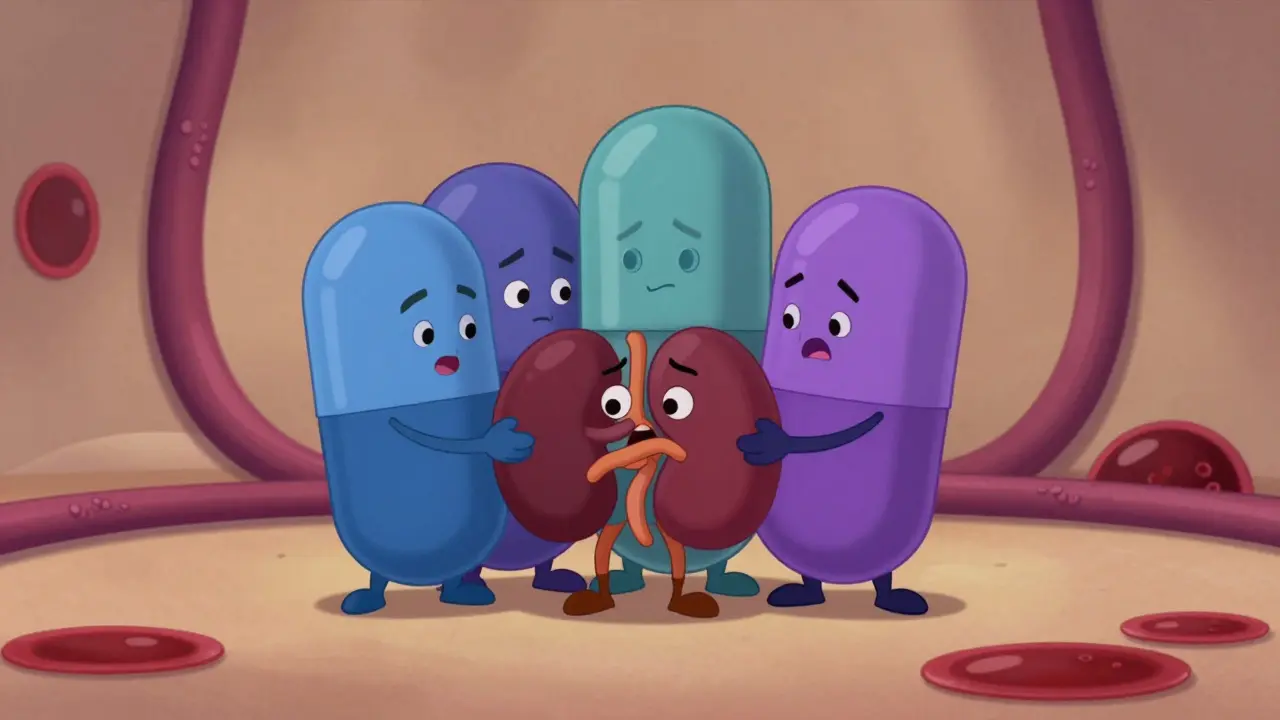
There is a specific combination of medications that acts like a powder keg. Nephrologists call this the Triple Whammy Syndromea dangerous drug interaction involving three specific classes of drugs. It occurs when you combine:
- An ACE inhibitor or ARB (common blood pressure meds)
- A diuretic (water pill like furosemide or hydrochlorothiazide)
- An NSAID (ibuprofen, naproxen, etc.)
On its own, each drug works fine. But together, they create a synergistic effect that increases the risk of acute kidney injury by over 30%. This combination is particularly dangerous in the first 30 days of therapy. Many seniors unknowingly fall into this trap because they pick up an NSAID for a backache while maintaining their regular heart medications.
Symptoms You Should Not Ignore
The scary part about kidney damage is that it often happens silently. By the time you feel "pain" or notice severe symptoms, the damage might already be advanced. Instead of waiting for severe issues, look for early warning signs.
| Symptom | What to Notice |
|---|---|
| Decreased Urine Output | Noticeably less frequent urination than usual despite drinking fluids |
| Pedal Edema | Swelling in your feet, ankles, or around your eyes that doesn't go down overnight |
| Fatigue | Unexplained tiredness or mental fog unrelated to sleep quality |
| Blood Pressure Spikes | Sudden increase in systolic blood pressure readings |
It is worth noting that serum creatinine levels-your standard blood test marker for kidney function-might still look normal even when damage is brewing. Up to 30% of early cases show no elevation in creatinine initially. That is why monitoring symptoms and urine output is crucial.
Safe Pain Management Alternatives
You might wonder how to handle pain if NSAIDs are too risky. There are safer pathways that offer relief without the kidney trade-off.
Topical Options
For joint pain, specifically osteoarthritis in the knee or shoulder, topical NSAID gels are a game-changer. Studies show these creams have systemic absorption rates that are 70% to 80% lower than pills. This means much less drug reaches your kidneys. Applying a gel directly to the inflamed area targets the pain source without flooding your bloodstream.
Acetaminophen
Acetaminophenan analgesic medication distinct from anti-inflammatory NSAIDs is often the go-to alternative. It lacks strong anti-inflammatory properties, so it won't reduce swelling like ibuprofen, but it handles pain effectively with a much lower risk profile for the kidneys. It is not free from side effects (liver toxicity exists), but regarding kidney safety, it is significantly more forgiving.
Opioids (With Caution)
In severe cases, doctors sometimes turn to opioids. While they carry addiction risks, they do not typically affect the renal blood flow pathways. They are generally reserved for acute, short-term pain rather than chronic management.

Creating a Safe Usage Plan
Prevention starts before you even pop the bottle cap. If you need to manage chronic pain or take NSAIDs frequently, adopt this protocol.
- Know Your Baseline: Get a simple blood test to determine your eGFR. Knowing where you start tells you where you can safely stop.
- Hydrate Aggressively: Especially during exercise or heat. Aim for 0.4 to 0.8 liters per hour of activity to keep your kidneys flushed and perfused.
- Set a Time Limit: Do not use NSAIDs for more than 7 to 10 days continuously without consulting a doctor. Re-evaluate your need weekly.
- Review Your Meds: Ask your pharmacist to review your full list. Specifically ask: "Am I at risk for the triple whammy interaction?"
Even a single dose can trigger injury in susceptible people, so always weigh the necessity of the pain relief against the potential organ cost. If you have a history of kidney stones or mild dysfunction, discuss non-drug therapies like physical therapy or heat packs first.
Why Doctors Struggle to Warn Everyone
This topic often creates tension between patients and doctors. Why isn't every patient warned? The reality is that for a healthy person, the risk is indeed low. Doctors focus warnings on those who already show signs of trouble. However, many people don't know they have underlying issues until it's too late.
Newer research in 2024 suggests that genetic testing could help predict who is sensitive to NSAIDs, looking at variants in the PTGS2 gene. Until that technology becomes mainstream, the safest bet is caution. Public education remains a gap, with studies showing nearly two-thirds of people believe over-the-counter status equals total safety. It does not. Understanding this distinction protects your long-term health.
Can taking ibuprofen once a week hurt my kidneys?
For a healthy individual with normal hydration and kidney function, occasional use (like once a week) is generally safe. However, if you have pre-existing conditions, even infrequent use can tip the balance toward injury, especially if you are dehydrated or taking other medications that affect blood pressure.
Is there a difference between prescription and OTC NSAID risks?
No. Chemically, generic versions of ibuprofen found online are the same as prescription strengths. The risk comes from the active ingredient inhibiting prostaglandins, which applies to all dosages. Higher prescription doses simply amplify the potential impact.
What is the 'triple whammy' syndrome in plain English?
It is a dangerous combination of three drugs: a blood pressure med (ACE inhibitor/ARB), a water pill (diuretic), and a painkiller (NSAID). Together, they squeeze the kidneys too tight, reducing blood flow and causing rapid kidney failure.
Are topical NSAID gels safe for kidney patients?
Yes, they are significantly safer. Because the medication stays mostly in the skin and muscle where applied, far less enters the bloodstream to affect the kidneys. This makes them a better option for people with chronic kidney disease.
How quickly can kidney damage happen?
Acute kidney injury can occur within 24 hours of starting NSAID use in susceptible individuals. Long-term damage accumulates over years of regular use, potentially leading to chronic kidney disease progression.
Rod Farren
April 1, 2026 AT 10:34It really boils down to the pharmacokinetic profile of these agents when they interact with the renal vasculature.
We have to consider that cyclooxygenase inhibition reduces prostaglandin synthesis significantly.
Without those prostaglandins, you lose autoregulation of blood flow to the glomeruli.
That means you are relying entirely on sympathetic nervous system inputs which can be risky during stress.
Many people overlook the fact that even low dose therapy alters hemodynamic equilibrium over weeks.
We see patients coming in with elevated creatinine levels after seemingly standard usage patterns.
It is not just about acute spikes but cumulative stress on the nephrons themselves.
Topical applications change the bioavailability curve drastically compared to oral ingestion.
Systemic absorption drops meaningfully so the kidneys face less direct chemical pressure.
You still have to watch out for transdermal delivery rates depending on skin thickness though.
Hydration plays a massive role in mitigating any reduction in filtration fraction.
If volume status is low the kidneys clamp down tighter without the protective prostaglandins present.
That is why we tell everyone to monitor urine output specifically during pain management cycles.
Ignoring the interaction with ACE inhibitors creates a synergistic drop in GFR speed.
Ultimately the goal is maintaining adequate perfusion while managing pain thresholds effectively.
Cara Duncan
April 2, 2026 AT 02:54Great breakdown here!! I hope everyone stays safe!! 🩺 ❤️
Molly O'Donnell
April 3, 2026 AT 12:31People ignore the label warnings at their own peril.
Christopher Beeson
April 3, 2026 AT 16:49The medicine cabinet holds silent killers waiting for our inevitable mistakes.
Callie Bartley
April 5, 2026 AT 00:28Doctors never tell us this until its too late and then they blame us.
Rocky Pabillore
April 6, 2026 AT 06:30Most individuals lack the intellectual capacity to manage their own medication regimens safely.
Jenny Gardner
April 6, 2026 AT 09:51This information is absolutely crucial!! Please share it with friends!! Thank you so much!!
Sharon Munger
April 6, 2026 AT 19:09its important to stay safe and drink water especially if you take meds
Owen Barnes
April 7, 2026 AT 18:09You shoudl consult your phsician about your risk factors for injury
Cullen Zelenka
April 8, 2026 AT 22:19Topical creams are actually a pretty cool option for joint issues.