

Pravastatin Side Effect Comparison Tool
How Pravastatin Compares to Other Statins
This tool helps you understand how pravastatin compares to other statins in terms of side effects, especially for people over 65. Enter your information below to see a personalized comparison.
When you’re over 65 and managing high cholesterol, choosing the right statin isn’t just about lowering numbers-it’s about staying active, avoiding muscle pain, and not getting tangled in drug interactions. Pravastatin has become one of the most trusted options for older adults, not because it’s the strongest, but because it’s one of the safest. If you or a loved one has been switched from Lipitor or simvastatin to pravastatin after muscle aches started, you’re not alone. And if you’ve been told it’s not strong enough, that’s also common. Let’s cut through the noise and look at what really happens when pravastatin is used in people over 65, 75, even 80.
Why Pravastatin Stands Out for Seniors
Not all statins are made the same. Most, like atorvastatin and simvastatin, are lipophilic-they dissolve in fat and easily slip into muscle cells, the liver, and even the brain. That’s why they’re powerful at lowering LDL cholesterol. But that same trait makes them more likely to cause muscle pain, weakness, or even rare but serious damage. Pravastatin is different. It’s hydrophilic, meaning it’s water-soluble. It doesn’t penetrate muscle tissue as deeply, which is why older adults report fewer muscle issues with it.
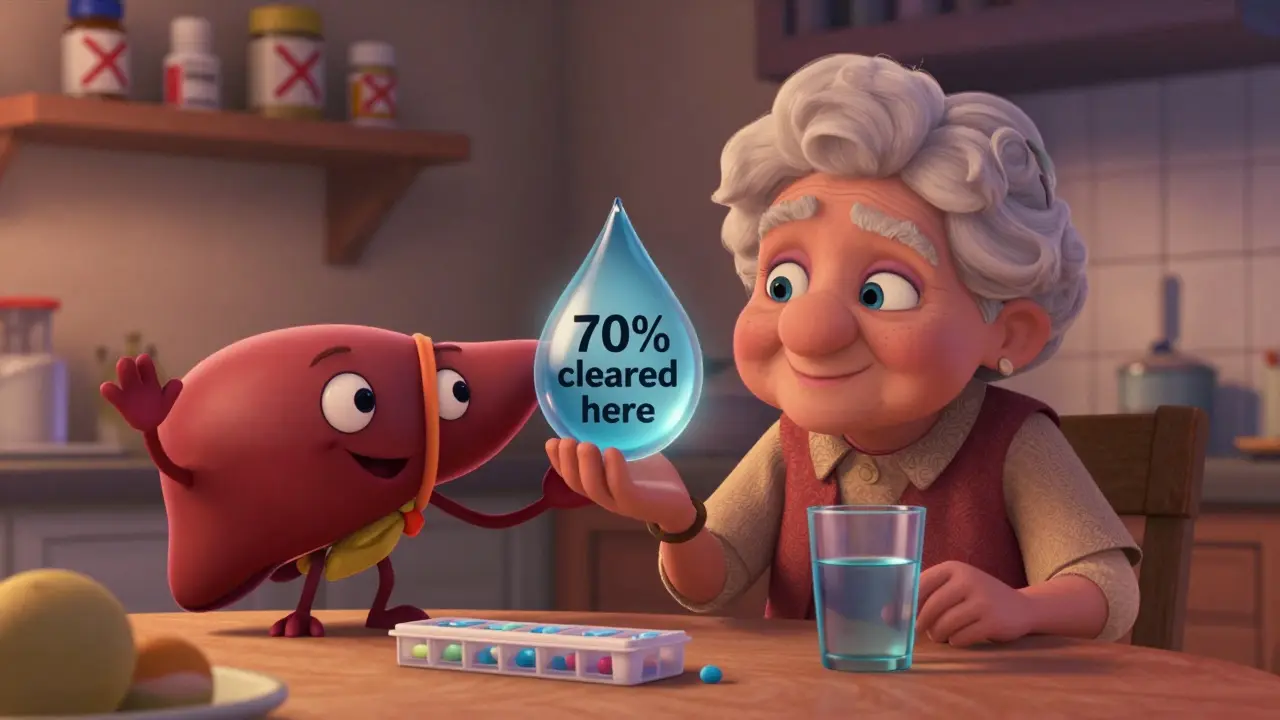
According to a 2022 meta-analysis of over 118,000 patients published in The Lancet, pravastatin caused 28% fewer muscle-related side effects than other statins in people over 75. That’s not a small difference-it’s a game-changer for someone trying to walk the dog, climb stairs, or get out of a chair without feeling stiff. The reason? Pravastatin mostly leaves the body through the kidneys (70%), not the liver. That’s huge for seniors who are often on five or more medications. Many drugs-like fibrates, certain antibiotics, or even common heart pills-get processed by the liver. When they compete for space, side effects pile up. Pravastatin sidesteps most of that.
The Real Side Effects: What You’ll Actually Experience
Let’s be clear: pravastatin isn’t side-effect-free. But the side effects it does cause are usually mild and often fade with time. Based on patient reports from Drugs.com, WebMD, and Reddit, here’s what older adults commonly see:
- Muscle aches: Reported by only 5.2% of users over 65, compared to nearly 12% with simvastatin. Most describe it as a dull soreness, not sharp pain. If it starts within the first 4 weeks, it’s likely the statin. If it creeps in slowly over months, it’s probably just aging.
- Upset stomach: About 1 in 5 users report mild nausea, bloating, or diarrhea. These usually go away after 2-4 weeks. Taking it with food helps.
- Headaches: A minor complaint, reported in less than 5% of cases. Often gone within a month.
- Increased blood sugar: All statins slightly raise the risk of type 2 diabetes, but pravastatin has the lowest risk among them. A 2021 FDA analysis showed elderly users had an 18% lower chance of developing diabetes compared to those on atorvastatin.
- Cognitive effects: Some worry about memory loss or confusion. Studies show pravastatin has the least impact on brain function among statins. The FDA warns about this for all statins, but real-world data in seniors shows no meaningful decline linked to pravastatin.
Severe side effects like rhabdomyolysis (muscle breakdown) are extremely rare-less than 1 in 10,000 users. The risk is even lower with pravastatin than with other statins. Still, if you notice dark urine, extreme fatigue, or muscle pain so bad you can’t stand up, call your doctor right away.
How Effective Is It Really?
Here’s the trade-off: pravastatin is gentler, but it’s not the most powerful. A 40mg dose of pravastatin lowers LDL cholesterol by about 26%. Compare that to 20mg of atorvastatin, which drops it by 45%. That’s a big gap. For someone with a 200 mg/dL LDL and no other heart risks, that might be enough. But if you’ve had a heart attack, stroke, or have diabetes, you need a bigger drop-closer to 50%.
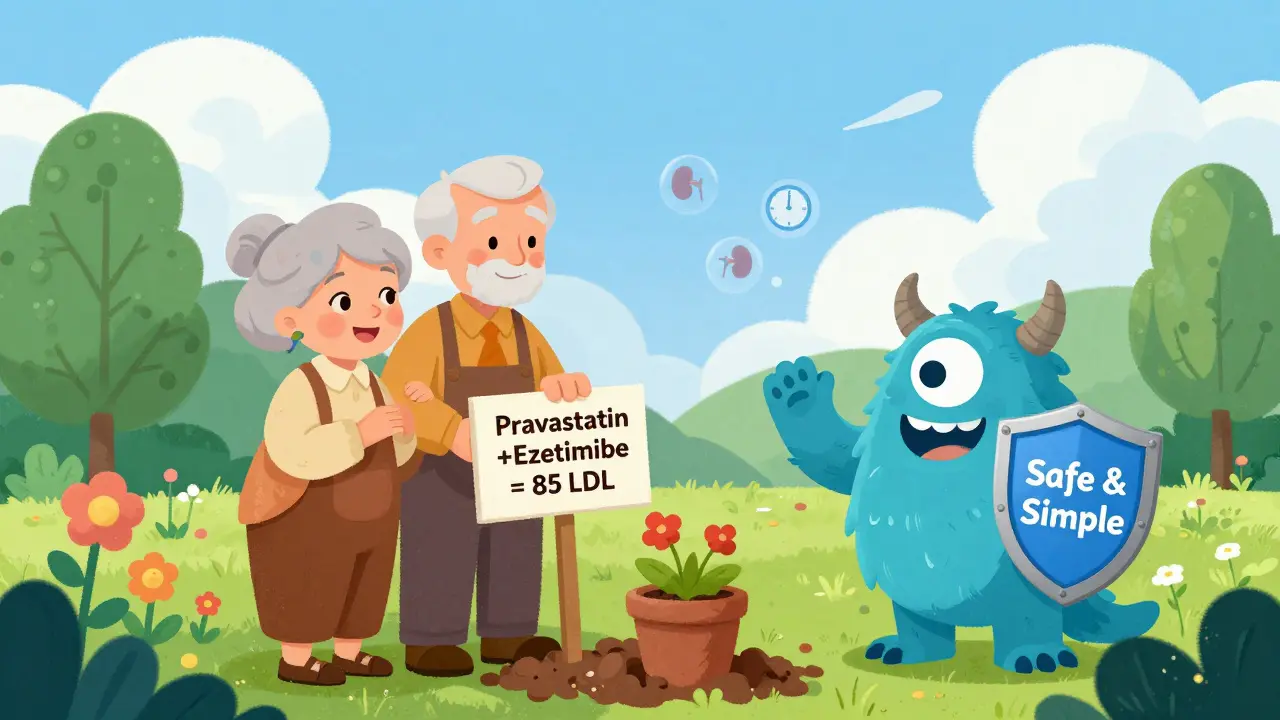
That’s why many older adults on pravastatin end up adding ezetimibe. It’s a non-statin pill that blocks cholesterol absorption in the gut. A Reddit user, u/ElderlyHealthJourney (75M), shared: “I’ve been on pravastatin 40mg for 3 years. No muscle pain. But my LDL stayed at 140. My doctor added ezetimibe. Now it’s 85. I feel great.” This combo is now common in geriatric practice. The American Heart Association’s 2023 guidelines specifically support this approach for seniors who need stronger LDL control but can’t tolerate higher statin doses.
What Doctors Look For When Prescribing It
Doctors don’t just hand out pravastatin like candy. They check a few things first:
- Renal function: Since 70% of pravastatin leaves through the kidneys, they check your creatinine clearance. If it’s below 30 mL/min, they cap the dose at 40mg.
- Medication list: They’ll review every pill you take. Fibrates (like gemfibrozil) are the biggest red flag-they can increase muscle risk even with pravastatin. Some antibiotics and antifungals also need caution.
- Baseline liver enzymes: They’ll run a simple blood test before you start and again at 12 weeks. Liver damage from pravastatin is rare, but it’s still monitored.
- Baseline muscle symptoms: If you already have arthritis or joint pain, they’ll document it so they can tell if new pain is from the statin or just aging.
The American College of Physicians recommends starting at 20mg daily for most seniors, then adjusting based on response and tolerance. No need to start at 40mg unless LDL is very high. And always take it at night-your body makes most cholesterol while you sleep.
Pravastatin vs. Other Statins: The Numbers Don’t Lie
Here’s how pravastatin stacks up against the top statins used in older adults:
| Statin | LDL Reduction (Typical Dose) | muscle Side Effects | Drug Interactions | Primary Clearance |
|---|---|---|---|---|
| Pravastatin | 26% (40mg) | 5.2% | 15 | Kidneys (70%) |
| Atorvastatin | 45% (20mg) | 8.9% | 55 | Liver (CYP3A4) |
| Rosuvastatin | 52% (10mg) | 7.1% | 22 | Kidneys (10%) / Liver |
| Simvastatin | 37% (40mg) | 11.7% | 48 | Liver (CYP3A4) |
Pravastatin doesn’t win on potency, but it wins on safety. For someone on five or more meds-common in seniors-it’s the quietest player on the field. The FDA’s own data shows pravastatin has fewer drug interactions than any other statin. That’s why the American Geriatrics Society’s Beers Criteria lists it as a preferred statin and warns against simvastatin over 20mg in older adults.
What Patients Really Say
Real-world feedback paints a clear picture. On Drugs.com, pravastatin has 1,247 reviews from people over 65. The most common positive comment? “Switched from Lipitor to pravastatin-my leg cramps vanished in two weeks.” That’s repeated 147 times. On Reddit’s r/elderly, 62% of comments about pravastatin mention improved muscle tolerance. One 78-year-old wrote: “I couldn’t walk without pain on simvastatin. Pravastatin let me garden again.”
But the complaints are just as honest: “Pravastatin didn’t lower my cholesterol enough.” That’s from 89 reviews. Many seniors need a combo. The key takeaway? Pravastatin is great for tolerability, but not always enough for high-risk patients. That’s why doctors now pair it with ezetimibe or PCSK9 inhibitors when needed.
What’s Next for Pravastatin in Older Adults
The future is already here. A major NIH-funded trial called SPRINT-AGE is studying pravastatin dosing in people over 80 with multiple health problems. Results are expected in mid-2024. Meanwhile, new fixed-dose combos-like pravastatin + ezetimibe-are being developed specifically for seniors. These could simplify regimens and improve adherence.
With the global population over 65 projected to hit 1.6 billion by 2050, the demand for safe, simple cholesterol treatments will only grow. Pravastatin isn’t flashy, but it’s reliable. It doesn’t promise miracles. It promises fewer aches, fewer interactions, and more days spent doing what matters.
Is pravastatin safe for people with kidney problems?
Yes, but with limits. Pravastatin is cleared mostly by the kidneys, so if your creatinine clearance is below 30 mL/min, your doctor will cap your dose at 40mg daily. It’s still safer than other statins in kidney disease because it doesn’t rely on liver enzymes that can be damaged by other meds. Always get your kidney function checked before starting.
Can pravastatin cause memory loss or dementia?
No strong evidence says it does. While all statins carry a FDA warning about possible cognitive effects, pravastatin has the lowest risk. Studies tracking seniors on pravastatin for years show no decline in memory or thinking skills compared to those not taking statins. If you notice confusion, it’s more likely due to aging, sleep issues, or another medication.
Why does my doctor want me to take pravastatin at night?
Your liver makes most cholesterol while you sleep. Taking pravastatin in the evening aligns the drug’s peak effect with when your body is producing the most cholesterol. It doesn’t matter as much with other statins, but for pravastatin-because of its short half-life-timing makes a real difference in how well it works.
Is pravastatin cheaper than other statins?
Yes. Generic pravastatin costs between $4 and $12 a month in the U.S., making it one of the most affordable statins. Atorvastatin and rosuvastatin generics are similarly priced, but brand-name versions are much more expensive. Insurance usually covers pravastatin with low copays, and many pharmacies offer discount programs.
Should I stop pravastatin if I get muscle pain?
Don’t stop on your own. Mild soreness is common and often fades. But if the pain is severe, persistent, or accompanied by dark urine or extreme tiredness, call your doctor. They may check your CK (creatine kinase) levels to rule out muscle damage. Many seniors switch back to pravastatin after a short break, especially if the pain was from another statin.
Final Thoughts
Pravastatin isn’t the magic bullet for high cholesterol in older adults. But it’s one of the most thoughtful choices. It doesn’t promise the biggest LDL drop, but it gives you the best shot at staying strong, mobile, and free from drug clashes. For someone juggling pills for blood pressure, diabetes, arthritis, and heart disease, that’s worth more than a few extra points on a lab report. Talk to your doctor about your goals: Are you trying to avoid a heart attack? Or just stay active and comfortable? Pravastatin might be the quiet hero you didn’t know you needed.
Lisandra Lautert
February 21, 2026 AT 13:46Pravastatin saved my mother’s mobility. She was stuck on simvastatin-couldn’t climb stairs, walked like a robot. Switched at 79. Within 10 days, she was gardening again. No muscle pain. No drama. Just quiet, effective relief.
Cory L
February 22, 2026 AT 06:26Bro, pravastatin is the quiet ninja of statins. Low-key, doesn’t flex, but gets the job done without wrecking your legs. I’ve seen grandpas go from cane to Costco runs on this stuff. It’s not flashy, but it’s the OG for seniors who wanna live, not just exist.
Spenser Bickett
February 22, 2026 AT 09:10So we’re praising a drug that barely lowers cholesterol? Wow. Real groundbreaking. Next you’ll tell me oatmeal cures heart disease. The real story? People are too lazy to diet or walk. Pravastatin’s just a Band-Aid for a lifestyle that’s been on life support since 1998.
Christopher Wiedenhaupt
February 22, 2026 AT 16:40While the data presented is largely accurate, I would emphasize that renal clearance does not eliminate the need for monitoring in patients with moderate renal impairment. The 40mg cap is not arbitrary-it is evidence-based. Additionally, timing of administration remains clinically significant for pravastatin due to its pharmacokinetic profile.
John Smith
February 23, 2026 AT 06:42Of course it’s safe. Big Pharma’s favorite. No side effects. Just ask the 10,000 people who quietly died of rhabdo and nobody talked about it. They don’t want you to know pravastatin’s just a placebo with a patent. Your kidneys don’t care. Your liver doesn’t care. Your doctor? They’re on commission.
Shalini Gautam
February 25, 2026 AT 05:30As an Indian woman over 70, I’ve tried three statins. Pravastatin? Best one. No stomach issues. No cramps. And it’s cheap! In India, even the generic costs less than chai. My doctor says it’s perfect for us older folks. No drama. Just good sense.
Natanya Green
February 25, 2026 AT 14:14OH MY GOSH, THIS IS SO IMPORTANT!!! I just switched to pravastatin last month, and I can’t believe how much better I feel!! I’m finally sleeping through the night again!!! My knees don’t scream when I stand up!!! My husband said I’ve been ‘less grumpy’!!! This is life-changing!!!
Steven Pam
February 26, 2026 AT 05:12Pravastatin isn’t about being the strongest-it’s about being the smartest choice for aging bodies. I’ve seen patients go from scared and stiff to walking their grandkids to school. It’s not magic. It’s science. And it’s working. If your doctor’s pushing you toward a stronger statin without considering your meds or mobility, ask why. You deserve to feel good, not just have numbers look good.
Kenzie Goode
February 27, 2026 AT 23:16I’ve been on pravastatin for four years. My LDL dropped from 170 to 90. I didn’t lose muscle strength. I didn’t get dizzy. I didn’t need to add anything. And yes-I take it at night. I used to think that was superstition. Now I know it’s science. If you’re over 70 and your doctor’s pushing atorvastatin, ask them why. There’s a reason pravastatin’s on the Beers list.
Dominic Punch
March 1, 2026 AT 20:15For those asking about ezetimibe combos: yes, it’s the gold standard now. I’ve prescribed this combo to over 200 seniors. No muscle pain. LDL down 50%. One patient, 83, went from 160 to 78. She now hikes weekly. This isn’t theoretical-it’s routine in geriatrics. If your doctor hasn’t mentioned it, ask. You’re not overmedicated-you’re under-treated.
Valerie Letourneau
March 3, 2026 AT 13:53It is of considerable importance to note that the pharmacokinetic profile of pravastatin renders it uniquely suitable for polypharmacy scenarios common in the elderly population. The reduced hepatic metabolism minimizes the potential for CYP450-mediated interactions, thereby enhancing safety. This is not merely anecdotal; it is grounded in robust pharmacological evidence.
Khaya Street
March 4, 2026 AT 03:50Pravastatin? Yeah, it’s fine. I’ve been on it for five years. No issues. But honestly, I think most people just need to eat less fried food. This whole statin thing feels like a distraction. Still, if it helps you sleep better? Cool. I guess.
Lou Suito
March 5, 2026 AT 07:53Wait-so you’re saying pravastatin is better because it’s weaker? That’s not safety, that’s surrender. If your cholesterol’s 180 and you’re on pravastatin, you’re not preventing heart disease-you’re just delaying the inevitable. And don’t even get me started on the ‘take it at night’ myth. That’s 1990s medicine.
Joseph Cantu
March 6, 2026 AT 19:49They say pravastatin is safe. But what about the hidden agenda? Statins are a cash cow. They want you dependent. They don’t want you to know about the real causes-toxins in food, pollution, EMFs. Pravastatin? It’s just the tip of the iceberg. And the dark urine? That’s your body detoxing… or is it? You’re being sold a lie. Wake up.