
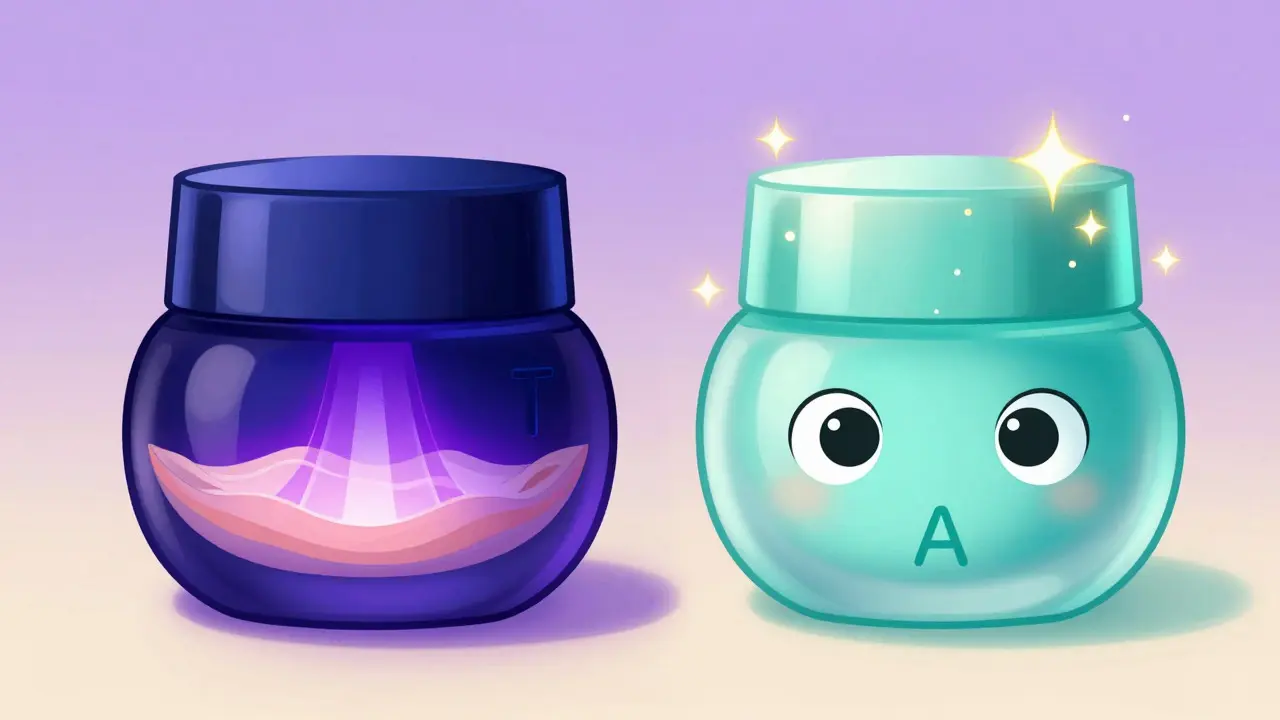
Imagine finding a single ingredient that can clear stubborn acne while simultaneously smoothing out fine lines. That is exactly what retinoid therapy is a dermatological treatment using vitamin A derivatives to accelerate cell turnover and improve skin texture. It has become the gold standard in skincare science for decades. But here is the catch: not all retinoids are created equal. You likely have two names on your radar-Tretinoin and Adapalene. Both work wonders, but they do so in very different ways. Choosing the wrong one can lead to weeks of painful peeling, redness, and frustration. Getting it right means clearer, younger-looking skin without the nightmare side effects.
Understanding the Science Behind Retinoids
To understand why these creams work, you need to look at how your skin behaves as you age. Your skin cells naturally turn over, shedding old cells and generating new ones. As we get older, this process slows down. Dead cells pile up, clogging pores and causing dullness. Retinoids fix this by binding to specific receptors in your skin cells, essentially hitting the fast-forward button on renewal.
Tretinoin is a first-generation retinoid derived from vitamin A, originally synthesized in 1954 and FDA-approved in 1971. It is the carboxylic acid form of vitamin A. Because it binds to multiple types of retinoic acid receptors, it penetrates deeply into the dermis (the lower layer of skin). This deep action is what makes it incredibly effective for wrinkles and sun damage, but also what causes significant irritation.
Adapalene is a third-generation synthetic retinoid developed by Galderma Laboratories, approved by the FDA in 1996. Unlike tretinoin, adapalene is a naphthoic acid derivative. It is designed to be more stable and selective. It primarily targets the epidermal layer (the surface of the skin) and binds specifically to receptors involved in inflammation and pore health. This specificity means it is less likely to cause the widespread redness associated with older retinoids, making it a gentler option for many users.
Tretinoin vs. Adapalene: Key Differences
The debate between these two isn't about which is "better" in a vacuum; it is about which is better for your specific skin goals and tolerance levels. Here is how they stack up against each other in real-world application.
| Feature | Tretinoin | Adapalene |
|---|---|---|
| Generation | First-generation | Third-generation |
| Availability | Prescription only (0.01% - 0.1%) | OTC (0.1%) and Prescription (0.3%) |
| Primary Use | Anti-aging, severe acne, hyperpigmentation | Mild to moderate acne, maintenance |
| Stability | Degrades in UV light/oxygen | Highly stable, can mix with benzoyl peroxide |
| Irritation Potential | High (especially conventional forms) | Low to Moderate |
| Penetration Depth | Deep (dermis) | Surface (epidermis) |
One major technical difference is stability. Tretinoin breaks down rapidly when exposed to sunlight and air. This is why you must apply it at night and store it carefully. Adapalene, however, is chemically robust. It does not degrade easily, which allows manufacturers to combine it with other ingredients like benzoyl peroxide in products such as Epiduo. This combination tackles acne from two angles: killing bacteria and unclogging pores.
Efficacy: Acne Treatment and Anti-Aging Results
If your main goal is clearing acne, both options are highly effective, but they achieve results differently. Clinical trials involving thousands of patients show that adapalene 0.1% reduces total acne lesions by 69-74% after eight weeks. This efficacy is statistically similar to tretinoin 0.025%, but adapalene wins on comfort. In a multicenter study published in the Journal of the European Academy of Dermatology and Venereology, patients reported significantly lower irritation scores with adapalene (2.1 out of 10) compared to tretinoin (3.4 out of 10).
For anti-aging, the story shifts. Tretinoin remains the undisputed champion for photoaging. A double-blind study found that 0.05% tretinoin cream produced a 42% improvement in fine wrinkles after 24 weeks, compared to 35% for adapalene 0.3% gel. More importantly, tretinoin excels at treating mottled pigmentation and deep dermal remodeling. Adapalene’s surface-level action makes it less effective for deep wrinkles. If you are over 35 and concerned about crow's feet or sun spots, tretinoin is likely the stronger candidate, provided your skin can handle it.

Navigating Side Effects and the 'Retinization' Period
Let’s be honest: starting a retinoid often feels terrible before it feels great. Dermatologists call this the "retinization period," lasting anywhere from two to six weeks. During this time, your skin adjusts to the accelerated cell turnover. You may experience dryness, flaking, redness, and even a temporary increase in breakouts known as "purging."
Purging happens because retinoids bring underlying micro-comedones (tiny clogs) to the surface faster than usual. With adapalene, purging typically lasts 3-7 days. With tretinoin, it can stretch to 10-14 days. According to user data from Reddit communities and product reviews, 78% of adapalene users and 92% of tretinoid users report initial irritation. However, those who persist beyond 12 weeks see dramatic improvements. The key is managing expectations and protecting your skin barrier.
How to Apply Retinoids Correctly
Most people fail not because the product doesn’t work, but because they use it incorrectly. Applying too much, too often, or on damp skin can destroy your moisture barrier. Follow these steps to maximize benefits and minimize pain:
- Start Slow: Begin by applying a pea-sized amount to clean, completely dry skin just two nights a week. Gradually increase frequency as your skin tolerates it, aiming for nightly use over 8-12 weeks.
- Use the Sandwich Method: To reduce irritation, apply a thin layer of moisturizer, wait 20 minutes, apply your retinoid, then apply another layer of moisturizer. Clinical trials show this method reduces irritation by nearly 50%.
- Avoid Damp Skin: Water increases the penetration rate of retinoids, leading to higher irritation. Ensure your face is bone-dry before application.
- Sun Protection is Non-Negotiable: Retinoids make your skin more sensitive to UV rays. Failure to use a broad-spectrum SPF 30+ daily can cause three times more adverse events, including severe burning and hyperpigmentation.
If you are using tretinoin, remember that it degrades in light. Apply it strictly at night. Adapalene is more forgiving, but nighttime application is still recommended to avoid any potential interaction with daytime environmental pollutants.

Cost, Accessibility, and Formulations
Accessibility plays a huge role in choosing between these two. Adapalene 0.1% is available over-the-counter (OTC) in most countries, including the US, where it became OTC in 2016. Products like Differin Gel cost around $15-$20. Tretinoin requires a prescription and ranges from $45 to $60 per tube without insurance, though generic versions and insurance coverage can drop this to $10-$20.
Formulation matters immensely for tolerance. Conventional tretinoin creams can be harsh. Look for advanced delivery systems like microspheres (e.g., Retin-A Micro) or micronized lotions (e.g., Altreno). These formulations release the active ingredient slowly, reducing peak irritation while maintaining efficacy. Adapalene is generally well-tolerated in gel or cream forms, with the 0.3% prescription strength offering greater potency for stubborn acne without a proportional increase in side effects.
Who Should Avoid Retinoids?
While retinoids are safe for millions, they are not for everyone. Both tretinoin and adapalene are classified as Pregnancy Category C by the FDA. High doses of oral vitamin A derivatives are known to cause birth defects, so topical use is generally discouraged during pregnancy and breastfeeding unless explicitly advised by a doctor. Women trying to conceive should consult their dermatologist and consider switching to safer alternatives like azelaic acid.
People with extremely sensitive skin conditions, such as active rosacea or eczema, should proceed with caution. Adapalene is usually the safer entry point for these individuals due to its lower irritation profile. Always patch test behind the ear or on the jawline for a few days before applying to the full face.
Can I use tretinoin and adapalene together?
Generally, no. Using two retinoids simultaneously increases the risk of severe irritation and skin barrier damage without adding significant benefit. Choose one based on your primary concern: adapalene for acne tolerance, or tretinoin for anti-aging depth. If you want to combine therapies, pair a retinoid with non-retinoid actives like niacinamide or hyaluronic acid.
How long does it take to see results from retinoid therapy?
You should expect to wait 8-12 weeks to see significant clinical improvement. For acne, lesion reduction becomes noticeable around week 8. For anti-aging benefits like wrinkle smoothing and pigment correction, visible changes typically appear after 12-24 weeks of consistent use. Patience is critical during the initial purging phase.
Is over-the-counter adapalene as strong as prescription tretinoin?
Not necessarily in terms of anti-aging, but yes for mild to moderate acne. OTC adapalene 0.1% is clinically equivalent to prescription tretinoin 0.025% for clearing acne lesions. However, for deep wrinkles and sun damage, prescription tretinoin (especially 0.05% or higher) is significantly more effective due to its deeper dermal penetration.
Why does my skin peel when I start using retinoids?
Peeling is a sign of increased cell turnover. Retinoids accelerate the shedding of dead skin cells. This "retinization" process is normal and usually subsides within 2-6 weeks. To manage it, use a gentle cleanser, avoid physical exfoliants (like scrubs), and prioritize heavy moisturizing. Do not pick at the peeling skin, as this can lead to scarring.
Can I use vitamin C with retinoids?
Yes, but timing matters. Vitamin C is best used in the morning under sunscreen, while retinoids are applied at night. Using them at the same time can increase irritation and potentially destabilize the vitamin C. Separating them allows you to benefit from both antioxidants and cell turnover without overwhelming your skin barrier.