
What Exactly Is an Arrhythmia?
An arrhythmia is when your heart doesn’t beat the way it should. It might beat too fast, too slow, or unevenly. Your heart’s rhythm is controlled by electrical signals that travel through it like a wiring system. When those signals get messed up - maybe because of scar tissue, stress, caffeine, or an underlying heart condition - your heartbeat goes off track. That’s an arrhythmia.
Not every irregular heartbeat is dangerous. Sometimes you feel your heart skip a beat after caffeine or a big meal, and it’s nothing. But when arrhythmias are frequent, last a long time, or come with symptoms like dizziness or chest pain, they need attention. The three most common types you should know about are atrial fibrillation, bradycardia, and tachycardia.
Atrial Fibrillation: When Your Heart’s Upper Chambers Chaotic
Atrial fibrillation, or AFib, is the most common serious heart rhythm problem. Instead of beating in a steady rhythm, the upper chambers of your heart (the atria) quiver or flutter wildly. This means blood doesn’t move properly, which can lead to clots. If a clot travels to your brain, it can cause a stroke.
The American Heart Association says AFib affects between 2.7 and 6.1 million Americans. That number keeps growing as people live longer. Risk factors include high blood pressure, diabetes, obesity, sleep apnea, and aging. Even if you feel fine, AFib can still be silently raising your stroke risk.
Symptoms vary. Some people feel their heart racing or fluttering like a hummingbird in their chest. Others get tired easily, short of breath, or lightheaded. A lot of people don’t feel anything at all. That’s why doctors often find AFib during a routine checkup when they feel an irregular pulse or see it on an ECG.
Diagnosis starts with a simple pulse check. If it feels uneven, the next step is a 12-lead electrocardiogram (ECG). For cases that come and go, you might wear a portable monitor for 24 hours or longer. An echocardiogram can show if your heart structure is damaged. Blood tests check for thyroid problems or electrolyte imbalances that might be triggering it.
Treatment has three goals: control the heart rate, restore normal rhythm if possible, and prevent blood clots. Most people take blood thinners like apixaban or warfarin to lower stroke risk. Rate control usually means medications like beta-blockers or calcium channel blockers to slow the heart down. Rhythm control - trying to get the heart back to normal - might involve drugs like amiodarone or a procedure called cardioversion, where a controlled electric shock resets the rhythm.
If meds don’t work or symptoms are bad, ablation is an option. This procedure uses heat or cold to scar small areas of heart tissue that are sending wrong signals. A newer method called pulsed field ablation (PFA) uses electrical pulses instead of heat or cold, which may be safer for nearby tissues. For some, especially older patients with permanent AFib, doctors may recommend a pacemaker combined with ablation of the AV node to take control of the rhythm.
Bradycardia: When Your Heart Beats Too Slow
Bradycardia means your heart beats fewer than 60 times per minute. For athletes or very fit people, that’s normal. Their hearts are strong and efficient - they don’t need to beat fast to pump enough blood. But for others, a slow heart rate can be a problem.
When the heart beats too slowly, it can’t pump enough oxygen-rich blood to your body. That’s when symptoms show up: fatigue, dizziness, fainting, shortness of breath, chest pain, or confusion. In severe cases, it can lead to cardiac arrest.
Causes vary. It might be due to aging, heart disease, damage from a heart attack, or an underactive thyroid. Certain medications - like beta-blockers or digoxin - can also slow the heart too much. Sometimes, the problem lies in the heart’s natural pacemaker (the sinoatrial node) or the electrical pathways that carry signals from the top to the bottom of the heart.
Diagnosis is straightforward. An ECG will show the slow rhythm. A Holter monitor (worn for 24-48 hours) or event recorder (used for weeks) can catch episodes that come and go. Blood tests check for thyroid or electrolyte issues. In some cases, a stress test shows how the heart responds to physical demand.
Not every case needs treatment. If you’re healthy and asymptomatic, your doctor might just watch it. But if symptoms are present, the usual fix is a pacemaker. It’s a small device implanted under the skin near your collarbone. It sends tiny electrical pulses to your heart when it detects a slow or missed beat. Modern pacemakers adjust automatically - if you’re walking up stairs, they speed up; if you’re sleeping, they slow down.
Some causes are reversible. If a medication is causing bradycardia, your doctor might adjust the dose. If an electrolyte imbalance is to blame, correcting it can restore normal rhythm. But for most people with persistent bradycardia, a pacemaker is the long-term solution.
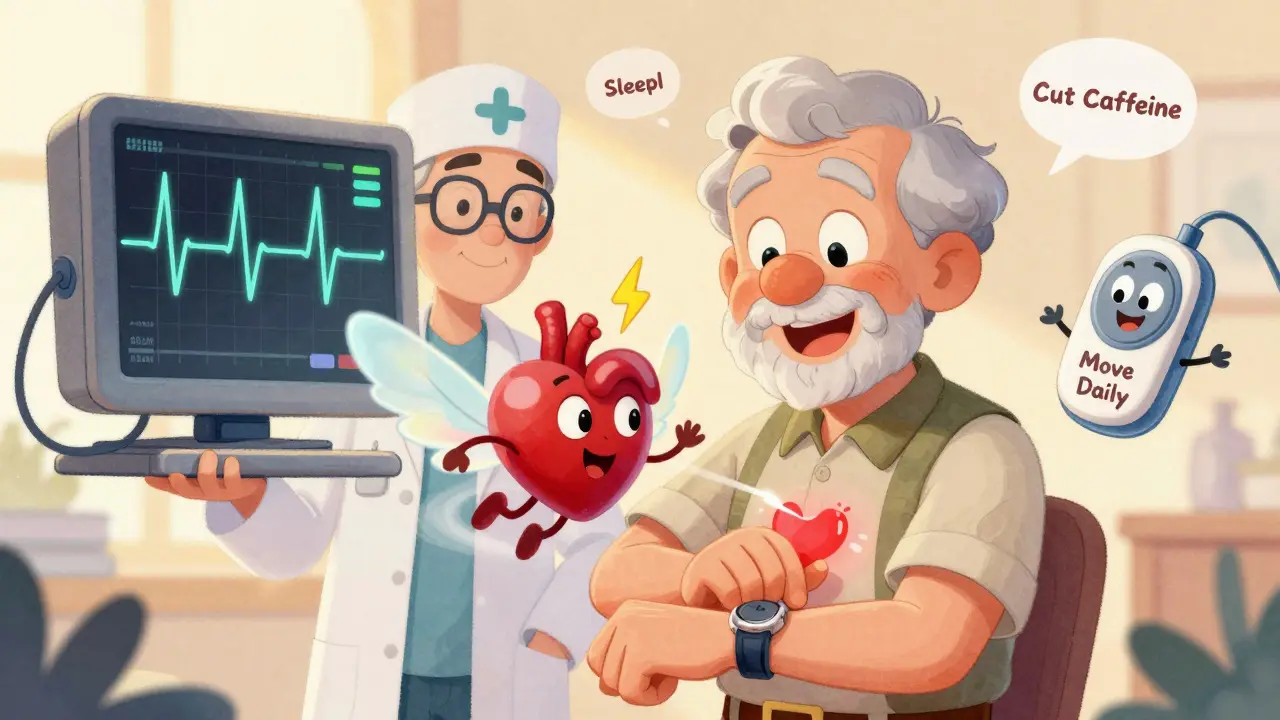
Tachycardia: When Your Heart Races Out of Control
Tachycardia means your heart beats more than 100 times per minute while you’re at rest. It’s not always a problem - exercise, stress, or anxiety can temporarily speed up your heart. But when it happens without reason, or lasts too long, it’s dangerous.
There are different kinds. Supraventricular tachycardia (SVT) starts in the upper chambers. Ventricular tachycardia (VT) starts in the lower chambers and is more serious. VT can turn into ventricular fibrillation, where the heart quivers uselessly instead of pumping - that’s a medical emergency.
Symptoms include palpitations, chest pain, lightheadedness, shortness of breath, and fainting. In severe cases, tachycardia can lead to heart failure or sudden cardiac arrest.
Causes include heart disease, high blood pressure, overactive thyroid, electrolyte imbalances, excessive caffeine or alcohol, and certain drugs. Stress and dehydration can trigger episodes in people who are prone to it.
Diagnosis starts with an ECG. For intermittent cases, a Holter monitor or event recorder helps catch the rhythm when it happens. Blood tests check thyroid levels and electrolytes. An echocardiogram looks for structural damage. In some cases, an electrophysiology study is done - thin wires are threaded into the heart to map out the electrical signals and find where the abnormal rhythm starts.
Treatment depends on the type and severity. For SVT, doctors often try the Valsalva maneuver - holding your breath and bearing down - to reset the rhythm. If that doesn’t work, medications like adenosine can be given quickly through an IV. Long-term, beta-blockers or calcium channel blockers help prevent recurrences.
For VT or other life-threatening types, an implantable cardioverter-defibrillator (ICD) may be needed. It’s like a pacemaker but stronger - it can deliver a shock to restart the heart if it goes into a deadly rhythm. Catheter ablation is also used to destroy the tissue causing the fast rhythm. Many people with SVT get cured with ablation and never need meds again.
How Are They Different? A Quick Comparison
| Feature | Atrial Fibrillation | Bradycardia | Tachycardia |
|---|---|---|---|
| Heart Rate | Irregular, often over 100 bpm | Less than 60 bpm | More than 100 bpm |
| Origin | Upper chambers (atria) | Sinoatrial node or conduction system | Upper or lower chambers |
| Common Symptoms | Palpitations, fatigue, shortness of breath, stroke risk | Dizziness, fainting, fatigue, confusion | Palpitations, chest pain, lightheadedness, fainting |
| Primary Diagnostic Tool | 12-lead ECG | ECG, Holter monitor | ECG, electrophysiology study |
| Typical Treatment | Blood thinners, rate/rhythm control meds, ablation | Pacemaker | Medications, ablation, ICD for life-threatening cases |
| Stroke Risk | High - up to 5x increase | Low | Low (unless it leads to heart failure) |
When to See a Doctor
You don’t need to panic every time your heart skips a beat. But if you notice any of these, get checked:
- Your pulse feels irregular or racing without cause
- You get dizzy or faint often
- You’re short of breath during normal activities
- You feel chest pain or pressure
- You have a family history of sudden cardiac death or arrhythmias
Even if you’re young and healthy, a new, unexplained change in your heartbeat deserves attention. Early detection can prevent strokes, heart failure, or sudden cardiac arrest.
Lifestyle Matters - Even If You Have a Diagnosis
Medications and devices help, but your daily habits make a huge difference. Here’s what works:
- Manage blood pressure. High blood pressure is a top trigger for AFib and tachycardia.
- Lose excess weight. Even a 10% drop can reduce AFib episodes.
- Limit alcohol. Binge drinking is a known trigger for AFib - even moderate amounts can cause problems in some people.
- Quit smoking. Smoking damages heart tissue and raises arrhythmia risk.
- Reduce caffeine. If you’re sensitive, switch to decaf.
- Get enough sleep. Sleep apnea is strongly linked to AFib.
- Exercise regularly. But don’t overdo it - extreme endurance sports can increase AFib risk in some.
These aren’t just "good ideas." For many people, they’re part of the treatment plan. The Cleveland Clinic says lifestyle changes matter at every stage - even before symptoms appear.
What Happens If You Ignore It?
Ignoring arrhythmias can be risky. AFib doesn’t go away on its own - it tends to get worse over time. Untreated, it can lead to heart failure or stroke. Bradycardia can cause repeated fainting, injuries from falls, or sudden cardiac arrest. Tachycardia can weaken the heart muscle, leading to heart failure.
Some people think, "I feel fine, so it’s not serious." But AFib can be silent. You might not feel anything until you have a stroke. That’s why screening matters, especially after age 65 or if you have risk factors.
Can stress cause arrhythmias?
Yes. Stress triggers adrenaline, which can speed up your heart or disrupt its rhythm. Chronic stress is linked to higher rates of atrial fibrillation and tachycardia. Managing stress through sleep, exercise, or therapy can reduce episodes.
Is it safe to exercise with an arrhythmia?
Usually, yes - but it depends on the type and severity. Most people with controlled AFib or bradycardia can safely do moderate exercise like walking or swimming. Those with tachycardia or an ICD should avoid high-intensity sports unless cleared by a cardiologist. Always talk to your doctor before starting a new routine.
Can arrhythmias go away on their own?
Some types, like occasional PVCs or short episodes of SVT, can resolve without treatment. But atrial fibrillation rarely goes away on its own - it usually gets worse over time. Bradycardia caused by medication might improve if the dose is adjusted, but structural causes usually need a pacemaker.
Do I need a pacemaker if I have bradycardia?
Only if you have symptoms or your heart rate drops dangerously low. If you’re an athlete with a slow heart rate and no symptoms, you likely don’t need one. But if you faint, feel dizzy, or your heart rate falls below 40 bpm at rest, a pacemaker is often recommended.
Can I drink coffee if I have AFib?
Recent studies show moderate coffee intake (1-3 cups per day) doesn’t increase AFib risk in most people. But if you notice your heart races after coffee, cut back. Everyone reacts differently - listen to your body.
What’s the difference between a pacemaker and an ICD?
A pacemaker helps if your heart beats too slowly. An ICD watches for dangerously fast rhythms and delivers a shock to restart the heart. Some devices combine both functions. ICDs are for people at risk of sudden cardiac arrest; pacemakers are for slow heart rates.
What Comes Next?
If you’ve been diagnosed with an arrhythmia, your next step is to understand your specific type and risk level. Work with your doctor to build a plan - whether it’s meds, lifestyle changes, or a device. Don’t wait until symptoms get worse. Early action keeps your heart strong and your life on track.
For those without a diagnosis but with concerns - get your pulse checked. A simple 30-second check at the wrist can reveal if something’s off. If it’s irregular, ask for an ECG. It’s quick, painless, and could catch a problem before it becomes serious.
Katie Taylor
December 24, 2025 AT 00:15Georgia Brach
December 25, 2025 AT 17:51Bhargav Patel
December 27, 2025 AT 16:18Steven Mayer
December 29, 2025 AT 02:38Joe Jeter
December 30, 2025 AT 18:34Sidra Khan
December 31, 2025 AT 16:01Lu Jelonek
January 1, 2026 AT 16:57Ademola Madehin
January 3, 2026 AT 15:35Diana Alime
January 4, 2026 AT 15:35Delilah Rose
January 6, 2026 AT 00:55Bret Freeman
January 6, 2026 AT 05:54