

Imagine you’ve been struggling with heavy sadness, exhaustion, and a lack of motivation for months. You see a doctor, get diagnosed with depression, and start taking an antidepressant. But instead of feeling better, your mood swings become wilder. You feel wired, restless, and unable to sleep, followed by crushing lows that hit harder than before. This isn’t just "bad depression." It might be a case of misdiagnosis.
The difference between unipolar depression and bipolar depression is not just academic-it’s the difference between getting well and getting worse. While both conditions involve deep depressive episodes, their roots, symptoms, and treatments are fundamentally different. Confusing them is common, but the consequences can be severe.
What Is the Core Difference?
To understand the distinction, you have to look at the full spectrum of mood. Unipolar depression, clinically known as Major Depressive Disorder (MDD), involves only one direction of mood change: down. You experience periods of intense sadness, hopelessness, and fatigue, but you never experience mania or hypomania.
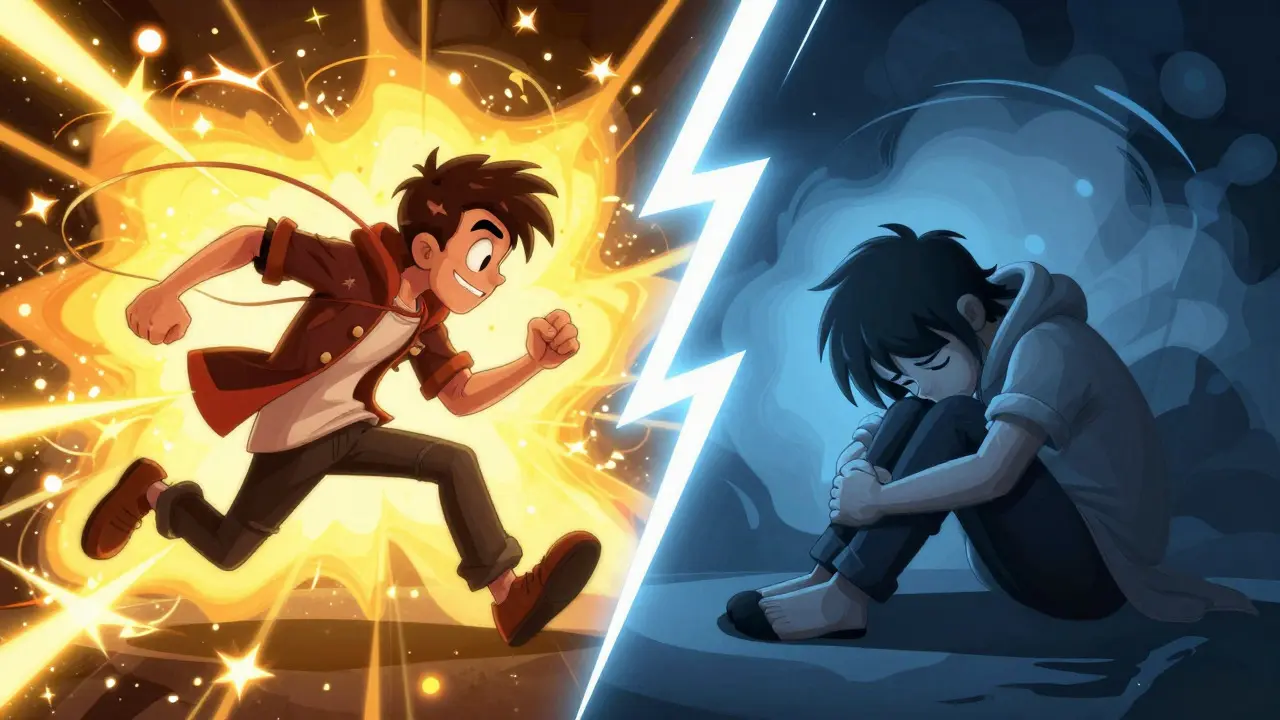
Bipolar disorder, on the other hand, is defined by cycling. It includes depressive episodes similar to those in MDD, but also features manic or hypomanic episodes. Mania is a period of abnormally elevated mood, energy, and activity. Hypomania is a milder form of this state. If you have ever had a period where you felt invincible, needed little sleep, talked rapidly, or took risky chances, you likely experienced hypomania or mania.
The critical takeaway here is simple: Unipolar depression stays low. Bipolar disorder goes high and low. Missing the "high" part leads to treating the wrong condition.
Why Diagnosis Is So Tricky
You might wonder why doctors miss this. The answer lies in how people present themselves. Most patients don’t walk into a clinic saying, "I think I’m bipolar." They come in because they are depressed. During a depressive episode, the symptoms of bipolar depression and unipolar depression look nearly identical. Both involve sadness, sleep disturbances, appetite changes, and difficulty concentrating.
However, subtle clues often point toward bipolarity. Research published in *The British Journal of Psychiatry* highlights specific markers:
- Psychomotor retardation: Feeling physically slowed down occurs in 68% of bipolar depression cases versus 42% in unipolar cases.
- Cognitive impairment: Trouble with complex thinking tasks is more pronounced in bipolar depression.
- Sleep patterns: Early morning awakening is more frequent in bipolar depression (57%) compared to unipolar (39%).
- Morning worsening: Mood tends to be worst in the morning for bipolar patients (63%) compared to unipolar patients (41%).
- Psychotic features: Hallucinations or delusions during depression are much more common in bipolar cases (22%) than unipolar (8%).
Another major red flag is family history. If a first-degree relative has bipolar disorder, your risk jumps from 1-2% in the general population to 5-10%. Doctors should always ask about this, but it’s often overlooked if the patient doesn’t volunteer the information.
Statistically, misdiagnosis is rampant. A study in the *Journal of Affective Disorders* found misdiagnosis rates around 37%. Even scarier, data from the National Comorbidity Survey Replication showed that 40.3% of people with bipolar disorder were initially diagnosed with unipolar depression. This delay costs patients time-on average, 8.2 years of inappropriate treatment-and increases hospitalization risks significantly.
Treatment: Why the Wrong Meds Can Backfire
This is where the stakes get highest. The standard treatment for unipolar depression is antidepressants, specifically Selective Serotonin Reuptake Inhibitors (SSRIs) like sertraline or escitalopram. For many with MDD, these work wonders, offering a 60-65% response rate after 8-12 weeks.
But for someone with bipolar disorder, prescribing an antidepressant alone is dangerous. Antidepressants can trigger a "switch" into mania. The STEP-BD study revealed that 76.1% of bipolar patients treated with antidepressants without a mood stabilizer experienced mood destabilization. Imagine adding fuel to a fire that’s already burning hot.
| Feature | Unipolar Depression (MDD) | Bipolar Depression |
|---|---|---|
| First-Line Medication | SSRIs (e.g., Sertraline, Escitalopram) or SNRIs | Mood Stabilizers (Lithium) or Atypical Antipsychotics (Quetiapine, Lurasidone) |
| Role of Antidepressants | Primary treatment | Avoided as monotherapy; used only cautiously with mood stabilizers |
| Psychotherapy Focus | Cognitive Behavioral Therapy (CBT): Restructuring negative thoughts | Interpersonal and Social Rhythm Therapy (IPSRT): Stabilizing daily routines |
| Long-Term Outlook | Medication may be discontinued after remission in some cases | Lifelong maintenance therapy typically required to prevent relapse |
| Risk of Misdiagnosis | Ineffective treatment, prolonged suffering | Induced mania, rapid cycling, increased hospitalization |
For bipolar depression, the gold standard involves mood stabilizers like lithium or atypical antipsychotics like quetiapine. Lithium shows a 48% response rate in bipolar depression, while quetiapine reaches 58.1%. These medications calm the underlying instability rather than just lifting the mood. Newer options like cariprazine have also shown promise, with remission rates of 36.6% in clinical trials.
Screening Tools: How to Catch It Early
If you suspect your depression might be bipolar, you need specific screening tools. General checklists won’t cut it. Two validated instruments are widely used:
- Mood Disorders Questionnaire (MDQ): This 13-item screen asks about past periods of elevated mood. Scoring 7 or higher suggests bipolar disorder. It has high specificity (94%), meaning false positives are rare, but sensitivity is lower (28%), so it can miss some cases.
- Hypomania Checklist-32 (HCL-32): This tool is more sensitive (69%) and captures subtler symptoms. A score of 14 or higher indicates potential hypomania.
Doctors should also watch for "treatment resistance." If you’ve tried two adequate courses of antidepressants with little improvement, the likelihood of having bipolar disorder increases 3.7 times. Poor response to standard depression meds is a major clue that something else is going on.

The Spectrum Debate: Are They Really Different?
Not all experts agree on a hard line between the two. Some researchers, including Dr. Frederick Goodwin and Dr. Kay Redfield Jamison, argue that recurrent unipolar depression exists on a "bipolar spectrum." They note that 15-20% of patients diagnosed with MDD eventually develop hypomanic symptoms. Genetic studies support this connection, showing a strong genetic correlation (r=0.72) between bipolar disorder and major depression.
However, the DSM-5 maintains a strict separation. Dr. Michael First, co-editor of the DSM-5, argues that only 10-15% of unipolar patients develop mania within ten years. For practical treatment purposes, keeping them distinct is crucial. Treating everyone as "potentially bipolar" could lead to unnecessary medication side effects, while treating everyone as "unipolar" risks inducing mania. The current consensus leans toward careful differentiation based on symptom history and family background.
Living with the Diagnosis: Next Steps
Getting the right label is the first step toward stability. If you have unipolar depression, CBT and SSRIs offer a clear path to recovery, and many people can eventually taper off medication. If you have bipolar depression, the journey looks different. It requires lifelong management, focusing on routine and rhythm. Interpersonal and Social Rhythm Therapy (IPSRT) helps patients maintain regular sleep, eating, and activity schedules, which is vital for preventing mood swings.
Don’t ignore the signs. If you’re being treated for depression but feel unstable, erratic, or unusually energetic at times, speak up. Ask your doctor about screening for bipolar features. The cost of waiting is measured in lost years and unnecessary suffering. With the right diagnosis, you can stop fighting the wrong battle and start finding real relief.
Can unipolar depression turn into bipolar disorder?
Yes, it is possible. Studies suggest that 10-20% of patients initially diagnosed with unipolar depression may later develop manic or hypomanic episodes, leading to a reclassification as bipolar disorder. This is why ongoing monitoring is essential, especially if antidepressants cause mood instability.
What happens if you take antidepressants for bipolar depression?
Taking antidepressants without a mood stabilizer can trigger a manic episode or accelerate mood cycling (rapid cycling). Approximately 76% of bipolar patients treated with antidepressant monotherapy experience mood destabilization, leading to more severe symptoms and higher hospitalization rates.
How do doctors distinguish between the two types of depression?
Doctors look for a history of manic or hypomanic episodes, family history of bipolar disorder, and specific symptoms like early morning awakening, psychomotor retardation, and psychotic features. Screening tools like the MDQ and HCL-32 are also used to identify hidden bipolar traits.
Is bipolar depression harder to treat than unipolar depression?
Bipolar depression is generally more complex to manage because it requires balancing mood stabilization rather than just lifting mood. It often necessitates lifelong medication and strict lifestyle routines. However, with the correct treatment plan involving mood stabilizers or atypical antipsychotics, significant improvement and stability are achievable.
What are the warning signs of hypomania?
Warning signs include needing less sleep without feeling tired, increased energy, racing thoughts, rapid speech, impulsivity, risky behavior (like excessive spending or sexual indiscretions), and an inflated sense of self-esteem. Unlike full mania, hypomania does not usually require hospitalization but still signals bipolar disorder.