
Immunosuppressant & Elderberry Interaction Checker
Important Note: Elderberry may interfere with immunosuppressant medications. This tool is for informational purposes only and should not replace professional medical advice.
Select your medication and click "Check Interaction Risk" to see if elderberry may be unsafe for you.
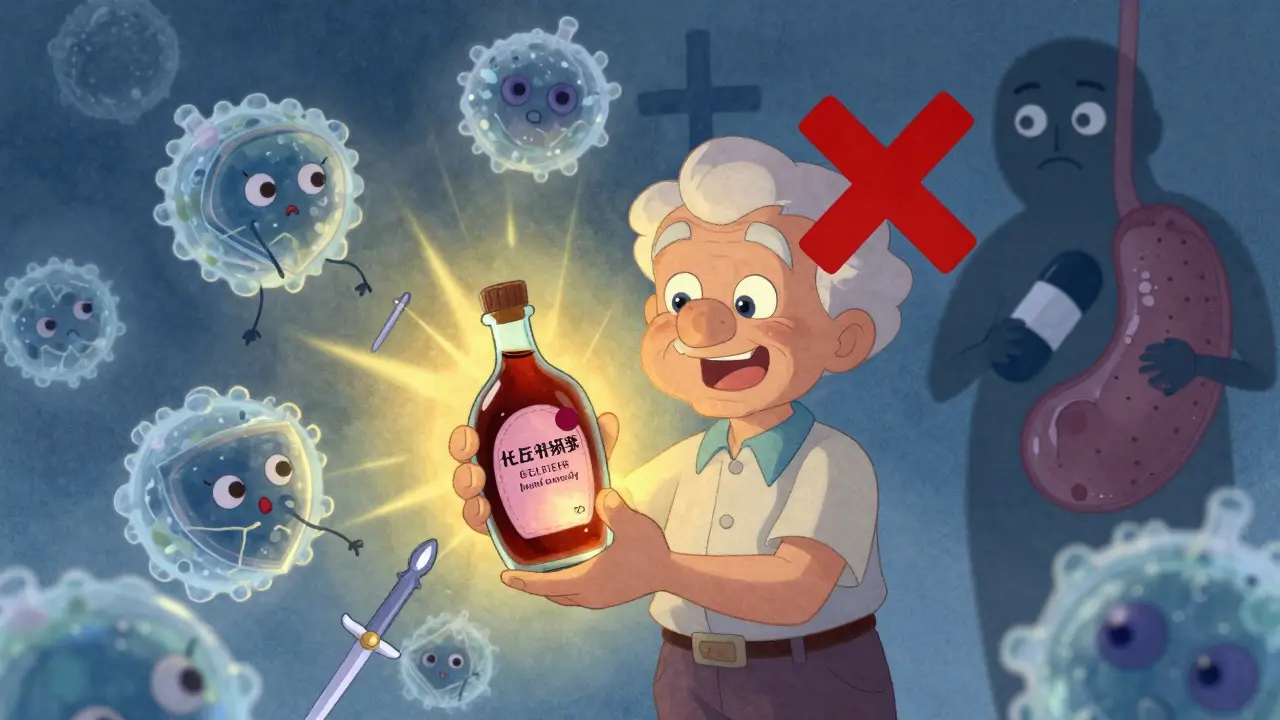
Every winter, millions of people reach for elderberry syrup, gummies, or capsules hoping to ward off colds and flu. It’s natural, it’s trendy, and it seems harmless-until you’re on immunosuppressants. If you’re taking medication to keep your body from rejecting a transplanted organ, or to calm down an overactive immune system like in lupus, rheumatoid arthritis, or Crohn’s disease, elderberry might be doing more harm than good. The problem isn’t that elderberry is dangerous on its own. It’s that it fights against the very purpose of your medication.
How Elderberry Actually Works
Elderberry isn’t just a sweet syrup. It’s packed with compounds like anthocyanins, flavonols, and phenolic acids-natural chemicals that interact with your immune cells. In healthy people, these compounds help activate immune responses. They boost the production of cytokines like interleukin-6 and tumor necrosis factor-alpha, which are the body’s alarm signals during infection. That’s why some studies show elderberry can shorten flu symptoms by 3 to 4 days in healthy adults. But if your immune system is already being held back by drugs like cyclosporine, tacrolimus, or mycophenolate, this kind of stimulation is the opposite of what you need. These medications are designed to quiet down immune activity. Elderberry, on the other hand, turns the volume back up. It’s like trying to put out a fire while someone keeps throwing gasoline on it.Which Immunosuppressants Are Affected?
Not all immunosuppressants react the same way, but the biggest concerns are with drugs that target specific immune pathways. These include:- Cyclosporine and tacrolimus (used after organ transplants)
- Mycophenolate (CellCept), often for kidney or lupus patients
- Azathioprine (Imuran), commonly prescribed for autoimmune diseases
- Corticosteroids like prednisone
- Biologics like infliximab (Remicade) for ulcerative colitis or rheumatoid arthritis
Real Stories: When Elderberry Went Wrong
Behind the statistics are real people who didn’t realize the risk. One kidney transplant patient on Reddit shared that after starting elderberry syrup for a cold, his tacrolimus levels dropped by 25%. His doctor warned him: that drop meant his body was starting to wake up-and it might start attacking the new kidney. He had to stop immediately. Another patient with ulcerative colitis on Remicade noticed her flare-ups got worse after taking elderberry supplements. She didn’t connect the two until her gastroenterologist asked if she’d started any new supplements. She hadn’t even thought of elderberry as a drug interaction-it was just a “natural remedy.” On the flip side, some people report no issues. A lupus patient on CellCept posted on a support forum that she’d taken elderberry for three winters without problems. But without blood tests or medical monitoring, there’s no way to know if her immune system was quietly overactive. Anecdotes like this are comforting, but they’re not proof of safety.
The Medical Debate: Is the Risk Real?
There’s disagreement among experts-and that’s what makes this confusing. A 2021 study in PubMed claimed there’s “no evidence elderberry overstimulates the immune system.” But that study looked at healthy people with colds, not people on immunosuppressants. It didn’t measure drug levels or transplant rejection rates. Meanwhile, CSIRO Publishing and the Royal New Zealand College of General Practitioners state clearly that elderberry “may increase cytokines and interfere with the effectiveness of immunosuppressants.” The American College of Rheumatology updated its 2023 guidelines to warn patients with autoimmune diseases to avoid elderberry. Even the European Medicines Agency issued a safety alert in 2021. The National Institutes of Health is currently running a clinical trial (NCT05213456) to measure exactly how elderberry affects tacrolimus levels in kidney transplant patients. Results aren’t due until late 2024, but early signs suggest the interaction is real-and potentially dangerous.What Should You Do?
If you’re on immunosuppressants, here’s what you need to do:- Stop taking elderberry. Even if you feel fine, the damage might be happening silently. Your immune system doesn’t always show symptoms until it’s too late.
- Talk to your doctor or pharmacist. Don’t assume they know you’re taking it. Many patients don’t mention supplements unless asked directly.
- Ask about alternatives. Vitamin D is a safe option for immune support-it doesn’t trigger cytokine spikes. Zinc and garlic are generally considered low-risk, but always check with your provider first.
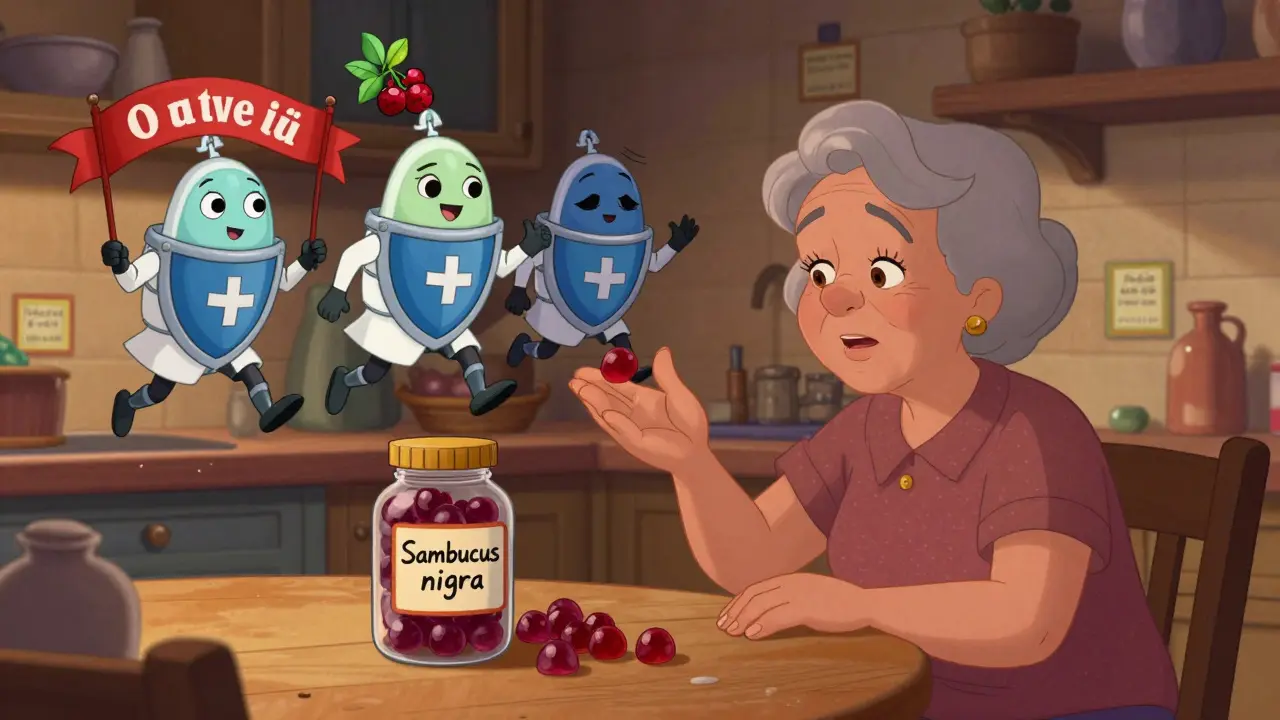
- Read labels carefully. Elderberry is in teas, gummies, syrups, lozenges, and even some cold remedies. Look for “Sambucus nigra” on the ingredient list.
Why This Matters More Than You Think
The elderberry market is growing fast-projected to hit over $2 billion by 2028. Meanwhile, about 3.1 million Americans are on immunosuppressants. That’s a huge overlap. Most people assume “natural” means “safe.” But natural doesn’t mean harmless, especially when you’re on powerful medications. Regulators like the FDA haven’t issued warnings about elderberry, but that’s because supplements aren’t held to the same standards as drugs. The GRAS (Generally Recognized As Safe) label only means it’s not toxic in normal doses-it doesn’t address drug interactions. That gap leaves patients unprotected.Bottom Line
Elderberry may help healthy people fight off a cold. But if you’re taking immunosuppressants, it’s not a supplement-it’s a risk. The science isn’t 100% settled, but the warning signs are strong enough that every major medical organization recommends avoiding it. Your immune system is already under siege from your medication. Don’t let a bottle of syrup undo years of careful treatment.When in doubt, skip it. Your body will thank you.
Melissa Taylor
December 17, 2025 AT 00:11Elderberry might seem harmless, but if you're on immunosuppressants, it's like inviting a bull into a china shop. I've seen too many patients think 'natural' means 'safe'-it doesn't. Always talk to your pharmacist before adding anything new. Your transplant or autoimmune treatment is too important to risk.
John Brown
December 18, 2025 AT 01:50My cousin’s on tacrolimus after a liver transplant. She swore by elderberry syrup until her doctor shut it down. Now she uses ginger tea instead-no fuss, no risk. Sometimes the simplest swaps make the biggest difference. Just listen to your care team.
Jocelyn Lachapelle
December 19, 2025 AT 05:28I take CellCept for lupus and never thought twice about elderberry gummies until now. Guess I’m stopping. My body’s already fighting enough without me accidentally adding fuel to the fire. Thanks for the wake-up call.
Sai Nguyen
December 20, 2025 AT 15:41Americans think herbs are medicine. In India we know better. If you’re on real drugs, you don’t play with berries. This is why your healthcare system is broken.
Jake Sinatra
December 21, 2025 AT 09:18While the anecdotal evidence varies, the pharmacological mechanism is clear: elderberry upregulates pro-inflammatory cytokines, which directly antagonizes the intended immunosuppressive effect of calcineurin inhibitors and biologics. The clinical risk is not theoretical-it is documented in case reports and supported by pharmacokinetic modeling. Caution is not optional.
RONALD Randolph
December 23, 2025 AT 01:52STOP! STOP! STOP! Elderberry is NOT a vitamin! It’s an immune stimulant! If you’re on immunosuppressants, you’re not supposed to be stimulating your immune system-EVER! Who let this nonsense get so popular?! The FDA is asleep at the wheel!
Mike Nordby
December 24, 2025 AT 04:51I appreciate the depth here. Most people don’t realize that supplements aren’t regulated like drugs. Just because it’s in a health food store doesn’t mean it’s safe with your meds. I always check with my pharmacist before trying anything new. It’s saved me more than once.
John Samuel
December 25, 2025 AT 06:28Imagine your immune system as a finely tuned orchestra-immunosuppressants are the conductor, keeping everything in harmony. Elderberry? That’s a rogue trumpet soloist blaring at full volume in the middle of a lullaby. The result? Chaotic dissonance. Please, don’t turn your treatment into a jazz improv session.
Lisa Davies
December 26, 2025 AT 17:55My sister’s on Remicade and started taking elderberry because she 'wanted to be proactive.' Three weeks later, she was back in the hospital. She didn’t even know it could interact. This post could save someone’s life. Thank you for sharing.
Benjamin Glover
December 28, 2025 AT 04:49Another American wellness delusion. Natural doesn’t mean safe. It means unregulated. And yet, people still trust influencers over physicians. How is this still a thing?
Raj Kumar
December 29, 2025 AT 06:13bro i was on cellcept for 5 yrs and took elderberry every winter no prob but maybe im just lucky? i dont know but my doc never said nothin so i kept goin. maybe its just me idk
Christina Bischof
December 29, 2025 AT 19:34i read this and immediately deleted the elderberry syrup from my cart. i didn’t even realize it was a thing. thanks for making it clear without scaring me. sometimes the quiet warnings are the ones that stick.
Michelle M
December 31, 2025 AT 14:55It’s funny how we treat our bodies like machines we can tweak with potions-when really, we’re complex systems shaped by centuries of evolution. Elderberry doesn’t 'boost' immunity. It agitates it. And when your body is already being held in check by medicine, agitation isn’t help-it’s sabotage. Maybe we need to stop romanticizing nature and start respecting biology.
Nupur Vimal
January 2, 2026 AT 07:53you guys are overreacting elderberry is fine i take it every day with my prednisone and my rheumatoid arthritis is better than ever you just dont understand how natural healing works