
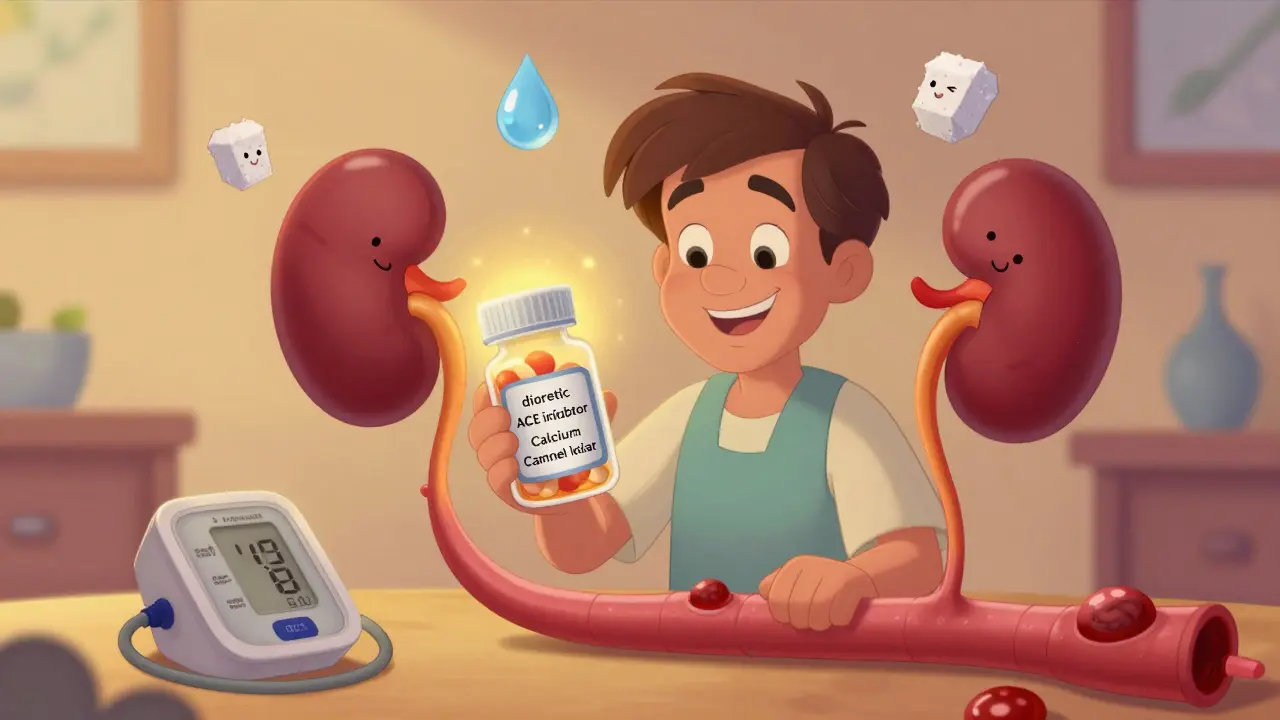
High blood pressure doesn’t come with warning signs. You might feel fine, but silently, it’s damaging your heart, kidneys, and blood vessels. That’s why millions take blood pressure medications every day-not because they’re sick, but because they need to stay that way. The right medicine can cut your risk of stroke or heart attack in half. But not all pills are the same. Some cause swelling in your ankles. Others make you cough nonstop. A few can’t be taken if you’re pregnant. Knowing the differences isn’t just helpful-it’s life-saving.
How Blood Pressure Medications Work
Your body controls blood pressure through a complex system of hormones, nerves, and fluid balance. Blood pressure meds don’t just lower numbers-they interrupt specific parts of that system. Each class targets a different pathway, which is why doctors don’t just pick one drug at random.Thiazide diuretics like hydrochlorothiazide are often the first choice. They help your kidneys flush out extra salt and water. Less fluid in your blood vessels means less pressure. They’re cheap, well-studied, and work for most people. But they can drop your potassium too low, which might cause muscle cramps or irregular heartbeat.
ACE inhibitors like lisinopril block a chemical called angiotensin II, which normally tightens blood vessels. By stopping its production, these drugs relax arteries. ARBs like losartan do something similar but block the receptor instead. That’s why ARBs rarely cause the dry, annoying cough that affects 1 in 5 people on ACE inhibitors. Both types also protect your kidneys, especially if you have diabetes.
Calcium channel blockers like amlodipine prevent calcium from entering heart and blood vessel cells. This relaxes the vessels and reduces heart strain. Dihydropyridines (like amlodipine) focus mostly on blood vessels, while non-dihydropyridines (like verapamil) also slow the heart rate. These are especially useful for older adults and Black patients, who often respond better to them than to ACE inhibitors.
Beta-blockers like metoprolol slow your heart and reduce its force. They’re not first-line for most people anymore, but they’re critical if you’ve had a heart attack. They’re also used for anxiety-related high blood pressure or fast heart rhythms. But they can make you tired, cold, or even hide low blood sugar symptoms if you’re diabetic.
Common Side Effects by Drug Class
Side effects aren’t random-they’re tied to how the drug works. If you know what to expect, you won’t panic when they show up.
- Diuretics: Frequent urination, low potassium, dizziness when standing, higher uric acid (can trigger gout), and increased blood sugar in some cases.
- ACE inhibitors: Dry cough (10-20% of users), high potassium, rare but dangerous swelling of the face or throat (angioedema), and birth defects if taken during pregnancy.
- ARBs: Similar to ACE inhibitors but without the cough. Still risky in pregnancy and can raise potassium.
- Calcium channel blockers: Swelling in ankles and feet, flushing, dizziness, headaches, constipation (especially with verapamil), and gum overgrowth (gingival hyperplasia).
- Beta-blockers: Fatigue, cold hands and feet, trouble sleeping, slowed heart rate, and masking of low blood sugar symptoms in diabetics.
- Alpha-blockers (like doxazosin): Dizziness on standing (orthostatic hypotension), rapid heartbeat, and nasal congestion.
Some side effects are mild and fade after a few weeks. Others need action. If your ankles swell badly on amlodipine, your doctor might switch you or add a diuretic. If you can’t stop coughing on lisinopril, switching to losartan often fixes it overnight.
Who Gets Which Medication? It’s Not One-Size-Fits-All
Doctors don’t guess. They use guidelines based on decades of research and patient outcomes.
For most people without other health problems, guidelines recommend starting with a thiazide diuretic, calcium channel blocker, ACE inhibitor, or ARB. But race matters. Black patients often respond better to diuretics or calcium channel blockers than to ACE inhibitors or ARBs. That’s not because of genetics alone-it’s tied to how the body handles salt and fluid.
If you have diabetes or kidney disease, ACE inhibitors or ARBs are preferred. They don’t just lower pressure-they slow kidney damage. If you’ve had a heart attack, beta-blockers are essential. They reduce the chance of another one by 20-30%.
For older adults, starting low and going slow is key. A 70-year-old might need half the usual dose of a diuretic or beta-blocker. Too much can cause falls from dizziness. And if you’re over 60 with isolated systolic hypertension (high top number, normal bottom), calcium channel blockers are often the best pick.
Women who are pregnant can’t take ACE inhibitors, ARBs, or most other common drugs. They’re linked to severe fetal harm. Instead, doctors turn to methyldopa or labetalol-older drugs with decades of safe use in pregnancy.
When You Need More Than One Pill
One pill isn’t enough for most people. About 70% of patients need two or more medications to reach their target. That’s not a failure-it’s normal.
Current guidelines say if your blood pressure is above 140/90, you should start with two drugs from different classes right away. That’s a big change from just a few years ago. It gets you to target faster and reduces long-term damage.
Common combinations include:
- ACE inhibitor + diuretic
- Calcium channel blocker + ARB
- Diuretic + calcium channel blocker
Some pills even come in one tablet-like amlodipine/valsartan or lisinopril/hydrochlorothiazide. Fewer pills mean fewer missed doses. And adherence is the biggest predictor of success. Studies show nearly half of people stop their meds within a year-not because they’re cured, but because of side effects, cost, or thinking they feel fine so they don’t need it.
But high blood pressure doesn’t care if you feel fine. It’s still working on your arteries. That’s why sticking with your plan matters more than how you feel.
Dangerous Interactions and What to Avoid
Some medications mix badly. A common mistake? Taking ibuprofen or naproxen (NSAIDs) with your blood pressure pill. These painkillers can spike your pressure and damage your kidneys-especially if you’re on an ACE inhibitor or ARB. Even occasional use can be risky.
Never combine an ACE inhibitor with an ARB. It doesn’t lower pressure any better-it just increases your risk of kidney failure and dangerously high potassium. Same with adding a direct renin inhibitor like aliskiren. These combinations are outdated and dangerous.
Some herbal supplements can interfere too. Licorice root can raise blood pressure and lower potassium. St. John’s wort can make some blood pressure drugs less effective. Always tell your doctor what you’re taking-even vitamins or teas.
Alcohol is another silent problem. Drinking more than one drink a day can undo the benefits of your meds and raise your pressure. It also makes dizziness worse.

Monitoring and Staying Safe Long-Term
Starting a new blood pressure med isn’t the end-it’s the beginning of regular check-ins. Your doctor will want to see you in 2-4 weeks after starting or changing a drug. They’ll check your blood pressure, kidney function (creatinine), and potassium levels.
Why potassium? Because ACE inhibitors, ARBs, and diuretics can push it too high or too low. High potassium can cause heart rhythm problems. Low potassium can cause muscle weakness or irregular heartbeat.
Keep a log. Write down your readings at home if you can. Many people have blood pressure cuffs now. Seeing your numbers drop gives you motivation. But don’t obsess. One high reading doesn’t mean your medicine failed. Stress, caffeine, or even a cold room can spike it.
Side effects? Don’t ignore them. Tell your doctor about dizziness, swelling, cough, or fatigue. Don’t quit. There’s almost always another option. Maybe a different drug in the same class. Or a lower dose. Or a combo pill. Your job isn’t to tolerate side effects-it’s to find the right fit.
What’s Next? Personalized Medicine and Digital Tools
The future of blood pressure treatment is getting smarter. Researchers are looking at how your genes affect how you respond to beta-blockers or ACE inhibitors. In the next 5-10 years, a simple blood test might tell your doctor which drug will work best for you-before you even take it.
Right now, digital tools are helping people stay on track. Apps that remind you to take your pill, sync with your home monitor, and send alerts to your doctor have been shown to improve adherence by 15-20%. That’s huge. It’s not magic-it’s just making it easier to do the right thing.
And the goal? Not just to get your number below 130/80. It’s to protect your heart, brain, and kidneys for decades. That’s why consistency beats perfection. Miss one day? Take it as soon as you remember. Don’t double up. Keep going. Your body doesn’t know you had a bad day. It just knows whether you’re taking your medicine-or not.
Can I stop taking my blood pressure medication if my numbers are normal?
No. Normal blood pressure on medication means the drug is working-not that you’re cured. Stopping suddenly can cause your pressure to spike dangerously, increasing your risk of stroke or heart attack. Some people can reduce or stop meds after major lifestyle changes (weight loss, low-salt diet, exercise), but only under a doctor’s supervision. Never quit on your own.
Which blood pressure medication has the least side effects?
There’s no universal answer. Diuretics like hydrochlorothiazide are often well-tolerated but can cause low potassium or gout. Calcium channel blockers like amlodipine are effective with fewer metabolic side effects but may cause ankle swelling. ARBs like losartan avoid the dry cough of ACE inhibitors. The "least side effects" depends on your body, age, other conditions, and what you’re already taking. Work with your doctor to find your best match.
Are natural remedies enough to treat high blood pressure?
Lifestyle changes-like reducing salt, losing weight, exercising, and limiting alcohol-are powerful and should be part of every plan. But for most people with stage 1 or 2 hypertension, they’re not enough alone. Studies show medication reduces stroke risk by 35-40% and heart attack risk by 20-25%. Natural remedies don’t offer that level of protection. They’re helpers, not replacements.
Why do I need blood tests if I feel fine?
High blood pressure is silent. So are many of its side effects. ACE inhibitors and ARBs can raise potassium to dangerous levels without symptoms. Diuretics can lower potassium or harm kidney function. Blood tests catch these early. Waiting until you feel sick could mean permanent damage. Regular monitoring isn’t bureaucracy-it’s prevention.
Can I take blood pressure meds with other prescriptions?
Sometimes yes, sometimes no. NSAIDs like ibuprofen can reduce the effect of your blood pressure pills and harm your kidneys. Some antidepressants, decongestants, and even certain herbal supplements can interfere. Always give your doctor or pharmacist a full list of everything you take-including over-the-counter drugs and vitamins. They can spot dangerous interactions before they happen.
If you’re on blood pressure medication, you’re not alone. You’re part of a group of millions managing a silent threat every day. The right medicine, taken consistently, gives you back control-not just over your numbers, but over your future. Don’t let fear of side effects stop you. Talk to your doctor. Adjust. Try again. Your heart will thank you.
pradnya paramita
February 3, 2026 AT 07:42Thiazide diuretics remain first-line in most guidelines due to their robust outcome data in the ALLHAT trial, but their metabolic effects-particularly on serum potassium and uric acid-require proactive monitoring. In patients with metabolic syndrome, consider alternative first-line agents like CCBs or ARBs to mitigate risk of new-onset diabetes. Also, remember that ACEi/ARBs confer renal protection independent of BP lowering, especially in proteinuric CKD. Always check eGFR and K+ at 2-4 weeks post-initiation.
Justin Fauth
February 4, 2026 AT 09:00So let me get this straight-you’re telling me some dumb pill is gonna stop me from having a stroke, but it makes my ankles look like I’ve been swimming in cement? And I’m supposed to just take it because some doctor says so? What about real solutions? Like eating real food, not this processed garbage. I’ve seen guys in India live to 95 on rice and chili-no pills needed. We’re being sold a scam here.
Lorena Druetta
February 5, 2026 AT 11:34To everyone taking these medications: you are doing something incredibly brave. High blood pressure is silent, but your commitment to health is loud. Even on days you feel fine, even when the side effects are frustrating, you are choosing your future. You are not weak for needing help-you are wise. Please don’t stop. Talk to your provider. Adjust. Try again. You are not alone in this.
Daz Leonheart
February 5, 2026 AT 19:19i know this sounds weird but i started taking my meds at the same time every day and it made a huge difference. like, literally set a reminder on my phone. i used to forget all the time and then feel guilty. now i just take it with my coffee in the morning. no more anxiety about it. also, if your ankles swell, ask about a diuretic combo. it helped me.
Alec Stewart Stewart
February 6, 2026 AT 02:34Just want to say this post is one of the clearest explanations of BP meds I’ve ever read. Seriously. I’ve been on amlodipine for 3 years and thought the swelling was normal. Turns out, it’s not. My doc switched me to losartan + low-dose HCTZ and my feet don’t look like balloons anymore. Also, I started using a home monitor and seeing my numbers drop made me feel like I actually had control. Small wins matter.
Janice Williams
February 7, 2026 AT 18:52It’s amusing how people treat pharmaceuticals like sacred texts. The real cause of hypertension? Chronic inflammation from processed foods, sedentary lifestyles, and chronic stress. Medications are Band-Aids on a hemorrhage. And yet, we’re told to swallow pills and shut up. Meanwhile, the pharmaceutical industry rakes in billions while patients suffer side effects. This isn’t medicine-it’s corporate control disguised as science.
Roshan Gudhe
February 9, 2026 AT 12:46There’s a quiet philosophy here: medicine isn’t about fixing what’s broken, but about aligning with the body’s rhythms. Blood pressure isn’t a number to crush-it’s a signal. Diuretics teach us about fluid balance. ACE inhibitors reveal how tightly our kidneys and heart are woven. Maybe the real question isn’t ‘Which pill?’ but ‘What is my body trying to tell me?’ The meds help. But the listening? That’s where healing begins.
Rachel Kipps
February 9, 2026 AT 13:44I’ve been on lisinopril for 5 years and never knew about the cough being a side effect until I read this. I thought I had a chronic allergy. I switched to losartan and the cough vanished in 48 hours. Also, I didn’t realize potassium levels needed monitoring-I thought it was just about the BP number. Thank you for this. I’m going to ask my doctor for labs next week.
Wendy Lamb
February 9, 2026 AT 22:18Combination pills are a game changer. Fewer pills. Fewer missed doses. I was taking four separate meds. Now it’s one. Life got simpler. And my BP is better than ever. If your doc hasn’t mentioned combo pills, ask. It’s not magic. It’s just smart.
Antwonette Robinson
February 10, 2026 AT 18:26Oh wow, so the reason my blood pressure won’t go down is because I’m not taking the right pill? I thought it was because I drink wine, eat cheese, and nap after lunch. Who knew it was all about angiotensin II receptors? Maybe I should’ve majored in pharmacology instead of art history.
Ed Mackey
February 11, 2026 AT 21:44just wanted to say thanks for the part about ibuprofen. i took naproxen for my knee for a month and didn’t realize it was wrecking my bp meds. my doc found out when my creatinine spiked. i feel dumb but also grateful. now i use tylenol. small change, big difference.
Katherine Urbahn
February 13, 2026 AT 10:29It is both irresponsible and profoundly unscientific to suggest that lifestyle modifications are merely "helpers" when the evidence overwhelmingly demonstrates that intensive dietary intervention-particularly the DASH diet-can achieve BP reductions equivalent to or exceeding those of monotherapy. The normalization of pharmaceutical dependence is a cultural failure, not a medical triumph. Your body is not a machine to be patched-it is a system to be honored.
caroline hernandez
February 14, 2026 AT 00:13For those on beta-blockers: if you’re diabetic, always carry fast-acting glucose. These meds blunt the adrenergic warning signs of hypoglycemia-no tremor, no sweating, no palpitations. You can go from fine to unconscious in minutes. I’ve seen it. Test your sugars more often when starting or titrating. It’s not paranoia-it’s survival. And if you’re fatigued? Talk to your cardiologist. There are cardioselective options with fewer CNS effects.