
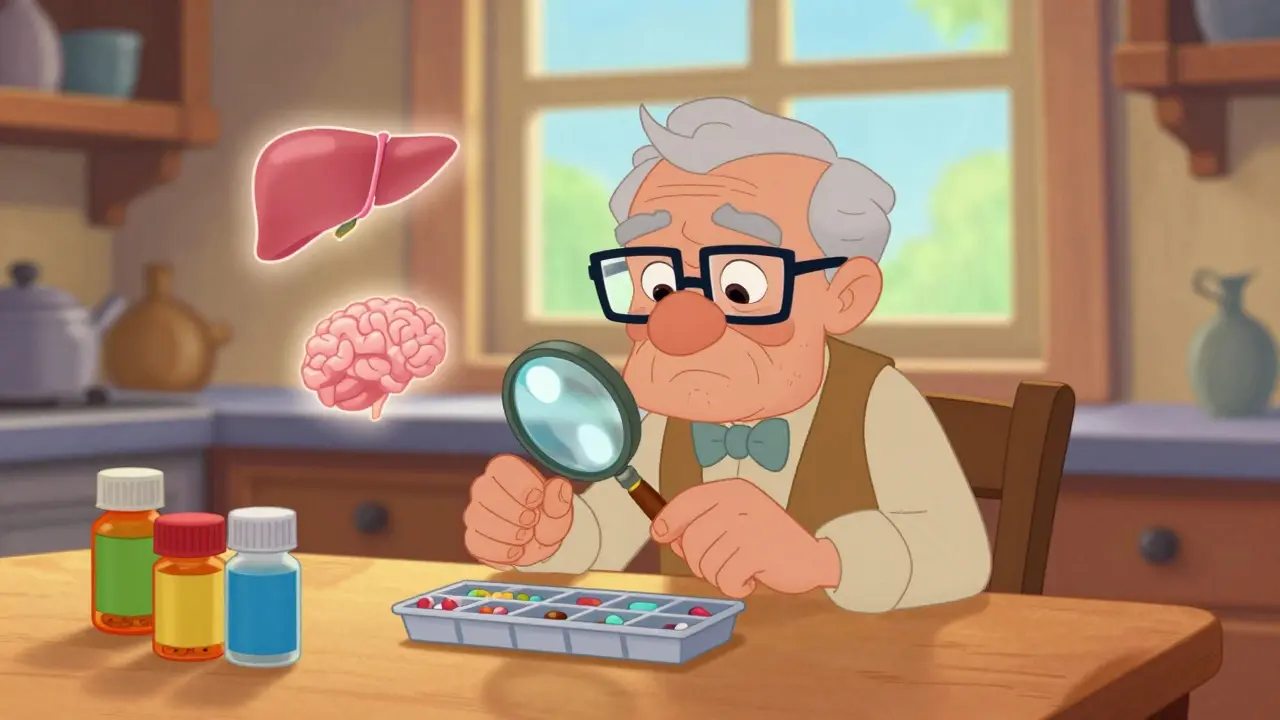
When you’re over 65, taking medication isn’t just about popping a pill. It’s about generic drug safety-and how your body changes as you age. Many assume that because a generic pill costs less, it’s less effective or riskier. But the truth is more complicated. Generic drugs are required by the FDA to work the same way as brand-name versions. They contain the same active ingredient, same dose, and same route of use. So why do so many older adults worry about switching from brand to generic? And what really puts them at risk?
Why Older Adults Are More Sensitive to Medications
Your body doesn’t process drugs the same way at 70 as it did at 30. By the time you hit 75, your liver and kidneys may be handling medications 20-30% slower. That means drugs stick around longer. A normal dose can become an overdose. This isn’t about the drug being weak-it’s about your body’s ability to clear it.
Body composition changes too. Fat increases, water decreases. That affects how drugs spread through your system. A blood pressure pill that used to work perfectly might now build up in your system, causing dizziness or fainting. The same goes for sleep aids, painkillers, and antidepressants. Older adults are especially sensitive to central nervous system drugs. A 2023 study from MedShadow.org found that even small doses of benzodiazepines can lead to falls, confusion, or hospitalization in seniors.
Polypharmacy: The Silent Killer
Taking five or more medications? You’re not alone. Medicare beneficiaries average 48 prescriptions a year, and 89% of those are generics. But here’s the scary part: the risk of an adverse drug reaction jumps from 13% with two drugs to 58% with five, and 82% with seven or more. That’s not because generics are unsafe-it’s because the combinations aren’t always reviewed properly.
Some drugs are dangerous together. For example, combining an opioid with a benzodiazepine increases overdose risk by 154%. Mixing gabapentin with an opioid raises respiratory depression risk by 70%. These aren’t brand-name issues-they’re prescribing issues. The Beers Criteria 2023 update, led by the American Geriatrics Society, lists dozens of medications that should be avoided or used with extreme caution in older adults. That includes muscle relaxants like cyclobenzaprine (Flexeril), certain anticholinergics, and even long-term use of aspirin for heart protection in people over 70.
Generic vs. Brand: Is There a Real Difference?
Legally, generics must be bioequivalent. That means they deliver the same amount of active ingredient into your bloodstream within 80-125% of the brand-name version. For most drugs, that’s fine. But for drugs with a narrow therapeutic index-like warfarin, levothyroxine, or phenytoin-even small changes matter.
Some seniors report instability after switching. One Reddit user shared that her 82-year-old mother’s TSH levels went wild after switching from brand-name Synthroid to generic levothyroxine. It took three dosage adjustments over six months to stabilize. That doesn’t mean generics are unsafe. It means that for NTI drugs, consistency matters. Switching between different generic manufacturers can sometimes cause fluctuations. That’s why many doctors prefer to keep patients on the same generic brand-or even the brand name-if stability is critical.
But here’s the data: a 2021 study in the Journal of Thrombosis and Haemostasis found generic warfarin was 98.7% therapeutically equivalent to brand-name Coumadin. The FDA has tracked this for decades. Still, 42% of older adults believe generics are riskier. That fear? It’s often based on experience, not science.
What the Experts Say
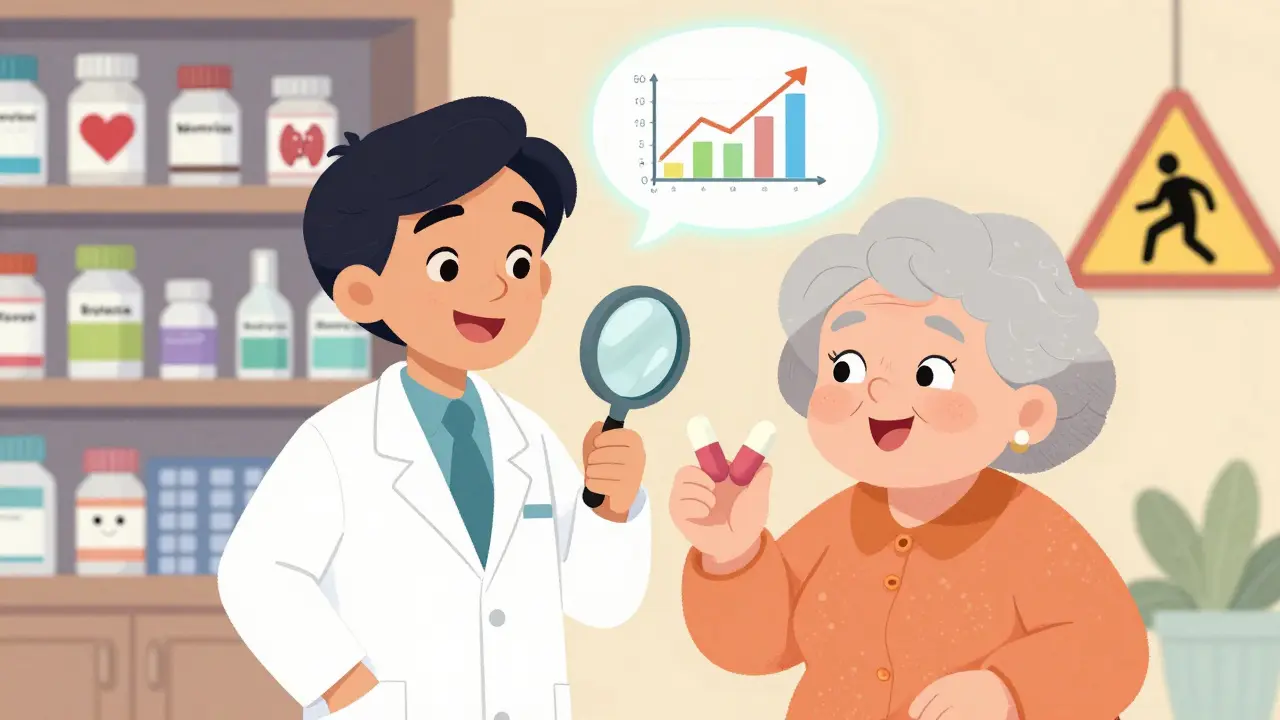
Dr. Dima Qato, a pharmacist and researcher at the University of Illinois Chicago, found that when patients are properly counseled about generics, their acceptance and proper use increases by 37%. The problem isn’t the drug-it’s the lack of clear communication.
Dr. Michael Steinman, a geriatrician at UCSF, puts it simply: "The issue isn’t generic versus brand. It’s whether the medication is appropriate for someone with multiple chronic conditions." Many prescriptions are written for single diseases. But older adults often have five, six, or more. A drug that’s fine for high blood pressure alone might cause dangerous drops in blood sugar when mixed with diabetes meds.
The FDA stands by generics. Janet Woodcock, former director of the FDA’s Center for Drug Evaluation and Research, said in 2021: "Generic drugs are just as safe and effective as brand-name drugs." But she also acknowledged that older adults need special attention. That’s why the FDA launched its Sentinel Initiative in 2022, monitoring adverse events by age group. Early data shows generic and brand-name drugs have similar safety profiles-except for warfarin in adults over 80, where reporting rates are 1.8 times higher. That doesn’t mean it’s less safe. It means older patients are more likely to notice and report side effects.
Real-Life Risks Beyond the Pill
Medication errors don’t always come from the drug itself. Packaging matters. A 2023 MedShadow.org analysis found 28% of medication errors in seniors involved confusion between similar-looking generic pills. Brand-name drugs often have unique shapes and colors. Generics? Sometimes they look nearly identical. One 88-year-old woman in a National Council on Aging case study took the wrong muscle relaxant because the pill looked like another one she was taking. She fell, broke her hip, and never fully recovered.
Storage and expiration matter too. A 2023 FDA report found 22% of medication errors in older adults came from using expired or improperly stored drugs. Heat, humidity, and poor labeling make this worse. If you live in a hot climate like Durban, keeping pills in a bathroom cabinet isn’t safe.
How to Stay Safe: 5 Practical Steps
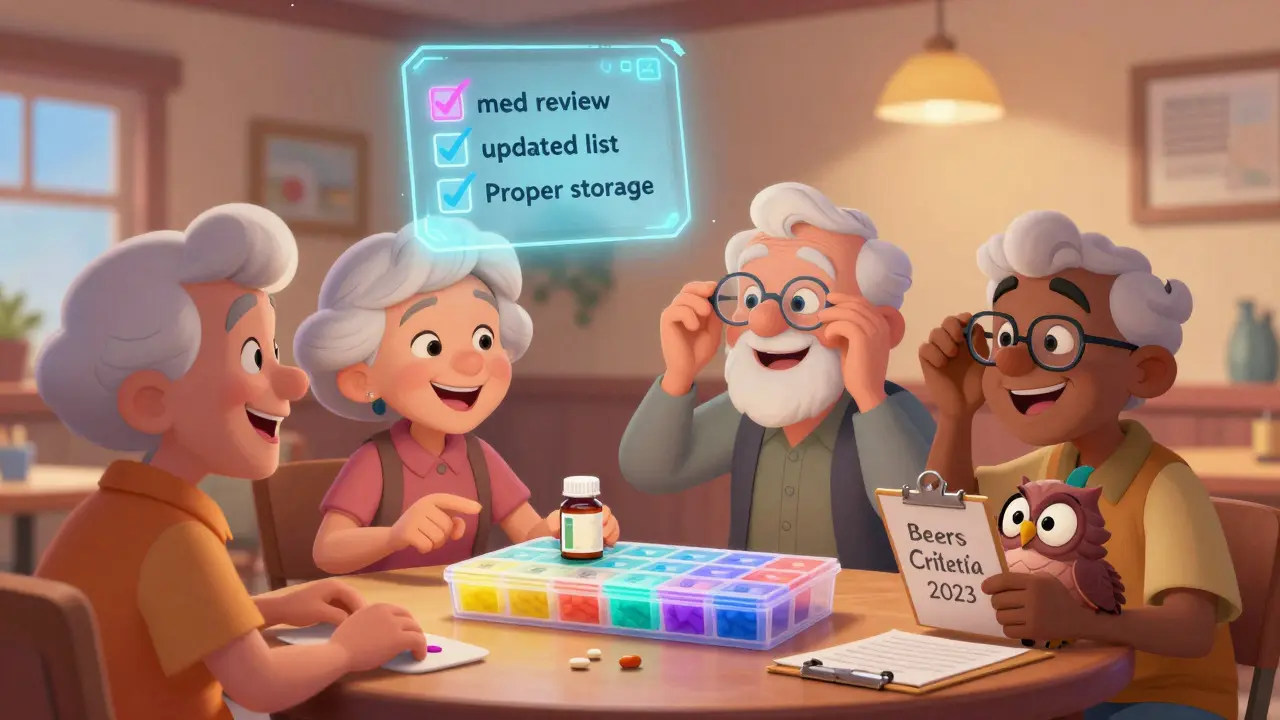
- Get a full medication review every 3-6 months. Ask your pharmacist to go through every pill, supplement, and OTC drug you take. Studies show this reduces adverse events by 27%.
- Use a pill organizer. Color-coded containers or automated dispensers cut medication errors by 34%. They’re not fancy-they’re lifesaving.
- Ask for larger print. The National Eye Institute says 65% of people over 65 have vision problems. If you can’t read the label, you can’t take the drug safely.
- Keep an updated list. Write down every medication, dose, and reason you take it. Bring it to every doctor visit. One study found this reduces duplicate prescriptions by 41%.
- Don’t assume generics are always interchangeable. For drugs like warfarin or levothyroxine, stick with the same manufacturer unless your doctor approves a switch.
The Bottom Line
Generic drugs aren’t the enemy. In fact, they save seniors billions. The average Medicare beneficiary saves $1,200 a year by taking generic atorvastatin instead of Lipitor. But safety isn’t about cost. It’s about awareness.
The real danger isn’t the generic pill. It’s the lack of review, the outdated prescriptions, the cluttered medicine cabinet, and the silence around side effects. Older adults don’t need fewer generics-they need better communication, better labeling, and better oversight.
Ask your doctor: "Is this still necessary?" Ask your pharmacist: "Could this interact with anything else I’m taking?" And if you’ve noticed changes in energy, balance, or memory after a switch-speak up. Your body is telling you something.
Are generic drugs really as safe as brand-name drugs for older adults?
Yes, generic drugs are required by the FDA to be bioequivalent to their brand-name counterparts, meaning they deliver the same active ingredient at the same rate and amount. For most medications, they are just as safe and effective. However, for drugs with a narrow therapeutic index-like warfarin, levothyroxine, or phenytoin-small differences in absorption can matter. While clinical studies show high equivalence (e.g., 98.7% for generic warfarin), some older adults experience instability after switching manufacturers. Consistency in the generic brand can help avoid this.
Why do older adults have more side effects from medications?
As we age, our bodies change. The liver and kidneys process drugs more slowly, sometimes by up to 30% after age 75. Body fat increases while water decreases, which alters how drugs are distributed. The central nervous system also becomes more sensitive. A dose that was safe at 50 can become dangerous at 80. This isn’t about the drug being weak-it’s about the body’s ability to handle it. That’s why "normal" doses for younger adults can be overdoses for seniors.
What medications should older adults avoid?
The 2023 Beers Criteria, updated by the American Geriatrics Society, lists medications that pose higher risks for seniors. These include benzodiazepines (like diazepam), anticholinergics (like diphenhydramine), muscle relaxants (like cyclobenzaprine), and certain NSAIDs. Opioids combined with benzodiazepines or gabapentinoids are especially dangerous, increasing overdose risk by over 150%. Even aspirin for primary prevention is now cautioned against for adults over 70 due to bleeding risks. The key isn’t brand or generic-it’s whether the drug is appropriate for someone with multiple health conditions.
Can switching from brand to generic cause problems?
For most drugs, no. But for drugs with a narrow therapeutic index-like levothyroxine or warfarin-switching between different generic manufacturers can sometimes cause small changes in how the drug is absorbed. This may lead to unstable lab results or side effects. If you notice new symptoms after a switch (like fatigue, heart palpitations, or dizziness), talk to your doctor. Many experts recommend sticking with the same generic brand once you find one that works well.
How can I reduce my risk of medication errors?
Start with a medication review every 3-6 months with your pharmacist. Use a pill organizer to avoid mix-ups. Keep an updated list of all medications-including supplements and OTC drugs-and bring it to every appointment. Ask for larger print on labels if you have vision issues. Store medications in a cool, dry place, and check expiration dates. If you’re taking five or more drugs, ask if any can be safely stopped. Many older adults are on medications that are no longer needed.
Christopher Wiedenhaupt
February 24, 2026 AT 15:22Generic drugs are a lifesaver for seniors on fixed incomes. I’ve seen my dad switch from brand-name Lipitor to generic atorvastatin and save over $1,000 a year-no difference in how he feels. The FDA’s bioequivalence standards are solid. Sure, some folks report weird side effects after switching, but that’s often because their bodies are adjusting, not because the drug’s flawed. Consistency matters more than brand loyalty.
Shalini Gautam
February 25, 2026 AT 04:56India makes some of the best generic drugs in the world-strict quality control, WHO-certified factories, and way cheaper than U.S. brands. Why are we scared of Indian generics? They’re used in WHO programs worldwide. If it’s good enough for global health initiatives, it’s good enough for Grandma.
Natanya Green
February 25, 2026 AT 11:30OMG. I JUST HAD A PANIC ATTACK reading this. My mom switched to generic levothyroxine and started zoning out at dinner like she was in a coma. I thought she was having mini-strokes. Turns out? Her TSH went haywire. We had to switch back. I’m not saying generics are bad-I’m saying the system is a nightmare. No one warned us. No one tracked her. It felt like a gamble with her life.
Brandice Valentino
February 27, 2026 AT 07:44Let’s be real-most people don’t even know what "bioequivalent" means. And yet, pharmacists are swapping pills like baseball cards. I’ve seen 80-year-olds with 12 different meds, all generics from 5 different manufacturers, and no one’s checking for interactions. It’s not the drug-it’s the chaos. And yes, I’ve had a pharmacy give me the wrong generic because the labels looked too similar. I cried. I was 78.
Larry Zerpa
February 28, 2026 AT 09:16Here’s the inconvenient truth: the FDA’s "80-125%" bioequivalence window is a joke. That’s a 45% variance. For a drug like warfarin, that’s the difference between a clot and a hemorrhage. Studies show equivalence? Sure. But those studies are done on healthy young adults, not 85-year-olds with renal impairment. The data is cherry-picked. And don’t get me started on how the FDA ignores adverse event reporting from nursing homes. The system isn’t broken-it’s designed this way.
Gwen Vincent
March 2, 2026 AT 07:43I work in geriatric pharmacy. I’ve seen firsthand how a pill organizer and a 10-minute chat with a pharmacist can prevent hospitalization. The real issue isn’t generics-it’s neglect. No one’s teaching seniors how to read labels. No one’s asking if they can even see the numbers. And when they’re confused, they don’t speak up. It’s not the pill. It’s the silence.
Holley T
March 3, 2026 AT 01:15Look, I get it-people are scared. But fear isn’t data. The idea that generics are "riskier" is a myth pushed by pharma marketing. Brand-name companies spent billions convincing seniors that their $200 pill is "better." Meanwhile, the generic version is identical, cheaper, and just as safe. The only time switching causes issues is with NTI drugs-and even then, it’s not the generic’s fault. It’s the lack of monitoring. If your doctor doesn’t check labs after a switch, that’s malpractice, not a generic problem. Also, the FDA’s Sentinel Initiative? It’s a joke. Underfunded. Understaffed. And nobody talks about how pharmacy chains profit from automatic switches without patient consent.
Ashley Johnson
March 3, 2026 AT 05:09EVERYTHING is a government conspiracy. The FDA is owned by Big Pharma. They let generics in because they want to kill old people. Why? To save money on Social Security. I know a woman who died after switching to generic warfarin. They said "it was natural causes." But her pills looked different. The color was off. And the bottle? No lot number. That’s not a mistake. That’s a target. They’re using generics to thin the herd. And no one’s talking about it. Why? Because they’re scared. You think your grandma’s safe? Think again.
tia novialiswati
March 4, 2026 AT 15:29You’re doing AMAZING just by reading this and caring about your meds! 💪 Seriously, if you’re asking questions, you’re already ahead of 90% of seniors. Keep that pill organizer, get that med review, and don’t be shy about asking your pharmacist to write the dose in big letters. You’re not a burden-you’re a warrior. And you’ve got this! 🙌
Maranda Najar
March 4, 2026 AT 17:29The tragedy here isn’t the generic pill. It’s the quiet, unspoken horror of an entire generation being medicated into oblivion-no one checking, no one listening, no one caring. My mother was prescribed five new drugs in one visit. No review. No warning. Just a stack of bottles and a smile. She didn’t know the names. She didn’t know why. She just took them. And now? She forgets her own name. Was it the drugs? Maybe. But more than that-was it the indifference? The system doesn’t see her as a person. She’s a line item. A cost. A statistic. And we let it happen. Because it’s easier than fighting.