
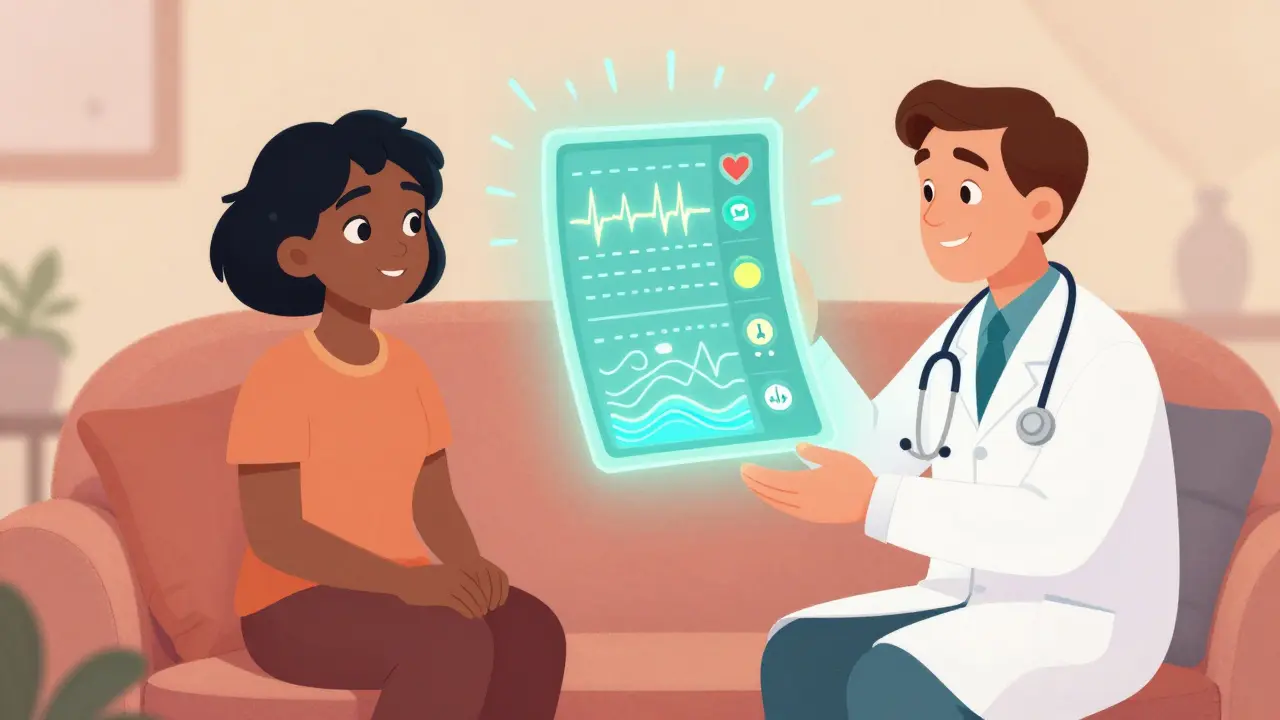
Stopping a medication isn’t as simple as skipping a pill. For many people, suddenly quitting a drug-whether it’s an antidepressant, a painkiller, or a benzodiazepine-can trigger symptoms that feel worse than the original condition. Nausea, dizziness, anxiety, insomnia, even seizures. These aren’t just side effects. They’re withdrawal symptoms, and they happen because your body has adapted to the drug over time. The good news? You don’t have to go through this alone. With the right conversation and a clear plan, tapering can be safe, manageable, and even empowering.
Why Tapering Matters More Than You Think
Most people assume that if a medication isn’t working anymore, they can just stop taking it. But for drugs like SSRIs (such as sertraline or paroxetine), opioids, or benzodiazepines (like alprazolam or clonazepam), your nervous system has built a dependence. It’s not addiction-it’s physiology. When you remove the drug too fast, your brain scrambles to readjust. The result? Withdrawal.
A 2021 review in the Journal of Clinical Psychiatry found that 8-12% of long-term benzodiazepine users experience severe withdrawal, including panic attacks and tremors. Opioid tapering gone wrong led to 17,000 deaths in the U.S. in 2022 alone, according to CDC data. And antidepressants? A 2023 study in NEJM showed that patients who stopped abruptly were 31% more likely to have intense withdrawal symptoms than those who tapered slowly.
But here’s the real issue: most patients aren’t warned. A survey of 1,200 people discontinuing antidepressants found that 74% wanted more information about how long withdrawal might last. Many felt blindsided. One Reddit user wrote: “My doctor never explained withdrawal would last 3 weeks-I felt betrayed and went back to higher doses.” That’s not just bad communication. It’s preventable harm.
What Does a Safe Taper Look Like?
There’s no one-size-fits-all taper. The speed and method depend on the drug, how long you’ve taken it, your age, other medications, and even your genetics. But here’s what works in practice:
- Benzodiazepines: ASAM’s 2022 guideline recommends reducing by 5-10% every 1-2 weeks. For someone on long-term therapy (over 6 months), that means a taper lasting 4-26 weeks. Faster tapers increase withdrawal risk by 40-60%.
- Opioids: The CDC and Mayo Clinic suggest dropping 10% of your original dose every 5-7 days. Once you hit 30% of the starting dose, slow down further. The Department of Veterans Affairs allows up to 50% weekly reductions for low-risk patients, but only if they’re stable and monitored.
- Antidepressants: This is the trickiest. Fluoxetine (Prozac) has a long half-life-you might taper in 1-2 weeks. But paroxetine (Paxil) or venlafaxine (Effexor)? You need 4-8 weeks. A 2021 NIH review found 71% of clinical guidelines recommend gradual tapering here, even though some experts argue it’s unnecessary for certain drugs.
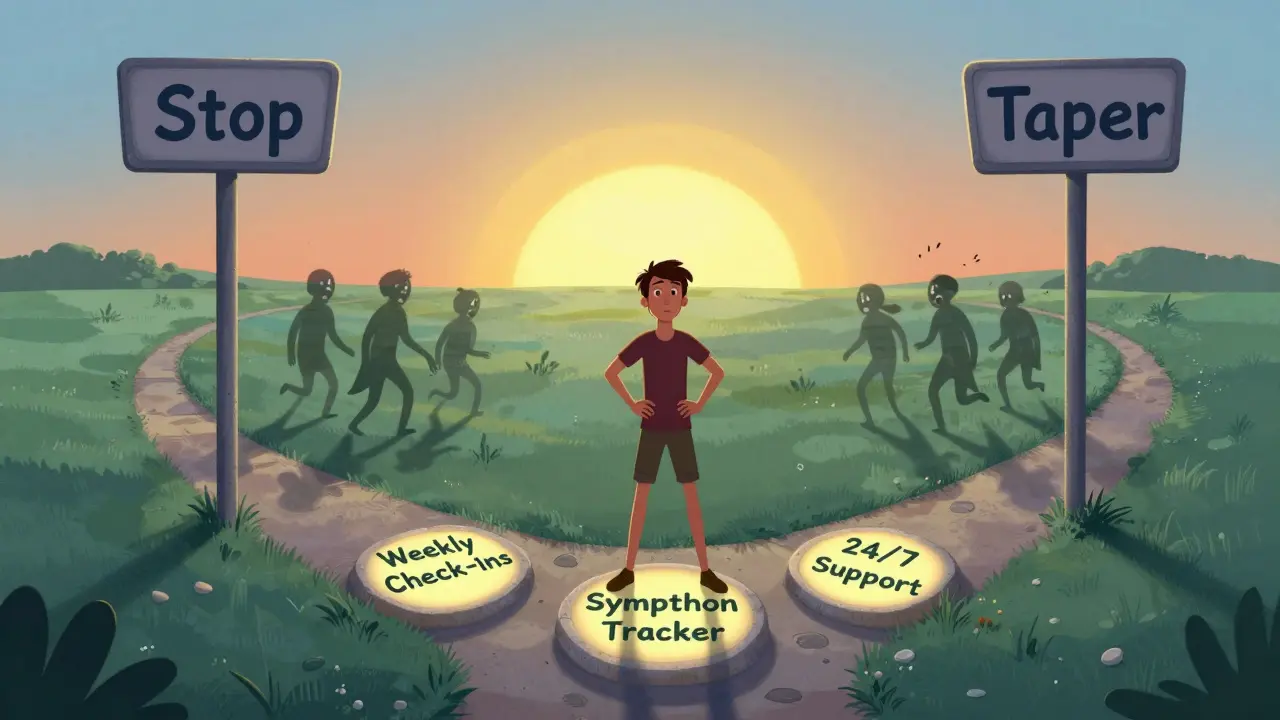
Success rates jump dramatically with structure. Mayo Clinic’s 10% weekly method had an 85% completion rate. Meanwhile, patients given a written taper schedule and 24/7 access to their provider had 82% satisfaction. That’s not magic. That’s clarity.
How to Start the Conversation With Your Provider
You don’t need to be an expert to ask the right questions. Here’s how to lead the discussion:
- Ask why. “Why is this medication still right for me now?” Sometimes, the reason it was prescribed years ago doesn’t apply anymore.
- Ask about alternatives. “Are there non-drug options I could try instead?” Physical therapy, sleep hygiene, or cognitive behavioral therapy can replace some meds.
- Ask for a plan. “Can we make a written taper schedule together?” Don’t accept vague promises like “We’ll see how you feel.”
- Ask about symptoms. “What should I expect? How long might they last? What should I do if they get worse?”
- Ask about support. “Can I call you if I have bad days? Is there someone I can text?”
Studies show that when patients co-create their taper plan, failure rates drop by 63%. That’s not just better outcomes-that’s dignity. You’re not a passive recipient of a prescription. You’re part of the team.

What Your Provider Should Do
Good providers don’t just hand you a schedule. They do five things:
- Assess your readiness. They might use a “Readiness Ruler” - asking you to rate on a scale of 1-10 how ready you feel to taper.
- Explain the risks and benefits in your terms. Not “this drug affects serotonin receptors.” But “stopping too fast might give you brain zaps and trouble sleeping for weeks.”
- Write it down. A signed, dated plan with exact doses and dates. Not a verbal suggestion. A document.
- Set up monitoring. Weekly check-ins for the first month. A symptom tracker app or journal. A 24-hour phone line.
- Adjust as needed. If you’re having bad days, the plan changes. No shame. No pressure. You’re not failing-you’re telling your body what it needs.
The CDC and ASAM both say: tapering decisions must consider your functional status, not just your dose. Are you working? Sleeping? Caring for your kids? If you’re stable and doing well, why rush? A 2021 study from the University of Washington found that forced rapid tapers in chronic pain patients increased suicide attempts by 60%. That’s not care. That’s negligence.
What to Watch For During Tapering
Withdrawal symptoms vary by drug, but here are common red flags:
- Antidepressants: Brain zaps (electric shock sensations), dizziness, nausea, mood swings, vivid dreams.
- Opioids: Sweating, muscle aches, diarrhea, anxiety, insomnia.
- Benzodiazepines: Tremors, panic attacks, heightened sensitivity to light/sound, seizures (rare but possible).
If symptoms become unmanageable, don’t panic. Don’t restart the full dose. Call your provider. Often, slowing the taper or adding a short-term supportive medication (like clonidine for opioid withdrawal) helps. The goal isn’t to avoid discomfort-it’s to manage it without harm.
What’s Changing in 2026
The rules are shifting. In 2023, Medicare started requiring individualized taper plans for high-dose opioid users. The FDA now demands tapering instructions on all long-acting opioid labels. ASAM launched a digital toolkit in 2024 that generates personalized taper schedules using AI. And new data from NEJM shows that letting patients adjust their own pace within safe limits reduces withdrawal severity by 31%.
By 2027, experts predict that tapering protocols will be standard for all medications with dependence risk-not just opioids and benzos, but even some sleep aids and muscle relaxants. This isn’t just trend. It’s safety.
Final Thoughts: You Have the Right to Ask
Stopping a medication isn’t failure. It’s a decision. And you have every right to be involved in it. Too many people feel rushed, ignored, or blamed when they struggle with withdrawal. But the science is clear: slow, supported, and personalized tapers work best.
If your provider says, “Just cut it in half,” or “You’ll be fine,” push back. Ask for the guidelines. Ask for a written plan. Ask for time. Your body isn’t a machine to be turned off. It’s a system that needs care-even when you’re saying goodbye to a drug.
Can I stop my medication cold turkey?
For some medications, like certain antibiotics or short-term painkillers, yes. But for antidepressants, benzodiazepines, opioids, and other drugs that affect your nervous system, stopping suddenly can be dangerous. Withdrawal symptoms can include seizures, extreme anxiety, heart palpitations, or suicidal thoughts. Always talk to your provider before stopping.
How long does withdrawal last?
It varies. For antidepressants, symptoms usually peak in the first 1-2 weeks and fade over 2-8 weeks. Benzodiazepine withdrawal can last months, especially after long-term use. Opioid withdrawal is often shorter-1-3 weeks-but some people report lingering fatigue or sleep issues for months. The key is that withdrawal isn’t the same as relapse. It’s your body healing.
What if my doctor refuses to help me taper?
You’re not alone. Some providers aren’t trained in tapering, or they fear liability. If your doctor won’t help, ask for a referral to a pain specialist, psychiatrist, or addiction medicine provider. You can also contact local mental health clinics or organizations like ASAM or the National Alliance on Mental Illness (NAMI). Your health matters-keep asking until you find someone who listens.
Can I taper on my own without medical supervision?
It’s possible for some people, but it’s risky. Without medical oversight, you can’t tell if symptoms are withdrawal or something else-like a new health issue. You also can’t adjust safely if things go wrong. If you’re on high-dose opioids, benzodiazepines, or long-term antidepressants, medical supervision is strongly recommended. Even if you’re feeling confident, a single check-in can prevent a crisis.
Is it normal to feel anxious about stopping my medication?
Yes. It’s very common. Many people feel anxious because they’ve been told the medication is essential, or they’ve had bad experiences with withdrawal before. That fear is real-and valid. The best thing you can do is talk about it. Write down your fears. Bring them to your appointment. A good provider will help you understand that anxiety is part of the process, not a reason to stay on the drug.
Aaron Sims
March 26, 2026 AT 09:59Stephen Alabi
March 26, 2026 AT 11:11Agbogla Bischof
March 26, 2026 AT 14:42Anil Arekar
March 27, 2026 AT 09:26Elaine Parra
March 28, 2026 AT 14:48Natasha Rodríguez Lara
March 29, 2026 AT 17:24peter vencken
March 31, 2026 AT 09:38Chris Crosson
March 31, 2026 AT 18:44Linda Foster
April 1, 2026 AT 21:54