

More than one in three adults over 65 struggles with insomnia. It’s not just trouble falling asleep-it’s waking up too early, not being able to fall back asleep, or feeling exhausted all day even after a full night in bed. And while many turn to pills, the safest options aren’t the ones you’ve heard advertised. In fact, some of the most common sleep medications used for decades can be dangerous for older adults.
Why Older Adults Need Different Sleep Medications
As we age, our bodies change. The liver and kidneys don’t process drugs as quickly. This means medications stick around longer, increasing the chance of next-day drowsiness, confusion, or falls. Many older adults are already taking multiple medications-for blood pressure, arthritis, heart conditions-which can interact badly with sleep drugs. A simple mix can turn a mild side effect into a hospital trip. The biggest danger? Falls. A 2022 study found that older adults taking benzodiazepines or z-drugs like zolpidem (Ambien) had a 50% higher risk of hip fractures. That’s not a small risk. It’s life-changing. Even if the pill helps you sleep, if it leaves you unsteady the next morning, it’s not worth it.What Medications Are No Longer Recommended
For years, doctors prescribed benzodiazepines like lorazepam or triazolam for insomnia. These were the go-to pills for decades. But in 2012, the American Geriatrics Society made a clear call: stop using them as first-line treatment for older adults. The evidence was too strong-higher fall risk, memory problems, increased confusion, and dependency. The same goes for z-drugs: zolpidem, eszopiclone (Lunesta), and zaleplon (Sonata). They’re marketed as safer than benzodiazepines, but studies show they carry nearly the same risks. A 2024 analysis found that 34% of older adults taking zolpidem reported next-day drowsiness, and 8% experienced strange behaviors like sleepwalking or driving while asleep-without remembering it. Even tricyclic antidepressants like amitriptyline, sometimes used off-label for sleep, are now discouraged. They dry out your mouth, cause dizziness, and can mess with your heart rhythm.The Safer Alternatives: What Actually Works
The best sleep medicine for older adults isn’t about making you fall asleep fast. It’s about helping you stay asleep safely-without grogginess, falls, or confusion. Low-dose doxepin (3-6 mg) is one of the most proven options. Originally an antidepressant, at this tiny dose, it works only on histamine receptors in the brain that control sleep maintenance. It doesn’t cause next-day drowsiness in most people. In fact, a 2024 study showed it improved sleep efficiency by over 6%-better than most other drugs. Patients on Reddit and Drugs.com consistently say it gives them “solid sleep without the hangover.” And it costs about $15 a month, even without insurance. Ramelteon (8 mg) is another safe bet. It mimics melatonin and helps you fall asleep faster. It doesn’t cause dependence, withdrawal, or next-day grogginess. It’s not a miracle drug-it only helps with sleep onset, not staying asleep-but for older adults who lie awake for an hour before nodding off, it’s a gentle, reliable option. The number needed to treat is 13, meaning for every 13 people who take it, one gets a meaningful improvement. That’s not flashy, but it’s real. Lemborexant (5-10 mg) is newer, approved in 2019. It blocks orexin, a brain chemical that keeps you awake. It helps you fall asleep faster and stay asleep longer. In trials with adults over 65, users gained nearly 43 extra minutes of sleep per night and woke up less often. The downside? Cost. Without insurance, it can run $750 a month. But for those who can afford it, many report “natural-feeling sleep” and no morning fog. Controlled-release melatonin (2 mg) is often overlooked. It’s not a sedative. It helps reset your body clock. For older adults whose internal clock has drifted-waking at 3 a.m. and unable to fall back asleep-it can be surprisingly effective. It’s cheap, safe, and has almost no side effects.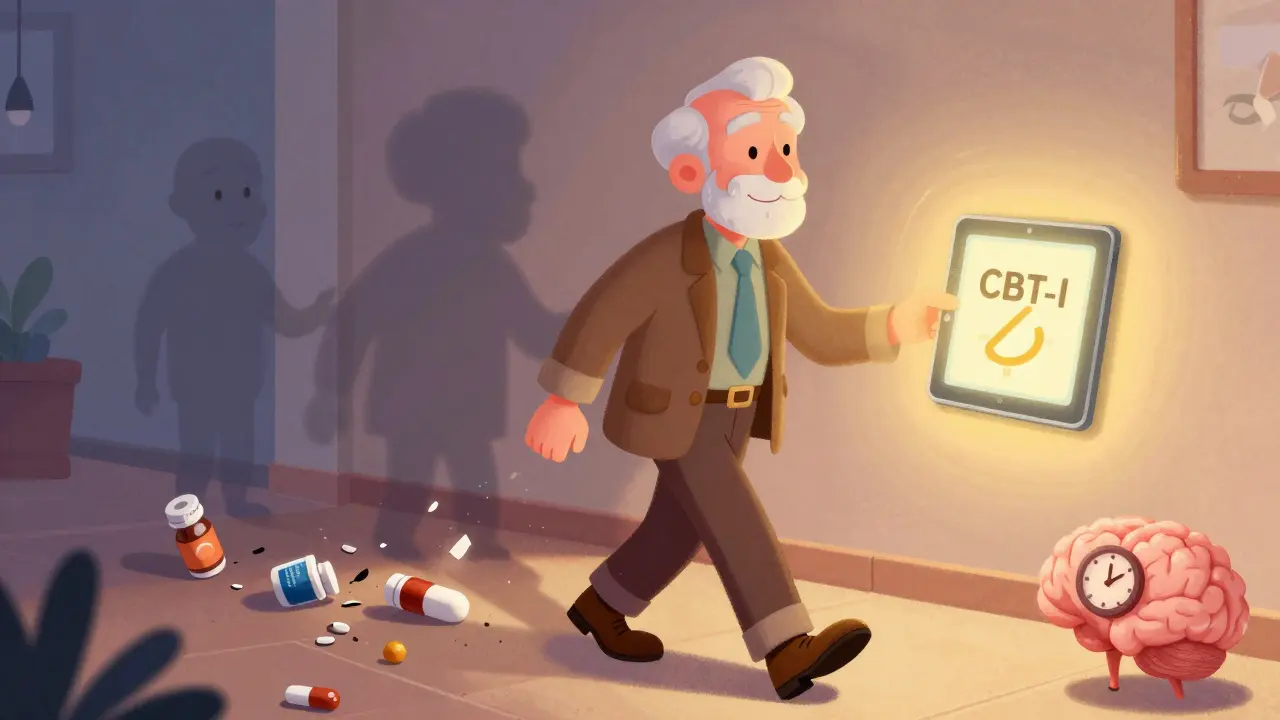
What About Non-Medication Options?
The gold standard for treating insomnia in older adults isn’t a pill at all. It’s Cognitive Behavioral Therapy for Insomnia (CBT-I). This isn’t just “sleep hygiene” advice like “avoid caffeine.” It’s a structured program that rewires how you think about sleep. It teaches you to stop worrying about not sleeping, to associate your bed only with sleep (not TV or worrying), and to reset your internal clock. A 2023 review found CBT-I worked better than any medication for long-term results. People who did CBT-I stayed asleep longer, felt more rested, and didn’t need pills after six months. But here’s the problem: most doctors don’t offer it. Only 22% of primary care providers in the U.S. refer patients to CBT-I. Insurance often doesn’t cover it. And finding a trained therapist can be hard, especially in rural areas. Digital CBT-I apps like reSET-O (FDA-cleared in 2023) are starting to fill the gap. They’re not perfect, but they’re better than a pill with hidden risks.How to Talk to Your Doctor
If you or a loved one is on a sleep medication, ask these questions:- Is this drug still recommended for someone my age?
- What are the risks of falls or confusion with this pill?
- Have we tried CBT-I or melatonin first?
- Can we try a lower dose?
- When should we stop this medication?
Real Stories, Real Results
One 72-year-old woman in Florida switched from zolpidem to 3 mg of doxepin after a fall broke her wrist. Within two weeks, she was sleeping through the night without morning fog. “I didn’t even know doxepin was an option,” she told her doctor. “I thought I had to live with Ambien or nothing.” A man in Ohio tried lemborexant after years of bad sleep. He loved it-until he saw the price. He switched to controlled-release melatonin and CBT-I. He now sleeps better than he has in 20 years. “I didn’t need a fancy drug,” he said. “I needed to learn how to sleep again.”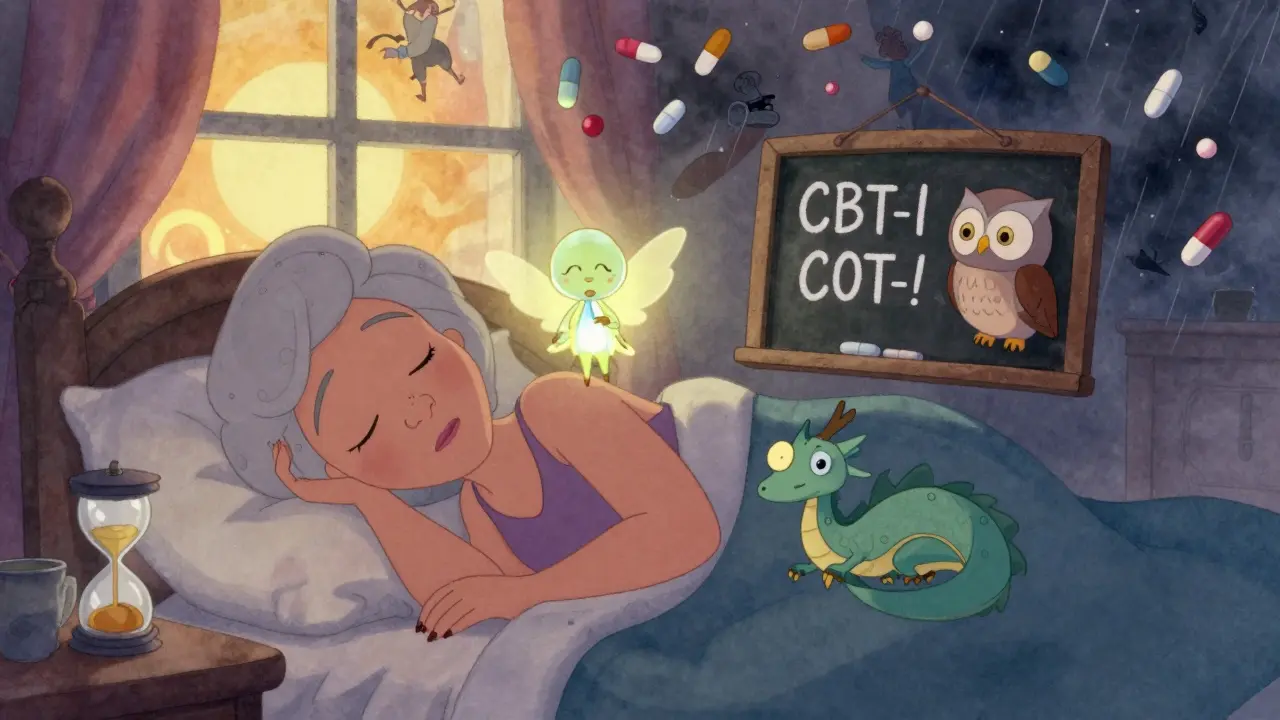
What to Watch Out For
Even safe medications need monitoring. Always start with the lowest dose. Check in with your doctor after two weeks. Use a sleep diary to track: when you go to bed, when you wake up, how many times you woke up, and how rested you feel. Watch for signs of over-sedation: stumbling, confusion, memory lapses, or slurred speech. These aren’t normal side effects-they’re red flags. Also, avoid mixing sleep meds with alcohol, opioids, or anti-anxiety drugs. That combination can slow your breathing to dangerous levels.The Bigger Picture
Despite all the evidence, benzodiazepines are still prescribed to over 7 million older adults in the U.S. every year. That’s nearly half of all insomnia prescriptions. Why? Because it’s easier than finding a CBT-I therapist. Because patients ask for something “stronger.” Because insurance won’t cover the safer, cheaper options. But change is coming. Medicare is starting to penalize doctors who overprescribe benzodiazepines. The FDA now requires all insomnia drugs to include geriatric dosing warnings. And more research is showing that small improvements matter. Even gaining 15 extra minutes of sleep a night can reduce disability risk by 18% over a year. The goal isn’t to sleep like a 25-year-old. It’s to sleep safely, wake up alert, and live independently longer.What is the safest sleep medication for older adults?
The safest options are low-dose doxepin (3-6 mg), ramelteon (8 mg), and controlled-release melatonin (2 mg). These have minimal risk of falls, confusion, or next-day drowsiness. Lemborexant is effective but expensive. Avoid benzodiazepines and z-drugs like Ambien or Lunesta.
Can I just stop taking my sleep medication cold turkey?
No. Stopping suddenly-especially benzodiazepines or z-drugs-can cause rebound insomnia, anxiety, or seizures. Always work with your doctor to taper off slowly, usually over 2-4 weeks. Add non-drug strategies like CBT-I or sleep hygiene during this time.
Why do doctors still prescribe risky sleep meds?
Many doctors aren’t trained in geriatric sleep care. Patients often ask for something that “works fast.” Insurance may not cover CBT-I or newer drugs. And it’s easier to write a prescription than to coordinate sleep therapy. But awareness is growing-more guidelines now warn against these drugs, and Medicare is starting to penalize inappropriate prescribing.
Is melatonin safe for older adults?
Yes, especially controlled-release melatonin (2 mg). It’s not a sedative-it helps reset your internal clock. It’s safe for long-term use, has almost no side effects, and works best for people who wake up too early. Avoid high doses (10 mg or more); they can cause drowsiness or headaches.
How long should I take sleep medication?
Most sleep meds should be used for only 4-5 weeks at a time. Long-term use increases fall risk and dependency. Low-dose doxepin is an exception-it can be used longer if needed and tolerated. Always set a stop date with your doctor and try non-drug methods during that time.
Can I use CBT-I instead of medication?
Yes, and it’s the most effective long-term solution. CBT-I helps you change thoughts and habits that keep you awake. Studies show it works better than pills over time and has no side effects. If you can’t find a therapist, try an FDA-cleared app like reSET-O or Sleepio. It’s not a quick fix, but it’s the only treatment that lasts.
Next Steps: What to Do Today
If you’re on a sleep medication:- Check the name. Is it a benzodiazepine (like lorazepam) or a z-drug (like zolpidem)? If yes, talk to your doctor about switching.
- Ask if you’ve tried low-dose doxepin or melatonin.
- Request a sleep diary template to track your patterns for two weeks.
- Ask about a referral to a sleep specialist or CBT-I provider.
- If cost is an issue, ask about generic options-doxepin is $15 a month. Lemborexant isn’t worth it unless you can afford it.
Harsh Khandelwal
December 24, 2025 AT 16:25Okay but let’s be real-what if the whole insomnia thing is just Big Pharma’s way of keeping us docile? I mean, why else would they push pills that make you stumble into walls but won’t tell you about the 17 other countries where they banned these drugs? They don’t want you sleeping naturally. They want you hooked. And don’t even get me started on CBT-I-sounds like a fancy word for ‘just lie there and think happy thoughts.’ 😏
Andy Grace
December 25, 2025 AT 10:35I’ve been on low-dose doxepin for six months now. No hangover, no dizziness. Just quiet, deep sleep. My wife says I stopped talking in my sleep too. Small wins. Still can’t believe it took me this long to try it after my GP mentioned it once in passing.
Delilah Rose
December 26, 2025 AT 04:42It’s heartbreaking how many older people are just handed a script for Ambien like it’s Advil. I’ve seen my own grandmother go from ‘I can’t sleep’ to ‘I don’t remember what I had for dinner’ after six months on z-drugs. The fact that we’ve got safe, cheap, evidence-based alternatives like doxepin and melatonin-and yet the system still pushes the dangerous stuff-says everything about how broken our healthcare priorities are. CBT-I isn’t just ‘therapy,’ it’s reclaiming autonomy over your own body. And yes, it’s harder than popping a pill. But so is learning to walk again after a fall. And we do it anyway because it’s worth it.
Spencer Garcia
December 27, 2025 AT 04:16Low-dose doxepin is the real MVP. 3mg, generic, $15/month. No grogginess. No risk. Just better sleep. If you’re on anything else, ask your doctor about switching. Seriously. It’s one of the easiest swaps in geriatric medicine.
Abby Polhill
December 27, 2025 AT 04:54As someone who’s worked in geriatric psych for a decade, I can tell you the data is rock solid: benzodiazepines and z-drugs = high fall risk, cognitive fog, dependency. The only reason they’re still prescribed? Systemic inertia. Providers aren’t trained in sleep medicine, insurers won’t cover CBT-I, and patients are conditioned to want a ‘quick fix.’ The rise of digital CBT-I apps like Sleepio is the only bright spot. Still, we’re decades behind Europe on this. Shame.
Bret Freeman
December 27, 2025 AT 07:25THEY’RE LYING TO YOU. EVERY SINGLE ONE OF THEM. The FDA? Compromised. The AMA? In bed with Big Pharma. Your doctor? Probably got a free lunch from a rep pushing Lunesta last week. And don’t even get me started on how they call melatonin a ‘supplement’ so they can avoid regulation. You think they care if you wake up at 3 a.m. terrified and confused? No. They care about the next quarterly earnings report. Wake up. This isn’t medicine. It’s a money pipeline. And you’re the product.
Lindsey Kidd
December 28, 2025 AT 08:01My dad switched from Ambien to 2mg controlled-release melatonin and CBT-I via an app-and now he’s sleeping 7 hours straight for the first time in 15 years 🙌 I cried when he told me he woke up without his head feeling like a brick. No pills. No side effects. Just… peace. If you’re reading this and on a sleep med-please, please, talk to your doctor. You deserve better. 💙
Rachel Cericola
December 28, 2025 AT 08:56Let me cut through the noise: if your doctor hasn’t mentioned low-dose doxepin or CBT-I as a first-line option, they’re not up to date. Period. The American Academy of Sleep Medicine, the AGS, the CDC-they all agree. These drugs are dangerous for older adults. The fact that 7 million are still getting benzodiazepines is a national scandal. And yes, insurance is the problem-but that doesn’t mean you can’t fight. Print this article. Bring it to your appointment. Ask for a referral. Demand a sleep diary. If they push back, get a second opinion. Your life isn’t a cost-benefit analysis for a pharmacy chain. You are not a statistic. You are a person who deserves to wake up alert, safe, and free from fear.
Blow Job
December 28, 2025 AT 12:51I’ve been a sleep specialist for 22 years. The data on doxepin 3mg is overwhelming. It’s not sexy. It doesn’t make headlines. But it’s the most effective, safest option we have for sleep maintenance in older adults. I’ve seen patients go from falling out of bed at 4 a.m. to gardening at 7 a.m. after switching. Don’t let the price of lemborexant distract you-start with the generic. And yes, CBT-I works better than anything. But if you can’t access it, doxepin is the next best thing. Seriously. Ask for it.
John Pearce CP
December 29, 2025 AT 19:07It is an undeniable fact that the erosion of traditional American values has led to a culture of pharmaceutical dependency. We have replaced discipline with pills, resilience with sedation, and personal responsibility with government-mandated therapy. The fact that a 72-year-old woman would prefer a $15 generic over the ‘miracle’ drugs promoted by liberal media is a testament to the enduring strength of the American spirit. One must ask: Why are we allowing foreign regulatory bodies and bureaucratic health agencies to dictate the health of our elderly? This is not medicine. It is cultural surrender.