
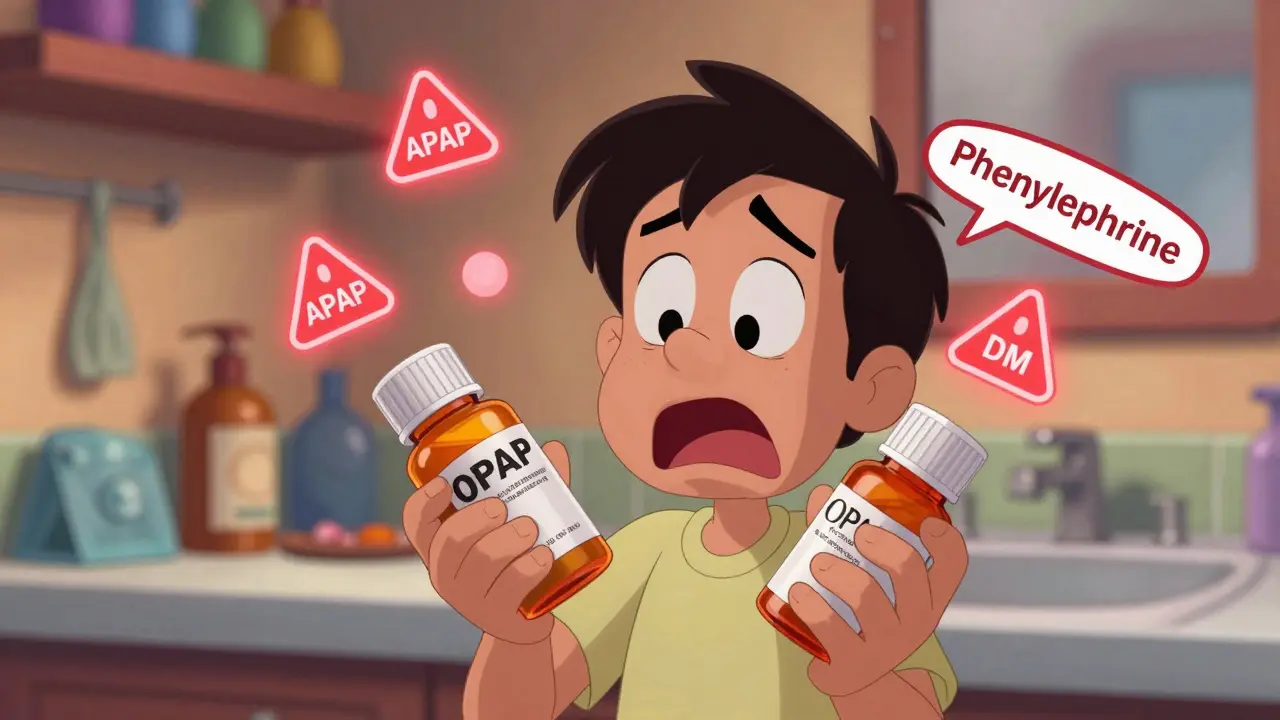
Every year, millions of people reach for OTC cold and flu combination pills thinking they’re saving time - one pill for fever, one for cough, one for congestion. But what they don’t realize is that those "one pill" solutions often contain the same active ingredients as the Tylenol or Advil they’re already taking. And that’s how people end up in the emergency room with liver damage they never saw coming.
What’s Actually in Those Combination Pills?
OTC cold and flu meds are designed to hit multiple symptoms at once: fever, cough, runny nose, sore throat, and congestion. To do that, they mix together several active ingredients. The most common ones? Acetaminophen (for pain and fever), dextromethorphan (for cough), phenylephrine (for congestion), and doxylamine or chlorpheniramine (for runny nose and sleep). Here’s the catch: acetaminophen is in more than 70% of these combination products. That means if you’re taking Tylenol Cold & Flu, and you also take regular Tylenol for a headache, you’re doubling up - and possibly tripling - your dose. The safe limit for acetaminophen is 4,000 mg in 24 hours. One caplet of Tylenol Cold & Flu Nighttime has 325 mg. Take six of those in a day? You’re at 1,950 mg. Add two extra Tylenol tablets? You’re already over half the limit. Add a NyQuil? Now you’re at 3,000 mg. One more cold tablet? You’ve crossed into danger zone. The FDA has been warning about this since 2011. In 2022 alone, poison control centers logged over 14,000 cases of acetaminophen overdose - and nearly all of them were linked to people taking multiple cold products without realizing they contained the same ingredient.Why You’re More Likely to Overdose Than You Think
It’s not just about taking two pills. It’s about not knowing what’s inside them. - Acetaminophen is sometimes labeled as “APAP” on the ingredient list. If you don’t know that abbreviation, you won’t know you’re doubling up. - Dextromethorphan is often shortened to “DM.” If you take Robitussin DM and DayQuil, you’re getting two doses of cough suppressant. - Phenylephrine is marketed as a decongestant - but studies show it doesn’t work at the doses found in OTC products. The FDA proposed removing it from the approved list in late 2024 because it’s ineffective at 10 mg. Yet it’s still in half the cold meds on the shelf. - Nighttime formulas like NyQuil contain doxylamine, a strong antihistamine that causes drowsiness. But if you take it and then also take Benadryl (diphenhydramine) for allergies? You’re stacking two sedating drugs. The next day, you feel foggy, unsteady, even nauseous - not because you’re still sick, but because your body is still processing the extra meds. A 2022 survey of 1,200 pharmacists found that 68% of them recommend single-ingredient products over combination ones. Why? Because when you only have a cough, you don’t need a fever reducer. When you only have a stuffy nose, you don’t need a sleep aid.The Real Cost of Convenience
Combination products dominate the market. Vicks DayQuil and NyQuil together make up nearly 30% of all OTC cold medicine sales. Johnson & Johnson’s Tylenol Cold line is even bigger. But that popularity comes at a price - your health. Think about it: if you’re taking a combination product because you have a fever, cough, and congestion, that makes sense. But if you only have a sore throat? Or just a headache? You’re taking unnecessary chemicals. And those chemicals have side effects. Phenylephrine can raise blood pressure - dangerous if you have heart issues. Antihistamines like doxylamine can cause confusion in older adults. Dextromethorphan, in high doses, can cause hallucinations or rapid heartbeat. And acetaminophen? It doesn’t just hurt your liver - it can kill it. A 2023 study in the Journal of the American Pharmacists Association found that 41% of adults have accidentally taken too much of an OTC cold medicine ingredient. Of those, 68% overdosed on acetaminophen. Most didn’t even know they were doing it.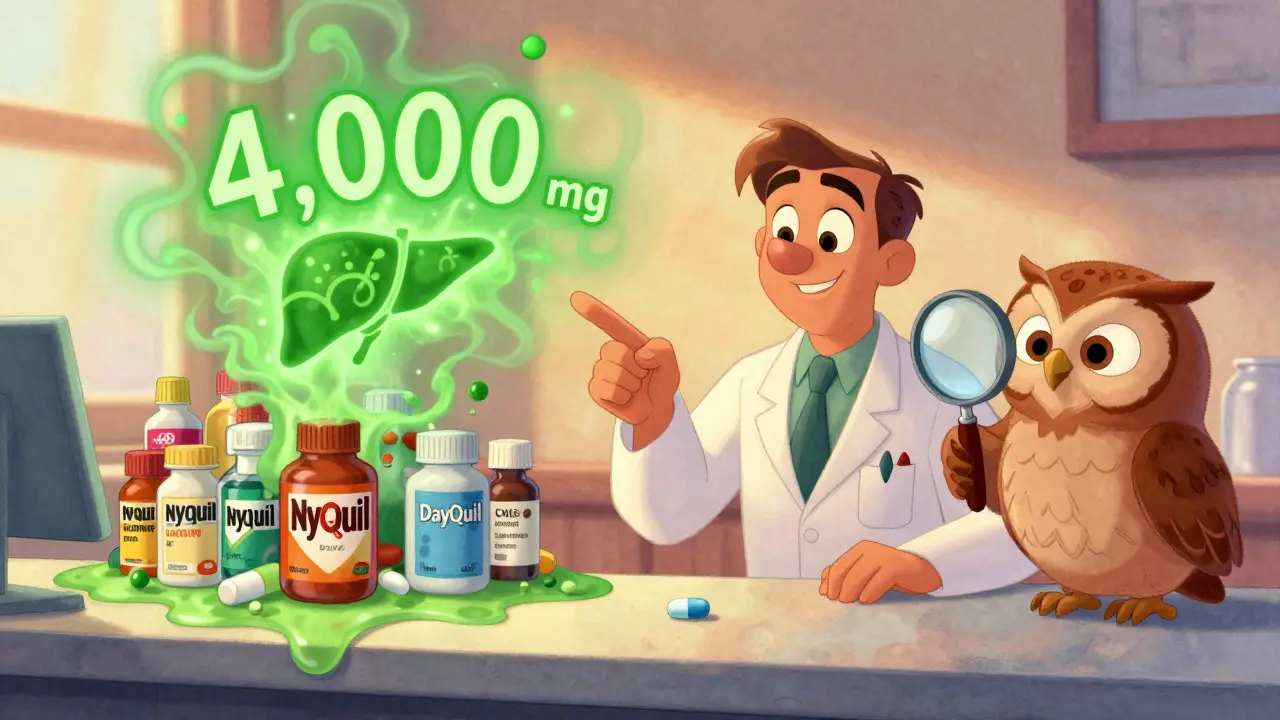
How to Stay Safe: A Simple 3-Step Plan
You don’t need to avoid cold meds. You just need to use them smarter.- Read the Drug Facts label - every time. Don’t glance. Don’t assume. Open the box. Find the “Active Ingredients” section. Write down each ingredient and its dose. Look for “APAP” - that’s acetaminophen. Look for “DM” - that’s dextromethorphan. If you’re taking more than one product, compare the lists. If any ingredient matches, you’re doubling up.
- Use single-ingredient products when you can. Got a fever? Take plain acetaminophen or ibuprofen. Got a cough? Take plain dextromethorphan. Got a stuffy nose? Take plain pseudoephedrine (behind the counter) or a saline spray. You’ll get the relief you need without the extras you don’t.
- Ask your pharmacist. Pharmacists aren’t just there to hand you the bottle. They’re trained to spot dangerous combinations. Tell them exactly what you’re taking - including vitamins, supplements, and even herbal teas. They’ll tell you if you’re at risk. And most do it for free.
What to Do If You’ve Already Taken Too Much
If you think you’ve taken too much acetaminophen - even if you feel fine - act fast. - Call Poison Control at 1-800-222-1222. They’re available 24/7. Don’t wait for symptoms. Liver damage from acetaminophen can take 24 to 48 hours to show up. By then, it’s too late for simple treatment. - If you’re dizzy, vomiting, or have pain in your upper right abdomen, go to the ER. These are early signs of liver stress. - Don’t take any more cold medicine until you’ve spoken to a professional.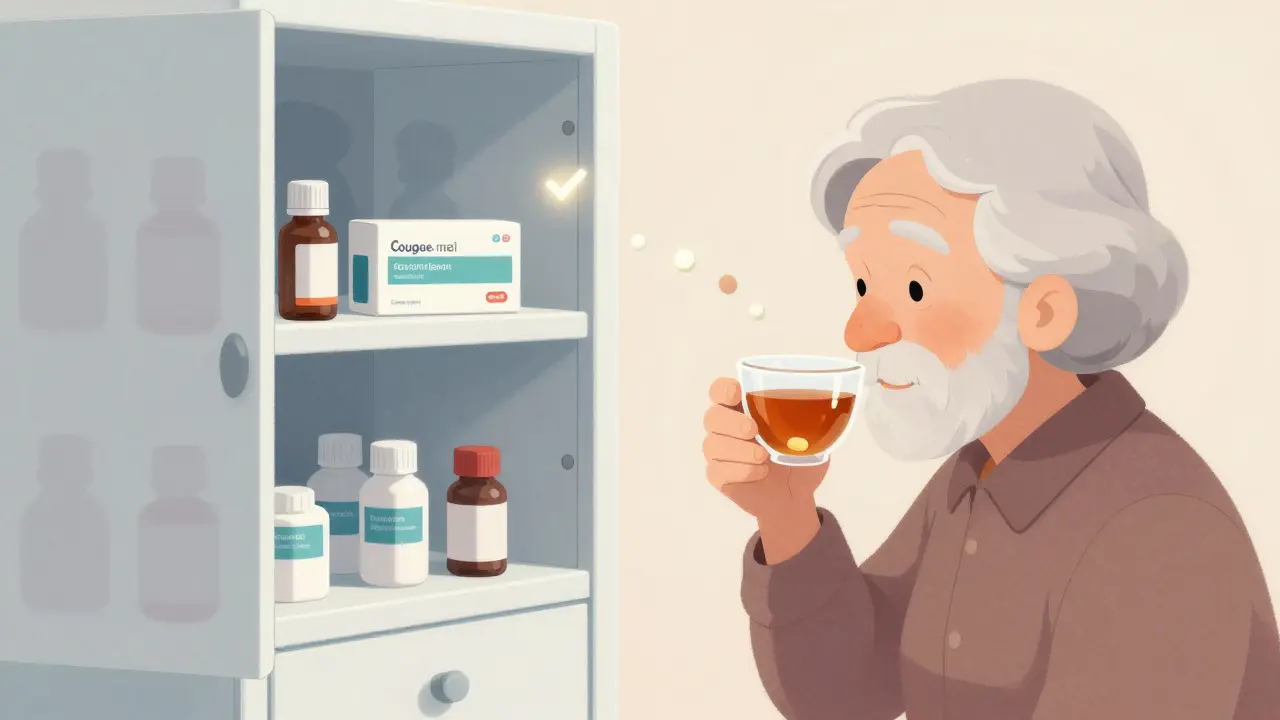
What’s Changing in 2026
The FDA’s 2024 proposal to remove phenylephrine from OTC cold products is a big deal. If it goes through, manufacturers will have to reformulate their products - likely replacing phenylephrine with guaifenesin (an expectorant) or removing it entirely. That means fewer ingredients, fewer chances for accidental overdose. Sales data shows consumers are already shifting. Single-ingredient acetaminophen sales jumped 12.7% in 2023, while combination product sales grew just 2.3%. More people are asking: “Do I really need all this?” Pharmacies are responding. Many now offer “symptom-specific” sections - separate bins for cough-only, congestion-only, and fever-only options. And more workplaces are switching to single-ingredient kits to avoid liability.Bottom Line: Simpler Is Safer
OTC cold and flu combinations aren’t evil. They’re convenient. But convenience shouldn’t come at the cost of your liver. The safest way to treat a cold isn’t to grab the biggest bottle on the shelf. It’s to ask yourself: What am I actually trying to fix? Then pick one medicine - and only one - that targets that one symptom. If you’re unsure? Ask your pharmacist. If you’re feeling worse instead of better? Stop taking everything. And if you think you’ve taken too much? Call Poison Control - now. Don’t wait. Your body doesn’t need five drugs to beat a cold. It just needs one - and the right one.Can I take OTC cold medicine if I’m already on other medications?
Maybe - but you need to check. Many cold medicines interact with blood pressure drugs, antidepressants, or thyroid medications. Acetaminophen is generally safe with most prescriptions, but dextromethorphan can cause dangerous serotonin buildup when mixed with SSRIs. Always run your full list of medications by a pharmacist before taking anything new.
Is it safe to take NyQuil and DayQuil together?
No. NyQuil and DayQuil contain the same active ingredients - just different doses and added sedatives. Taking both means you’re doubling your acetaminophen and dextromethorphan intake. That’s a fast track to liver damage and overdose. Use one or the other, based on your symptoms and time of day - never both.
Why do some cold meds say “APAP” instead of acetaminophen?
“APAP” is the chemical abbreviation for acetaminophen. It’s used on labels to save space, but it’s the same drug. If you see APAP on a label, treat it exactly like you would acetaminophen. Don’t take another acetaminophen product if you’re already taking one with APAP.
What’s the safest OTC cold medicine for seniors?
For older adults, the safest approach is single-ingredient products with minimal sedatives. Avoid antihistamines like doxylamine and diphenhydramine - they can cause confusion, falls, and urinary retention. Acetaminophen for pain/fever and guaifenesin for mucus are generally safer. Always start with the lowest dose and consult a doctor before taking anything new.
Are there cold medicines without acetaminophen?
Yes. Advil Cold & Flu, for example, uses ibuprofen instead of acetaminophen. But it still contains dextromethorphan and phenylephrine. So if you’re avoiding acetaminophen, you still need to check the rest of the ingredients. The safest bet? Stick to single-ingredient options like plain ibuprofen, plain dextromethorphan, or saline nasal spray.
How do I know if I’ve taken too much acetaminophen?
You might not feel anything for the first 24 hours. Early signs include nausea, vomiting, loss of appetite, and pain in the upper right side of your abdomen. By the time you feel sick, liver damage may already be underway. If you suspect an overdose - even if you feel fine - call Poison Control immediately at 1-800-222-1222. Don’t wait.
Bobbi-Marie Nova
January 17, 2026 AT 09:39Bro i took NyQuil and Tylenol last week and woke up feeling like my liver was trying to escape through my ribcage. Never again. Just take plain acetaminophen if you need it. Why does Big Pharma want us to buy 5 pills when 1 works? 🤔
Allen Davidson
January 18, 2026 AT 19:40Stop treating colds like they’re a war you need to bomb with chemicals. If you’ve got a cough, get dextromethorphan. Fever? Acetaminophen. Stuffy nose? Saline spray. Simple. The combo packs are marketing traps wrapped in bright packaging. Your body doesn’t need a cocktail - it needs precision.
john Mccoskey
January 19, 2026 AT 10:55The real tragedy here isn’t the acetaminophen overdose - it’s the systemic failure of public health literacy. People don’t read labels because they’ve been conditioned to trust branding over biology. The FDA’s warnings since 2011 have been ignored not because of ignorance, but because convenience has been commodified into a moral failing. We’ve outsourced our responsibility to pharmaceutical marketing departments who design products to maximize consumption, not health. The fact that phenylephrine is still on shelves despite being clinically ineffective is not an accident - it’s capitalism operating exactly as intended. And we’re the ones paying with our livers.
Ryan Hutchison
January 21, 2026 AT 09:17Americans are so lazy they’ll risk liver failure just to avoid reading a tiny label. In Russia or Germany, people actually look at ingredients. Here? You buy the bottle with the biggest logo and hope for the best. This isn’t a medical issue - it’s a cultural one. We’ve turned healthcare into a fast-food menu and now we’re surprised when we get food poisoning.
Melodie Lesesne
January 21, 2026 AT 15:08My grandma swears by single-ingredient stuff now. She used to take NyQuil every time she sneezed. Now she just takes plain acetaminophen if her head hurts and a humidifier if she’s congested. She says she feels better and doesn’t wake up groggy. Sometimes simple really is better.
Corey Sawchuk
January 21, 2026 AT 16:27Pharmacist told me last month to stop buying the combo packs. Said he sees 3 people a week who overdosed on APAP without knowing it. I switched to plain stuff. Feels weird at first but way less weird than waking up in the ER
Rob Deneke
January 22, 2026 AT 06:31Just read the label. Seriously. It’s not hard. If you’re taking two things and both say APAP or DM you’re playing Russian roulette with your liver. I used to be the guy who took NyQuil and DayQuil together. Now I’m the guy who lives to tell the story. Don’t be that guy.
Chelsea Harton
January 24, 2026 AT 01:31apap = acetaminophen. i learned this the hard way. dont be me
Jody Fahrenkrug
January 25, 2026 AT 12:48I used to think the combo packs were efficient. Turns out they’re just efficient at making you feel worse the next day. Now I only take what I need. My sleep quality improved, my brain fog lifted. Who knew less medicine = more energy?
kanchan tiwari
January 26, 2026 AT 16:21THIS IS A GOVERNMENT PLOT. They want you to take the combo pills so your liver fails and you die early. Then they can sell you expensive liver transplants. Big Pharma owns the FDA. The phenylephrine ban? A distraction. They’re just switching to a new poison called ‘guai-fen-sin’ that’s secretly made from genetically modified corn syrup. Wake up.
Bianca Leonhardt
January 27, 2026 AT 19:54People who take these combo meds are the reason hospitals are full. You don’t need to be this stupid. You have a phone. You have eyes. You can read. Stop being a walking public health liability.
Travis Craw
January 29, 2026 AT 07:42i never knew apap was acetaminophen until i read this. i thought it was some kind of new ingredient. now i always check. thanks for the reminder. also i dont take nyquil and dayquil together anymore. my body thanks me