
Imagine waking up on the floor with a bruise on your forehead, or finding yourself in the kitchen at 3 a.m. with the fridge wide open and a half-eaten pizza in your hands. If this sounds familiar, you or someone you care about may be experiencing parasomnia-a group of sleep disorders where abnormal behaviors happen during sleep. These aren’t just strange dreams. They’re real, sometimes dangerous events: sleepwalking, night terrors, sleep eating, or even acting out violent dreams during REM sleep. And while they’re more common in kids, they don’t disappear with age. About 1.5% of adults sleepwalk regularly. For many, the biggest risk isn’t the behavior itself-it’s what happens when they’re moving without awareness.
Why Parasomnia Can Be Dangerous
People with parasomnias aren’t dreaming about falling off a cliff-they’re actually getting up and walking, climbing, or even leaving the house. Studies show that between 17% and 38% of frequent sleepwalkers suffer injuries during episodes. These aren’t minor bumps. Broken bones, head trauma, burns from touching stoves, and falls down stairs are all documented. In the U.S. alone, emergency rooms see about 8,000 parasomnia-related injuries every year. Most happen in the bedroom. That’s why fixing your sleep space isn’t optional-it’s life-saving.
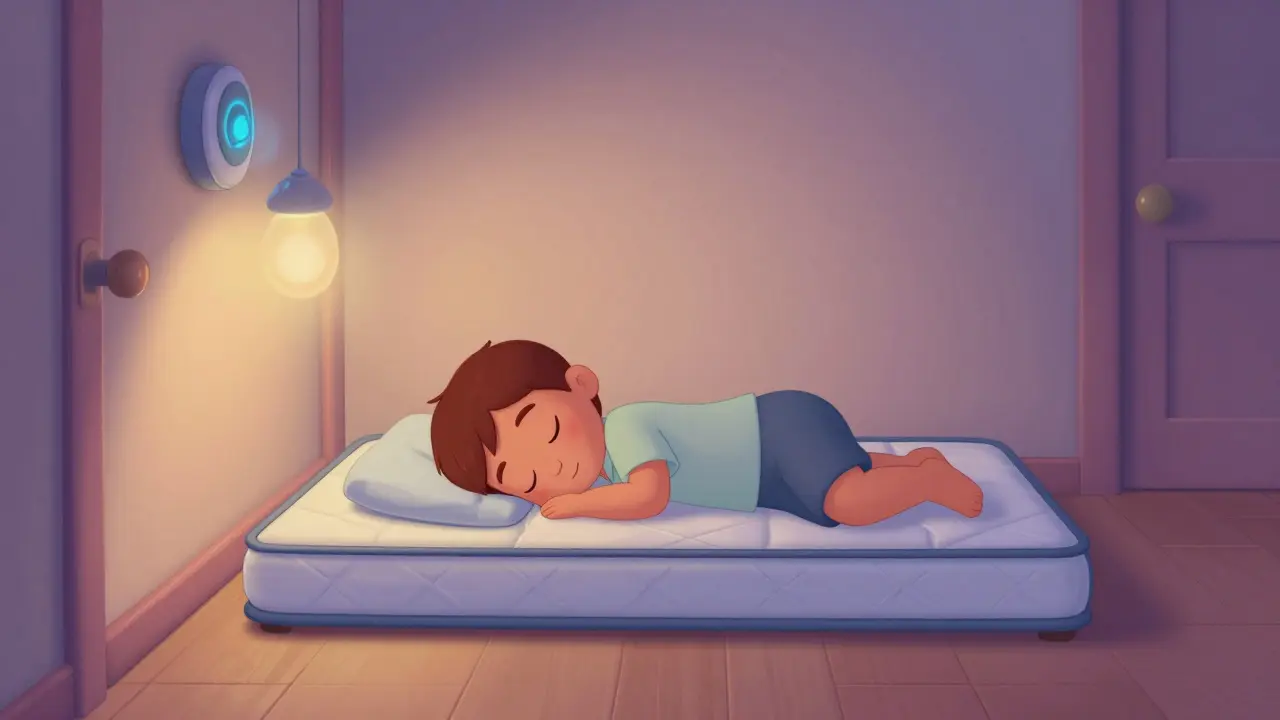
Lower the Bed to the Floor
Standard beds are 18 to 24 inches off the ground. That’s enough height to cause serious injury if someone falls out during a sleepwalking episode. MetroHealth Medical Center’s research found that lowering the bed to floor level cuts fall-related injuries by 92%. You don’t need a hospital bed. Start by removing the bed frame and placing the mattress directly on the floor. Add a thin foam pad underneath if the floor is hard. This simple change removes the biggest risk factor: height. For kids, it’s especially effective. Parents report their children stop wandering far from the bed once it’s on the ground.
Install Bed Rails with Padding
If lowering the bed isn’t possible, bed rails are the next best option. But not just any rails. Duke Health recommends padded rails that extend at least 16 inches above the mattress. This stops people from rolling out during thrashing or sudden movements. Use soft, high-density foam covered in durable fabric. Avoid metal or plastic rails-they can cause cuts or bruises if someone hits them. Test the rails by lying down and rolling toward the edge. If you can still roll over, the padding isn’t high enough.
Clear the Area Around the Bed
Think of the space around your bed like a minefield. Every chair, lamp, nightstand, rug, or power cord is a potential hazard. The Whitney Sleep Center found that removing all furniture within a 6-foot radius reduces tripping and collision injuries by 63%. That means no nightstands with lamps, no dressers within reach, no area rugs that can catch a foot. Even a loose extension cord can cause a fall. If you need a lamp, mount it on the wall. If you need to charge your phone, plug it in across the room. The goal is to make the area around the bed as empty and safe as possible.
Secure Windows and Doors
Windows are a silent killer in parasomnia cases. People have fallen from second-story windows, climbed out thinking they’re escaping a dream, or opened them and walked onto balconies. Child Neurology Foundation guidelines now recommend secondary locks on windows that require a 10-pound force to open. This stops children and adults from opening them during episodes, but still allows emergency exit. For doors, electronic alarms are the gold standard. Kaiser Permanente uses door alarms that trigger with just a whisper of movement-0.5 decibels of sound. These devices, like the Sleep Guardian Pro, alert caregivers within 0.8 seconds of someone leaving the room. They’re 98.7% accurate in pediatric cases. Don’t rely on doorstops or child locks-they can be pushed open or bypassed.
Pad the Walls
People with parasomnias often walk in circles, bump into walls, or fall sideways. Cleveland Clinic’s 2022 safety manual recommends installing 2-inch thick, high-density foam padding along all walls within a 3-foot perimeter of the bed. This isn’t just for kids. Adults with REM sleep behavior disorder can kick, punch, or lunge during episodes. Foam padding reduces impact injuries by 85% compared to standard walls or carpet. Use removable, washable covers for easy cleaning. You can buy pre-cut panels online or have them custom-cut to fit your room. It looks like a gym wall, but it’s a lifesaver.
Use a Sleeping Bag with Armholes
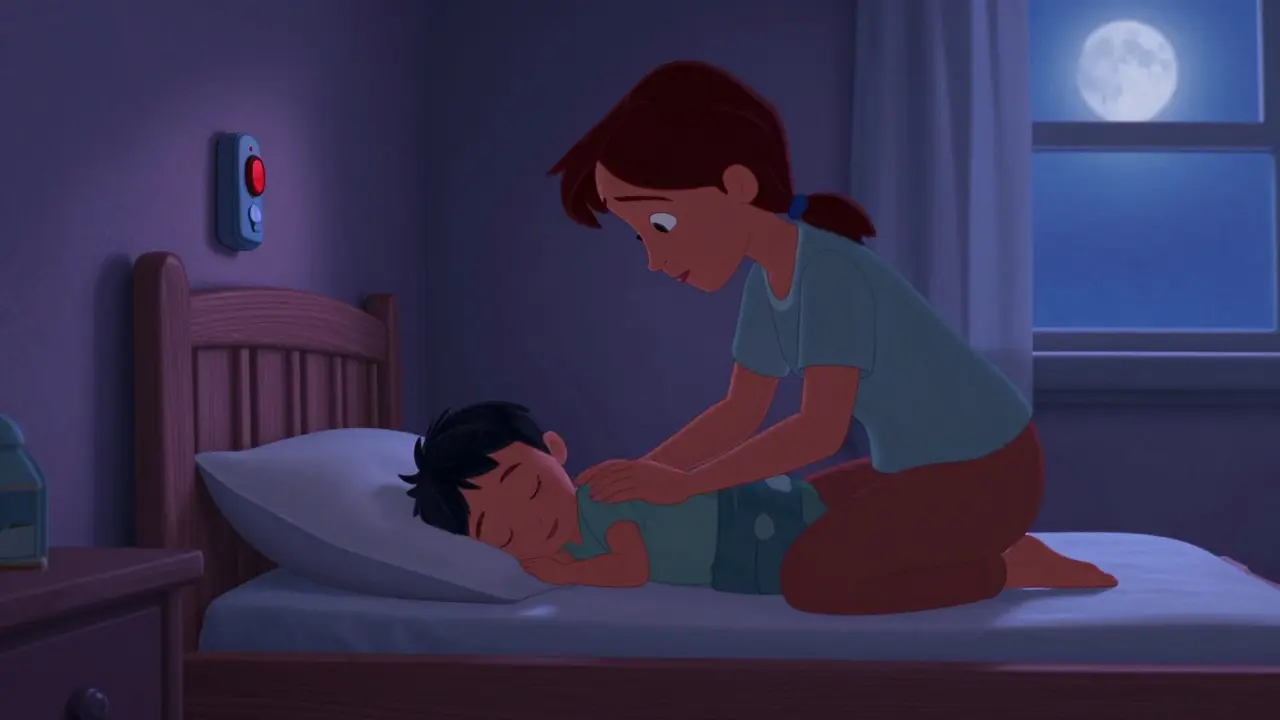
Loose blankets and sheets give sleepwalkers freedom to move-and they do. MetroHealth’s 2019 trial tested a full-length sleeping bag with armholes for sleepwalkers. Results showed a 73% reduction in how far people wandered from bed. The sleeping bag limits limb movement, making it harder to stand up or walk far. It doesn’t feel like a prison. Many users say it’s surprisingly comforting, like being wrapped in a cocoon. Look for breathable, cotton blends. Avoid heavy winter bags-they’re too hot and can cause overheating, which triggers more episodes.
Sleep on the Ground Floor
The National Sleep Foundation analyzed over 1,200 injury reports from 2018 to 2022. Their conclusion? 92% of serious injuries happened in upper-level bedrooms. Stairs are the #1 danger zone. If you have a multi-story home, move the person with parasomnia to the ground floor. Even if it means rearranging the whole house, it’s worth it. A bedroom on the first floor eliminates the risk of falling down stairs. It’s the single most effective change you can make. If the ground floor is too noisy or cold, use white noise machines and adjust the temperature. Safety comes before comfort.
Fix Your Sleep Habits
Physical changes help, but they’re not enough on their own. Parasomnias get worse with sleep deprivation, stress, and irregular schedules. The American Academy of Sleep Medicine found that keeping a consistent sleep schedule-with no more than a 30-minute variation in bedtime and wake time-reduces episode frequency by 42% in adults and 57% in children. That means no weekend oversleeping. No late-night Netflix binges. No naps after 3 p.m.
Also, remove all screens from the bedroom. The Integrative Psych Center’s study showed that avoiding screens for two hours before bed cuts arousal episodes by 33%. Blue light disrupts melatonin, which makes sleep lighter and more fragmented. Even a phone on the nightstand can trigger a partial awakening that leads to a sleepwalking episode.
Avoid caffeine after 2 p.m. and alcohol within four hours of bedtime. Alcohol might make you sleepy, but it fragments sleep and increases deep sleep disruptions-the exact time when sleepwalking happens. Cleveland Clinic data shows this combo reduces severity scores by 28 points on a 100-point scale.
End your night with a 20-minute wind-down: dim lights, deep breathing, or gentle stretching. Duke Health’s Cognitive Behavioral Therapy program found this routine cuts episode frequency by 37%.
Temperature and Humidity Matter
Your bedroom should feel like a cave-cool and calm. The National Sleep Foundation recommends keeping the temperature between 60 and 67°F (15.6-19.4°C) and humidity between 40% and 60%. Too hot? You’ll toss and turn. Too dry? You’ll wake up with a dry throat and partial arousal. Both trigger parasomnias. Use a smart thermostat and a hygrometer to monitor. A small humidifier or dehumidifier can make a big difference.
Don’t Wake Them Up
If you find someone sleepwalking, your instinct might be to shake them awake. Don’t. The American Academy of Sleep Medicine found that abrupt awakening increases the chance of violent reactions by 68%. Instead, use a calm, quiet voice. Speak softly-around 45 to 55 decibels, like a gentle whisper. Guide them back to bed with your hand on their shoulder, not by grabbing them. Most episodes end this way within a minute. If they’re heading toward danger, gently block their path and redirect. They won’t remember it in the morning.

Scheduled Awakenings Can Help
If episodes happen at the same time every night, try scheduled awakenings. Keep a sleep diary for two weeks. Note when the episode usually starts. Then, wake the person 15 to 30 minutes before that time, keep them fully awake for 5 minutes, then let them go back to sleep. This interrupts the brain’s pattern. A 2019 study in Pediatrics showed this reduces non-REM parasomnias in kids by 53%. It’s not fun for parents, but it’s effective.
Medication Is an Option-But Not the First Step
For severe cases, doctors may suggest medication. Clonazepam, a mild sedative, reduces injury risk by 76%. But 32% of patients develop dependency over five years. Melatonin, at 2-5 mg taken two hours before bed, reduces pediatric episodes by 41% with almost no side effects. The Child Neurology Foundation recommends it as a first-line option for children. Always talk to a sleep specialist before starting anything. Medication should follow safety changes, not replace them.
Test Your Gear Weekly
Alarms, sensors, and locks only work if they’re functioning. Duke Health’s data shows weekly testing keeps devices at 99.2% reliability. Monthly checks drop that to 87%. Set a phone reminder for every Sunday. Test the door alarm by opening the door slightly. Check the bed alarm’s sensitivity. Make sure the window locks still work. A broken alarm is worse than no alarm-it gives false confidence.
Involve the Whole Family
Especially with kids, let them help choose the padding color, alarm sound, or sleeping bag design. The Child Neurology Foundation found that 83% of children follow safety rules better when they helped pick them. It turns a scary situation into something they control. For adults, make it a team effort. Everyone in the house should know the plan: how to respond, where the keys are, how to reset alarms. Practice the steps once a month.
Cost and Insurance
Setting up a safe bedroom costs between $250 and $1,200, depending on what you need. Foam padding, alarms, and window locks are one-time buys. Many major insurers now cover 50% or more of medically necessary modifications. Ask your doctor for a letter of medical necessity. Some companies even offer rental options for bed alarms. The $417 million the U.S. spends yearly on parasomnia injuries shows this isn’t a luxury-it’s a healthcare priority.
What’s Coming Next
Researchers at the Cleveland Clinic are testing AI systems that predict sleepwalking episodes 90 seconds before they happen-using motion sensors and brainwave patterns. Early results show 89% accuracy. In a few years, these systems could automatically turn on lights, lock doors, or play calming sounds before an episode starts. But for now, the tools you have are enough. You don’t need the future. You need the floor, the alarm, the padding, and the routine.
Can parasomnia be cured?
There’s no single cure for parasomnia, but many people outgrow it-especially children. For adults, symptoms often improve with better sleep habits and safety changes. In some cases, medication or therapy helps reduce episodes significantly. The goal isn’t always to stop them completely, but to prevent injuries so they don’t disrupt life.
Are bed alarms worth the cost?
Yes-if you choose a medical-grade model. Cheap alarms under $100 trigger false alarms 3.2 times per night, which causes stress and sleep disruption. Medical-grade alarms like the Sleep Guardian Pro cost $200-$400 but have a 97% accuracy rate and only 0.4 false alarms per night. They’re reliable enough that caregivers trust them. Look for models with adjustable sensitivity and battery backup.
Should I lock my child’s door at night?
Never lock a door from the outside. It’s dangerous and illegal in most places. Instead, use door alarms that alert you when the door opens. If your child has a history of wandering outside, install window locks and keep keys to outside doors in a secure location. Safety isn’t about confinement-it’s about awareness and prevention.
Can alcohol cause sleepwalking?
Yes. Alcohol disrupts deep sleep cycles and increases the chance of partial arousals-exactly when sleepwalking happens. Even one drink within four hours of bedtime can trigger an episode in someone prone to parasomnia. Avoid alcohol completely if you or a loved one has a history of sleepwalking or night terrors.
How long does it take to see results after making changes?
Most families see a drop in injuries within two weeks. Sleep habits like consistent bedtime and screen reduction take 3-4 weeks to show full effect. Alarms and padding work immediately. Track episodes in a simple journal: date, time, duration, what happened. After a month, you’ll know what’s working. Don’t wait for perfection-start with one change, like lowering the bed, and build from there.
Is parasomnia hereditary?
Yes. Studies show that if one parent has a history of sleepwalking, their child has a 45% chance of developing it. If both parents have it, the risk jumps to 60%. It’s linked to genes that affect deep sleep regulation. This doesn’t mean it’s inevitable-it means you should be extra vigilant about sleep hygiene and safety from an early age.
Karen Droege
January 26, 2026 AT 08:48Lowering the bed to the floor? YES. Absolute game-changer. My cousin used to launch herself out of bed like a human cannonball-bruises everywhere, once cracked a rib. We dumped the frame, threw a memory foam pad down, and now she sleeps like a baby. No more ER trips. No more panic at 3 a.m. Just peace. Why isn’t this standard practice everywhere?
Simran Kaur
January 26, 2026 AT 21:54In India, we sleep on the floor anyway-charpai or just a mat. No one thinks twice about it. But I never realized how perfectly this aligns with parasomnia safety. Maybe our grandparents knew something the modern world forgot. No bed frame, no height, no fall. Just grounded sleep. Simple. Sacred.
Neil Thorogood
January 27, 2026 AT 01:58So let me get this straight… we’re paying $1,200 to turn a bedroom into a padded prison so someone can sleepwalk like a zombie? 🤡 I mean, cool, I guess. But why not just lock the door? Oh wait-NO, that’s illegal. Right. Because safety is a bureaucracy now. 🙃
Jessica Knuteson
January 27, 2026 AT 12:10Physical modifications are performative safety. The real issue is neurological dysregulation. You’re treating symptoms not causes. The bed is not the problem. The brain is. Fixing the environment is like putting a bandaid on a hemorrhage. And don’t get me started on melatonin as a ‘first-line option.’ It’s a supplement, not a pharmaceutical intervention. The data is weak. Correlation isn’t causation.
Robin Van Emous
January 28, 2026 AT 12:17I just want to say-thank you. This post was so thoughtful. I’ve been scared to talk about my sleepwalking because people think I’m crazy. But this? This feels like someone finally saw me. I lowered my bed last week. It’s not fancy. Just a mattress on the floor. But I slept through the night. No falls. No panic. Just… rest. I didn’t know I needed this until I read it.
Angie Thompson
January 29, 2026 AT 01:41OMG YES TO THE SLEEPING BAG WITH ARMHOLES!! I tried it last month and I felt like a burrito but in the best way. Like a cozy, safe cocoon. No more midnight kitchen raids. No more finding my shoes on the ceiling. 😭 I even got one with little stars on it. My partner says I look like a sleepy astronaut now. Worth it. 10/10. Buy it. Do it. Live.
eric fert
January 31, 2026 AT 01:33Let’s be real here-this whole thing is a capitalist scam dressed up as medical advice. Foam padding? $300? Door alarms? $400? Who’s profiting here? The mattress companies? The alarm manufacturers? The sleep consultants? And now we’re supposed to believe that if you just spend enough money, your brain will stop malfunctioning? Meanwhile, people in rural areas with no access to any of this are just… managing. With duct tape and prayer. The system doesn’t care about safety. It cares about revenue. And now you’re all buying into it like it’s a wellness trend. Wake up.
Aishah Bango
January 31, 2026 AT 07:43Why are we enabling dangerous behavior instead of forcing accountability? If someone sleepwalks into the kitchen and eats your food, that’s theft. If they climb out a window, that’s endangerment. This post reads like a manual for coddling adults who refuse to take responsibility for their own actions. Maybe they need consequences. Maybe they need therapy. Not a padded room.
Suresh Kumar Govindan
February 1, 2026 AT 07:44It is imperative to note that the structural modifications proposed herein are predicated upon a Western biomedical paradigm that privileges technological intervention over ancestral somatic wisdom. In traditional Ayurvedic practice, sleep disturbances are treated via pranayama, brahmi, and dinacharya-rhythmic daily routines aligned with circadian and lunar cycles. The notion of foam padding as therapeutic is not merely reductionist-it is ontologically bankrupt.
TONY ADAMS
February 1, 2026 AT 23:33bro i sleepwalked into my neighbor's yard last year and they had a dog. it barked. i screamed. i woke up on their porch. they called the cops. i had to explain i was sleepwalking. they gave me a sandwich. i still sleepwalk. i got a bed alarm. it beeps. i don't care. i just wanna sleep.
Ashley Karanja
February 2, 2026 AT 15:31There’s a profound phenomenological dimension here that’s being overlooked-the embodied dislocation of parasomnia as a rupture in the continuity of self. The bed isn’t just a physical object; it’s a symbolic anchor for the psyche. When we lower the mattress to the floor, we’re not just reducing fall risk-we’re re-establishing somatic grounding, a return to the primordial earth as a container for the fragmented nocturnal self. The sleeping bag? A modern-day swaddling, a re-enactment of intrauterine security. And the alarms? They’re not just sensors-they’re ritualistic boundary markers between the conscious and the unconscious. This isn’t just safety. It’s archetypal healing.
Josh josh
February 3, 2026 AT 14:20lowe the bed to the floor its the best thing ever no joke i did it and now i dont wake up with a headache from hitting the headboard anymore
bella nash
February 4, 2026 AT 14:50The institutionalization of safety measures through environmental modification represents a paradigmatic shift in the management of nocturnal behavioral disorders. One must consider the ethical implications of transforming domestic space into a clinical zone. Is the bedroom now a therapeutic apparatus? And if so, who defines its parameters? The physician? The insurance company? The manufacturer?
Geoff Miskinis
February 4, 2026 AT 22:41Interesting how the author casually dismisses the notion of locking doors while simultaneously advocating for 98.7% accurate alarms that trigger on 0.5 decibels of movement. That’s not prevention-that’s surveillance. And yet, the same people who would scream about privacy violations if their smart fridge tracked their midnight snacks are perfectly fine with a device that monitors their sleepwalking like a prison guard. Hypocrisy is the new normal.
Neil Thorogood
February 6, 2026 AT 11:00Wait… so if I sleepwalk and break my arm, the insurance pays for the foam? But if I break my arm because I fell off the couch while watching Netflix? Nope. Not covered. 😂 America, you’re hilarious.