

What Is Perioral Dermatitis?
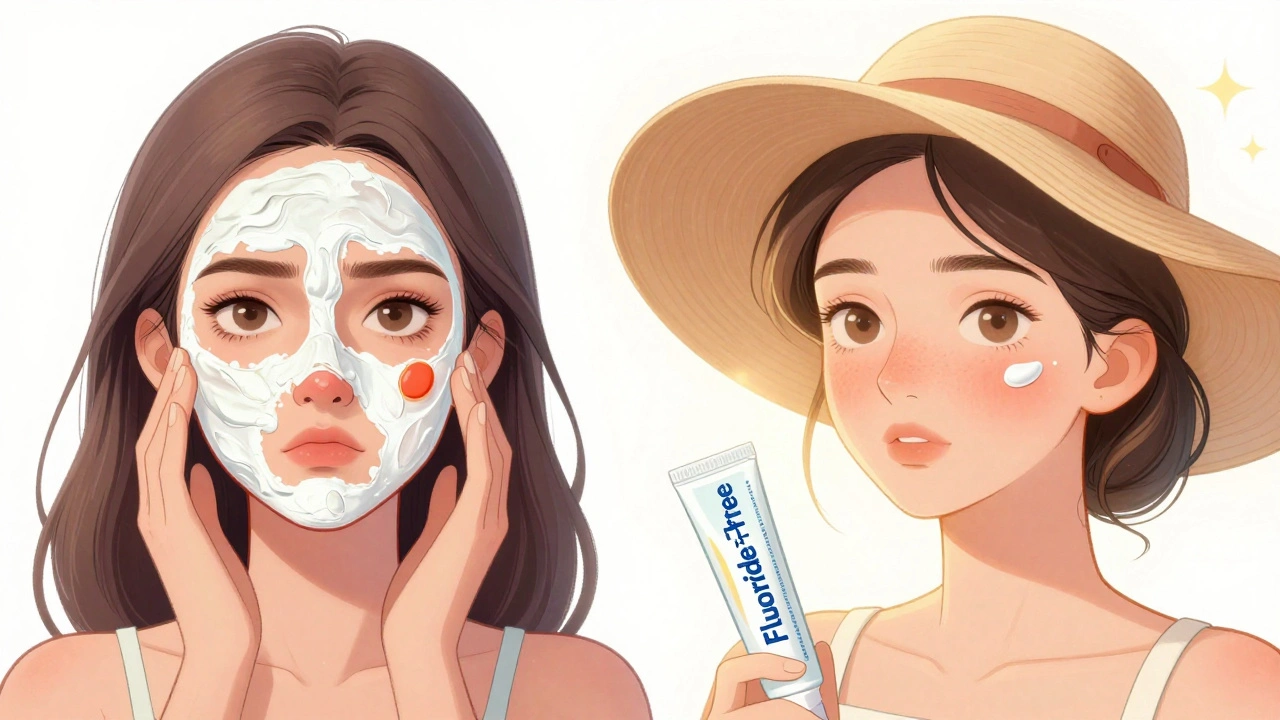
Perioral dermatitis is a red, bumpy rash that shows up around the mouth, often spreading to the area near the nose and eyes. It looks like tiny red bumps or pimples, but unlike acne, there are no blackheads or whiteheads. The skin right on the lip border usually stays clear, which is one of the key signs doctors use to tell it apart from other rashes. It’s most common in women between 16 and 45, though men can get it too - just much less often. About 78% of people with this condition say it affects how they feel about their appearance, leading to anxiety or embarrassment.
The rash can burn, sting, or itch. In some cases, it spreads to the area around the eyes. The bumps are usually 1 to 2 millimeters wide, and they tend to show up in clusters. It’s not contagious, and it doesn’t mean you’re dirty or have poor hygiene. This is an inflammatory reaction, not an infection you can catch from someone else.
What Causes Perioral Dermatitis?
The biggest trigger by far is topical steroids. Whether it’s hydrocortisone cream you bought over the counter for a "spotty" face, or a prescription ointment for eczema, using these on your face for more than two weeks can set off a cycle. At first, the redness improves - which feels like a win. But then, when you stop using it, the rash comes back worse. This happens in 92% of people who’ve used facial steroids for over two weeks.
Other common triggers include:
- Heavy moisturizers - anything with petroleum jelly, dimethicone, or beeswax. These clog the skin’s natural barrier and cause irritation.
- Fluoridated toothpaste - sodium fluoride at 1,000-1,500 ppm triggers reactions in 37% of cases. Brushing your teeth and then touching your face can transfer the irritant.
- Makeup foundations - especially those with isopropyl myristate or high concentrations of titanium dioxide. Foundation is the top cosmetic offender in 68% of cases.
- Physical sunscreens - zinc oxide or titanium dioxide above 10% can cause flare-ups in 22% of people. Even "gentle" mineral sunscreens can be too thick.
- Hormonal changes - 55% of women notice worsening before their period. Birth control pills contribute in 28% of cases.
- Environmental factors - wind and sun exposure make symptoms worse in 63% and 41% of cases respectively.
- Diet - while not a universal trigger, gluten-free diets helped 43% of patients with confirmed sensitivity in one clinical study.
There’s also a link with Demodex mites - tiny bugs that live on skin. They’re found in 83% of perioral dermatitis cases, compared to 45% in people without the rash. But we don’t yet know if they cause it or just hang out where the skin is already irritated.
What Not to Do: Common Mistakes
Most people try to fix this by reaching for more products - stronger creams, exfoliants, acne treatments. That makes it worse.
Here’s what you should stop immediately:
- Any cream, lotion, or ointment with steroids - even "natural" ones labeled for "redness" or "irritation."
- Face washes with sulfates (like sodium lauryl sulfate) or alcohol - they strip your skin’s natural oils.
- Exfoliants - scrubs, AHAs, BHAs, retinoids, and chemical peels. Your skin is already inflamed. Don’t scrub it.
- Heavy moisturizers - the thicker, the worse. Think Vaseline, Aquaphor, or any product that feels greasy.
- Using multiple products - more than three in your routine is too many. Simplicity is the key.
One of the most common mistakes? People don’t realize they’re using steroids. They might have used hydrocortisone 1% for a few days after a sunburn or a breakout. They think it’s helping. Then the rash explodes. That’s the rebound effect.
Gentle Skin Care Routine That Actually Works
The goal is to calm the skin, remove triggers, and rebuild the barrier - slowly. Here’s a step-by-step routine that’s backed by clinical data and real patient success stories.
Step 1: Stop All Steroids
This is non-negotiable. Even if you’ve only used it for a week, stop. The first 7-14 days will be rough. Your skin may get redder, itchier, or even start peeling. This is called steroid withdrawal. It’s not a sign you’re doing something wrong - it’s part of healing. 75% of patients go through this phase.
Step 2: Cleanse Once a Day
Washing your face twice a day dries out the skin and worsens the rash in 88% of cases. Stick to one gentle cleanse, preferably at night.
Use a non-foaming cleanser with a pH between 5.5 and 6.5. Look for these ingredients:
- Glycerin
- Ceramides (0.5-2%)
- Dimethyl isosorbide
Avoid anything with:
- Sodium lauryl sulfate
- Essential oils
- Fragrance
- Alcohol
Popular choices among patients: Cetaphil Gentle Skin Cleanser, Vanicream Cleansing Bar.
Step 3: Moisturize Lightly - Only If Needed
Some people don’t need moisturizer at all. If your skin feels tight or flaky, use a tiny amount of a simple cream.
Look for:
- Ceramide content: 0.5-2%
- Hyaluronic acid: under 1%
- No petrolatum, dimethicone, or beeswax
Good options: Vanicream Moisturizing Cream, La Roche-Posay Toleriane Double Repair Face Moisturizer (fragrance-free version).
Apply just a pea-sized amount. Don’t layer. Don’t reapply. Let your skin breathe.
Step 4: Sun Protection - The Right Way
Sun exposure makes perioral dermatitis worse for 63% of people. But most sunscreens make it worse too.
Use only:
- Liquid or gel formulas
- Mineral filters below 5% (zinc oxide or titanium dioxide)
- No fragrance, no oils
EltaMD UV Clear Broad-Spectrum SPF 46 (4.7% zinc oxide) is one of the most recommended. If you’re still reacting, try a wide-brimmed hat instead. Physical protection beats chemical filters every time.
Step 5: Switch Your Toothpaste
Fluoride is a known trigger. Switch to a non-fluoridated toothpaste with sodium lauryl sulfate under 0.1%.
Brands like Tom’s of Maine Fluoride-Free or Weleda Salt Toothpaste have worked for many. Rinse well after brushing, and avoid touching your face right after.
Step 6: Skip Makeup - or Use It Wisely
For the first 4-6 weeks, skip foundation entirely. If you must wear makeup, use only:
- Fragrance-free
- Non-comedogenic
- Titanium dioxide under 3%
- Mineral tinted moisturizers (not full coverage)
Use a clean brush or sponge. Wash it daily. Don’t sleep in it.
Medical Treatments That Help
While gentle skin care is the foundation, some people need help from a doctor.
Topical treatments:
- Metronidazole 0.75% gel - applied twice daily. Clears 70% of cases in 8 weeks.
- Pimecrolimus 1% cream - a non-antibiotic option. Reduces inflammation with fewer side effects. Works for 65% of patients.
Oral treatments:
- Doxycycline 40mg modified-release - low-dose, taken once daily. Clears 85% of cases in 12 weeks. Side effects? Only 12% of users report stomach upset - much better than the old 100mg dose.
Antibiotics are not a cure. They’re a tool to calm the inflammation while you fix your skin care routine. Stopping too early leads to recurrence in 40% of cases.
How Long Does It Take to Heal?
Most people start seeing improvement after 3-4 weeks. But full healing takes 6-12 weeks. The first two weeks are the hardest - the flare-up phase after stopping steroids. Many people give up then, but that’s when the real healing begins.
One Reddit user wrote: "I cried for three days straight. My face looked like a burn. Then, on day 12, I saw a single spot fade. That’s when I knew I was going to be okay."
Stick with it. Don’t go back to your old products. Don’t try new "miracle" creams. Your skin needs time to reset.
What About Diet?
Diet isn’t a magic fix for everyone. But if you have gluten sensitivity, going gluten-free helped 43% of patients in one study. If you suspect food is playing a role, try eliminating dairy, sugar, and gluten for 6 weeks. Track your symptoms. If the rash improves, it might be a trigger.
But don’t assume diet is the main cause. Most cases are triggered by topical products, not food. Focus on your skin care first. Then consider diet if nothing else works.
Can It Come Back?
Yes. Without proper trigger management, recurrence rates are 40-60%. But when people stick to a simple, gentle routine and avoid steroids, recurrence drops to 25%.
Keep your routine even after the rash clears. Don’t go back to your old moisturizer because "it worked before." That’s how it comes back.
Keep your toothpaste non-fluoridated. Keep your sunscreen light. Keep your hands off your face. These small habits prevent relapse.
When to See a Dermatologist
You don’t need to wait until it’s bad. If you’ve had the rash for more than 2 weeks, or if it’s spreading to your eyes, see a dermatologist. They can confirm the diagnosis and rule out rosacea, fungal infections, or other conditions.
Bring a list of all products you’ve used on your face in the last 3 months - including toothpaste, sunscreen, and any creams your friend recommended. That’s often the missing piece.
Can perioral dermatitis go away on its own?
It can, but only if you stop all triggers - especially steroids. Most people need to actively change their skin care routine to heal. Left untreated, it can last months or even years. The longer you wait, the harder it is to fix.
Is perioral dermatitis the same as acne?
No. Acne has blackheads and whiteheads. Perioral dermatitis doesn’t. It’s a red, bumpy rash that forms in a ring around the mouth, sparing the lip border. It’s also not caused by oil or clogged pores. It’s an inflammatory reaction to products or steroids.
Why does my skin get worse before it gets better?
That’s called steroid withdrawal. If you’ve been using a steroid cream, your skin became dependent on it. When you stop, your body overreacts - causing a flare-up. This lasts 7-14 days. It’s not a setback. It’s part of the healing process. 78% of people who push through this phase see full improvement.
Can I use natural or organic products?
Not necessarily. "Natural" doesn’t mean gentle. Essential oils, coconut oil, shea butter, and tea tree oil are common triggers. Many organic products contain these. Stick to products labeled fragrance-free, non-comedogenic, and with minimal ingredients. Less is more.
How do I know if my moisturizer is too heavy?
If it feels greasy, leaves a film, or takes more than 30 seconds to absorb, it’s too heavy. Look for "lightweight," "gel-cream," or "fluid" textures. Avoid anything with petrolatum, dimethicone, or beeswax listed in the first five ingredients. If you’re unsure, skip it for a week - your skin might not need it at all.
Will I have to change my skin care forever?
Not forever - but for the long term. Once your skin is healed, you can slowly reintroduce products one at a time. But avoid steroids, heavy moisturizers, and fluoride toothpaste indefinitely. Most people find that a simple, minimalist routine is better for their skin overall. You’re not stuck with it - you’re just choosing what works.
Final Thoughts
Perioral dermatitis isn’t a life sentence. It’s a signal - your skin is reacting to something you’re putting on it. The fix isn’t more products. It’s less. Stop the steroids. Simplify your routine. Be patient. Healing takes time, but it’s possible.
Most people who stick with the right routine see their skin clear up in 2-3 months. And once it does, they often feel better than they did before - not just because the rash is gone, but because they finally understand how to care for their skin without harming it.
Nikhil Pattni
December 7, 2025 AT 15:58precious amzy
December 9, 2025 AT 14:04William Umstattd
December 10, 2025 AT 20:51George Taylor
December 10, 2025 AT 22:29Angela R. Cartes
December 11, 2025 AT 07:19Also, toothpaste? Please. That’s a myth. My friend used fluoride toothpaste for 10 years and never had a rash. Coincidence? Maybe. But I’m not buying it.
Arun Kumar Raut
December 12, 2025 AT 16:46Andrea Beilstein
December 14, 2025 AT 15:55we are told to mask it to cover it to fix it
but what if the skin knows what it needs better than any cream ever could
what if the answer isn’t in the bottle but in the silence between applications
we treat our faces like machines that need tuning not living tissue that needs rest
perioral dermatitis is not a problem to solve it is a whisper asking us to stop
Courtney Black
December 15, 2025 AT 23:41Carina M
December 16, 2025 AT 14:30iswarya bala
December 18, 2025 AT 07:29