

Does turning on a light feel like someone is shining a laser pointer directly into your brain? If you find yourself squinting in normal office lighting or wearing sunglasses indoors just to get through the day, you are not imagining things. You might be dealing with photophobia, which is an abnormal intolerance to visual perception of light that serves as a symptom rather than a standalone condition. This isn't a psychological fear of light; it is a physiological response where your eyes and brain struggle to process brightness at normal levels.
Affecting roughly 35% of the general population, photophobia is more common than most people realize. It’s not just about being sensitive to the sun. For many, even the glow from a smartphone screen or the hum of fluorescent bulbs can trigger pain, headaches, or nausea. Understanding why this happens is the first step toward getting relief, because treating the symptom without addressing the root cause rarely works long-term.
Why Does Light Hurt Your Eyes?
To understand photophobia, we have to look at how your body processes light. In a typical scenario, light enters your eye, hits the retina, and sends signals to the brain. The iris adjusts the pupil size to control how much light gets in. But in people with photophobia, this system goes into overdrive. Studies from Harvard Medical School show that affected individuals often have pupillary constr abnormalities, failing to contract properly even when light intensity is low.
The issue usually falls into three main buckets:
- Eye-related conditions (45% of cases): Issues like uveitis, corneal abrasions, or cataracts can make the eye physically more sensitive. In fact, 92% of patients with uveitis report light sensitivity before any other symptoms appear.
- Neurological conditions (40% of cases): Migraines are the biggest culprit here. According to the American Migraine Foundation, 76-80% of migraine sufferers experience photophobia during attacks. The brain’s trigeminal nerve pathways become hypersensitive, interpreting light as pain.
- Medication-induced sensitivity (15% of cases): Certain antibiotics, antidepressants, and decongestants can dilate pupils or alter neural processing, making light feel harsher.
It is also worth noting that photophobia affects women more than men, with females accounting for 65% of reported cases, particularly between the ages of 25 and 55. If you fit this demographic and have unexplained light sensitivity, it’s worth investigating further.
Mild vs. Severe: How Bad Is It?
Not all light sensitivity is created equal. Doctors use tools like the Photophobia Severity Scale (PSS-10) to measure impact, but you can also self-assess based on daily function. Here is how the severity typically breaks down:
| Severity Level | Prevalence | Symptoms & Triggers | Impact on Daily Life |
|---|---|---|---|
| Mild | 48% | Squinting in direct sunlight; discomfort under bright overhead lights. | Minimal; manageable with standard sunglasses outdoors. |
| Moderate | 37% | Pain under fluorescent lighting; need for sunglasses indoors. | Moderate; may affect work productivity and social activities. |
| Severe | 15% | Pain even in dim rooms (50 lux); inability to keep eyes open in normal light. | High; can lead to workplace disability and significant lifestyle changes. |
If you fall into the severe category, untreated photophobia can reduce workplace productivity by up to 52%. That is a huge hit to your career and quality of life. Recognizing the level of severity helps determine whether you need simple environmental tweaks or a full medical workup.
The FL-41 Tint: A Game Changer?
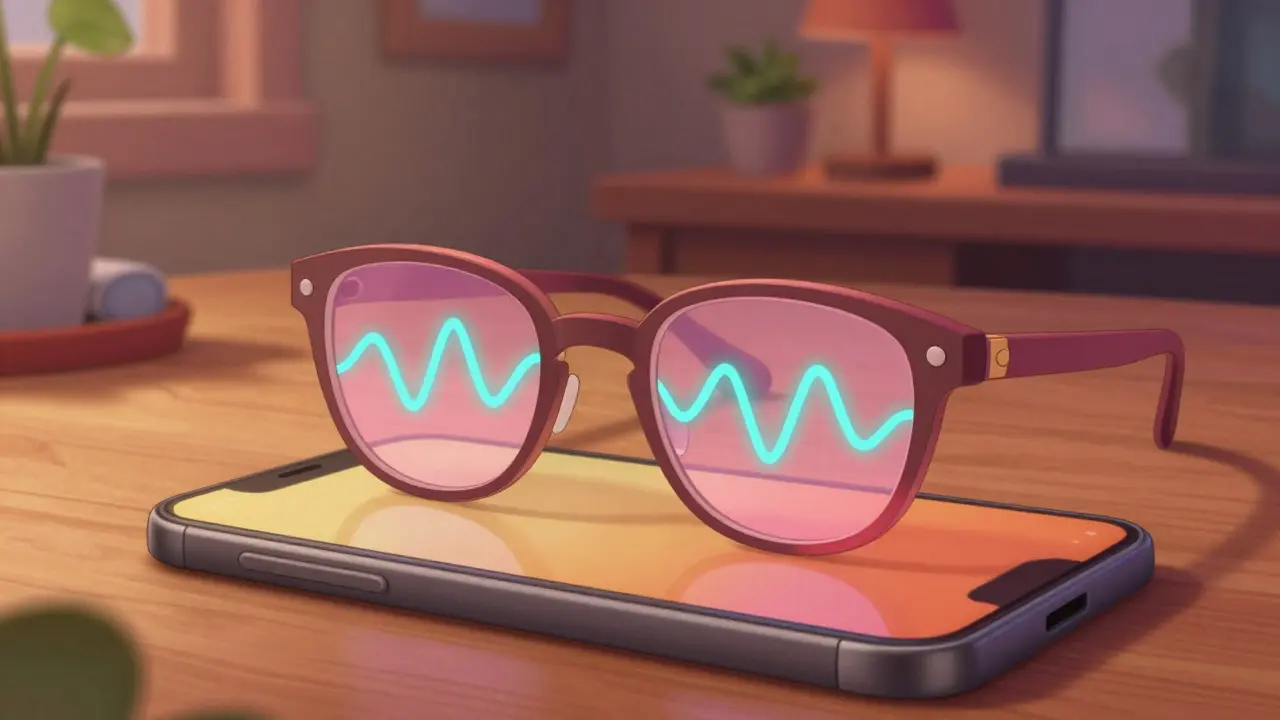
When standard sunglasses fail, many turn to specialized tinted lenses. The most researched option is the FL-41 tint, which is a rose-colored lens that filters 70% of problematic blue-green light wavelengths between 500-550nm. Unlike generic blue-light blockers found in cheap computer glasses, FL-41 targets specific wavelengths that trigger neural sensitivity in migraine and photophobia patients.
Research from UCLA Health shows that these lenses can reduce cortical spreading depression-a key mechanism in migraines-by 31%. In controlled trials, patients reported a 43% reduction in symptoms after using FL-41 lenses. Brands like TheraSpecs dominate this market, offering prescription-strength versions for around $149 per pair.
However, there is a catch. About 68% of users experience initial color distortion when they first start wearing them. It takes 2-3 weeks for the brain to adapt. Also, improper selection is a major pitfall; 73% of ineffective treatments happen because patients buy the wrong tint off the shelf without professional guidance. Make sure you are getting a true FL-41 filter, not just a pink-tinted fashion accessory.
Environmental Hacks for Immediate Relief
While you wait for your doctor’s appointment or new glasses to arrive, you can modify your environment to reduce triggers. Digital screens account for only 38% of photophobia triggers; ambient lighting is the real enemy in 62% of workplace cases.
Here are practical steps to lower your light exposure:
- Dim the lights: Aim for 100-200 lux in your immediate workspace. Normal office lighting is often 500 lux, which is way too bright for sensitive eyes.
- Switch bulbs: Replace flickering fluorescent tubes with warm-white LED bulbs. Fluorescent lights often have an invisible flicker that aggravates neural pathways.
- Use task lighting: Instead of overhead lights, use a desk lamp directed away from your eyes. This creates a focused pool of light without washing out the room.
- Screen settings: Enable night mode or f.lux software to shift screen colors toward the warmer end of the spectrum, especially in the evening.
Some companies are starting to take this seriously. Twenty-eight percent of Fortune 500 companies now implement "migraine-friendly" lighting policies, which has reduced sick days by 17% in some offices. If you work in a corporate environment, consider asking HR about adjustable task lighting options.

When to See a Doctor
Photophobia is often dismissed as "just sensitivity," but it can be a warning sign. Dr. Rania Habib from Mount Sinai notes that photophobia represents a critical neurological warning sign in 12% of emergency department presentations. It can precede serious diagnoses like meningitis or autoimmune disorders by 48-72 hours.
You should seek immediate medical attention if your light sensitivity:
- Appears suddenly without prior history.
- Is accompanied by a stiff neck, fever, or confusion.
- Follows an eye injury or chemical exposure.
- Causes vision loss or double vision.
A comprehensive eye exam plus a neurological workup typically costs between $300 and $1,200 depending on insurance. While it sounds expensive, missing a treatable condition like uveitis or lupus can lead to permanent vision damage. Specialists in neuro-ophthalmology receive higher patient satisfaction ratings (4.7/5) compared to general practitioners (3.9/5) for treating these issues, so finding the right specialist matters.
Future Treatments and Long-Term Outlook
The landscape for photophobia treatment is evolving. The FDA approved the Photosensitivity Assessment Device (PAD-2000) in May 2023, allowing for more accurate diagnosis of pupillary reflexes. Looking ahead, Phase 3 trials for topical eye drops targeting TRPM8 receptors are expected to submit for FDA approval by Q2 2025. Early tests suggest these drops could reduce light sensitivity by 60%.
For now, the best approach remains a combination of optical aids (like FL-41 lenses), pharmaceutical interventions (such as CGRP inhibitors for migraines), and environmental modifications. With proper management, 78% of cases show significant improvement within six months. Autoimmune-related cases may require lifelong management, but they are still controllable.
Is photophobia a permanent condition?
Not necessarily. If photophobia is caused by a temporary issue like an eye infection, medication side effect, or acute migraine, it often resolves once the underlying cause is treated. However, chronic conditions like migraines or autoimmune disorders may require ongoing management with lenses and lifestyle adjustments.
Do blue-light blocking glasses help with photophobia?
Generic blue-light blockers often do not help and can sometimes worsen symptoms if they don't target the correct wavelengths. The FL-41 tint is specifically designed to filter the 500-550nm blue-green spectrum that triggers neural sensitivity in photophobia patients. Standard computer glasses usually block different wavelengths and lack the clinical backing of FL-41.
Can stress make photophobia worse?
Yes. Stress increases muscle tension and can heighten neural sensitivity, particularly in migraine sufferers. Since migraines are a leading cause of photophobia, stress-induced migraines will naturally bring on light sensitivity. Managing stress through relaxation techniques can indirectly reduce photophobia episodes.
What is the cost of FL-41 tinted glasses?
Prescription FL-41 glasses from brands like TheraSpecs typically cost around $149 per pair. Non-prescription wraparound styles may be slightly cheaper, while high-end frames with custom prescriptions can exceed $200. Insurance rarely covers these specialized tints, so they are usually an out-of-pocket expense.
How do I measure the brightness in my home?
You can use a free lux meter app on your smartphone to estimate light levels. For photophobia sufferers, aiming for 100-200 lux in living spaces is ideal. Normal office lighting is often 500 lux, which is considered too bright for those with moderate to severe sensitivity. If your reading is consistently above 300 lux indoors, try dimming lights or using lamps instead of overhead fixtures.
Dana Ellington
May 20, 2026 AT 19:24OMG this post is literally saving my life right now!! I have been suffering from migraines for years and never knew about the FL-41 tint until today. I was so desperate trying different glasses but nothing worked like these rose colored ones. The part about the blue-green wavelengths being the real enemy was such a huge revelation for me. I cant believe I spent so much money on generic blue light blockers that did absolutely nothing. My eyes feel so much better just reading this article honestly. Thank you so much for sharing all these stats and tips. I am going to try the lux meter app immediately because my office lights are probably way too bright. Please keep writing posts like this because they really help people who are struggling silently. You are amazing for putting this together!!
victoria catharinaa
May 21, 2026 AT 12:36I agree with the points made here but i think people need to understand that stress plays a massive role in this too. If you are stressed your brain becomes hypersensitive to everything including light. It is not just about the bulbs or the screens. You have to manage your mental state as well. Dont ignore the root cause. Get help if you need it.
Glen Speck
May 22, 2026 AT 19:38the philosophy of light is often misunderstood in modern society we treat illumination as a commodity rather than a sensory experience that shapes our consciousness. when the iris fails to contract properly it is not merely a mechanical failure but a breakdown in the dialogue between the self and the external world. i find it fascinating how the trigeminal nerve interprets light as pain this suggests that our neural pathways are deeply intertwined with environmental stimuli. perhaps we should consider that our architecture has become hostile to human biology by prioritizing brightness over comfort. the flicker of fluorescent lights is a form of violence against the nervous system. we must reclaim our spaces by embracing dimness and shadow as essential components of mental health. the fl-41 tint is a technological bandage on a deeper cultural wound. we need to rethink how we design our homes and offices to honor the natural rhythms of human perception.
Sam Mackellar
May 24, 2026 AT 03:47One must acknowledge the rigorous scientific methodology presented in this analysis. The differentiation between eye-related conditions and neurological causes is particularly illuminating for those seeking clarity. It is imperative that individuals do not self-diagnose without consulting a qualified neuro-ophthalmologist. The statistics regarding the efficacy of FL-41 lenses are promising, yet one must remain cautious of anecdotal evidence. Professional guidance is essential to avoid the pitfalls of improper tint selection. Furthermore, the environmental modifications suggested are both practical and scientifically sound. Reducing ambient lux levels to 100-200 is a reasonable objective for workplace accommodations. We must advocate for policies that support such adjustments within corporate structures. The cost-benefit analysis of preventive care versus long-term disability is clear. Investment in proper lighting solutions yields significant returns in productivity and well-being.
Justina Ingram
May 25, 2026 AT 10:50ugh why does nobody talk about how bad the fluorescent lights are at work?? i hate them so much :( they make my head throb instantly. i tried wearing sunglasses inside but everyone looked at me weird lol. maybe i should get those pink glasses mentioned above. hope they actually work and dont make everything look weird forever. dealing with this is so annoying x_x
amit kumar
May 26, 2026 AT 23:17This is very helpful information! 🌟 I have been struggling with light sensitivity since last year and it affects my coding sessions a lot. 💻 The tip about using f.lux software is great. I will switch to warm colors immediately. Also, the idea of task lighting instead of overhead lights makes so much sense. 😊 Thanks for sharing this detailed guide. It helps to know I am not alone in this. 🙏
Lori Wildrick
May 28, 2026 AT 06:44I appreciate the gentle tone of this article. It feels supportive rather than overwhelming. I have always felt isolated in my struggles with light sensitivity. Knowing that 35% of people experience this brings a sense of community. I plan to share this with my colleagues who might benefit from the environmental hacks. Small changes can make a big difference. Let us support each other in finding relief. 🌸
Emma Olliff
May 28, 2026 AT 15:06It is pathetic that the average person cannot distinguish between a cheap fashion accessory and a clinically validated medical device. The ignorance surrounding photophobia is staggering. People buy random blue-light glasses from gas stations and wonder why their symptoms persist. This lack of discernment is a reflection of broader societal decline. Only those willing to invest in quality solutions like TheraSpecs deserve relief. The rest are content with mediocrity. Do not expect sympathy from those who take their visual comfort seriously. Educate yourself or suffer the consequences.
Diana Wiechecka
May 29, 2026 AT 16:39Interesting read! 👀 I never knew about the TRPM8 receptor trials. That sounds promising for the future. Hope the new drops come out soon. 🧪