

Getting a good night’s rest should be easy during pregnancy, but for many women, it feels like an impossible mission. You might think you’re just dealing with standard discomfort, but symptoms like loud snoring, gasping for air, or burning chest pain could signal something more serious. Obstructive sleep apnea (OSA) is a condition where breathing repeatedly stops and starts during sleep due to airway blockage, and it affects roughly 10.5% of pregnant women in their third trimester. When left untreated, this isn’t just about tiredness-it significantly raises the risk of high blood pressure, gestational diabetes, and even emergency cesarean sections.
Alongside breathing issues, acid reflux often worsens as your belly grows, pushing stomach acid upward while gravity works against you. The good news? You have control over how you manage these challenges. By understanding the right sleeping positions, knowing when to seek testing for sleep disorders, and using targeted treatments like continuous positive airway pressure (CPAP) devices, you can protect both your health and your baby’s development.
Understanding Pregnancy-Related Sleep Disordered Breathing
Pregnancy changes your body in ways that directly impact your airways. Hormonal shifts cause swelling in the nasal passages and throat tissues, known as upper airway edema. Add weight gain and increased neck circumference, and you create a perfect storm for airway collapse during sleep. According to guidelines from the American College of Obstetricians and Gynecologists (ACOG), sleep-disordered breathing is now recognized as a key risk factor for preeclampsia.
| Factor | Impact on Airway | Prevalence Increase |
|---|---|---|
| Upper Airway Edema | Narrowing of throat tissue | Affects majority of third-trimester patients |
| Increased Neck Circumference | External pressure on airway | Higher risk if BMI ≥30 kg/m² |
| Hormonal Changes | Relaxation of throat muscles | Contributes to muscle tone loss during REM sleep |
| Fetal Growth | Diaphragm elevation reduces lung capacity | Worsens symptoms after 24 weeks |
If you are obese (BMI ≥30 kg/m²), your risk jumps dramatically to nearly 27%. This isn't just about comfort; a 2022 meta-analysis published in *Sleep Medicine Reviews* found that untreated OSA increases the risk of preeclampsia by 2.3 times and gestational diabetes by 1.7 times. Recognizing early signs-like chronic daytime fatigue, morning headaches, or witnessed pauses in breathing-is crucial for timely intervention.
The Critical Role of Sleeping Positions
Where you lie down matters more than you might think. Sleeping on your back (supine position) allows the weight of the uterus to press against major blood vessels and push the diaphragm up, restricting airflow. This position is linked to lower oxygen saturation levels and higher rates of stillbirth in some studies. Instead, aim for the left lateral position.
Lying on your left side improves blood flow to the heart, kidneys, and placenta while keeping the airway open. Research from Brown Health shows that maintaining left lateral positioning can reduce the apnea-hypopnea index (AHI)-a measure of sleep apnea severity-by nearly 23% in women with mild cases. To make this sustainable, consider using specialized support tools:
- Full-body pillows: These help maintain alignment and prevent rolling onto your back. Products like the Leachco Full Body Pillow Pro provide structural support throughout the night.
- Wedge pillows: Elevating your upper body by 15-30 degrees (using a wedge set at 7-8 inches) helps keep the airway open and reduces reflux simultaneously.
- Positional aids: Some women use tennis balls sewn into the back of pajamas or special belts to gently discourage back-sleeping without waking them fully.
Consistency is key. Even shifting slightly toward your side can yield significant benefits compared to flat-back sleeping. If you wake up gasping or with a dry mouth, check your position-you may have rolled onto your back during deep sleep cycles.
Managing Acid Reflux Without Medication Risks
Gastroesophageal reflux disease (GERD) or heartburn plagues up to 80% of pregnant women. The relaxing hormone progesterone slows digestion, while physical pressure from the growing fetus forces stomach contents upward. While antacids are common, not all are safe or effective long-term.
Evidence-based strategies focus on mechanical and dietary adjustments first. Avoid eating within three hours of bedtime to allow your stomach to empty partially. Elevate the head of your bed by 6-8 inches using blocks under the bedposts rather than stacking pillows, which can bend your neck and worsen airway obstruction. For immediate relief, alginate-based antacids like Gaviscon Advance form a protective raft on top of stomach contents, preventing acid splash without systemic absorption risks. Always consult your provider before starting any new medication, but lifestyle tweaks often provide substantial relief without pharmaceutical side effects.
When and How to Use CPAP Therapy
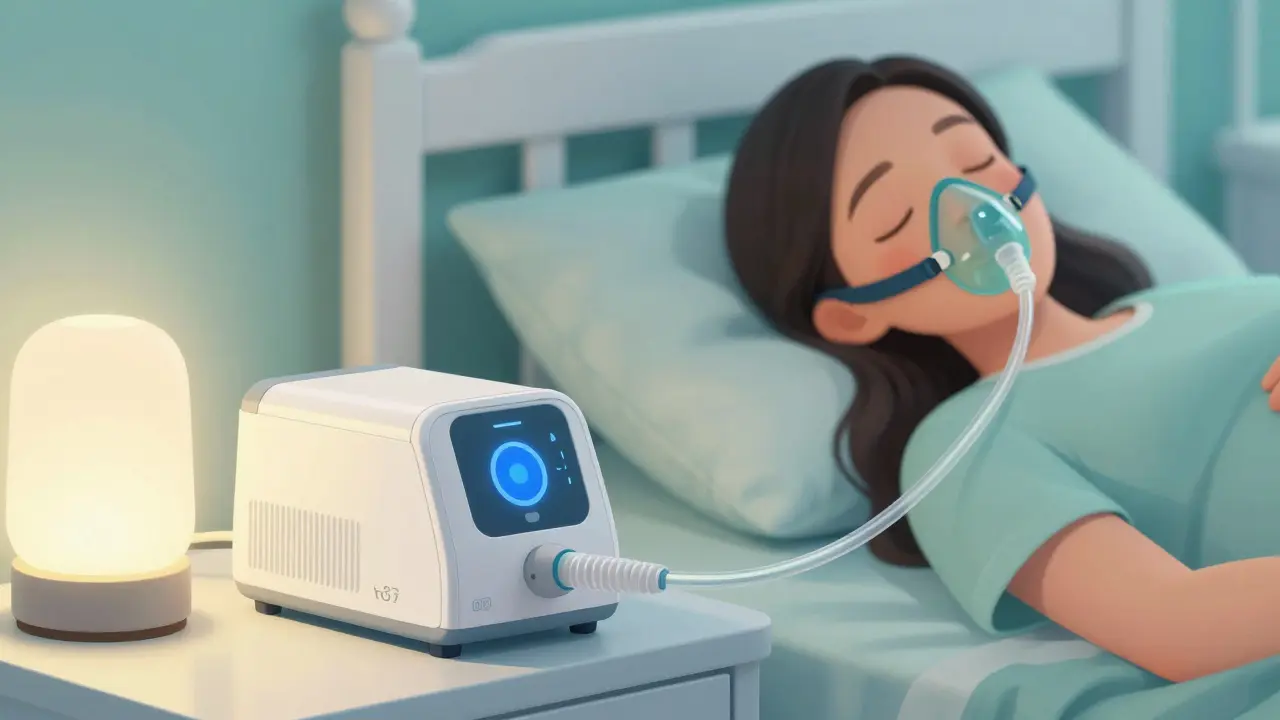
For moderate to severe obstructive sleep apnea, positional therapy alone isn’t enough. Continuous Positive Airway Pressure (CPAP) remains the gold standard treatment. It delivers steady air pressure through a mask to keep your airway inflated during sleep. A landmark study in *JAMA Network Open* (2023) showed that starting CPAP between 24-28 weeks of gestation reduced the risk of gestational hypertension by 35% and preeclampsia by 30%.
Using CPAP during pregnancy requires specific adaptations. Standard masks may leak due to facial swelling (edema). Nasal pillows or full-face masks designed for pregnancy, such as the ResMed AirTouch F20 Pregnancy Edition, feature softer silicone cushions that accommodate changing facial structures. Humidification settings should be adjusted to around 37°C to combat nasal congestion caused by hormonal changes.
- Timing is critical: Initiate therapy before 28 weeks for maximum benefit in reducing hypertensive disorders.
- Pressure titration: Start low (4-6 cm H₂O) and increase gradually. Auto-titrating machines adjust pressure nightly based on resistance detected.
- Adherence support: Many women struggle with mask comfort initially. Education sessions covering fitting and troubleshooting can boost adherence from 54% to over 80%, according to clinical data from Philadelphia-based clinics.
If you experience claustrophobia or skin irritation, don’t give up immediately. Mask liners, chin straps, and different interface types (nasal vs. oral-nasal) offer alternatives. Consistent use-even 4 hours per night-provides meaningful protection against cardiovascular complications.
Screening, Diagnosis, and Next Steps
You shouldn’t have to guess whether your symptoms are normal pregnancy fatigue or a sign of sleep apnea. Universal screening using tools like the Berlin Questionnaire or STOP-Bang questionnaire at your first prenatal visit is recommended by recent updates to American Academy of Sleep Medicine (AASM) guidelines. If you score high, follow-up with the Epworth Sleepiness Scale to assess daytime impairment.
Diagnosis typically involves overnight polysomnography in a lab, though home sleep apnea tests are increasingly accepted for low-risk patients. Don’t delay evaluation if you notice:
- Loud, habitual snoring
- Observed apneas (pauses in breathing) reported by a partner
- Excessive daytime sleepiness despite adequate time in bed
- Unexplained high blood pressure readings
Early identification opens the door to interventions that safeguard your pregnancy outcome. Postpartum, remember that sleep apnea doesn’t always disappear. Repeat testing at 12 weeks after delivery is advised for those diagnosed during pregnancy, as lingering issues can affect long-term cardiovascular health.
Is it safe to use CPAP during pregnancy?
Yes, CPAP therapy is considered safe and is the first-line treatment for moderate-to-severe obstructive sleep apnea in pregnant women. It does not harm the fetus and significantly reduces maternal risks like preeclampsia and gestational hypertension when used consistently.
Which sleeping position is best for preventing sleep apnea?
The left lateral position (sleeping on your left side) is optimal. It prevents the uterus from compressing major blood vessels and keeps the airway open better than sleeping on your back or right side. Using a body pillow helps maintain this position throughout the night.
Can acid reflux worsen sleep apnea symptoms?
Yes, there is a strong link between GERD and sleep apnea. Acid reflux can irritate the upper airway, causing inflammation and spasms that narrow the throat. Treating reflux with elevation and diet changes often improves sleep quality and reduces apnea events.
When should I get tested for sleep apnea during pregnancy?
Screening should begin at your first prenatal visit using questionnaires like Berlin or STOP-Bang. If you exhibit risk factors such as obesity, snoring, or high blood pressure, diagnostic testing via polysomnography or home sleep test is recommended before 28 weeks to allow time for effective intervention.
Do I need to continue CPAP after giving birth?
Not necessarily, but you should be re-evaluated. Many women see resolution of symptoms postpartum as fluid retention decreases and weight stabilizes. However, repeat sleep studies at 12 weeks postpartum are recommended because some women retain underlying sleep apnea that requires ongoing management.