
Imagine you just picked up a prescription for your child’s asthma or your own blood pressure medication. You hand it over, the pharmacist smiles, and you walk out feeling secure. But what if that pill isn’t what the label says? Or worse, what if storing it in your bathroom cabinet turns that life-saving drug into a useless-and potentially harmful-chemical mess?
We often treat our medicine cabinets like filing cabinets: open them, grab what we need, close them up. It’s convenient. It’s also one of the most dangerous habits in modern households. Between the rising threat of counterfeit drugs, which mimic real medications but contain incorrect dosages or toxic fillers, and the silent degradation caused by humidity and heat, your home supply is under siege. This isn’t just about keeping kids safe from accidental ingestion (though that accounts for thousands of ER visits yearly). It’s about ensuring the medicine you take actually works.
The Hidden Danger of Bathroom Cabinets
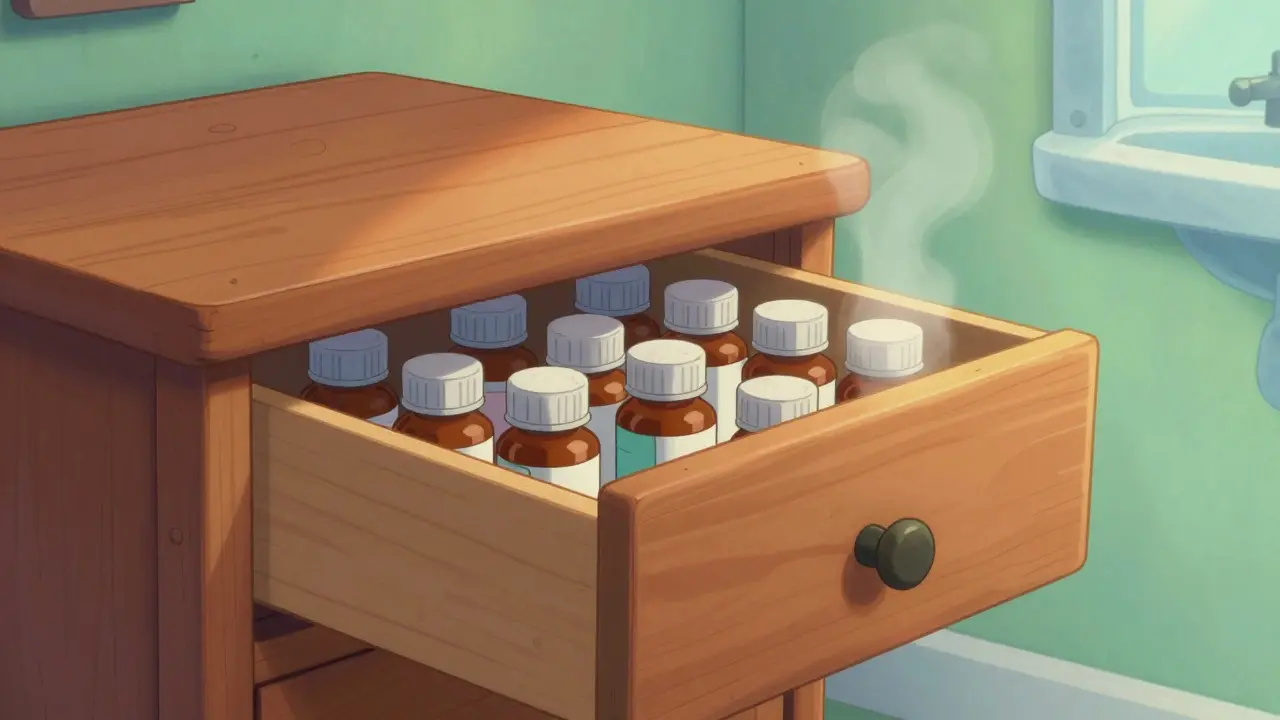
Let’s start with where most of us keep our meds: the bathroom. It feels logical because it’s where you’re likely to be when you need to take something. But chemically, it’s a disaster zone. Every time you shower, the humidity spikes. According to data cited by the U.S. Environmental Protection Agency (EPA) and pharmaceutical guidelines from Pfizer, bathroom humidity can exceed 80% during showers.
Why does this matter? Because moisture destroys efficacy. Take aspirin, for example. In high humidity, aspirin degrades into vinegar and salicylic acid within just 14 days. You might not taste the difference immediately, but the therapeutic effect vanishes. Ampicillin, an antibiotic, loses 30% of its potency in just seven days at 75% humidity. If you’re taking antibiotics to fight an infection, taking a weakened dose doesn’t just fail to cure you-it can contribute to antibiotic resistance.
The ideal environment for most medications is cool, dry, and dark. Specifically, temperatures between 68-77°F (20-25°C) and humidity below 60%. A bedroom dresser drawer or a closet shelf away from windows offers these conditions far better than a steamy bathroom mirror cabinet. Light-sensitive medications like tetracycline degrade 40% faster when exposed to direct sunlight. So, move those bottles out of the window sill and into a dark, stable space.
Spotting Counterfeit Medications Before They Reach You
Storage protects what you have, but authenticity ensures what you have is safe. The rise of online pharmacies has made counterfeit pharmaceuticals easier to access than ever. These aren’t just fake; they’re dangerous. They may contain too little active ingredient (leaving you untreated), too much (causing overdose), or entirely wrong substances like fentanyl or industrial chemicals.
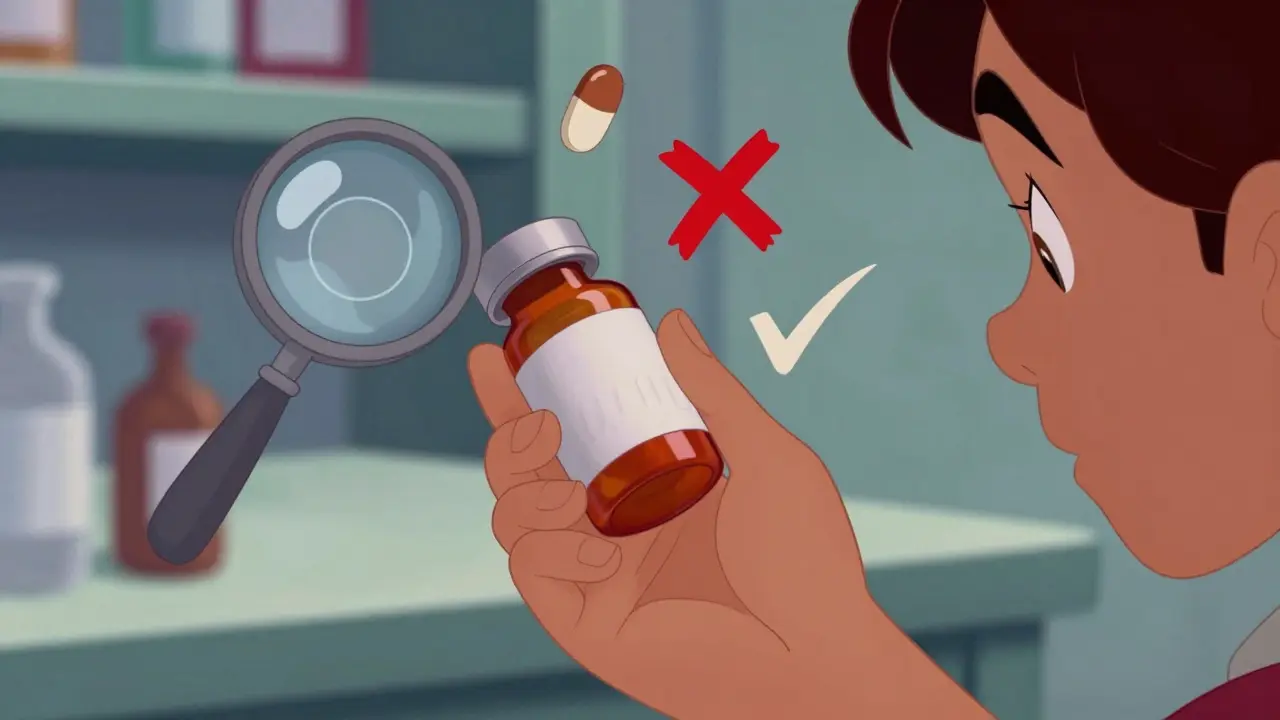
How do you spot them without a lab test? Start with the packaging. Legitimate medications come in sealed, tamper-evident containers. Check for misspellings on the label-a common red flag. Look at the pills themselves. Are they chipped, discolored, or crumbling? Do they smell unusual? Real manufacturers use precise molding processes. Counterfeits often look slightly off: uneven shapes, strange textures, or colors that don’t match previous batches.
If you buy online, verify the pharmacy’s credentials. In many regions, legitimate online pharmacies require a valid prescription and display a physical address and phone number. Organizations like the FDA maintain lists of verified internet pharmacies. Never buy from sites that offer “miracle cures” or prices that seem too good to be true. If a drug costs 90% less than your local pharmacy, ask yourself who is cutting corners. Usually, it’s the quality control.
Locked Storage: The Gold Standard for Safety
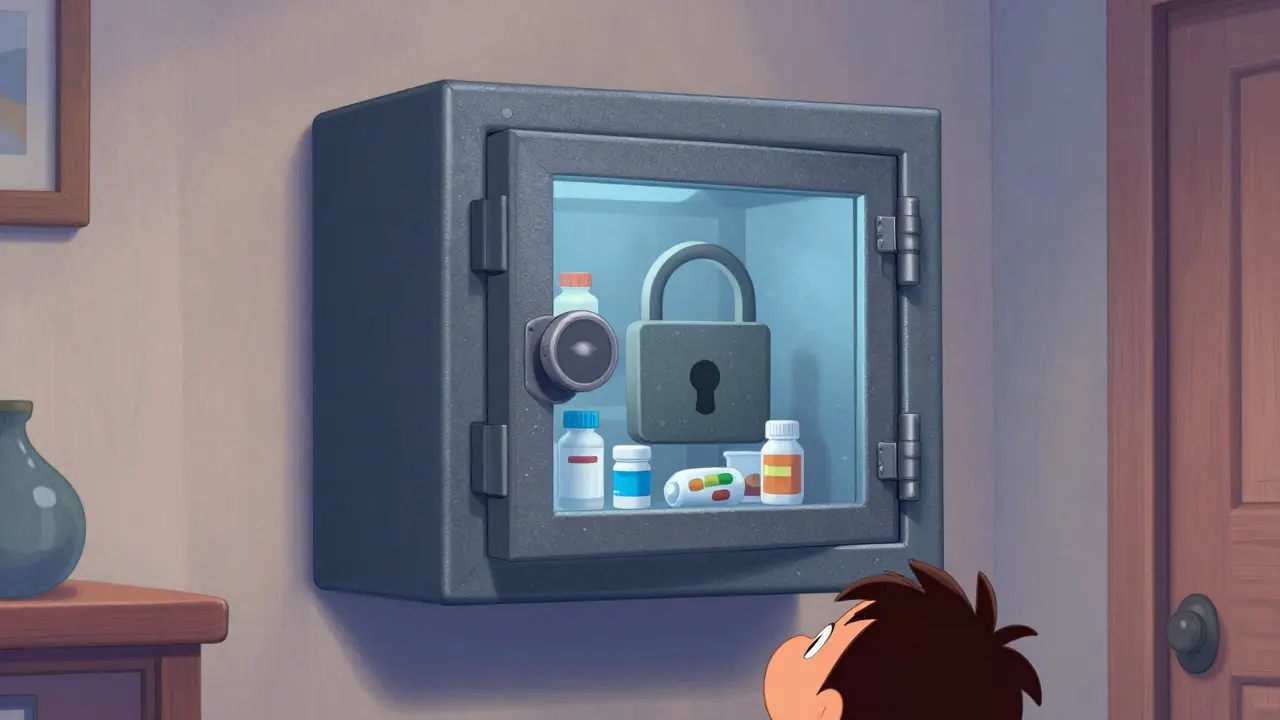
You’ve stored your meds in a dry place and verified they’re authentic. Now, lock them up. I know, it sounds extreme. But the statistics are undeniable. The National Association for Children of Alcoholics (NACoA) reports that 70% of adolescent prescription medication misuse originates from home medicine cabinets. These aren’t strangers stealing from your house; these are teenagers accessing pills left in plain sight.
Child-resistant caps help, but they aren’t foolproof. Studies show that while they reduce child access by 85%, they only cut poisoning risk by 45% when used alone. Combine them with a locked cabinet, and that protection jumps to 92%. The EPA states that 95% of accidental pediatric medication exposures could be prevented through proper locked storage.
What counts as a lock? It doesn’t have to be a bank vault. A dedicated medication safe, a fireproof document box, or even a small gun safe works well. For homes with children under five, install these cabinets at least 5 feet (1.5 meters) high, out of their sightlines. If you have elderly family members with arthritis, consider combination locks with large dials rather than tiny keys that get lost or complex tumblers that are hard to turn. The goal is security without sacrificing accessibility for those who need it.
Refrigerated Medications Need Special Care
Not all meds stay at room temperature. Insulin, certain antibiotics, and some biologics require refrigeration. But here’s the catch: putting them directly in the fridge next to leftovers creates two problems. First, cross-contamination risks. Second, temperature fluctuations every time someone opens the door.
FDA guidelines specify that refrigerated medications should be kept between 36-46°F (2-8°C). To achieve this, store them in a separate, lockable container placed near the back of the refrigerator door or in the main compartment away from the cooling element. Never freeze insulin unless specifically instructed, as freezing destroys its structure. Also, keep naloxone (Narcan) accessible. If you have opioids in the house, NACoA guidelines suggest storing naloxone where it can be accessed within 10 seconds during an emergency, separate from the locked opioid supply.
The Disposal Problem: Don’t Flush It
When medications expire or are no longer needed, the temptation is to flush them or toss them in the trash. Both are bad ideas. Flushing introduces pharmaceuticals into water systems, contaminating groundwater and harming aquatic life. Trashing them leaves them accessible to curious pets, children, or scavengers.
The Secure and Responsible Drug Disposal Act established take-back programs to handle this safely. As of 2024, there are over 14,000 permanent collection sites nationwide, including pharmacies, hospitals, and law enforcement agencies. If you don’t have a drop-box nearby, mix the medications with an unappealing substance like used coffee grounds, cat litter, or dirt in a sealed plastic bag before throwing it in the trash. This makes them less recognizable and less likely to be ingested accidentally.
| Method | Safety Level | Efficacy Preservation | Best For |
|---|---|---|---|
| Bathroom Cabinet | Low | Poor (High Humidity) | None (Avoid) |
| Bedroom Drawer | Medium | Good (Dry/Cool) | Non-controlled OTC meds |
| Locked Safe | High | Excellent | Prescriptions, Opioids, Teens’ Access |
| Refrigerator | Medium | Variable (Temp Fluctuation) | Insulin, Specific Biologics |
Building a Routine: The 4-Step Protocol
Changing how you store meds feels like a chore until it becomes a habit. The Up & Away campaign suggests a simple four-step protocol:
- Audit: Spend 15 minutes finding every medication in your home. Check purses, glove compartments, nightstands, and old drawers. Consolidate them.
- Select: Choose one or two primary storage locations based on your household. Locked cabinets for families with young kids; accessible but secure spots for elderly residents.
- Routine: Create a daily habit. Never leave meds on countertops after administration. Put them back immediately. This takes about 3-5 weeks to become automatic.
- Inventory: Do a quarterly check. Expire dates slip by unnoticed. Remove anything unused or expired and dispose of it properly.
This routine doesn’t just protect your health; it saves money. Accidental poisonings cost the healthcare system billions annually. More personally, it prevents the heartbreak of an avoidable emergency room visit. Secure storage is one of the highest-return public health interventions available, according to Congressional Budget Office analyses.
Where is the best place to store medication at home?
The best place is a cool, dry, dark location away from humidity sources like bathrooms and kitchens. A locked cabinet in a bedroom or closet is ideal. Maintain temperatures between 68-77°F (20-25°C) and humidity below 60% to preserve efficacy.
How can I tell if my medication is counterfeit?
Check for tamper-evident seals, correct spelling on labels, and consistent pill appearance. Counterfeits may be chipped, discolored, or crumble easily. Buy only from verified pharmacies and be wary of unusually low prices online.
Should I store insulin in the refrigerator?
Yes, but store it in a separate, lockable container within the fridge, away from the cooling element to prevent freezing. Keep it between 36-46°F (2-8°C). Never freeze insulin unless directed by your doctor.
Is it safe to flush expired medications?
No. Flushing contaminates water supplies. Use drug take-back programs or mix meds with unappealing substances like coffee grounds in a sealed bag before disposing in the trash.
Do child-resistant caps eliminate the need for locks?
No. Child-resistant caps reduce access by 85% but only cut poisoning risk by 45% when used alone. Combining them with locked storage increases protection to 92%, making locks essential for households with children or teens.