

For years, doctors treated autoimmune diseases like rheumatoid arthritis, lupus, and type 1 diabetes as problems inside the immune system-overactive, misfiring, attacking the body. But what if the real trigger isn’t inside the blood or joints, but deep in the gut? New research is turning this idea into reality. Scientists now know that the trillions of bacteria living in your intestines don’t just help digest food-they can turn on or turn off autoimmune responses. And that changes everything.
What’s Really Going On in Your Gut?
Your gut isn’t empty. It’s a bustling city of microbes-bacteria, fungi, viruses-living in perfect balance under normal conditions. But in people with autoimmune diseases, that balance breaks down. A 2025 meta-analysis of 47 studies involving over 12,800 patients found a consistent 23.7% drop in microbial diversity across those with rheumatoid arthritis, multiple sclerosis, and type 1 diabetes. Less diversity means fewer helpful bacteria and more harmful ones taking over. One key player that keeps showing up? Faecalibacterium prausnitzii. This friendly bacterium produces butyrate, a short-chain fatty acid that calms inflammation. In autoimmune patients, levels of this bug are down by an average of 41.2%. At the same time, Ruminococcus gnavus is up by 37.5%. This bug doesn’t just sit quietly-it produces toxins that irritate the gut lining and can slip into the bloodstream, triggering immune attacks. It’s not random. These changes are seen across different autoimmune diseases. That’s why researchers now believe the gut is a common starting point for many of these conditions-not just one disease, but a whole group.The Bacteria That Escape
Here’s where it gets scary. Some gut bacteria don’t stay in the gut. They leave. Yale researchers found that Enterococcus gallinarum can travel from the intestines to the liver, spleen, and lymph nodes. In lupus patients, this bug was found in extraintestinal tissues in 63% of cases-compared to only 8% in healthy people. Once it gets there, it wakes up immune cells that shouldn’t be activated. It’s like a burglar breaking into your house and setting off alarms in every room. In mouse models, removing this one bacterium reduced autoimmune symptoms by half. In human cells, blocking its growth stopped the production of autoantibodies-those faulty antibodies that attack your own tissues. This isn’t theory anymore. It’s a direct link between a specific gut bug and systemic disease.How Gut Bugs Control Your Immune System
It’s not just about bad bacteria. It’s about how your immune system learns to respond. Your gut is where your immune system gets its training. When you’re young, your body learns to recognize what’s foreign and what’s part of you. Gut bacteria play a huge role in this. They teach immune cells to tolerate harmless things-like food and good microbes-while still fighting real threats. In autoimmune disease, that training goes wrong. Researchers at Ohio State University found that a specific gut bacterium called segmented filamentous bacteria (SFB) can dramatically increase the number of T follicular helper (Tfh) cells. These cells normally help make antibodies. But when they’re overactive, they drive the production of autoantibodies. In mice with arthritis, SFB exposure increased autoantibodies by 68%. The same effect was seen in lupus mice. That means one gut bug can push multiple autoimmune diseases forward. And then there’s the flip side: regulatory T cells. These are the peacekeepers. They tell the immune system to calm down. In healthy people, good gut bacteria like Faecalibacterium prausnitzii help these cells grow. In autoimmune patients, they’re missing. That’s why inflammation never turns off.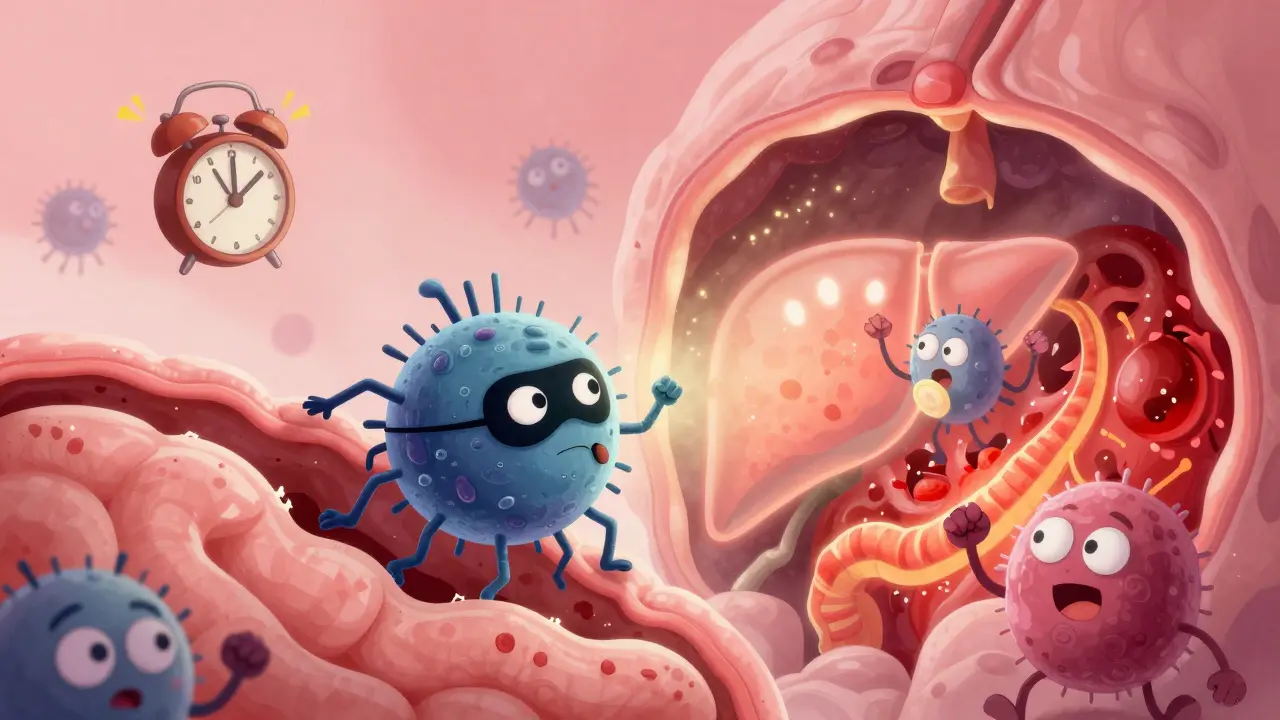
Why One Size Doesn’t Fit All
You might think: if gut bacteria cause autoimmunity, then just fix the gut and you’re done. But it’s not that simple. Take Lactobacillus reuteri. In some studies, it reduces inflammation. In others, it makes autoimmune brain disease worse by 28%. Why? Because different strains of the same species behave differently. And your body’s response depends on your genes, your diet, your environment. Type 1 diabetes patients have 32% fewer butyrate-producing bacteria than rheumatoid arthritis patients. Multiple sclerosis patients show unique immune tags-called IgA-binding patterns-on specific gut microbes that aren’t seen in other diseases. That means the same dysbiosis pattern can lead to different outcomes depending on your biology. This is why blanket probiotics often fail. A supplement with Lactobacillus acidophilus might help one person and hurt another. The answer isn’t just adding good bugs-it’s removing the bad ones and restoring the right balance for your body.What’s Being Done Right Now
The science is moving fast. As of November 2024, over 150 clinical trials were registered to test microbiome-targeted therapies for autoimmune diseases. Here’s what’s working:- Prebiotics: Galactooligosaccharides (GOS) increased regulatory T cells by 34% in phase II trials for rheumatoid arthritis.
- Targeted antibiotics: Researchers are testing drugs that kill only harmful bacteria like Enterococcus gallinarum, without wiping out the whole gut.
- Probiotic cocktails: 22 specific strains are now in human trials-not random yogurt cultures, but carefully selected combinations designed to restore balance.
- Fecal microbiota transplants (FMT): Early trials in lupus and Crohn’s show promise, but long-term safety data is still limited.
Cost, Access, and the Road Ahead
The science is exciting, but it’s not yet mainstream. Getting your gut microbiome analyzed costs between $1,200 and $3,500. It takes an average of 78 days to get a full profile. Insurance rarely covers it. Only 38% of academic medical centers currently use microbiome testing in lupus care-just 22% for RA, and 15% for MS. But things are changing. Global funding hit $847 million in 2024, up 22% from 2023. The NIH launched a $18.7 million initiative in January 2025 to develop three microbiome therapies by 2028. Companies like Vedanta Biosciences and Seres Therapeutics have dozens of candidates in the pipeline. Experts agree: by 2030, microbiome profiling will be standard in autoimmune diagnosis. The question isn’t if-it’s when.What You Can Do Today
You don’t need a $3,000 test to support your gut health. Here’s what actually helps:- Eat more fiber-especially from vegetables, legumes, whole grains, and fruits. Fiber feeds good bacteria.
- Limit processed foods, sugar, and artificial sweeteners. They feed bad bacteria and damage the gut lining.
- Consider fermented foods: kimchi, sauerkraut, kefir, and plain yogurt. They add live microbes naturally.
- Avoid unnecessary antibiotics. They wipe out good bacteria along with bad ones.
- Manage stress. Chronic stress changes gut bacteria composition and weakens the gut barrier.
What’s Next?
The future of autoimmune treatment won’t just be pills that suppress your immune system. It’ll be personalized plans that fix your gut first. Imagine a blood test that tells you which bacteria are triggering your symptoms. Then a custom probiotic, or a targeted antimicrobial, designed just for you. No more trial and error. No more guessing. We’re not there yet. But we’re closer than we were five years ago. The gut isn’t just part of the story anymore. It’s the starting point.Can gut bacteria really cause autoimmune diseases?
Yes. Research shows certain gut bacteria, like Enterococcus gallinarum and segmented filamentous bacteria, can escape the intestines and trigger immune responses that lead to autoimmune conditions like lupus and rheumatoid arthritis. These bacteria activate harmful immune cells and increase autoantibody production. In studies, removing these bacteria reduced disease symptoms by up to 50% in animal models.
Are probiotics helpful for autoimmune diseases?
Some are, but not all. Generic probiotics from the store often don’t help-and some, like Lactobacillus reuteri, can make certain autoimmune conditions worse. The promising ones are specific strains tested in clinical trials, like those in Vedanta’s or Seres’ pipelines. Prebiotics like galactooligosaccharides have shown stronger results in boosting regulatory T cells than many probiotics.
How do I know if my gut is contributing to my autoimmune condition?
There’s no single test yet, but signs include persistent digestive issues (bloating, diarrhea, constipation), food sensitivities, and inflammation that doesn’t improve with standard treatments. A microbiome test can reveal low diversity, low Faecalibacterium prausnitzii, or high Ruminococcus gnavus-patterns strongly linked to autoimmune disease. Talk to a specialist who understands gut-immune connections.
Can diet fix my gut microbiome if I have an autoimmune disease?
Diet alone won’t cure autoimmune disease, but it’s the most powerful tool you have to support your microbiome. High-fiber, plant-rich diets increase good bacteria and reduce inflammation. Avoiding sugar, processed foods, and artificial sweeteners helps stop bad bacteria from thriving. Many patients report reduced symptoms after switching to a whole-food, low-inflammatory diet-even before any medical treatment.
Will microbiome testing become standard for autoimmune patients?
Yes, and soon. By 2030, experts predict microbiome profiling will be routine in autoimmune diagnosis and treatment planning. The NIH and major biotech firms are investing heavily to make it faster, cheaper, and more accurate. Right now, it’s mostly available in research centers, but as costs drop and evidence grows, it will move into mainstream care.
dean du plessis
December 27, 2025 AT 16:49The gut is basically the silent conductor of our immune orchestra and nobody's been listening
People treat autoimmunity like it's a glitch in the software when it's really a corrupted hard drive
We've been patching symptoms for decades while the real root rot was growing under the floor
It's like blaming the smoke alarm for the fire
Caitlin Foster
December 27, 2025 AT 23:12OH MY GOD YES!!!
EVERY TIME I EAT A DONUT I FEEL LIKE MY BODY IS TRYING TO EAT ITSELF
THIS IS WHY I STOPPED JUNK FOOD AND NOW I CAN WALK WITHOUT FEELING LIKE I'M MADE OF GLUE
IT'S NOT IN MY JOINTS IT'S IN MY GUT
THEY NEED TO PUT THIS ON TV
WHY ISN'T THIS IN EVERY DOCTOR'S OFFICE??
WE NEED A MOVEMENT
GET YOUR GUT RIGHT OR GET LEFT BEHIND!!!
Kylie Robson
December 29, 2025 AT 00:47While the correlation between dysbiosis and autoimmune pathology is statistically significant, the causal attribution remains confounded by confounding variables such as dietary heterogeneity, antibiotic exposure timelines, and host genetic polymorphisms in TLR and NOD2 pathways
Additionally, the purported reduction in Faecalibacterium prausnitzii may be an epiphenomenon rather than a driver, given its role as a commensal indicator rather than a direct immunomodulator
The overinterpretation of murine models in human translational contexts is a recurring methodological flaw in microbiome literature-especially when extrapolating SFB-mediated Tfh expansion to polygenic human autoimmune conditions
Andrew Gurung
December 30, 2025 AT 10:33Of course the pharmaceutical industry doesn't want you to know this
They make billions off immunosuppressants that treat symptoms while letting the real culprit thrive
Big Pharma is literally poisoning your gut to keep you hooked on their $10,000/month drugs
They don't care about your health-they care about your recurring monthly payment
And they're paying off researchers to call this 'pseudoscience'
They even banned FMT in the 90s because it threatened their monopoly
Wake up, sheeple. Your gut is your true immune command center.
And yes, I've read all the papers. I'm not crazy. They are.
Miriam Piro
December 31, 2025 AT 12:23Have you ever wondered why they won't let you test your gut flora for free? Why it costs $3,000? Why insurance won't cover it? Because they don't want you to know that your disease can be fixed with a $20 jar of sauerkraut and a 30-day broccoli fast
They need you to believe you're broken beyond repair so you keep taking their pills
And what's the one thing they never tell you? That the same bacteria that cause lupus can also cure it-if you know which ones to bring back
They're hiding the cure because it's not patentable
And if you think I'm being dramatic... ask yourself why your doctor hasn't mentioned this once in 12 years
They're not ignorant-they're complicit
And you? You're the product.
But you're not powerless.
Start with kimchi.
Then demand change.
Then watch them panic.
Paula Alencar
December 31, 2025 AT 16:01It is profoundly significant that the scientific community is finally acknowledging the gut-immune axis as a foundational pillar in the pathogenesis of autoimmune conditions, rather than treating it as a peripheral or incidental observation
The implications for personalized medicine are nothing short of revolutionary, as we transition from a one-size-fits-all immunosuppressive paradigm to a precision microbiome modulation framework
It is imperative that clinicians, policymakers, and patients alike recognize that therapeutic efficacy must be anchored in ecological restoration rather than suppression
Furthermore, the ethical imperative to democratize access to microbiome diagnostics cannot be overstated-health equity must be central to this emerging paradigm
Let us not repeat the mistakes of the past, where breakthroughs were monopolized by corporate interests and rendered inaccessible to those who needed them most
We stand at the threshold of a new era in immunology-and we must meet it with wisdom, humility, and collective responsibility
Todd Scott
January 2, 2026 AT 08:52As someone who grew up in Lagos and now lives in Chicago, I’ve seen how diet shapes immunity differently across cultures
My grandmother in Nigeria ate fermented cassava, plantains, and bitter leaf soup every day-no probiotics, no supplements
She lived to 92 without a single autoimmune diagnosis
Meanwhile, my cousin here eats gluten-free granola bars and takes three different probiotics every morning and still has RA
It’s not just about the bugs-it’s about the whole food system
Processed food, even if it’s ‘healthy,’ still breaks the symbiosis
Real food, fermented, local, seasonal-that’s the real medicine
And it’s cheaper than a lab test
Don’t overcomplicate it. Eat like your ancestors did. Your gut will thank you.
Chris Garcia
January 3, 2026 AT 20:30Let us not forget that the gut is not merely an organ but a living ecosystem-a cathedral of microbial life shaped by millennia of coevolution
Modern life has become a siege against this sacred balance: antibiotics as blunt instruments, sugar as a poison, stress as a silent assassin
But the body remembers. It remembers the taste of wild yams, the smell of fermenting grains, the rhythm of sun and soil
When we restore these rhythms, we do not just heal-we remember who we are
Science is catching up to wisdom
And that wisdom? It was never lost
It was buried under plastic wrappers and pharmaceutical promises
Let us dig it up-not with a scalpel, but with a spoon
James Bowers
January 5, 2026 AT 13:30While the hypothesis presented is compelling, the assertion that microbiome profiling will become standard by 2030 is unsupported by current regulatory frameworks and lacks sufficient longitudinal validation
Furthermore, the cited clinical trials lack phase III data and are predominantly investigator-initiated, with minimal independent replication
The commercialization of microbiome diagnostics is proceeding ahead of clinical utility, creating a dangerous precedent of premature adoption
Until standardized, validated biomarkers are established and peer-reviewed across diverse populations, such claims remain speculative and potentially misleading
Nikki Thames
January 6, 2026 AT 05:47And yet, you still don’t understand, do you?
You think eating kimchi is enough?
You think a $20 jar of sauerkraut will undo decades of glyphosate, C-sections, and formula feeding?
You think the system will let you fix this on your own?
They control the labs, the patents, the insurance, the doctors.
You’re not supposed to know this.
You’re not supposed to be able to heal yourself.
And if you do?
They’ll call you a quack.
They’ll say you’re lucky.
They’ll never admit the truth.
That your body was never broken.
That they broke it.
And they’re still breaking yours.
And you? You’re still eating their food.
Still taking their pills.
Still believing they care.
Wake up.
It’s not too late.
But you’re running out of time.