
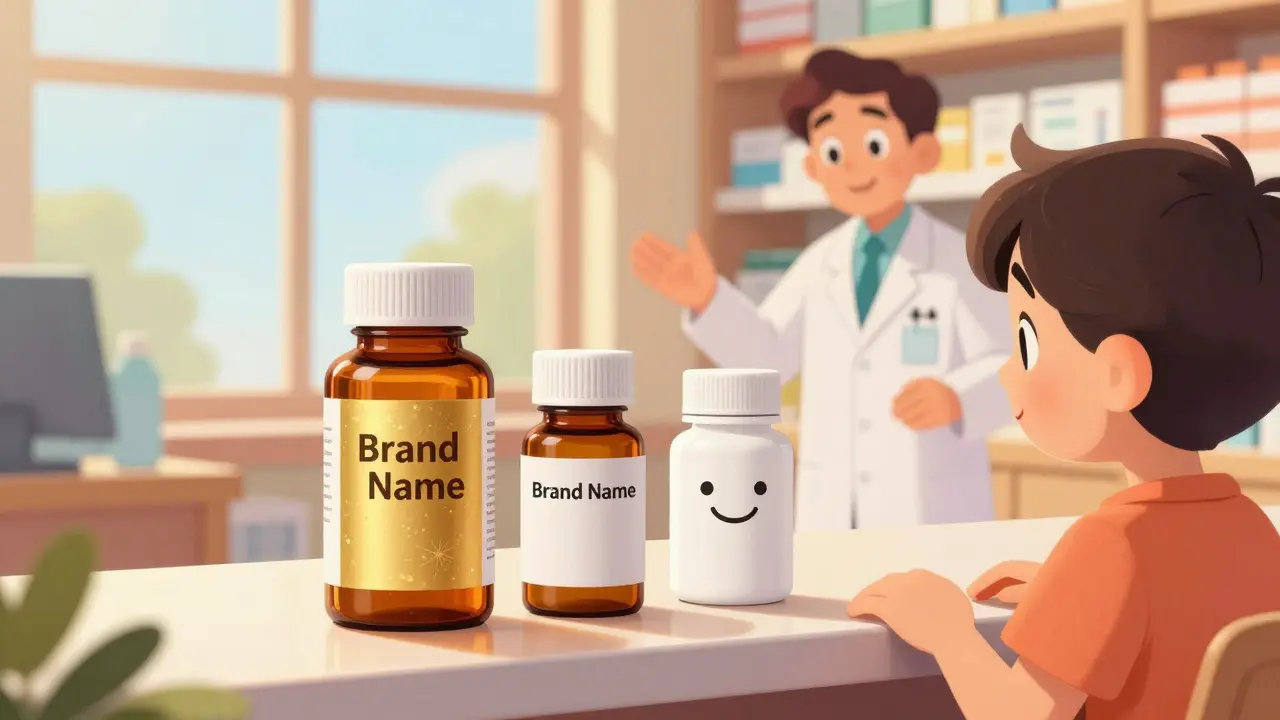
Ever wonder why your pharmacist might offer you a medication that looks and acts exactly like a brand-name drug but costs significantly less, yet isn't labeled as a "traditional" generic? You've likely encountered an Authorized Generic is a pharmaceutical product identical to the brand-name drug in dosage, safety, and quality, but marketed under a different label-either by the original manufacturer or a partner with their permission. Also known as AGs, these drugs bypass the usual hurdles that generic companies face, creating a unique middle ground in the pharmacy world.
The core problem for many patients is the "sticker shock" of brand-name medications. While traditional generics eventually drive prices down, there is often a gap-a window of time where only one generic company has the right to sell the drug. This is where authorized generics step in to break the monopoly and lower costs faster.
What Makes Authorized Generics Different?
To understand the pricing, you first have to understand the paperwork. Most generic drugs require an Abbreviated New Drug Application (ANDA). This is a long process where a company proves to the FDA is the U.S. Food and Drug Administration, the federal agency responsible for protecting public health by ensuring the safety and efficacy of drugs that their version is biologically equivalent to the brand.
Authorized generics are different because they are produced using the exact same manufacturing facilities and quality control processes as the brand. Because they operate under the original New Drug Application (NDA), they don't need a separate ANDA. They are, for all intents and purposes, the brand-name drug in a plain wrapper. This allows them to hit the market instantly, often at the same time as the first traditional generic competitor.
The 180-Day Exclusivity Battle
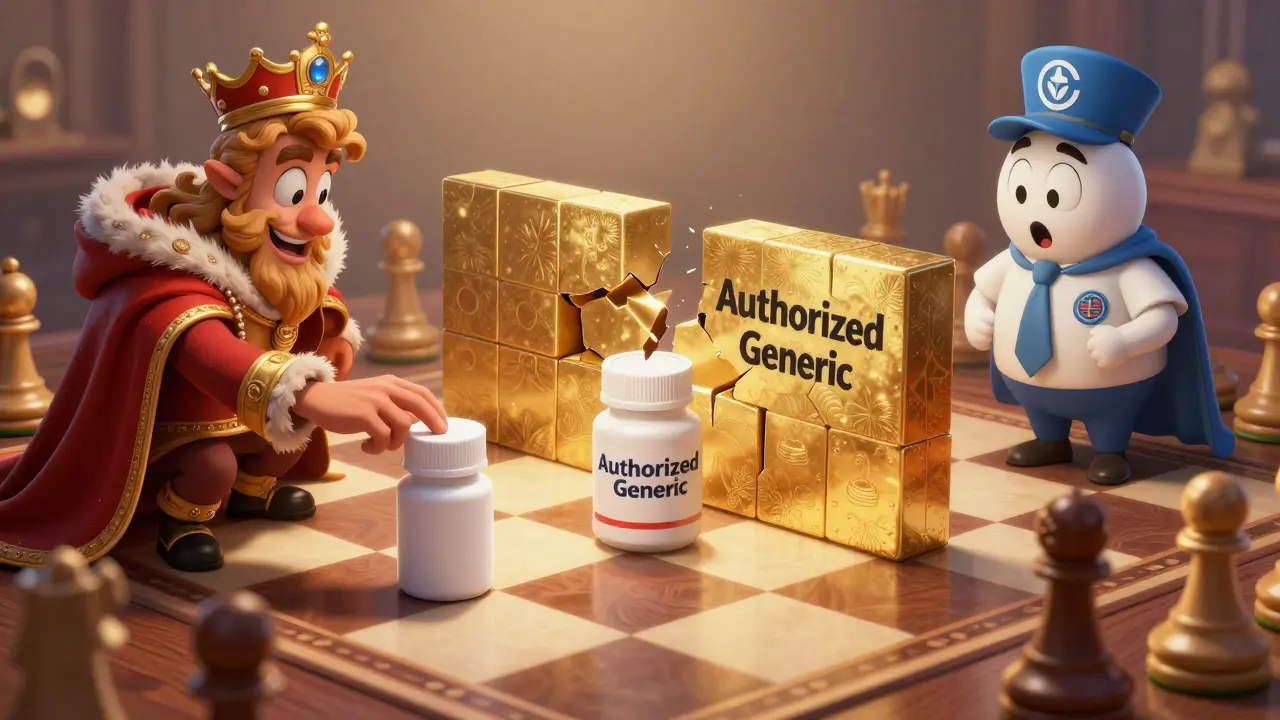
The real reason authorized generics exist comes down to a strategic chess match over the Hatch-Waxman Act is a 1984 U.S. law that balanced the need for pharmaceutical innovation with the need for affordable generic medicines . Under this law, the first generic company to successfully challenge a drug patent gets 180 days of "market exclusivity." For six months, they are the only generic player in the game, which means they can keep prices relatively high-often around 80% of the brand price.
Brand-name companies hate losing total control. To fight back, they launch an authorized generic. By doing this, the brand company creates competition for that first generic manufacturer. Instead of a two-way race between the brand and one generic, it becomes a three-way fight. This forces the generic company to drop its prices immediately to stay competitive. According to FTC data, when an AG enters the market during this window, retail prices typically drop by 4% to 8% compared to when no AG is present.
Breaking Down the Price Gap
Why do they actually cost less if they are made in the same factory? It isn't about the cost of the ingredients; it's about the marketing and the "perceived value." Brand-name drugs carry a price premium to recoup the billions spent on research, development, and advertising. An authorized generic doesn't need a multi-million dollar ad campaign or a fancy brand identity. It sells on the merit of being a low-cost alternative.
| Feature | Brand-Name Drug | Authorized Generic (AG) | Traditional Generic (ANDA) |
|---|---|---|---|
| Price Level | Highest (Premium) | Moderate to Low | Low (once multiple enter) |
| Manufacturing | Original Facility | Original Facility | Third-party Facility |
| FDA Pathway | Full NDA | Under original NDA | Abbreviated ANDA |
| Price Reduction | N/A | 4% - 8% retail drop | Up to 51% after 1 year |
The impact is even more visible on the wholesale side. Pharmacies often see on-invoice prices drop by 13% to 18% when an AG is available. This is particularly noticeable in high-loyalty categories like cardiovascular medications or CNS (central nervous system) drugs, where patients are often hesitant to switch to a completely unknown generic brand but feel safe switching to an authorized version.
Real-World Examples of Pricing Shifts
Look at the case of the EpiPen. In 2016, following a massive public outcry over price hikes, Mylan released an authorized generic version of its epinephrine auto-injector. They priced it at $300-exactly half the cost of the $600 branded version. This wasn't just about health; it was a strategic move to handle public relations and market pressure.
Another example is Gilead, which launched authorized generics for its hepatitis C treatments, Harvoni and Epclusa. By releasing these before the patents even expired, Gilead managed to maintain a footprint in the market while anticipating the inevitable wave of traditional generic competition. It allowed them to capture a share of the generic market (typically 15-25%) before other companies could move in.
The Role of Pharmacy Benefit Managers (PBMs)
While the drug itself is cheaper, your out-of-pocket cost depends on your insurance. This is where Pharmacy Benefit Managers are PBMs are third-party administrators of prescription drug programs that manage formularies and negotiate rebates with manufacturers come in. PBMs decide which "tier" a drug falls into. If a PBM places an authorized generic on the same tier as a traditional generic, patients save a lot of money. In fact, one analysis of 1.2 million patient records showed that this seamless switching improved medication adherence by over 8 percentage points because the cost was no longer a barrier.
However, if a PBM places the AG on a "brand tier," you might still pay a high co-pay, even though the drug is technically a generic. This is why the pricing of AGs can sometimes feel inconsistent across different insurance plans.
Potential Downsides and Controversies
It's not all a win for the consumer. Some health economists, like Dr. Peter Bach, have pointed out a potential dark side: the "pay-for-delay" strategy. Sometimes, brand companies use the promise of an authorized generic as a bargaining chip in legal settlements with generic manufacturers. By agreeing to launch an AG, they might convince a generic competitor to delay their own market entry, which can actually keep prices higher for longer in the long run.
Furthermore, the market is complex. While AGs lower prices initially, true price crashes usually only happen when at least four different generic manufacturers are competing. Since AGs are often used to limit the influence of the first generic entrant, they are a helpful stepping stone, but not the final solution for the lowest possible price.
Is an authorized generic exactly the same as the brand drug?
Yes. Unlike traditional generics, which are made by different companies to be "bioequivalent," authorized generics are the same drug, made by the same manufacturer, in the same facility, and with the same ingredients. The only difference is the label and the price.
Why doesn't the brand company just lower the price of the original drug?
Brand companies want to maintain a "premium" image and price for their main product. By launching a separate authorized generic, they can compete for price-sensitive customers without devaluing the main brand, which they may still be selling to those with high-end insurance.
How can I tell if I'm taking an authorized generic?
Check the packaging. It won't have the brand name in large letters, but the manufacturer listed on the bottle will often be the same company that invented the drug, or a partner they have authorized to sell it.
Do authorized generics require a new FDA approval?
No. They are marketed under the original New Drug Application (NDA) already approved by the FDA. The brand company simply notifies the FDA that they are marketing an authorized generic version.
Will my insurance always cover authorized generics?
Most insurance plans do, but the cost depends on the formulary tier assigned by your PBM. Some may treat it as a brand, while others treat it as a generic. It is always best to ask your pharmacist if a lower-cost authorized generic is available for your specific plan.
What to Do Now
If you are paying a high copay for a branded medication, don't assume a generic isn't available just because your doctor didn't mention one. Ask your pharmacist specifically if there is an authorized generic option. Because these drugs are identical to the brand, you don't have to worry about the "quality gap" that some people fear with third-party generics.
If your insurance is refusing to cover an AG or is placing it on a high-cost tier, you can ask your doctor to submit a "prior authorization" or a "formulary exception" request. Since the AG is identical to the brand, the medical justification for the switch is usually very simple for your doctor to prove.
Tama Weinman
April 18, 2026 AT 23:11Just a little tip for everyone: follow the money. The whole "authorized generic" thing is just another layer of the pharmaceutical industrial complex ensuring they keep their grip on the market while pretending to be the good guys. It's a shell game designed to keep the PBMs and the big labs in a cozy little loop while we just pay for the privilege of staying alive. Absolute joke.