
When your body turns against itself, even simple tasks become battles. Getting out of bed, holding a coffee cup, walking to the mailbox-these aren’t just chores. For people with autoimmune diseases like lupus, rheumatoid arthritis, or Sjögren’s syndrome, they’re daily fights against fatigue, pain, and stiffness that no pill can fully fix. That’s where rehabilitation and occupational therapy come in-not as afterthoughts, but as essential tools to reclaim independence.
Why Functional Impairment Isn’t Just About Pain
Many assume that if the inflammation is under control, life should return to normal. But that’s not how autoimmune diseases work. Even when blood tests look better, the damage lingers. Muscles weaken from disuse. Joints stiffen from inactivity. The nervous system gets stuck in overdrive, making even small efforts feel exhausting. This isn’t laziness. It’s a biological response to chronic inflammation, medication side effects, and the body’s own attempts to heal. The Health Assessment Questionnaire Disability Index (HAQ-DI) measures how well people can do everyday tasks-dressing, eating, walking, gripping. Studies show that without intervention, HAQ-DI scores rise steadily over time. But with structured rehab, they can drop by 1.8 points on average. That’s not just a number. It’s the difference between needing help to button a shirt and doing it yourself.Physical Therapy: Rebuilding Strength Without Triggering Flares
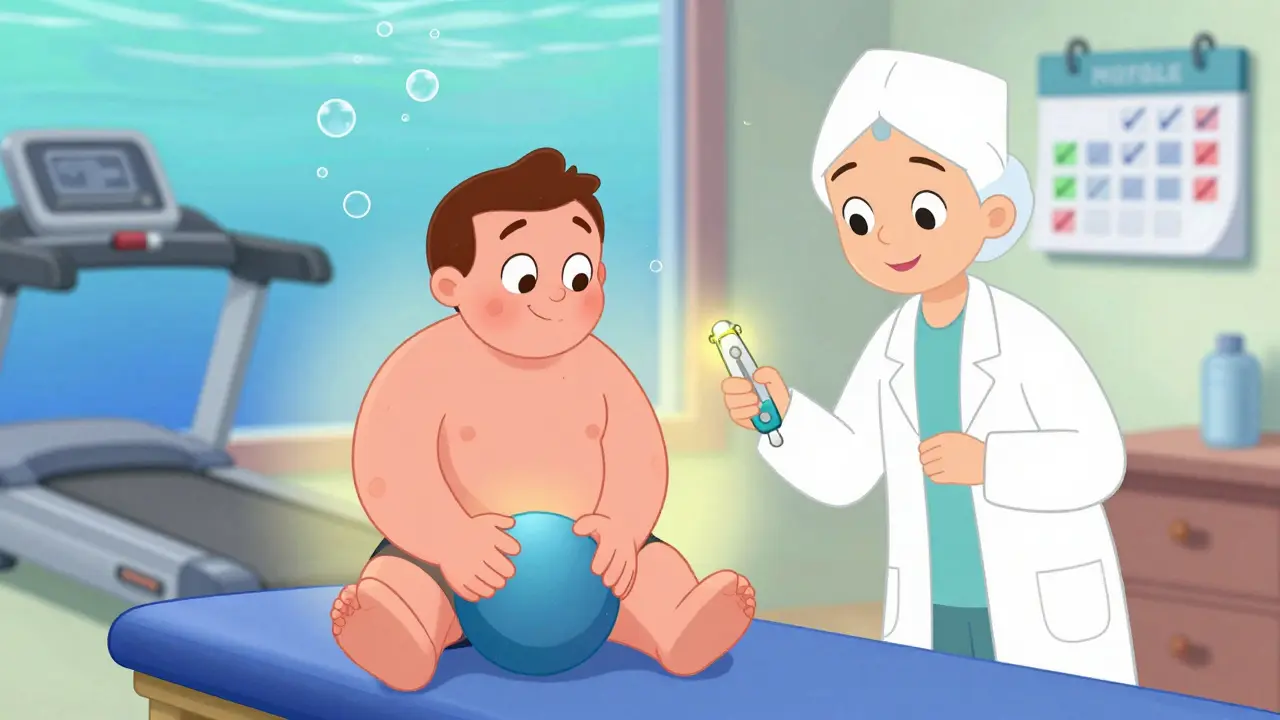
Physical therapy for autoimmune conditions isn’t about lifting heavy weights or running marathons. It’s about precision. During a flare, when joints are swollen or feverish, therapists start with gentle isometric exercises-muscle contractions without joint movement-at just 20-30% of maximum effort. Think squeezing a soft ball or holding a light leg lift for five seconds. Too much too soon? That’s how 37% of patients end up with injuries, according to the Arthritis Foundation. As symptoms ease, therapy shifts. Aerobic training kicks in, but carefully. Heart rate is kept at 40-60% of reserve-roughly a pace where you can still talk but not sing. Underwater treadmills, set to 92-96°F, reduce joint stress while improving circulation. Patients using hydrotherapy report 22% more pain relief than those doing land-based workouts. But here’s the catch: 68% of rural clinics don’t even have access to these pools. Therapists use tools like goniometers to track joint range and TENS units delivering 50-100Hz pulses to block pain signals. Progress isn’t measured by how much you can lift, but by how much easier daily life becomes. One patient reduced her HAQ-DI from 2.1 to 0.8 after six months of graded exercise-enough to return to part-time work.Occupational Therapy: Making the World Fit Your Body
If physical therapy rebuilds your body, occupational therapy rebuilds your life. OTs don’t just teach you how to move-they teach you how to live with less strain. The core strategy? The 4 Ps: Prioritize, Plan, Pace, Position. Prioritize means asking: What tasks matter most? Is it cooking dinner? Playing with your kids? Writing emails? Focus on those. Plan means breaking tasks into chunks. Instead of cleaning the whole kitchen in one go, do the counters today, the sink tomorrow. Pace means stopping every 15-20 minutes for a 5-10 minute rest. Position means using tools-long-handled reachers, ergonomic grips, raised toilet seats-to avoid awkward movements. For people with hand damage from rheumatoid arthritis, the Arthritis Hand Function Test shows OT improves grip and pinch strength by 33% more than PT alone. Adaptive tools like voice-activated smart home systems cut the effort needed to turn on lights or lock doors by 31%. One woman with severe lupus arthritis now uses voice commands to control her thermostat, lights, and even her coffee maker-something she hadn’t done independently in five years.
The Boom-Bust Cycle and How to Break It
The biggest trap? The boom-bust cycle. You have a good day. You feel like yourself again. So you clean the house, go shopping, visit friends. Then-crash. Pain spikes. Fatigue hits hard. Recovery takes days. This happens to 63% of patients, according to FOX Rehabilitation. The fix? The 70% rule. Never push past 70% of your perceived maximum effort. That means if you feel like you could do 100%, stop at 70. Use a heart rate monitor or a simple perceived exertion scale. If your heart rate spikes or you feel a wave of exhaustion, you’ve gone too far. Activity diaries help track patterns-what you did, how you felt, how long it took to recover. Over time, you learn your personal thresholds.What Doesn’t Work (And Why)
Not all rehab is created equal. Many therapists still treat autoimmune patients like they have ordinary muscle weakness. They push through pain. They ignore flares. That’s dangerous. Active joint swelling, fever over 100.4°F, or recent steroid injections are red flags-exercise should stop until those clear. Another failure point? Ignoring central fatigue. This isn’t just tired muscles. It’s your brain and nervous system being overwhelmed by inflammation. In conditions like lupus and Sjögren’s, pushing harder makes fatigue worse. One JAMA Internal Medicine study found 19% of rehab programs miss this entirely, worsening symptoms instead of helping. Insurance is another barrier. Most plans cover only 12-15 sessions a year. But the evidence shows you need 24-30 sessions over six months to see lasting results. That leaves many patients stuck paying out-of-pocket or quitting mid-treatment.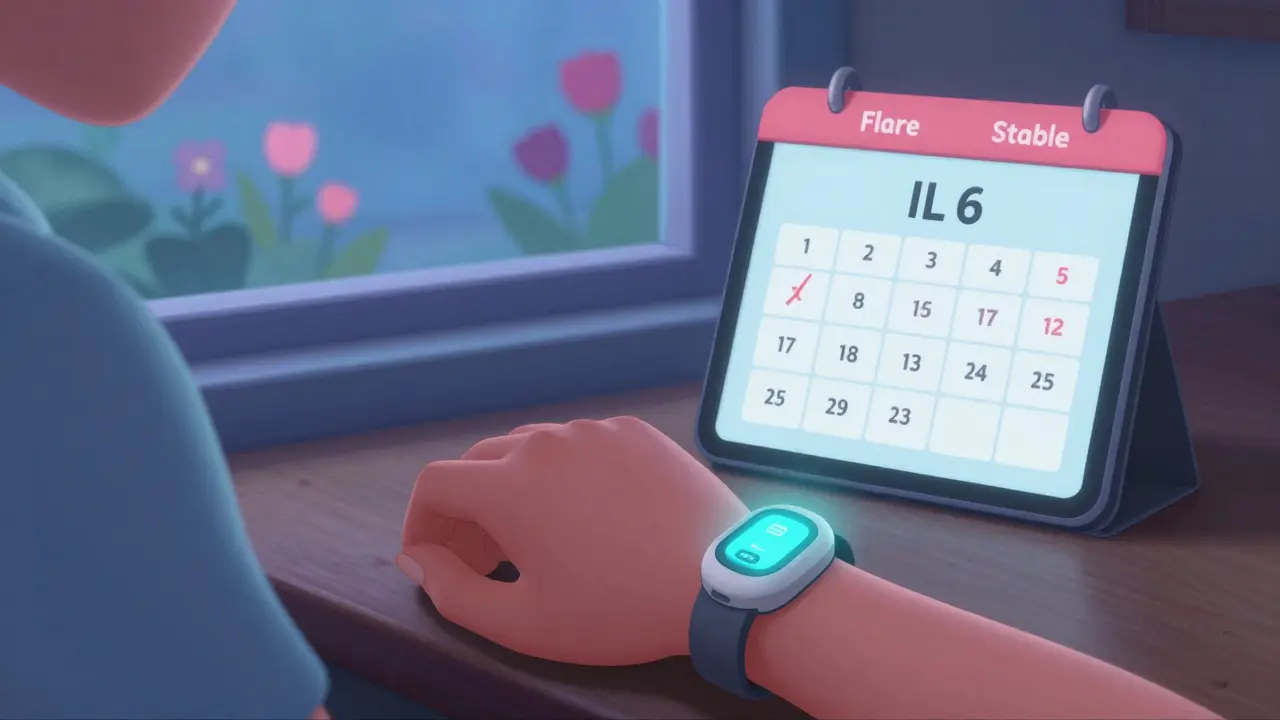
Who Should Do This? And When?
The best time to start rehab? Within the first 12 months of symptoms. Early intervention cuts long-term disability risk by nearly half. But it’s never too late. Even patients with 10+ years of disease can regain function. You need a therapist trained in autoimmune conditions. Look for certifications like the Academy of Pelvic Health Physical Therapy’s Autoimmune Specialty Certification-120 hours of training, focused on disease-specific protocols. General PTs or OTs often lack the depth needed. The field is growing. The autoimmune rehab market hit $2.8 billion in 2023 and is rising fast. But there’s a shortage. By 2026, the U.S. will be short 18,000 qualified therapists. Telehealth has helped-68% of patients now use remote sessions, up from 22% before 2020. Apps like Lupus Foundation’s ‘PacePartner,’ currently in trials, use wearable sensors to predict flares with 82% accuracy and adjust exercise plans automatically.What’s Next? Personalized Rehab Based on Your Biology
The future of rehab isn’t one-size-fits-all. The NIH’s Autoimmune Rehabilitation Registry, launched in 2023, is tracking 5,000+ patients to find patterns. Early results show that adjusting exercise intensity based on weekly blood markers like IL-6 (a key inflammation signal) improves outcomes by 39%. The 2024 ACR guidelines will include these biomarkers for the first time. Imagine a wearable that tells your therapist, “Your IL-6 is up today-scale back to light isometrics.” That’s not science fiction. It’s coming.Real Talk: What Patients Say
On Reddit’s r/ChronicIllness, people share hard truths. One wrote: “My therapist told me to ‘push through the pain.’ I ended up in the ER.” Another: “After six months of pacing, I can hold my granddaughter without crying.” The common thread? Success comes from patience, personalization, and partnership. Not from toughness. Not from ignoring limits. It’s about working with your body, not against it.Can physical therapy make my autoimmune disease worse?
Yes-if it’s done incorrectly. Pushing through pain, ignoring flares, or using high-intensity workouts during active disease can trigger crashes and worsen symptoms. But when tailored to your current condition-using low-intensity, phased progression-it reduces pain and improves function. Always work with a therapist trained in autoimmune conditions.
How long does it take to see results from rehab?
Most patients notice small improvements in energy and mobility within 4-6 weeks. Meaningful gains in daily function, like being able to cook or dress independently, usually take 3-6 months. The key is consistency. Skipping sessions or overdoing it on good days delays progress.
Is hydrotherapy better than regular exercise for autoimmune patients?
During flares, yes. Water supports your joints, reduces pain, and allows movement without impact. Studies show 22% more pain relief with hydrotherapy compared to land-based exercise. But it’s not always accessible-68% of rural clinics don’t have pools. For maintenance, a mix of water and land-based work works best.
Can occupational therapy help with fatigue?
Absolutely. OT doesn’t just fix physical tasks-it restructures your day to conserve energy. Using the 4 Ps (Prioritize, Plan, Pace, Position), patients learn to spread out tasks, rest before they’re exhausted, and use tools that reduce effort. This cuts central fatigue by helping the nervous system recover instead of burn out.
What if my insurance won’t cover enough sessions?
Many plans limit coverage to 12-15 sessions, but clinical guidelines recommend 24-30. Ask your therapist for a detailed letter of medical necessity. Some patients get coverage through appeals or Medicaid waivers. Home-based telehealth programs are often more affordable and can extend care between sessions. Also, look for nonprofit programs or university clinics offering sliding-scale fees.
Are there apps or tools that help with rehab at home?
Yes. Apps like ‘PacePartner’ (in Phase 3 trials) use wearable sensors to track heart rate variability and predict flares. Others offer guided low-impact workouts, activity diaries, and reminders to rest. Simple tools like a fitness tracker to monitor exertion levels or a voice assistant to control home devices can also make a big difference in daily independence.
Malikah Rajap
January 20, 2026 AT 07:24Okay, but have you ever tried to explain to your boss that you can’t lift your coffee cup because your immune system is having a temper tantrum? I mean, I get the therapy stuff-but the real MVP is the person who still shows up to Zoom calls in pajamas and says, “I’m not lazy, I’m biologically compromised.”
Aman Kumar
January 20, 2026 AT 15:22Let me be blunt: the entire rehabilitation paradigm is predicated on a neoliberal fallacy-that individual compliance can compensate for systemic neglect. You’re telling people to ‘pace’ while insurance caps coverage at 12 sessions? That’s not rehab-it’s performative pity. The real pathology isn’t in the joints-it’s in the healthcare industrial complex.
Jake Rudin
January 21, 2026 AT 12:53It’s fascinating how we’ve reduced chronic illness to a series of measurable outcomes-HAQ-DI scores, IL-6 levels, 70% effort rules-while ignoring the existential weight of living in a body that betrays you daily. Is it progress if you can button your shirt but still feel like a ghost in your own skin? I wonder if we’re measuring the right things.
Astha Jain
January 21, 2026 AT 18:14OT is lit fr. I got me one of them voice thingies and now i can turn on my lightz without moving my hands. no cap. also, my cat now judges me harder when i take a nap. she knows.
Valerie DeLoach
January 22, 2026 AT 08:15For anyone reading this who feels isolated: you’re not alone. I’ve been living with lupus for 14 years. I used to think I had to push through everything to be ‘strong.’ Now I know strength is saying no. It’s resting. It’s letting someone help you tie your shoes. And yes-it’s okay to cry when you finally hold your grandchild without pain. That’s not weakness. That’s human.
Tracy Howard
January 22, 2026 AT 15:44Canada’s got it right-we fund 30 sessions, no questions asked. Meanwhile, you Americans are out here bargaining with insurance companies like you’re haggling at a flea market for your dignity. If you can’t afford rehab, you’re not ‘poor’-you’re being systematically abandoned. This isn’t healthcare. It’s a luxury.
Josh Kenna
January 23, 2026 AT 17:45My PT told me to push through and I ended up in the ER too. Like… why do people still think pain is a motivator? I’m not a robot. My body isn’t a machine that needs a tune-up. It’s a fragile, angry, tired thing that deserves to be listened to. Thank you for writing this.
Erwin Kodiat
January 24, 2026 AT 19:37Just wanted to say-this post made me feel seen. I’ve been doing hydrotherapy for 8 months now. I still have bad days. But I can walk my dog again. And that’s enough. Not perfect. Not cured. Just… enough.
Jackson Doughart
January 26, 2026 AT 10:55While the clinical data presented is compelling, I must emphasize the ethical imperative to avoid overmedicalizing lived experience. The reduction of chronic illness to biomarkers and efficiency metrics risks erasing the phenomenological reality of suffering. One cannot quantify the quiet grief of a mother who can no longer hug her child without wincing.
Lydia H.
January 27, 2026 AT 03:19My therapist started me on underwater treadmill last year. I cried the first time I walked without pain. Not because I was happy. Because I’d forgotten what it felt like to move like a normal person. This isn’t rehab. It’s resurrection.
Phil Hillson
January 27, 2026 AT 04:40Everyone’s acting like this is some groundbreaking revelation but I’ve been doing pacing since 2017. Also, why is everyone talking about IL-6 like it’s the secret sauce? I’ve got 3 different blood tests and none of them match how I feel. The system is broken. The science is fine. The people running it? Not so much.
Jacob Hill
January 27, 2026 AT 14:29Just wanted to add-my insurance denied my 24th session, so I started doing my exercises with a YouTube video and a resistance band. I also keep an activity journal in Google Docs. It’s not perfect, but it’s mine. And honestly? I’d rather have a messy, self-made plan than wait for someone else to give me permission to heal.
Lewis Yeaple
January 28, 2026 AT 00:58According to the 2024 ACR guidelines, biomarker-guided rehabilitation protocols demonstrate statistically significant improvements in functional mobility (p < 0.01) when integrated with standardized physical therapy regimens. However, implementation fidelity remains suboptimal in community-based settings due to insufficient provider training and infrastructural limitations.