
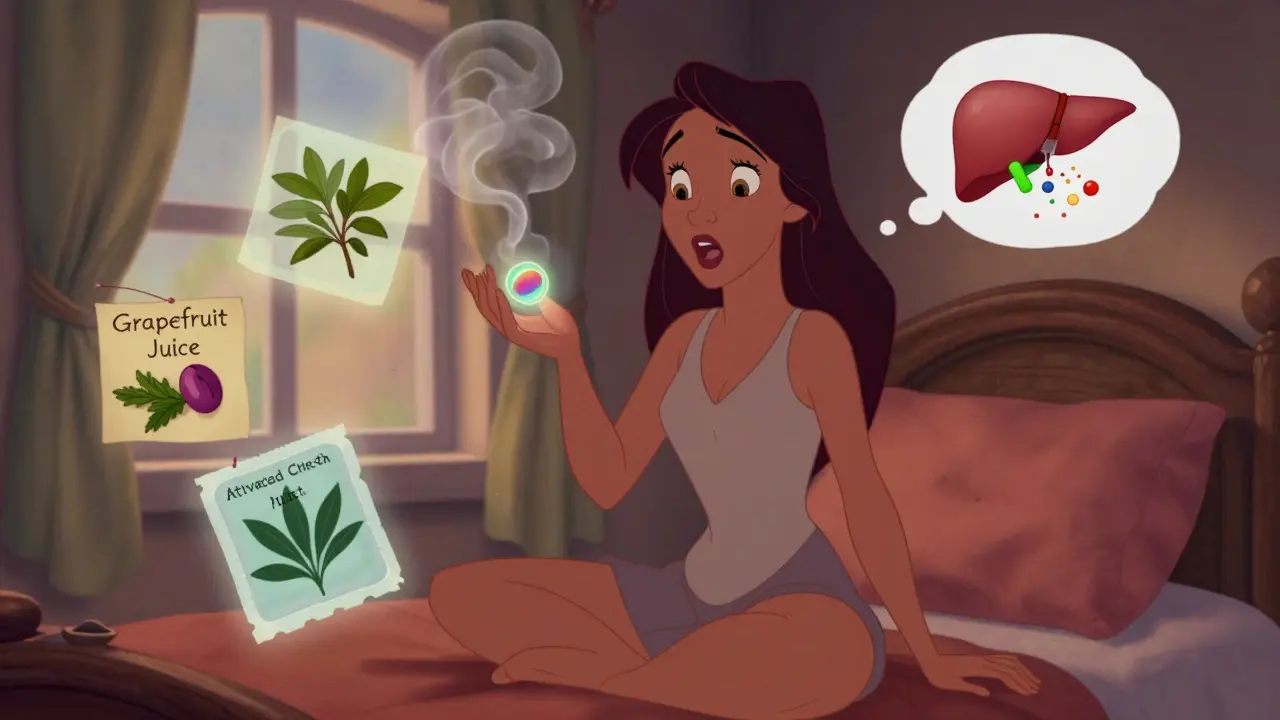
Many women take herbal supplements to support energy, mood, or hormone balance - but few realize some of these natural products can make birth control less effective. It’s not just about taking pills at the wrong time. Certain herbs can interfere with how your body absorbs, breaks down, or uses the hormones in contraceptives. The result? Unexpected pregnancy. This isn’t a myth. It’s a documented risk backed by clinical studies and medical guidelines.
St. John’s Wort Is the Biggest Culprit
If you’re taking St. John’s wort for depression, anxiety, or sleep, you need to know this: it can cut the effectiveness of birth control pills by up to 50%. This isn’t a minor concern - it’s a well-studied, clinically proven interaction.
St. John’s wort contains a compound called hyperforin. When you take it, hyperforin turns on a system in your liver called the pregnane X receptor (PXR). This system wakes up enzymes - specifically CYP3A4 - that break down hormones like ethinyl estradiol and progestin. These are the two key ingredients in most combined oral contraceptives. When those enzymes get overactive, your body flushes out the hormones faster than they should be cleared. That means less hormone stays in your bloodstream to prevent ovulation.
A study published in medical journals showed women taking 900 mg of St. John’s wort daily along with a standard birth control pill (30 mcg ethinyl estradiol and 150 mcg levonorgestrel) had hormone levels drop significantly. Over 23% of them experienced breakthrough bleeding - a clear sign the pill wasn’t working as it should. In comparison, only 5% of women not taking the herb had the same issue. That’s nearly five times the risk.
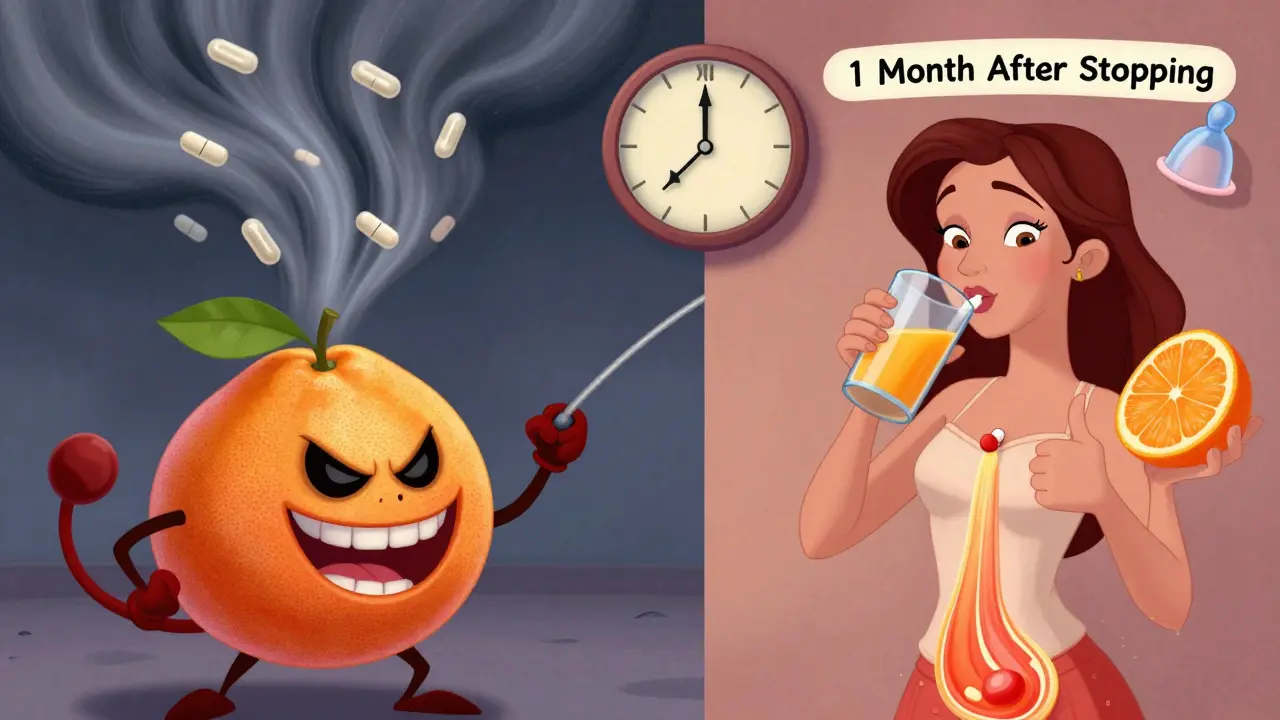
The American College of Obstetricians and Gynecologists (ACOG) recommends using a backup method - like condoms - while taking St. John’s wort and for at least one month after you stop. Why the wait? Because the enzymes stay active even after you quit the herb. Your body needs time to reset.
Other Supplements That Could Lower Effectiveness
St. John’s wort is the most dangerous, but it’s not the only one. Other herbal products carry risks too, even if the evidence isn’t as strong.
- Soybean isoflavones - found in soy protein, tofu, and supplements - act like weak estrogens in your body. They don’t speed up hormone breakdown. Instead, they compete with the estrogen in your pill for receptor sites. If too many receptors are taken up by soy, your body may not respond to the contraceptive hormone properly.
- Grapefruit juice - often thought to only affect blood pressure or cholesterol meds - can also interfere with birth control. It blocks enzymes that normally break down hormones, but the effect is unpredictable. Sometimes it raises hormone levels (increasing side effects), sometimes it lowers them. No one knows why.
- Activated charcoal - used for bloating or detox - physically grabs onto the hormones in your pill if taken within 4 hours. It’s like a sponge soaking up the pill before your body can absorb it. One dose can cut absorption by up to 30%.
- Saw palmetto, alfalfa, garlic pills, and flaxseed - these have weaker or mixed evidence, but they’re linked to hormone changes. Saw palmetto affects androgen pathways. Alfalfa has plant estrogens. Garlic can alter liver metabolism. Flaxseed contains lignans, which may bind to estrogen receptors. None are proven to cause failure, but none are proven safe either.
Supplements That Are Probably Safe
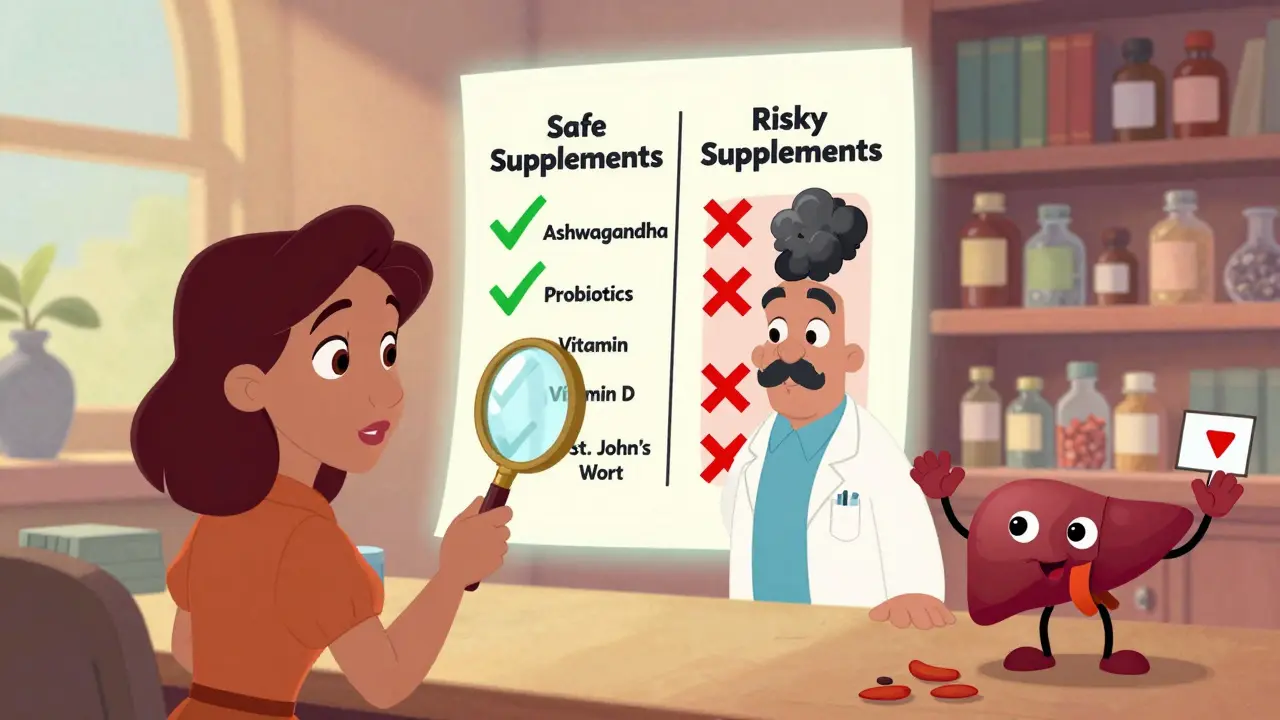
Not all supplements are risky. Many have no known interaction with birth control.
- Ashwagandha - a popular adaptogen for stress - was studied in 2015 and showed no effect on the liver enzymes that break down birth control hormones. It’s likely safe. But be careful: high doses can cause stomach upset or, rarely, mild liver irritation. If you get sick from it, your body might not absorb the pill properly.
- Probiotics - whether from yogurt or capsules - don’t interfere with hormone levels. They work in the gut, not the liver. No evidence of interaction.
- Melatonin - used for sleep - doesn’t change how birth control is processed. However, some women report stronger side effects like drowsiness or headaches when taking both. That’s not a failure of the pill - just a heightened reaction.
- Vitamin D, B-complex, magnesium - these basic nutrients have zero known interactions with hormonal contraceptives.
DIM and Other Gray-Area Supplements
Diindolylmethane (DIM), often marketed for estrogen balance, sits in a gray zone. It’s derived from cruciferous veggies like broccoli. At low doses (50-100 mg), there’s no evidence it affects birth control. But at high doses (600 mg and up), it may push your body to break down estrogen faster - potentially lowering hormone levels enough to reduce contraceptive protection.
Dr. Jolene Brighten, a functional medicine doctor, says: "At doses over 50-100 mg, DIM could theoretically lower estrogen. If you’re on a low-dose pill, that might matter." She advises talking to your provider before using high-dose DIM. There’s no official guideline, but caution is wise.
Why Herbal Supplements Are Riskier Than Prescription Drugs
Prescription drugs go through years of testing before they hit the market. Manufacturers must prove how they interact with other medications. Herbal supplements? Not so much.
The FDA doesn’t require supplement makers to test for drug interactions. Labels often don’t list active ingredients clearly. One batch of St. John’s wort might have 0.3% hyperforin. Another might have 0.8%. That’s a huge difference - and no one knows which you’re getting.
A 2018 review in PubMed found that many herbal products are "labeled inadequately," with "batch-to-batch variations" and "unsupported therapeutic claims." You’re essentially guessing what you’re putting in your body. And when you’re on birth control, guessing isn’t safe.
What to Do If You’re Already Taking Supplements
Don’t panic. But do act.
- Check your supplement labels. Look for St. John’s wort, soy isoflavones, activated charcoal, or high-dose DIM.
- Track your symptoms. Have you had more breakthrough bleeding than usual? Unusual spotting? That could be a sign your pill isn’t working.
- Stop the risky supplement. If you’re taking St. John’s wort, switch to something else - like 5-HTP (with doctor approval) or talk therapy. For grapefruit, switch to orange juice. For activated charcoal, avoid it on pill days.
- Use backup contraception. If you’ve taken a risky supplement in the last month, use condoms until you’re sure your hormone levels have stabilized.
- Talk to your doctor. Bring your supplement list. Ask: "Could any of these interfere with my birth control?" Most OB-GYNs don’t ask about supplements unless you bring it up.
Bottom Line: When in Doubt, Ask
Herbal supplements aren’t automatically safe just because they’re "natural." The idea that "if it’s from a plant, it’s harmless" is dangerous - especially when you’re relying on birth control to prevent pregnancy.
The safest approach? Assume any new supplement could interfere - until proven otherwise. St. John’s wort? Avoid it. Grapefruit juice? Skip it on pill days. Activated charcoal? Don’t take it within 4 hours of your pill. Ashwagandha or probiotics? Probably fine. But don’t guess.
Your birth control works best when you know exactly what’s in your body. Talk to your provider before adding anything new. Even if it’s "just a vitamin."
Can I take St. John’s wort if I’m on the pill?
No. St. John’s wort significantly reduces the effectiveness of birth control pills by speeding up hormone breakdown. It can lead to breakthrough bleeding and increase the risk of pregnancy. Avoid it entirely while on hormonal contraception. If you’ve taken it, use a backup method like condoms for at least one month after stopping.
Does grapefruit juice affect birth control?
Yes, it can. Grapefruit juice blocks liver enzymes that help regulate hormone levels. This can cause unpredictable changes - sometimes raising hormone levels (increasing side effects like nausea or headaches), sometimes lowering them (reducing contraceptive effectiveness). To be safe, avoid grapefruit juice while on birth control. Orange juice is a safer alternative.
Is ashwagandha safe with birth control?
Yes, ashwagandha appears safe for most people on birth control. A 2015 study found no effect on the liver enzymes that break down contraceptive hormones. However, high doses can cause stomach upset or, rarely, mild liver irritation. If you feel sick, your body may not absorb the pill properly. Stick to standard doses (300-500 mg daily) and monitor for side effects.
Can probiotics make birth control less effective?
No. Probiotics work in the gut and don’t interact with the liver enzymes or hormone receptors involved in birth control. There’s no evidence they reduce effectiveness. You can safely take probiotics while on the pill, patch, or ring.
What should I do if I had unprotected sex after taking a risky supplement?
If you had unprotected sex after taking St. John’s wort, activated charcoal, or another risky supplement, consider emergency contraception (like Plan B) as soon as possible - ideally within 72 hours. Then, talk to your doctor. You may need to switch to a different birth control method or use a backup for the next cycle. Don’t wait for a missed period to act.
Aisling Maguire
February 28, 2026 AT 12:37Sneha Mahapatra
March 1, 2026 AT 18:44Angel Wolfe
March 3, 2026 AT 02:10Sophia Rafiq
March 3, 2026 AT 02:43Eimear Gilroy
March 4, 2026 AT 18:47Ajay Krishna
March 6, 2026 AT 18:08Justin Ransburg
March 6, 2026 AT 22:08Miranda Anderson
March 7, 2026 AT 05:29Gigi Valdez
March 9, 2026 AT 02:57Lisa Fremder
March 10, 2026 AT 19:04Brandon Vasquez
March 12, 2026 AT 12:51Vikas Meshram
March 13, 2026 AT 06:56Ben Estella
March 14, 2026 AT 07:54Jimmy Quilty
March 16, 2026 AT 01:10bill cook
March 17, 2026 AT 20:40