

Opioid Geriatric Dosage Estimator
Estimated Dose: 0 mg
This calculation suggests starting at 50% of the standard dose to mitigate risks of delirium, falls, and respiratory depression.
Enter the standard dose and click calculate to see the geriatric adjustment.
💡 Clinical Reminder
- Renal Decline: Reduced kidney function leads to drug buildup and toxicity.
- BBB Permeability: The blood-brain barrier is leakier in seniors, increasing sedation.
- Fall Risk: Watch for orthostatic hypotension and hyponatremia (especially with Tramadol).
- Tapering: Never stop opioids "cold turkey"; always use a stepwise taper.
Giving pain medication to a senior citizen isn't as simple as following the instructions on the bottle. For an older adult, a standard dose of an opioid can be the difference between a comfortable afternoon and a trip to the emergency room. The reality is that as we age, our bodies stop processing drugs the same way they did at thirty. This shift creates a dangerous gap where standard prescriptions often lead to opioid side effects like sudden confusion, severe dizziness, and life-altering falls.
If you are caring for a parent or grandparent, or if you're managing your own health, you need to know that the risks aren't just "part of getting old." They are predictable chemical reactions. From the way kidneys filter waste to how the brain absorbs medication, the biological landscape changes. This means the "normal" dose for a middle-aged adult can easily become a toxic dose for someone over 65.
Why Older Bodies React Differently to Opioids
To understand why opioids are so risky for seniors, we have to look at what's happening under the hood. Renal Function is the process by which the kidneys filter blood and remove waste. As people age, this function naturally declines. If the kidneys can't clear a drug out of the system, the medication builds up in the bloodstream, leading to toxicity even if the patient is taking the prescribed amount.
It's not just the kidneys. The liver's ability to metabolize drugs slows down, and the body's composition shifts. Most older adults have less lean muscle mass and a higher percentage of body fat. Since some opioids are fat-soluble, they can linger in the body much longer than expected. Furthermore, the blood-brain barrier-the protective filter that keeps harmful substances out of the brain-becomes more permeable. This makes the brain far more sensitive to the sedative effects of these drugs, which is why a small dose can lead to profound mental fog.
The Dangerous Link Between Opioids and Falls
A fall in a younger person is a bruise; a fall in an older adult can be a catalyst for a permanent decline in independence. Opioids trigger falls through several different paths. First, there is the obvious sedation. When a person is drowsy, their reaction time slows, and their balance falters. Second, opioids can cause orthostatic hypotension-a sudden drop in blood pressure when standing up-which leads to a head rush and immediate instability.
Some specific medications add extra layers of risk. For example, Tramadol is a synthetic opioid used to treat moderate to moderately severe pain. While it's often viewed as a "weaker" option, it can cause hyponatremia, which is a dangerously low level of sodium in the blood. This chemical imbalance leads to confusion and drowsiness, making a fall almost inevitable. When you combine these effects with other medications, the risk multiplies through drug-drug interactions involving enzymes like CYP2D6 and CYP3A4, which dictate how quickly the body breaks down the drug.
| Symptom | Mechanism | Potential Outcome |
|---|---|---|
| Sedation | Central Nervous System depression | Slowed reflexes, sleepiness, falls |
| Hyponatremia | Sodium imbalance (common with Tramadol) | Confusion, dizziness, seizures |
| Hypotension | Drop in blood pressure upon standing | Fainting, vertigo, hip fractures |
| Cognitive Impairment | Increased blood-brain barrier permeability | Delirium, memory loss, disorientation |
Delirium and the Cognitive Cost
When we talk about "confusion" in seniors, we are often talking about Delirium, which is an acute state of confusion and fluctuating consciousness. Unlike dementia, which is a slow decline, delirium happens fast. Opioids are a frequent trigger for this state.
The risk is especially terrifying for those already battling cognitive decline. Research from the Danish Dementia Research Centre found that older adults with dementia who start opioid therapy face an elevenfold increased risk of death within the first two weeks of use. This isn't just a coincidence; the drugs can suppress breathing and severely disrupt the brain's already fragile chemistry. Many of these symptoms are misidentified as a worsening of dementia or a natural part of aging, meaning patients stay on dangerous doses far longer than they should.

Mastering Dose Adjustments: Start Low, Go Slow
The gold standard for geriatric prescribing is the "start low, go slow" approach. This isn't just a catchy phrase; it's a safety requirement. Generally, the starting dose for an older adult should be 25% to 50% lower than what would be prescribed for a younger person. From there, increases should be gradual, with careful monitoring of how the patient responds.
Clinicians are now using tools like STOPPFall, which is a clinical decision aid designed to help healthcare providers decide when to reduce or stop medications that increase fall risks. The goal is a delicate balance: treating pain effectively while avoiding the side effects that cause falls. If a patient is stumbling or showing signs of mental clouding, it is time to discuss deprescribing.
Deprescribing should never be done "cold turkey." Because the body can develop a physical dependence in just a few days, the dose must be tapered down slowly. This prevents withdrawal symptoms and allows the body to adjust. It requires a foundation of trust between the patient and the doctor, as many seniors fear that reducing their meds will lead to unbearable pain.
Heart Health and Other Hidden Risks
While falls and delirium get the most attention, opioids can also hit the heart. Data suggests that long-term opioid use is linked to a significantly higher risk of myocardial infarction, or heart attacks. In one study, patients with a cumulative supply of 180 days or more over a few years saw their risk of a heart attack increase by over 2.6 times. This adds another layer of complexity for seniors who are likely already managing hypertension or heart disease.
Furthermore, the risk of fracture is higher. While some studies show the difference isn't statistically massive, the trend is clear: those on opioids are more likely to experience bone fractures. When you combine the risk of a fall with the risk of a fracture, the potential for a catastrophic injury becomes very real.
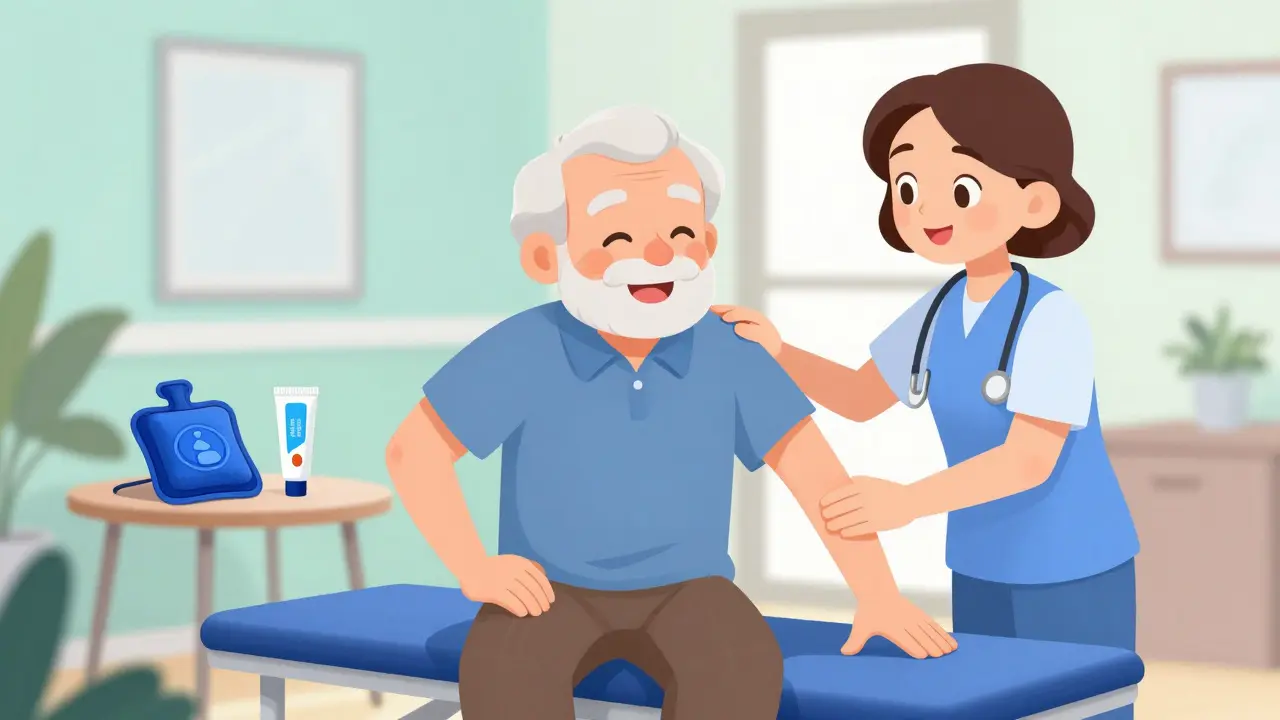
Practical Alternatives to Opioid Use
Because the risks are so high, opioids should be the last resort, not the first. Multimodal pain management is the modern approach. This means using a combination of different techniques to manage pain without relying on a single, heavy-duty drug.
- Physical Therapy: Targeted exercises can reduce chronic joint pain and actually improve balance, reducing fall risk.
- Non-Pharmacological Aids: Heat/cold therapy, TENS units, and massage can provide significant relief for localized pain.
- Topical Agents: Creams or patches that deliver medication locally to the skin avoid the systemic risks of oral opioids.
- Psychological Support: Cognitive Behavioral Therapy (CBT) can help older adults change how they perceive and respond to chronic pain.
Why are opioids more dangerous for people over 65?
Aging causes physiological changes, such as reduced kidney and liver function, which makes it harder for the body to clear medication. Additionally, a more permeable blood-brain barrier makes seniors more susceptible to sedation and cognitive impairment.
What are the warning signs that an opioid dose is too high for a senior?
Keep an eye out for excessive drowsiness, sudden confusion or disorientation (delirium), a lack of coordination, or a sudden increase in dizziness when standing up. If the person seems "foggy" or more prone to stumbling, the dose may need adjustment.
Can Tramadol cause falls?
Yes. Tramadol can cause hyponatremia (low blood sodium levels), which leads to dizziness, drowsiness, and confusion, all of which significantly increase the likelihood of a fall.
What does "start low, go slow" mean in practice?
It means starting a patient on a dose that is 25% to 50% lower than the standard adult dose and increasing it very gradually only if necessary, while closely monitoring for side effects at every step.
Is it safe to stop taking opioids suddenly?
No. Physical dependence can occur quickly. Stopping opioids abruptly can cause severe withdrawal symptoms. Any reduction in dosage should be a stepwise tapering process managed by a healthcare provider.
Next Steps for Caregivers and Patients
If you are currently managing opioid therapy for an older adult, start by auditing the current medication list. Are there other drugs that might be interacting with the opioid? Use a tool like the STOPPFall criteria to evaluate if the benefits of the medication are still outweighing the risks of a potential fall.
Schedule a specific "medication review" appointment with a primary care physician. Instead of just asking if the pain is controlled, ask: "Is this dose still appropriate for their current kidney and liver function?" If you notice a change in mental clarity or balance, document the specific time and activity when it happened. This concrete data helps doctors make safer dose adjustments and decide if it's time to move toward non-opioid alternatives.
william wang
April 15, 2026 AT 14:44The mention of the CYP2D6 and CYP3A4 enzymes is a great detail. It really underscores why personalized medicine is so critical for the elderly since genetic polymorphisms can make some people ultra-rapid metabolizers or poor metabolizers of these drugs, which just adds to the unpredictability of the dose.
Anna BB
April 16, 2026 AT 11:06It's so heartbreaking to think about how a simple pill can steal a person's clarity...!!! We really need to focus more on the dignity of the patient and the holistic approach to pain...!!!
Agatha Deo
April 16, 2026 AT 16:08Oh sure, because we can totally trust the pharmaceutical companies to just 'taper' patients off while they're busy pushing the next high-margin drug. It's almost like the system is designed to keep them foggy and dependent, but please, let's just follow the 'gold standard' guide provided by the same industry that created the crisis.
Maggie Graziano
April 17, 2026 AT 13:04big pharma wants them confused so they buy more meds
Joshua Nicholson
April 18, 2026 AT 18:02basically just says dont give old people too many drugs lol
Richard Moore
April 19, 2026 AT 21:39I totally agree with the focus on physical therapy! 🏋️♂️ It's way better to build strength than to just numb the pain and hope they don't trip over a rug! 😱
Michael Lewis
April 21, 2026 AT 20:13Physical therapy is a game changer. If you're a caregiver, push for that PT referral early. It's about regaining autonomy, not just avoiding a fall. Get them moving safely and the need for heavy meds often drops significantly!
Nell O'Leary
April 23, 2026 AT 03:57The pharmacological profile of fat-soluble opioids really complicates the pharmacokinetics in geriatric populations due to the increase in adipose tissue ratio 💊 it's a classic case of altered volume of distribution causing unexpected toxicity :)
Rob Schlautman
April 24, 2026 AT 02:23im just sitting here thinking about how the medical establishment loves to use these fancy terms like orthostatic hypotension just to make it sound like some mystery when really they just gave a grandma too much morphine and now she is seeing ghosts and falling over in the hallway which is just typical of how this whole system operates without a shred of common sense for the actual human being involved
Nathan Berlin
April 24, 2026 AT 05:34only in the west do they struggle with this basic logic 🙄 my country has way better holistic integration of care 🇮🇳 we dont just pump people with pills and then act surprised when they fall over lol 😂
Colleen Tankard
April 25, 2026 AT 07:09This is such a helpful guide for anyone with aging parents 💖’ it’s so easy to overlook these things until it’s too late ✨
Sophia Rice
April 27, 2026 AT 01:18i tried talking to my docs about this for my mom and they were laaaaay about it at first but it really helps to have la a list of symptoms to show them!!
Theresa Griffin MEP
April 28, 2026 AT 11:11Multimodal pain management is imperative. Strict adherence to the 'start low, go slow' protocol ensures patient safety. Immediate implementation is advised.
Jon lee
April 30, 2026 AT 01:38It's all about that partnership between the doctor, the patient, and the family. When everyone is on the same page about the risks, the outcomes for our seniors are so much better. Just keep advocating for those who can't always speak up for themselves.