
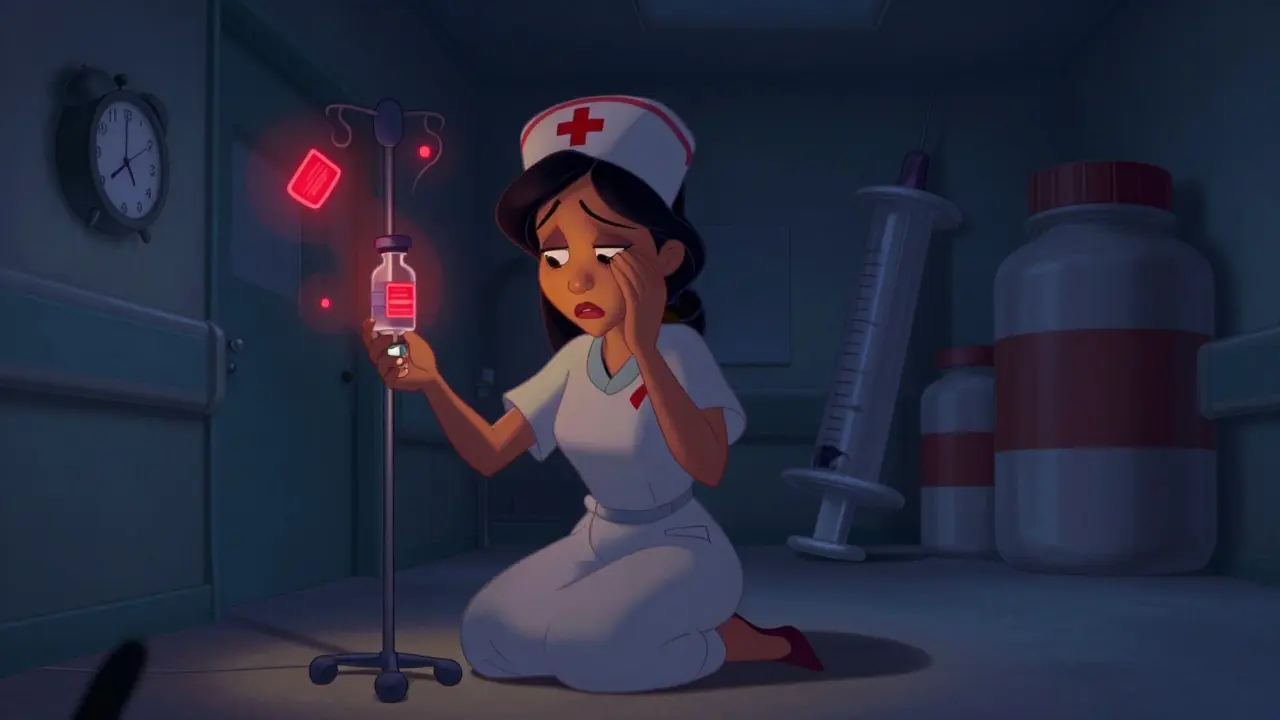
Why Nighttime Makes Medication Errors More Likely
It’s 3 a.m. You’ve been on your feet for 14 hours. Your eyes are heavy. The IV pump beeps. You reach for the wrong vial. The dose looks right-but it’s not. This isn’t a horror story. It’s a real event that happens more often than hospitals admit.
Research shows that medication errors spike during night shifts. A 2023 review of 38 studies found that 82% of errors and near misses were linked to fatigue. Nurses, doctors, and pharmacists working overnight are more likely to misread labels, give the wrong dose, or skip critical checks. Why? Because tired brains don’t work the same way.
When you’re sleep-deprived, your ability to focus drops by 25-30%. Short-term memory falters. You process numbers slower. You miss details others would catch easily. A single night without sleep can make your reaction time as slow as someone with a blood alcohol level of 0.05%. That’s the legal limit for driving in many countries.
The Medications That Make Fatigue Worse
Some of the drugs you or your colleagues take to cope with night shifts are actually making the problem worse.
Diphenhydramine-common in over-the-counter sleep aids and allergy meds-causes drowsiness in 50-60% of users. Zolpidem, prescribed for insomnia, leaves 15-20% of people groggy the next day. Benzodiazepines like diazepam cause residual sedation in 30% of users. Even pain meds like oxycodone and antidepressants like trazodone can leave you sluggish.
These aren’t just side effects. They’re safety risks. If you’re taking any of these and working nights, you’re not just tired-you’re impaired. The CDC’s National Institute for Occupational Safety and Health (NIOSH) says healthcare workers should review their meds with a doctor if they feel excessively sleepy on shift. Switching from diphenhydramine to loratadine, for example, can cut drowsiness without losing effectiveness.
How Night Shifts Break Your Brain
Your body runs on a 24-hour clock. When you work nights, you fight biology. Your circadian rhythm tells your brain it’s time to sleep. But you’re forcing it to stay awake. The result? A slow collapse in cognitive function.
Studies show that after three consecutive night shifts, attention span drops by nearly 40%. Visual memory declines by 27%. Communication skills suffer too-research found a 33% drop in how clearly clinicians can explain things to patients and coworkers. That’s not just about mistakes. It’s about trust. If you can’t clearly say, “This is 5 mg, not 50,” someone could die.
And it’s not just mental. Night shift workers have a 40% higher risk of depression, a 28% higher chance of developing diabetes, and a 22% greater risk of heart disease. Fatigue doesn’t just cause errors. It breaks your health.
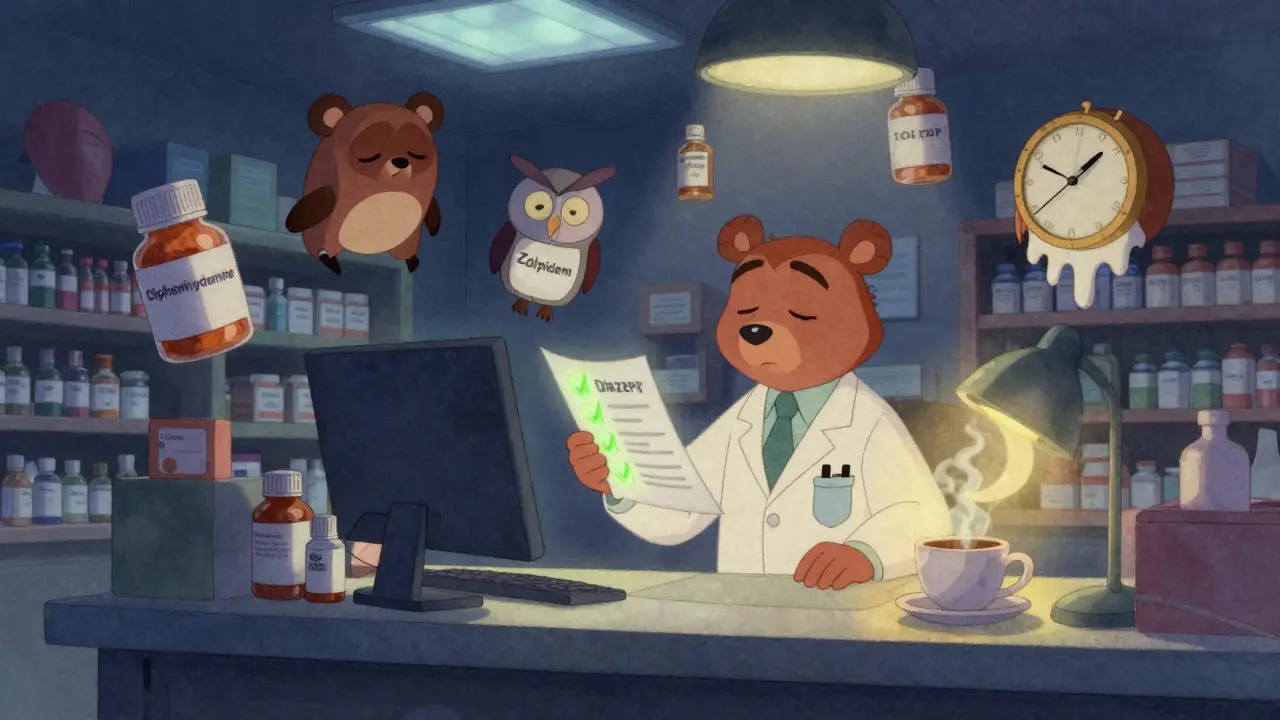
The Real Cost of a Single Mistake
One wrong dose. One missed check. One misread label.
That’s all it takes. Medication errors cost the U.S. healthcare system an estimated $20 billion a year. Most of those are preventable. And most happen during night shifts.
Nurses are especially vulnerable. Working nights increases their error rate by 38%. Working 12-hour shifts bumps it up another 15%. When you’re exhausted, you skip double-checks. You rush. You rely on memory instead of procedure. And in high-pressure environments like the ER or ICU, there’s no room for shortcuts.
Surgeons who get less than six hours of sleep have patients with 2.7 times more complications. When their shifts go over 12 hours, complication rates jump nearly 50%. That’s not a theory. That’s data from 22 surgical departments.
What Actually Works to Prevent Errors
There’s no magic fix. But some strategies have proven results.
System backups help. Alarms, barcode scanning, automated dose checks-these reduce errors by 18%, according to Johns Hopkins. Technology doesn’t replace vigilance. It supports it.
Short naps work better than long ones. A 20-40 minute nap during a night shift can boost alertness by 12-15%. But naps longer than 90 minutes? They don’t help much. And waking up from deep sleep can leave you groggy for 30 minutes-your performance drops 22% during that time. That’s called sleep inertia. It’s dangerous if you’re about to administer insulin or heparin.
Strategic napping before your shift helps more. If you nap for 90 minutes before starting a night shift, your error rate in the ER drops by 15%. In the ICU, it drops 12%. That’s not luck. That’s science.
Caffeine can be a tool. A cup of coffee before a critical task can sharpen focus. But don’t rely on it. It masks fatigue-it doesn’t fix it. And too much can lead to jitteriness, anxiety, and heart palpitations.

What Hospitals Need to Change
Individuals can do their part. But systems need to change too.
After the 2003 ACGME rules limited resident work hours, you’d think errors would drop. They didn’t. Why? Because even with shorter shifts, many doctors still can’t sleep during the day. Their bodies are out of sync. One night of total sleep loss takes three days to recover from.
What’s needed isn’t just more breaks. It’s better scheduling. Fewer consecutive night shifts. Protected sleep time after duty. Access to quiet, dark rooms for naps. And a culture where admitting you’re too tired to work isn’t seen as weakness.
Right now, most hospitals treat fatigue as an individual problem. It’s not. It’s a system failure. And until leadership treats it that way, mistakes will keep happening.
What You Can Do Tonight
You don’t have to wait for policy changes to protect your patients-and yourself.
- Check your meds. Are you taking anything that makes you drowsy? Talk to your doctor. Swap diphenhydramine for loratadine. Ask about alternatives to sedating sleep aids.
- Use a checklist. Even if you’ve done the same task a hundred times, read the label. Say the name out loud. Confirm the dose. Don’t skip it.
- Take a 20-minute nap if you can. Even if it’s in a quiet corner. Close your eyes. Set an alarm. You’ll come back sharper.
- Don’t work alone. If you’re tired, ask a colleague to double-check your work. No shame in that. It’s what professionals do.
- Hydrate and move. Walk for five minutes every hour. Drink water. Avoid heavy meals. Your body needs stimulation to stay alert.
- Track your sleep. If you’re consistently getting under five hours on days off, you’re running on empty. That’s not sustainable. It’s not safe.
The Bottom Line
Medication safety at night isn’t about being perfect. It’s about being aware.
You’re not lazy. You’re not careless. You’re fighting biology. And the system isn’t set up to help you win.
But you can still make a difference. Small changes-checking your meds, using a checklist, taking a nap, asking for help-add up. They protect your patients. They protect you.
Because in the quiet hours of the night, when the lights are dim and the hospital is still, the only thing standing between a patient and a mistake is you. And you deserve to be sharp enough to get it right.
Ann Romine
January 2, 2026 AT 00:16Also, the 20-minute nap trick? Game changer. Even if it’s just in the supply closet with a hoodie over your head.
Austin Mac-Anabraba
January 3, 2026 AT 04:26Phoebe McKenzie
January 4, 2026 AT 02:29Also, if you're taking diphenhydramine, you're not a nurse-you're a walking liability.
Alex Warden
January 5, 2026 AT 20:37LIZETH DE PACHECO
January 7, 2026 AT 01:43Lee M
January 8, 2026 AT 05:32Kristen Russell
January 10, 2026 AT 03:35Bryan Anderson
January 10, 2026 AT 15:22Matthew Hekmatniaz
January 10, 2026 AT 23:09Liam George
January 12, 2026 AT 04:37sharad vyas
January 12, 2026 AT 12:39Dusty Weeks
January 13, 2026 AT 02:32