
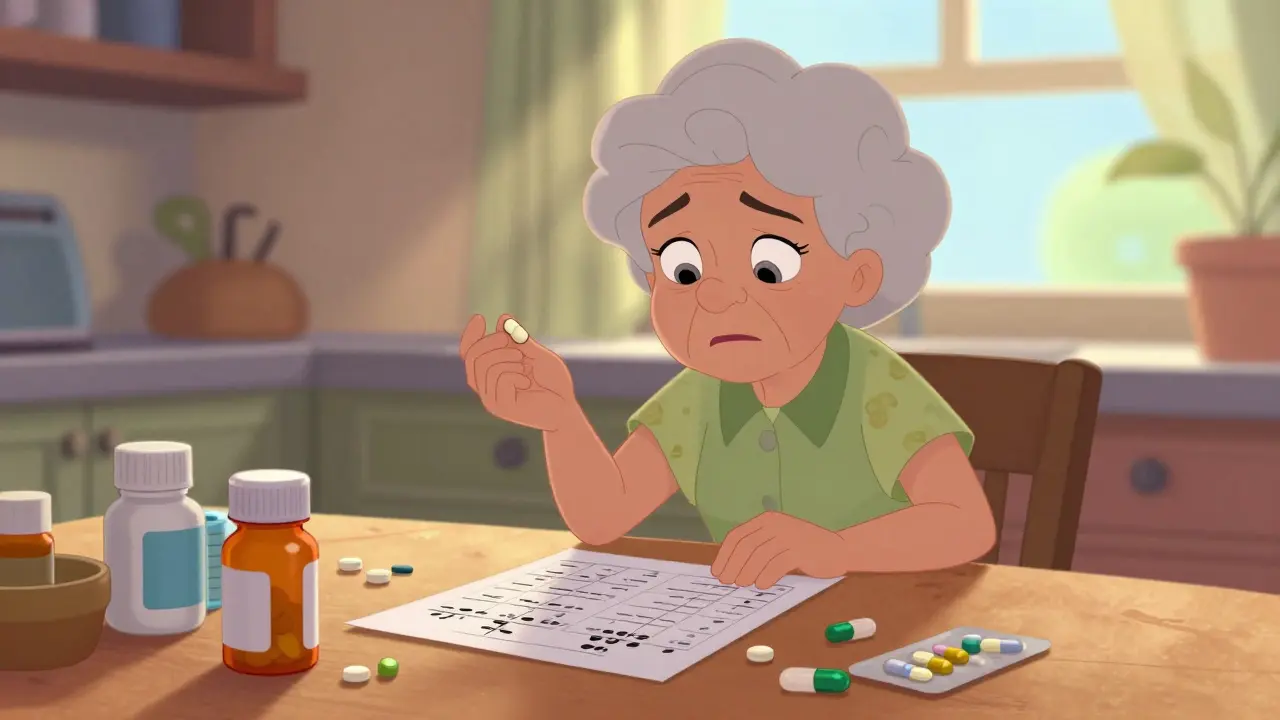
Imagine juggling five different pills at breakfast, three more at lunch, and a complex evening routine that requires steady hands and perfect memory. Now imagine doing this while your vision is fading, your bank account is tight, and you’re not entirely sure why you need half of them. This isn’t a hypothetical nightmare; it’s the daily reality for millions of older adults.
We often blame patients when they don’t take their medicine as prescribed. We call it "non-adherence" and treat it like a personal failure. But the truth is far more systemic. Medication adherence, defined simply as taking medication exactly as prescribed, is dropping among seniors not because they are lazy or stubborn, but because the systems we’ve built are incredibly difficult to navigate. With 89% of adults over 65 taking at least one prescription drug, and over half managing four or more, the stakes have never been higher. When seniors skip doses, it doesn’t just lead to worse health outcomes; it drives up hospitalizations and costs billions in preventable healthcare spending.
The Polypharmacy Trap: Why More Pills Mean Less Care
The biggest hurdle standing between seniors and better health is a phenomenon known as polypharmacy. This term refers to the use of multiple medications, often more than medically necessary. It’s not just about having high blood pressure and diabetes; it’s about the cascading effect of treating side effects with new drugs.
Consider the numbers. Research shows that 57% of women and 44% of men over 65 take five or more medications per week. For 12% of this age group, that number jumps to ten or more. Complexity kills compliance. Studies indicate that patients managing three or four daily doses show significantly lower adherence rates than those on a simple once-daily regimen. It’s basic human behavior: if a task becomes too complicated, people stop doing it correctly.
But it gets worse. Polypharmacy increases the risk of adverse drug reactions (ADRs). In ambulatory older adults, there is a staggering 35% annual rate of ADRs, with nearly a third of those requiring hospitalization. Many seniors mistake these side effects-like dizziness, fatigue, or confusion-for natural signs of aging. They might stop taking a heart medication because it makes them tired, unaware that the fatigue is a side effect, not their age catching up to them.
Beyond Forgetfulness: The Hidden Barriers to Taking Meds
We tend to think that seniors miss doses because they forget. While memory issues account for about 6.9% of adherence challenges, this is actually a minor player compared to other factors. If we only focus on pillboxes and alarms, we miss the real problems.
Social Isolation: Believe it or not, social support is the single biggest barrier to adherence, accounting for 33.6% of challenges. Loneliness changes everything. Without family members checking in or friends encouraging healthy habits, the motivation to manage a complex health regimen evaporates. Seniors living alone are significantly more likely to let their prescriptions slide.
Education and Health Literacy: Understanding a prescription is a skill. 23.7% of adherence issues stem from education levels. If a patient doesn’t understand *why* they are taking a medication, or what happens if they miss a dose, they are less likely to prioritize it. Misinterpretations of clinical test results often lead to premature stopping of treatment. For example, a senior might see their blood pressure drop to normal levels and assume they no longer need the medication, not realizing the drug is what keeps it normal.
Physical Limitations: It sounds simple to pop a pill, but try opening a child-proof cap with arthritis-ridden fingers. Decreased vision and poor manual dexterity are significant physical barriers. If a senior can’t read the label or open the bottle, they won’t take the med. These aren’t character flaws; they are mechanical failures in the design of medication packaging and instructions.

The Cost Crisis: Choosing Between Food and Medicine
Let’s talk about money. It’s the elephant in the room. Even with insurance, out-of-pocket costs can be prohibitive. Data from the CDC reveals that 3.6% of older adults fail to obtain needed medications due to cost, and another 3.4% do not take them as prescribed for financial reasons.
This issue hits specific demographics harder. Black and Hispanic older adults experience cost-related nonadherence at rates of 5.3%, compared to 4.4% for White adults. Women are also disproportionately affected, with 4.0% reporting cost barriers versus 3.1% of men.
Perhaps most alarming is the link to food insecurity. Among food-insecure older adults, cost-related nonadherence is six times higher than among those who are food-secure. You cannot expect someone to prioritize a cholesterol-lowering statin if they are unsure where their next meal is coming from. This forces impossible trade-offs: pay for housing, buy groceries, or fill the prescription. Most will choose survival over prevention.
| Barrier Category | Impact Percentage | Key Insight |
|---|---|---|
| Social/Family Support | 33.6% | Lack of caregivers or community connection leads to neglect of routine care. |
| Education Level | 23.7% | Poor health literacy prevents understanding of dosage and necessity. |
| Regimen Complexity | 9.92% | Too many pills or confusing schedules cause errors and abandonment. |
| Access/Cost | ~7%* | Financial constraints force rationing of essential drugs. |
| Memory Issues | 6.9% | Cognitive decline affects timing and recognition of benefits. |
*Estimated combined impact based on CDC data regarding acquisition and usage barriers.
Actionable Solutions: Simplifying Senior Care
So, how do we fix this? Blaming the patient doesn’t work. We need practical, evidence-based strategies that address the root causes identified above.
- Deprescribing and Regimen Simplification: Healthcare providers must routinely review medications. The goal is to reduce polypharmacy by evaluating each drug’s utility against the patient’s life expectancy and care goals. Can two daily doses be consolidated into one? Is this medication still necessary after five years? Simplifying the schedule is the single most effective clinical intervention.
- Leverage Technology Wisely: Automated dispensers and smart pillboxes can help with the 6.9% of memory-related issues. However, technology should not replace human connection. Apps that remind caregivers to check in on their loved ones can address the social isolation gap. Remote monitoring tools allow nurses to verify adherence without requiring frequent home visits.
- Improve Health Literacy: Doctors and pharmacists need to communicate differently. Instead of medical jargon, use plain language. Explain the "why" behind every pill. Use visual aids. Ensure the patient can repeat back the instructions (the "teach-back" method). If they don’t understand, they won’t comply.
- Address Financial Toxicity: Pharmacists play a crucial role here. They should proactively suggest generic alternatives or patient assistance programs. For those facing food insecurity, connecting them with local social services is part of holistic care. You can’t treat hypertension if the patient is stressed about starvation.
- Strengthen Social Networks: Community health workers and volunteer programs can provide the social support that families can’t always offer. Regular phone calls, transportation to pharmacies, and companionship during medication routines can drastically improve adherence rates.
The Role of Healthcare Providers in 2026
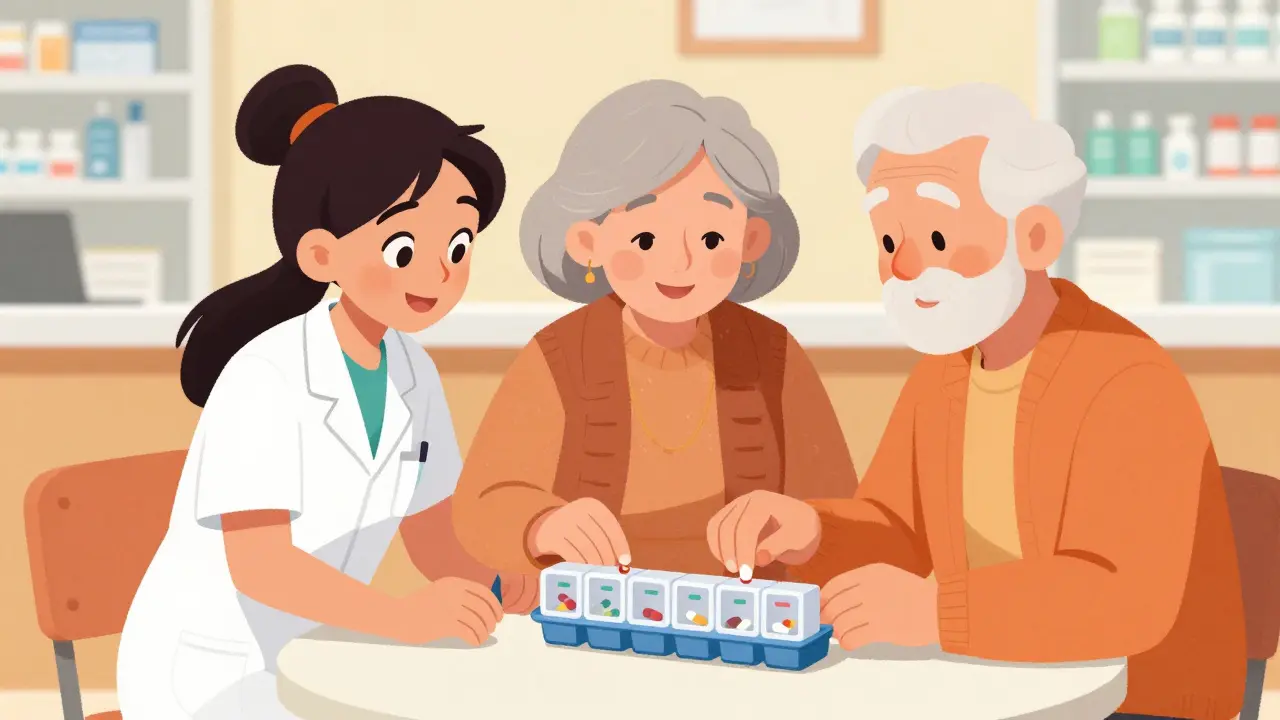
In 2026, the expectation for healthcare has shifted from reactive to proactive. Providers are no longer just prescribing; they are partnering. The integration of pharmacists into primary care teams is becoming standard practice. Pharmacists are experts in medication management and are uniquely positioned to identify interactions and simplify regimens.
Furthermore, value-based care models now penalize hospitals for preventable readmissions caused by non-adherence. This financial incentive aligns perfectly with patient well-being. Clinics are investing in adherence technologies and staff training specifically focused on communication techniques. The message is clear: medications do not work in patients who do not take them. Therefore, ensuring adherence is not an administrative task; it is a core clinical outcome.
Next Steps for Families and Caregivers
If you are caring for an older adult, start by observing. Don’t accuse; ask. Ask if they are struggling to open bottles. Ask if the cost is worrying them. Ask if they feel lonely. Small adjustments, like switching to easy-open caps or setting up automatic refill deliveries, can remove friction from their day.
Work with their doctor to create a "medication map." A simple chart showing what to take, when, and why, posted prominently in the kitchen, can serve as a constant visual reminder. Finally, build a support network. Whether it’s a neighbor, a friend, or a professional service, ensure there is at least one person who checks in regularly. Connection is the best medicine for adherence.
What is the most common reason seniors stop taking their medication?
While forgetfulness is a common assumption, research indicates that social isolation and lack of support are the largest barriers, accounting for 33.6% of adherence challenges. Cost and complexity of the regimen are also major factors.
How does polypharmacy affect older adults?
Polypharmacy, or taking multiple medications, increases the risk of adverse drug reactions by 35% annually in ambulatory seniors. It also complicates daily routines, leading to missed doses and higher hospitalization rates.
Can cost really prevent seniors from taking prescribed meds?
Yes. CDC data shows that 3.6% of older adults fail to obtain medications due to cost, and this rate is six times higher among those experiencing food insecurity. Many are forced to choose between basic needs like food and prescription drugs.
What is the best way to simplify a senior's medication regimen?
The most effective strategy is "deprescribing," where healthcare providers review all medications to eliminate unnecessary ones and consolidate dosing schedules. Reducing multiple daily doses to once-daily regimens significantly improves adherence.
How can family members help improve medication adherence?
Family members can help by simplifying the environment (using pill organizers), checking in regularly to combat social isolation, assisting with physical tasks like opening bottles, and facilitating conversations with doctors about cost and side effects.