
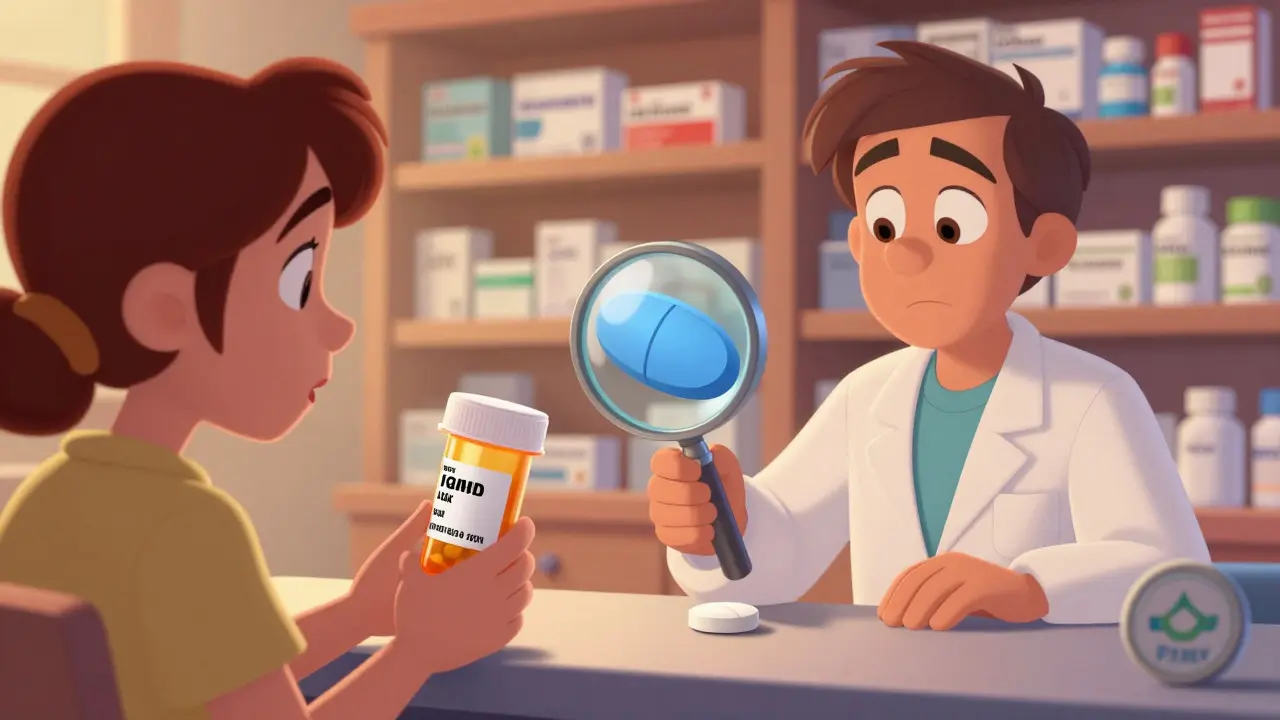
Every year, millions of people save hundreds of dollars by switching to generic drugs. But if you’ve ever picked up a prescription and thought, "This doesn’t look right," you’re not alone. Legitimate generic drugs work just like brand-name ones-same active ingredients, same effectiveness, same safety. But counterfeit versions are out there, and they can be dangerous. So how do you know you’re getting the real thing?
What Makes a Generic Drug Legitimate?
A legitimate generic drug isn’t a cheap copy. It’s a legally approved version of a brand-name drug that contains the exact same active ingredient, in the same strength, and works the same way in your body. The U.S. Food and Drug Administration (FDA) requires generic manufacturers to prove bioequivalence: their product must deliver the drug into your bloodstream within 80% to 125% of the rate and amount of the brand-name version. That’s not a guess-it’s science. A 2021 study in JAMA Internal Medicine found that 98.7% of FDA-approved generics met this standard, with average blood levels matching the brand within 1%. Legitimate generics are made in FDA-inspected facilities. The FDA inspects over 2,500 manufacturing sites every year. These aren’t backyard labs. They follow strict rules called Current Good Manufacturing Practices (cGMP). That means consistent quality, clean environments, and accurate dosing. If a generic drug is sold in the U.S., it’s been reviewed and approved by the FDA-or imported through a legally authorized channel.What You Can Expect to See (and What to Watch For)
Generic drugs often look different from their brand-name counterparts. That’s not a red flag-it’s the law. Trademark rules prevent generics from copying the exact color, shape, or logo of the original. So if your brand-name pill is a blue oval and your generic is a white round tablet, that’s normal. But here’s what’s not normal:- Cracked, crumbly, or bubbled tablets - These suggest poor manufacturing or improper storage.
- Uneven scoring lines - Legitimate pills have clean, precise score marks. Counterfeits often have crooked or missing lines.
- Unusual odor or taste - If your pill smells like plastic or tastes bitter in a way it never did before, stop taking it.
- Excess powder or crystals in the bottle - This can mean the pills broke down due to heat, moisture, or poor packaging.
- Crooked, blurry, or misspelled labels - The FDA reports that 78% of counterfeit drugs have labeling errors. Look for typos in the drug name, strength, or manufacturer.
Check the Packaging
Legitimate generic drugs come in sealed, tamper-evident containers with full labeling. Every bottle or blister pack should include:- The drug name (active ingredient)
- Strength (e.g., 10 mg, 500 mg)
- Manufacturer’s name
- Lot number
- Expiration date
Verify the Pharmacy
Where you buy your drugs matters as much as what you buy. Over 96% of online pharmacies selling counterfeit drugs operate outside legal supply chains. Even some brick-and-mortar pharmacies might be unlicensed. To check if your pharmacy is legitimate:- Visit NABP’s website and search for the pharmacy in their .pharmacy verified list.
- Look for the .pharmacy seal on the website or printed on receipts.
- Ask the pharmacist: "Is this pharmacy accredited by the National Association of Boards of Pharmacy?"
Use the FDA’s Orange Book
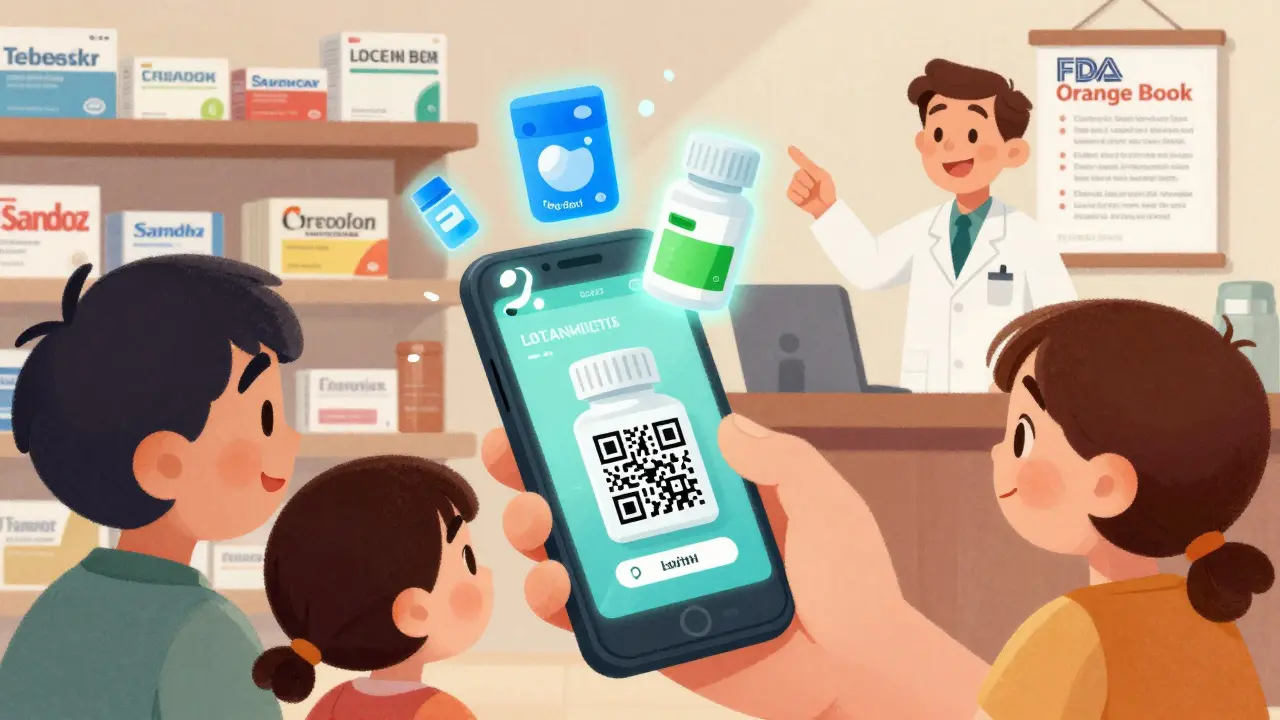
The FDA’s Orange Book is a public database that lists all approved generic drugs and their brand-name equivalents. You can search it by drug name or manufacturer. It tells you which generics are rated as therapeutically equivalent (AB-rated), meaning they’re interchangeable with the brand. For example, if you’re taking Lipitor (atorvastatin), the Orange Book will show you which generic manufacturers are approved and which ones have been withdrawn. You can look up the application number on the label and cross-check it. If it’s not there, the drug isn’t FDA-approved.Scan the Code
Since 2022, major generic manufacturers like Teva, Sandoz, and Viatris have been putting 2D data matrix codes on their packaging. These aren’t barcodes-they’re digital fingerprints. You can scan them with free apps like MediSafe or DrugBank to verify the drug’s origin, lot number, and expiration date. In 2023, the FDA completed its Drug Supply Chain Security Act (DSCSA) rollout, which requires every prescription drug to have a unique serial number. This system lets pharmacies and regulators trace a pill from manufacturer to patient. If your pill’s code doesn’t scan or shows a mismatch, report it immediately.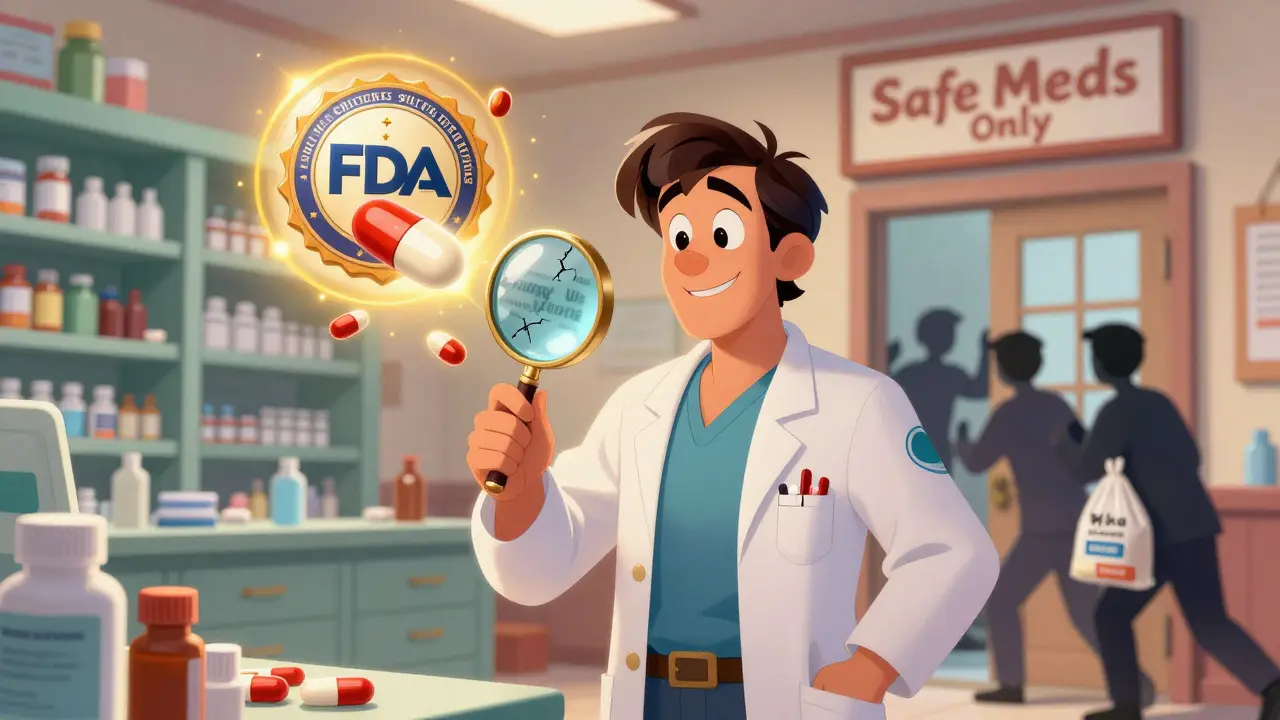
Know Your Manufacturer
Not all generic makers are created equal. Companies like Teva, Sandoz, and Apotex have decades of experience and high compliance rates. PharmacyChecker, an independent verification site, rates Teva at 4.6 out of 5 based on over 2,000 reviews. Sandoz scores 4.5. These companies invest in quality control because they know their reputation depends on it. Avoid generics from unknown manufacturers, especially if they’re sold online or in discount stores with no clear branding. If the bottle says "Manufactured for [Unknown Company]" with no address or contact info, walk away.What to Do If Something Feels Off
If you notice any of these signs:- Your medication doesn’t work like it used to
- You feel new side effects you’ve never had before
- The pill looks, smells, or tastes different
Cost Isn’t the Only Factor
Yes, generics save money-on average $300 to $500 per month compared to brand-name drugs. But the real savings come from knowing you’re getting safe, effective medicine. A counterfeit pill might cost $5 instead of $50, but if it doesn’t work-or worse, if it makes you sick-the cost becomes immeasurable. Legitimate generics are rigorously tested, consistently manufactured, and traceable. They’re not perfect, but they’re reliable. And when you buy from a licensed pharmacy and know how to spot the red flags, you’re not taking a gamble-you’re making a smart, informed choice.Can generic drugs be less effective than brand-name drugs?
No, not if they’re FDA-approved. Generic drugs must prove they deliver the same amount of active ingredient into your bloodstream at the same rate as the brand-name version. Studies show they work just as well. The difference is in the inactive ingredients-like dyes or fillers-which don’t affect how the drug works.
Why do generic pills look different from brand-name ones?
By law, generic manufacturers can’t copy the exact appearance of brand-name drugs to avoid trademark infringement. So they change the color, shape, or size. But the active ingredient, strength, and dosage form must be identical. If the pill looks different but still has the same imprint and manufacturer name, it’s likely legitimate.
Is it safe to buy generic drugs online?
Only if you buy from a pharmacy with the .pharmacy seal or that’s accredited by VIPPS. Over 96% of online pharmacies selling drugs are illegal. Many sell counterfeit or substandard products. Never buy from sites that don’t require a prescription or offer "discounts" that seem too good to be true.
What should I do if my generic drug stops working?
Don’t assume your body has changed. First, check the pill’s appearance against your previous refill. Look for changes in color, shape, or imprint. If something’s off, take the bottle to your pharmacist and ask if the manufacturer changed. If the drug still doesn’t work, contact your doctor and report it to the FDA’s MedWatch program.
Are all generic drugs made in the U.S.?
No. Many generic drugs are made in India, China, and other countries. But if they’re sold in the U.S., they must meet FDA standards. The FDA inspects foreign manufacturing sites just like U.S. ones. As long as the drug is approved and sold through a licensed pharmacy, the country of origin doesn’t affect safety.
Henry Sy
January 15, 2026 AT 06:00Man i swear some of these generics look like they were made in a garage with a 3d printer and kool-aid. I took one last month that tasted like burnt plastic and my blood pressure went nuts. Not cool. The FDA says theyre all good but i dont trust no label that says "manufactured for" with no actual company name. I just stick with brand name now even if it costs me a week of ramen.
says haze
January 17, 2026 AT 03:30The entire premise of generic drug equivalence is a statistical illusion masked as science. Bioequivalence thresholds of 80%-125% are not proof of therapeutic parity-they are legal loopholes dressed in lab coats. The human body is not a beaker. Variability in inactive ingredients alters absorption kinetics in ways that clinical trials, often underpowered and industry-funded, fail to capture. We mistake sameness for identity. A pill with the same active molecule is not the same medicine. It is a different pharmacological experience. And we are the unwitting subjects of this commodified placebo paradigm.
Alvin Bregman
January 17, 2026 AT 06:19so i just check the imprint code on the pill and match it with the drugs.com app. if it scans and the color matches what i remember from last time im good. dont overthink it. if the bottle looks like it was printed on a home printer and the lot number is 123456789 then yeah maybe dont take it. but most of the time its fine. pharmacies arent out to kill you just trying to save you money
Robert Way
January 18, 2026 AT 22:35hey i just bought a generic version of my blood thinner and the pill was a diffrent color and i was like wtf but then i checked the label and it had the same name and number so i took it. now i feel kinda sick tho maybe it was fake idk. i think the pharmacist was drunk or something
Sarah Triphahn
January 20, 2026 AT 07:29If you’re taking generics without checking the manufacturer you’re playing Russian roulette with your health. Teva and Sandoz are fine. The rest? Probably made in a basement in Mumbai with tap water and wishful thinking. You think $5 is a bargain until your liver gives out. Don’t be stupid. Know your maker or don’t take it.
Vicky Zhang
January 22, 2026 AT 04:56Okay listen i know this sounds crazy but i used to panic every time my generic changed shape or color until i learned to just trust the process. I keep a little notebook now where i write down the pill’s imprint, color, and manufacturer every time i refill. It’s like keeping a diary for my medicine. And guess what? I’ve never had a problem since. The system works if you just pay attention. You’re not being paranoid-you’re being empowered. You got this. One pill at a time.
Allison Deming
January 24, 2026 AT 03:47It is deeply concerning that the public is encouraged to accept pharmaceutical products based on regulatory assurances alone, without cultivating a critical understanding of supply chain integrity. The FDA’s inspection regime, while ostensibly robust, is constrained by resource limitations and geopolitical dependencies. The proliferation of foreign manufacturing sites, many of which operate under opaque oversight, renders the notion of "FDA-approved" an increasingly hollow designation. We must demand transparency-not merely compliance. To equate regulatory approval with safety is to confuse bureaucracy with bioethics.
Susie Deer
January 25, 2026 AT 16:30Why are we even talking about this? If you want real medicine buy American. No foreign labs. No Chinese powder. No Indian factories. If it's not made in the USA it's not safe. Period. The FDA can't inspect every overseas plant. So don't risk it. Buy only US-made generics or pay for the brand. End of story.