

You might have started a generic version of your medication to save money, only to find that it just isn't working the same way. Maybe you've noticed a new rash, a strange side effect, or your symptoms are simply returning. While most generics are a great substitute, there are times when moving back to the original brand is the right call for your health. However, you can't just swap pills on your own; doing so without a plan can lead to treatment gaps or insurance nightmares.
The core of the issue usually comes down to what's not the active ingredient. While the FDA is the federal agency responsible for protecting public health by ensuring the safety, efficacy, and security of human drugs, they allow generics to have different inactive ingredients-like dyes, fillers, or binders. For most people, these don't matter. But for some, these "inert" ingredients cause allergic reactions or change how the body absorbs the drug. If you're dealing with a Narrow Therapeutic Index (NTI) drug-where a tiny change in dose can mean the difference between a working med and a toxic one-consistency is everything.
Why Some People Need to Switch Back
Most generics are bioequivalent, meaning they work almost exactly like the brand name. But "almost" isn't always good enough. If you're taking medications for epilepsy, organ transplants, or thyroid issues, your body is incredibly sensitive to slight variations. A study in JAMA Internal Medicine found that using proper switching protocols can reduce medication errors by 47%, highlighting how risky an unplanned swap can be.
Common reasons for wanting to return to the brand name include:
- Allergic Reactions: You might be reacting to a specific dye or preservative used by a generic manufacturer that the brand name doesn't use.
- Therapeutic Failure: The generic version simply isn't controlling your symptoms as well as the brand did.
- Instability: You've noticed your levels (like INR for blood thinners) are swinging wildly since the switch to generic.
| Feature | Brand-Name Drug | Generic Drug |
|---|---|---|
| Active Ingredient | Identical | Identical |
| Inactive Ingredients | Consistent formulation | Varies by manufacturer |
| Cost | Higher (3-5x more) | Significantly lower |
| FDA Approval Path | Full NDA (New Drug Application) | ANDA (Abbreviated NDA) |
The Safety Risks of DIY Switching
It's tempting to just buy the brand name over the counter or ask a pharmacy to "just give me the brand this once," but this is risky. For instance, the American Academy of Neurology has warned that switching between different formulations of anti-epileptic drugs can increase the risk of breakthrough seizures by 27%. Your brain and body can become accustomed to a specific chemical delivery system; changing it abruptly can trigger a reaction.
There is also the "pharmacy shuffle." If you don't have a specific instruction on your prescription, a pharmacist might switch you between different generic manufacturers every month based on what's in stock. This creates a moving target for your treatment. When you switch back to brand, you are essentially locking in one consistent formula, which provides a stable baseline for your doctor to monitor.

How to Coordinate the Switch with Your Doctor
To get back on the brand name safely, you need a paper trail. Doctors can't just write "Brand Name"; they often need to prove to your insurance company that the generic failed. This is where the Dispense as Written (DAW) code comes in. When a doctor marks a prescription as DAW-1, it tells the pharmacist that the brand is medically necessary.
Here is the safest way to handle the conversation with your provider:
- Keep a Symptom Log: Don't just say "I feel different." Document specific dates and reactions. For example: "Developed a red rash on arms 2 hours after taking Generic X on Tuesday."
- Request a "Brand Medically Necessary" Order: Ask your doctor to use a specific clinical justification. Mentioning "therapeutic failure" or "adverse reaction to inactive ingredients" is key for insurance approval.
- Discuss Monitoring: If you're on an NTI drug, ask for a follow-up blood test or check-up within 7 to 10 days of the switch to ensure your levels remain stable.
Navigating the Insurance Battle
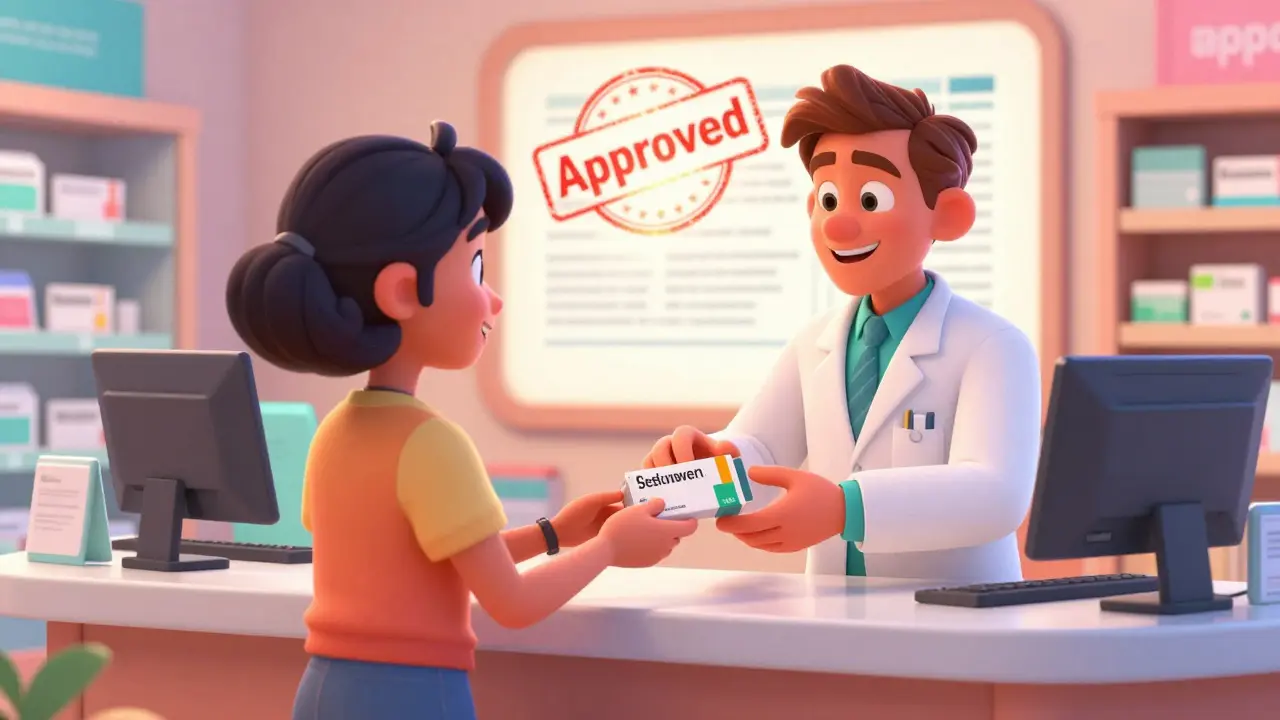
This is where most people hit a wall. Insurance companies love generics because they're cheaper. In fact, some Medicare Part D plans require prior authorization for nearly 70% of brand-name drugs when a generic exists. If your request is denied, don't give up immediately. About 63.7% of these denials are successfully appealed when the doctor provides strong clinical evidence.
To speed up the process, ensure your doctor includes laboratory evidence. If your blood markers were stable on the brand but became unstable on the generic, that data is your strongest weapon. Be prepared for a wait; some patients report it takes a couple of weeks to clear the prior authorization hurdles. To avoid a gap in medication, ask your pharmacist if they can provide a small "bridge supply" of the brand while the insurance paperwork is processing.
The Final Checklist for a Safe Transition
Before you take that first brand-name pill again, run through this list to make sure nothing is missed:
- Did my doctor explicitly write "Dispense as Written" (DAW) on the script?
- Do I have a confirmed appointment for a follow-up check in the next two weeks?
- Have I confirmed with my pharmacy that they have the exact brand requested (not an authorized generic)?
- Do I have enough of the current medication to last through the insurance approval window?
Is the brand name always better than the generic?
No. For the vast majority of people, generics are identical in effect and safety. The brand is only "better" if you have a specific sensitivity to the inactive ingredients in the generic or if you are using a drug with a very narrow therapeutic window where the 80-125% bioequivalence range isn't tight enough for your specific biology.
What is an "authorized generic" and how does it affect my switch?
An authorized generic is the exact brand-name drug, but sold without the brand label. This can be confusing because you might think you're getting a generic, but you're actually getting the brand formulation. If you are switching back to avoid a generic's inactive ingredients, ask your pharmacist to clarify if the "generic" they are offering is an authorized generic or a different manufacturer's version.
Will my insurance cover the brand name if I switch back?
It depends. Most insurance plans will only cover the brand name if your doctor submits a Prior Authorization (PA) proving that the generic is clinically inappropriate for you. Without this documentation, you may have to pay the full retail price, which can be 3 to 5 times higher than the generic.
Can I just buy the brand name and take it alongside the generic to transition?
Absolutely not. Never "double up" or mix medications without a doctor's specific tapering plan. This can lead to overdose or dangerous drug interactions. The switch should be a clean replacement-stop one, start the other-under medical supervision.
How do I know if I'm having a reaction to a generic's inactive ingredients?
Common signs include new skin rashes, hives, sudden stomach upset, or an unexpected change in how the medication controls your symptoms shortly after your pharmacy switches manufacturers. If you notice these, record the lot number from the bottle and contact your doctor immediately.
Vijay AGarwal
April 25, 2026 AT 02:50This is an absolute nightmare for so many people! I've seen patients literally spiral into a health crisis because some pharmacy decided to switch their manufacturer to save a few pennies! It's a total disaster when your stability is on the line! 😱
Sharyl Foster
April 26, 2026 AT 00:05Please, the whole 'inactive ingredients' thing is mostly a placebo. Most of the time you're just imagining the difference because the pill looks slightly different. People love to pretend they're special and need the brand name just to feel important.
Michael Deane
April 26, 2026 AT 03:06It's just a joke how these insurance companies run the show in this country and force you to take whatever cheap garbage they want while the actual American doctors who spent years studying are basically just secretaries writing scripts that get ignored by some corporate suit in a skyscraper who doesn't know a thing about medicine but knows how to squeeze every cent out of a working man's pocket.
Jaclyn Vo
April 27, 2026 AT 12:31Omg literally me!! 🙄 I tried a generic for my thyroid meds and I felt like a zombie for three weeks! My doctor was like 'oh it's probably just a transition period' but NOPE, I was literally dying!! 💅✨ Once I got back to the brand name everything was perfect again!
Eric Mwiti
April 28, 2026 AT 10:53Oh sure, because the FDA is just famously known for its impeccable oversight and totally doesn't have a cozy little relationship with the big pharma companies it's supposed to regulate. What a shocker that the 'safe' option is the one that costs five times more.
Edwin Perez
April 30, 2026 AT 10:07They just put those fillers in there to track us or keep us docile. Why do you think the manufacturers change every month? It's an experiment on the population. The 'brand name' is just a different flavor of the same control mechanism.
Anand Mehra
May 2, 2026 AT 01:04bioequivalence is a myth for some these days basic chemistry fails when greed enters the room just a loop of failure
James Harrison
May 2, 2026 AT 13:24It's interesting how we view the 'original' as the truth and the 'copy' as the deviation. In reality, both are just chemical arrangements designed to interact with our biological systems. The stress of the switch might be as impactful as the ingredients themselves.
Kristen O'Neal
May 3, 2026 AT 15:54I actually had a similar issue with my blood pressure meds. I started getting these weird dizzy spells that weren't there before. I did exactly what this post suggests-kept a log and pushed the insurance company until they gave in. It's a battle, but you have to be your own advocate because nobody else is going to fight that hard for you.
Beena Garud
May 4, 2026 AT 00:15The intersection of pharmaceutical economics and individual biological necessity presents a profound ethical dilemma. One must contemplate the societal cost of prioritizing fiscal savings over the precise stability of a human life.
sachin singh
May 4, 2026 AT 04:39It is truly encouraging to see such a detailed guide on navigating the insurance process. The mention of the DAW code is particularly useful for those of us who are unfamiliar with the administrative side of healthcare.
Elle Torres Sanz
May 5, 2026 AT 08:51I think it's important to remember that different cultures have different access to these meds, and the struggle with insurance is very specific to the US system. Regardless, we should all support each other in finding the treatment that actually works for our unique bodies.
Karyn Tindall
May 6, 2026 AT 19:03I cannot even imagine the sheer terror of a breakthrough seizure just because a pharmacist swapped a bottle! It's absolutely heartbreaking and frankly terrifying that this is a known risk in our healthcare system!
Michael Chukwuma
May 7, 2026 AT 07:47I totally agree with the part about keeping a symptom log. It really helps the doctor see the pattern and makes the insurance appeal much stronger. I've seen it work for a few friends too.